
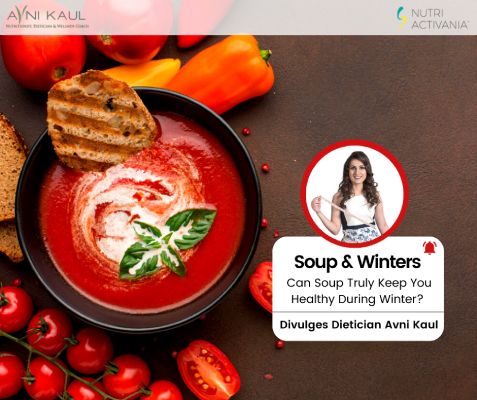
Divulges Leading Indian Dietician Avni Kaul
The chilly weather is already making you pile on layers as you sit down to have a hot meal. But winter foods are mostly in the “comfort” variety, which means that they are high in calories and full of unhealthy ingredients.
Dietician Avni Kaul says that soup does not fall into that category. Soup has a surprising number of health benefits to offer if you prepare it the right way. Check out the ways in which soup will keep you healthy this winter, as revealed by Delhi’s top dietician and nutritionist Avni Kaul in this blog.
Keeps you full
When your stomach is not growling and feeling empty, it is easier to refrain from unhealthy snacking. A satisfying meal is one way to curb cravings. Though winter feels like hibernation time, it is unhealthy to put on extra pounds during this season. Soup makes you feel full for a longer time and keeps your weight in check.
Because of how your stomach digests food and water, soup keeps hunger away longer than an unblended meal does. A hormone known as ghrelin lets your body know when the stomach is empty, but when you consume blended foods such as soup, this process slows down. Essentially, your appetite responds to a full stomach and soup achieves that. Certain studies show that those who consume soup can stay full for up to an hour and a half longer compared than those eating a solid meal.
Nourishes you with fruits and vegetables
There is no secret that vegetables and fruit improve your health through vitamins, fiber, and anti-inflammatory properties. And if you would rather not take the time to chew, soup could be a convenient option. Vegetable soups could replenish part of your everyday serving of fruits and vegetables, and the recommended amount is at least 5 a day.
You can opt to include these by chopping them up for a chunkier soup such as Chunky Lentil and Vegetable Soup or by mixing them together for a smooth one like in Roasted Butternut Squash Soup.
Either way, you are feeding your body with healthy options. Also, some cooked vegetables can provide more nutrients than raw ones, such as carrots which become higher in beta-carotene, or cooked tomatoes which form higher lycopene levels when cooked, which promotes strong bones and healthy skin.

Provides added hydration
During the winter, you might not realise when you become dehydrated because you are not overly feeling hot or sweaty. But your body still requires certain levels of water to function. If you are not paying attention to your water consumption, you can become dehydrated even in a cold setting.
You can replenish your fluid levels by drinking water or by eating foods that contain water in them. Soup is one food that has a high amount of water and helps your body retain water.
Because broth has sodium, broth-based soups may cause your body to hold water longer. This might lead to better hydration without repeatedly drinking water. You can dress up your broth-based soup having vegetables and protein, so your meal is well-rounded.
Provides comfort against cold symptoms
Soup, specifically, chicken soup, has been an age-old recommendation for colds and respiratory infections. But does it truly work as a remedy? Several kinds of soups do provide health benefits that can alleviate cold symptoms, but how much they actually help depends on the broth and ingredients. Soups also have multiple nutrients in sick people that provide nourishment when their appetite is low.
While studies are not clear on chicken soup’s benefits for colds, there is certain evidence that it has medicinal properties. Hot chicken soup could increase the flow of mucus and clear your nasal passages better than plain hot water. Chicken broth also can help control inflammation. The spices and temperature of the soup also help sinuses, and soup is regarded as comfort food for several people when they are under the weather.
Improves immune system
Soups could bolster your immune system when you are cooped up indoors during the winter. Your body’s defense mechanisms against illness require extra help when sickness is going around and temperatures are low. Chicken stock has zinc, which could help the body repair itself, and it could also, restore damaged tissue. But more so than broth, the ingredients included in several soups increase your immune system.
Ingredients in soups could make it a beneficial addition to your winter menu. Garlic, which is present in vegetable and bone-broth soups, protects your body against viruses and combats harmful bacteria.
Other additions that are rich in vitamin C, such as broccoli, spinach, or potatoes, cause your body to resist pathogens and safeguard against immune system deficiencies. Fill your homemade soups with immune system boosters during these winter months to enhance your well-being.
Could be a good source of protein
When your soup has a rich level of protein, you are providing your body with a vital element for bones, skin, blood, and more. Meats such as chicken is a significant source of protein that make tasty soups. You can also make a seafood soup having shrimp as your protein.
For meat eaters, protein is straightforward, but vegetable lovers can also avail benefit from protein-rich soups. Several, leafy greens such as spinach contain a surprising amount of protein in them. Legumes are also full of protein, as well as iron and magnesium.
Reduce calories
You can manage your weight gain through soup because it could reduce the number of calories that you eat in a meal. If you eat soup before your meal, your total calorie consumption can drop substantially.
Irrespective of the soup’s form, it could cause you to eat less during a meal but still have a variety of foods when soup serves as your first course. Creamy soups are more caloric, so refrain from these if you are trying to maintain a certain weight.
Have soup as a winter meal
Instead of stocking up on greasy and unhealthy foods during winter, you can indulge in a nutrient-filled soup. Bone-broth and vegetable soups can satisfy your taste buds, stomach, and well-being. Make certain you add some to your meal plans this season so you can stay away from illness and maintain your health.