
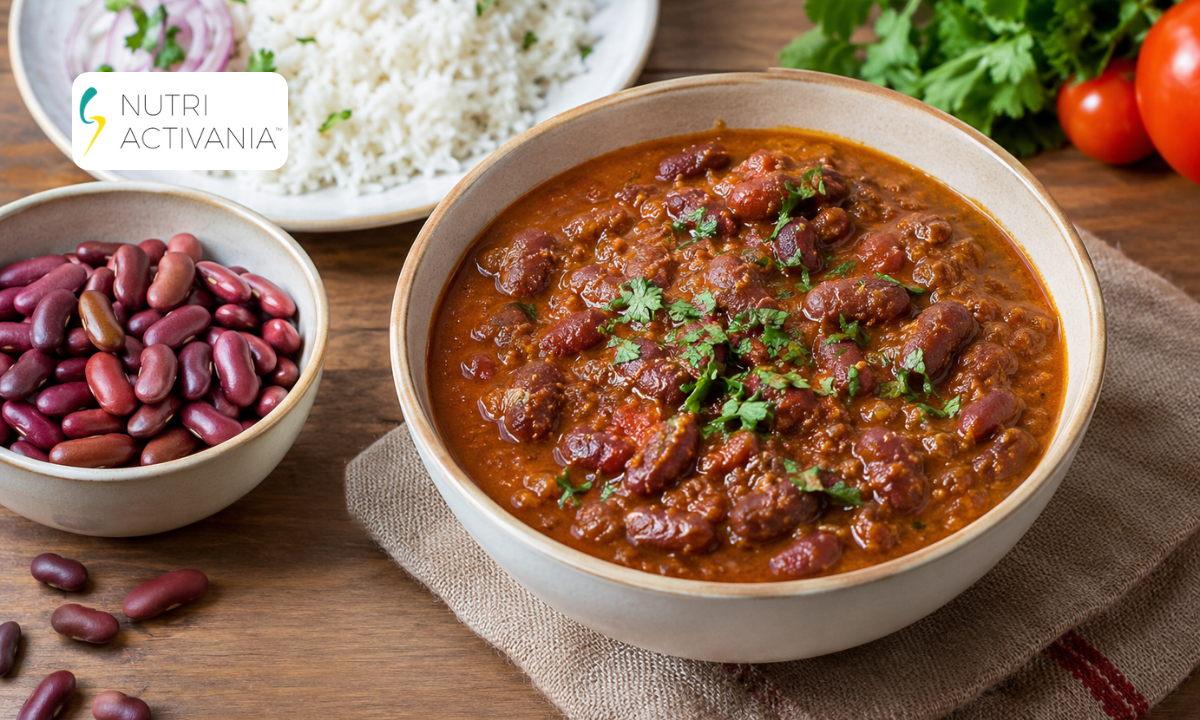
Rajma, also known as kidney beans, is a popular ingredient in Indian kitchens. From traditional rajma chawal to homemade bean curries, it is an affordable and versatile food that provides plant-based protein, dietary fibre, and essential nutrients.
The benefits of eating rajma go beyond its protein content. When properly cooked and included in a balanced diet, kidney beans can help support digestive health, promote fullness, and contribute to healthy blood sugar and cholesterol management.
Rajma also contains folate, iron, potassium, and magnesium. However, its nutritional value depends on the portion size, cooking method, and ingredients used in the recipe.
Let’s explore rajma nutrition, its potential health benefits, and how to include it safely in your daily diet.
Key Takeaways
- Rajma provides plant-based protein, dietary fibre, folate, potassium, and non-haem iron.
- Its protein and fibre content can help promote fullness and support digestive health.
- Rajma can fit into balanced eating patterns for weight management, blood sugar control, and heart health.
- The calories, fat, and sodium in rajma curry depend on the ingredients and portion size.
- Dried kidney beans must be soaked and cooked thoroughly before eating. Raw or undercooked kidney beans can cause food poisoning.
Rajma Nutrition Facts
Cooked kidney beans provide protein, complex carbohydrates, fibre, and several essential micronutrients. They are naturally low in fat and can be included in vegetarian and vegan diets.
Nutrition in 100 Grams of Cooked Rajma
| Nutrient | Approximate amount |
| Calories | 127 kcal |
| Protein | 8.7 g |
| Carbohydrates | 22.8 g |
| Dietary fibre | 7.4 g |
| Fat | 0.5 g |
| Iron | 2.9 mg |
| Potassium | 403 mg |
| Folate | 130 mcg |
Values are approximate and refer to cooked kidney beans without added salt. Actual values vary by bean variety and cooking method. These figures are for plain cooked beans, not rajma curry.
Rajma provides a combination of protein and complex carbohydrates, making it a useful component of a balanced meal. Its fibre content also contributes to digestive health and feelings of fullness.
7 Health Benefits of Eating Rajma
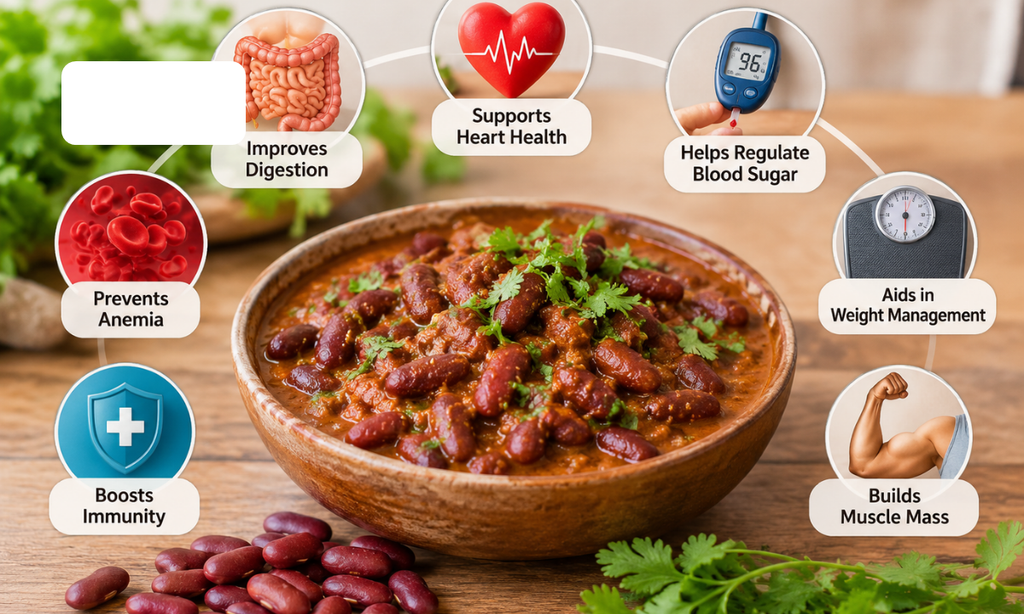
1. Provides Plant-Based Protein
Protein is essential for muscle maintenance, tissue repair, and many normal functions in the body. Rajma is a useful source of plant-based protein, particularly for people who follow vegetarian or vegan diets.
Including rajma in meals can help increase your daily protein intake. Pairing it with foods such as rice, whole-wheat roti, or other grains adds variety to your overall protein sources. If you also want to compare other protein sources, see how much nutrition is in one egg.
For people who exercise regularly, protein-rich foods can support muscle maintenance and recovery when combined with sufficient total protein and appropriate physical activity.
How to include it: Enjoy rajma curry with rice or roti. You can also add cooked kidney beans to salads, soups, and homemade vegetable bowls.
2. Supports Digestive Health
One of the important benefits of eating rajma is its dietary fibre content. Fibre helps support regular bowel movements and contributes to normal digestive function.
Rajma also contains resistant starch and other carbohydrates that reach the large intestine, where gut bacteria can ferment them. This process can support a healthy gut environment.
However, increasing fibre intake suddenly may cause gas, bloating, or abdominal discomfort, particularly in people who are not accustomed to eating beans.
How to include it: Start with a moderate portion if you rarely eat legumes. Soak dried rajma, discard the soaking water, and cook the beans thoroughly until soft. Increase your portion gradually according to your tolerance.
3. May Help With Weight Management
Rajma can be a useful food for people trying to manage their weight because it provides protein and dietary fibre. These nutrients can help you feel satisfied after a meal and may reduce the urge to snack soon afterwards.
However, rajma does not directly burn body fat. Weight management depends on your overall calorie intake, physical activity, sleep, and eating habits.
The preparation method also matters. A simple homemade curry may fit more easily into a calorie-controlled diet than a preparation containing large amounts of oil, butter, or cream. Read more about weight loss with Indian food for practical meal ideas.
How to include it: Serve a moderate portion of rajma with rice or roti and vegetables. Adjust the portions to your individual energy needs rather than eliminating carbohydrates completely.
4. May Help Support More Gradual Blood Sugar Responses
Rajma contains fibre, protein, and complex carbohydrates. These characteristics can slow digestion and may support a more gradual rise in blood glucose compared with some lower-fibre carbohydrate foods.
This makes properly cooked kidney beans a useful option in many balanced eating patterns, including diets designed for blood sugar management.
However, rajma is not a treatment for diabetes. Its effect on blood glucose depends on portion size, the rest of the meal, medication, and individual response.
How to include it: Combine rajma with non-starchy vegetables and a suitable portion of rice or whole-grain roti. If you have diabetes, follow your healthcare professional’s advice on meal planning and glucose monitoring.
5. Can Fit Into a Heart-Healthy Eating Pattern
Rajma provides dietary fibre, potassium, folate, and other nutrients that contribute to a healthy eating pattern.
Soluble fibre from beans may help lower LDL cholesterol when consumed regularly as part of an appropriate diet. Replacing some foods high in saturated fat with plant-based protein sources such as beans can also support heart health.
However, eating rajma alone cannot prevent or treat heart disease. Overall dietary quality, physical activity, blood pressure, cholesterol levels, and other health factors remain important.
How to include it: Prepare rajma with moderate amounts of oil and salt. Add vegetables and include a variety of beans, lentils, and pulses throughout the week.
6. Provides Non-Haem Iron
Iron is needed to make haemoglobin, the protein in red blood cells that carries oxygen around the body. Rajma supplies non-haem iron, the form of iron found in plant foods.
The body generally absorbs non-haem iron less efficiently than the haem iron found in animal foods. However, including iron-containing plant foods in your diet can contribute to your daily iron intake.
Vitamin C can improve the absorption of non-haem iron.
How to include it: Serve rajma with vitamin C-rich foods such as tomatoes, capsicum, lemon, or amla. If you have diagnosed iron-deficiency anaemia, dietary changes alone may not be sufficient. Follow your clinician’s advice regarding testing and treatment.
7. Supplies Folate and Other Essential Nutrients
Rajma contains folate, a B vitamin needed for DNA production, normal cell division, and red blood cell formation. Folate is particularly important before and during early pregnancy, although food alone may not meet the increased folic acid requirements associated with pregnancy.
Kidney beans also provide potassium and magnesium, which contribute to normal muscle function, nerve signalling, and other essential processes in the body.
Eating a variety of legumes, vegetables, fruits, whole grains, nuts, and seeds can help improve the overall nutrient quality of your diet.
How to include it: Rotate rajma with other pulses, such as chana, moong, masoor dal, and other beans, rather than relying on a single food for all your nutritional needs.
Is Rajma Good for Weight Loss?
Yes, rajma can fit into a weight-loss diet. Its protein and fibre content can help promote fullness, while its nutrient profile makes it a useful component of balanced meals.
Portion size and preparation method are important. Rajma cooked with excessive oil or butter can contain substantially more calories than plain cooked kidney beans.
For a balanced rajma meal:
- Choose a moderate serving of rajma curry.
- Pair it with a suitable portion of rice or whole-grain roti.
- Add vegetables or a fresh salad.
- Use oil in moderation.
- Maintain a calorie intake appropriate for your goals.
There is no need to avoid rice completely. The overall balance and portion sizes of your meals matter more than eliminating one food. For a structured example of familiar meals, check this 7-day Indian diet plan for weight loss.
If you want a plan built around your routine, food preferences, and calorie needs, consult a weight loss dietician in Delhi.
Can People With Diabetes Eat Rajma?
Many people with diabetes can include properly cooked rajma in their diet. Its fibre, protein, and complex carbohydrates can make it a useful part of a balanced meal.
The amount you eat still matters because rajma contains carbohydrates that affect blood glucose. Eating it with vegetables and appropriate portions of other foods can help create a balanced meal.
Individual responses differ. If you monitor your blood glucose, your readings may help you understand how a particular portion and meal combination affects you.
Rajma should complement, not replace, prescribed diabetes medication or professional dietary advice.
Rajma Nutrition vs Rajma Curry: What Is the Difference?
Plain cooked kidney beans and rajma curry do not necessarily have the same nutritional values. The ingredients used in cooking can change the total calories, fat, and sodium in each serving.
| Preparation | Nutritional considerations |
| Plain cooked rajma | Contains approximately 127 kcal and 8.7 g protein per 100 g, with no added cooking fat or salt. |
| Homemade rajma curry | Calories and fat depend on the amount of oil, butter, cream, and other ingredients used. Sodium varies with added salt. |
| Rajma chawal | Includes calories and carbohydrates from both the rajma and rice. Portion sizes and accompanying vegetables affect the overall meal. |
| Canned kidney beans | Usually already heat-treated. Draining and rinsing can help reduce some of the added sodium when salt is present. |
For a balanced meal, use a moderate amount of oil, pay attention to portion sizes, and add vegetables. Remember that the nutrition values for plain cooked beans should not be used as the exact values for a prepared curry.
How Much Rajma Should You Eat?
There is no single ideal portion for everyone. Your age, activity level, appetite, overall diet, and health needs all influence how much rajma is appropriate.
As a practical starting point, around ½ to 1 cup of cooked rajma can be included in a meal, depending on your nutritional requirements and tolerance.
If you are not used to eating beans, begin with a smaller portion and increase it gradually. This may help your digestive system adjust to the additional fibre.
Remember that rajma curry containing oil, butter, cream, or other ingredients has a different calorie and nutrient profile from plain cooked kidney beans.
Rajma Side Effects and Precautions
Rajma is nutritious, but a few precautions can help you include it comfortably and safely.
- Gas and bloating: Rajma contains fibre and fermentable carbohydrates that can cause gas. Start with a small portion and increase it gradually.
- Digestive discomfort: Soaking dried beans, discarding the soaking water, and cooking them thoroughly may improve tolerance.
- Undercooked beans: Raw or undercooked kidney beans contain phytohaemagglutinin, a natural lectin that can cause food poisoning.
- Individual dietary restrictions: People with kidney disease or specific medical dietary requirements may need personalised advice about how legumes fit into their diet.
Seek medical advice if digestive symptoms are severe or persistent, or if you experience vomiting, blood in your stool, or significant abdominal pain.
How to Cook Rajma Safely
Proper preparation is essential because raw or inadequately cooked kidney beans contain phytohaemagglutinin, a natural lectin that can cause nausea, vomiting, diarrhoea, and abdominal pain.
Follow these precautions when preparing dried rajma:
- Sort and rinse the beans: Remove damaged beans and any unwanted material.
- Soak thoroughly: Leave the dried beans in plenty of water for several hours, preferably overnight.
- Discard the soaking water: Drain the beans and rinse them before cooking.
- Boil vigorously first: Place the soaked beans in fresh water and bring them to a rolling boil for at least 10 minutes. Then continue cooking until the beans are completely soft.
- Cook thoroughly: Do not eat kidney beans that are raw, hard, or undercooked.
A pressure cooker can be used when operated according to the manufacturer’s instructions. Ensure the beans are fully cooked and soft before eating, and follow reliable kidney-bean preparation guidance.
Do not rely on a slow cooker or low-temperature cooking alone to make dried red kidney beans safe. These methods may not reach the temperature needed to destroy the toxin.
Commercially canned kidney beans are generally already heat-treated. Drain and rinse them if appropriate for your recipe, then heat them as desired.
Healthy Ways to Include Rajma in Your Diet
Rajma is versatile and can be used in different meals beyond traditional rajma chawal.
- Rajma chawal: Serve homemade rajma curry with a suitable portion of rice and vegetables.
- Rajma with roti: Pair the curry with whole-wheat roti and a vegetable side dish.
- Rajma salad: Combine thoroughly cooked and cooled kidney beans with cucumber, tomato, onion, lemon, and herbs.
- Rajma vegetable bowl: Mix cooked beans with vegetables and a grain of your choice.
- Rajma soup: Add cooked kidney beans to homemade vegetable soup for extra protein and fibre.
- Rajma filling: Use mashed cooked beans with vegetables and spices as a filling for wraps or sandwiches.
Choose preparations that suit your preferences and nutritional needs. You do not need to eat rajma every day to benefit from including legumes in a varied diet.
Frequently Asked Questions
1. What are the main benefits of eating rajma?
Rajma provides plant-based protein, dietary fibre, iron, folate, potassium, and other nutrients. It can support digestive health, help promote fullness, and contribute to a balanced eating pattern that supports heart health and blood sugar management.
2. How much protein does 100 g of cooked rajma contain?
One hundred grams of cooked kidney beans contains approximately 8.7 g of protein. Dry beans have a higher protein concentration per 100 g because they contain much less water.
3. Is rajma good for weight loss?
Rajma can support weight management because it provides protein and fibre, which may help you feel full. However, weight loss depends on your overall calorie intake and lifestyle rather than any single food. Learn how a dietician helps with weight loss sustainably.
4. Can I eat rajma every day?
Rajma can be included regularly in a balanced diet if you tolerate it well. Eating a variety of pulses, vegetables, grains, and other protein sources helps provide a broader range of nutrients.
5. Does rajma cause gas?
Rajma can cause gas and bloating because it contains fermentable carbohydrates and fibre. Soaking dried beans, discarding the soaking water, cooking them thoroughly, and increasing your intake gradually may help reduce discomfort.
6. Can people with diabetes eat rajma?
Rajma can fit into many diabetes-friendly eating patterns because it provides fibre, protein, and complex carbohydrates. Portion size and the rest of the meal still matter, so individual dietary advice may be helpful.
7. Can I eat rajma at night?
You can eat rajma at dinner if it suits your digestion and meal schedule. If you experience bloating or discomfort, try a smaller portion or eat it earlier in the day.
8. Is rajma a good source of iron?
Yes. Rajma contains non-haem iron, which contributes to normal red blood cell production. Eating it with vitamin C-rich foods can help improve iron absorption.
9. What are the side effects of eating rajma?
Rajma may cause gas, bloating, or digestive discomfort, especially when eaten in large portions by people who are not accustomed to legumes. Raw or undercooked kidney beans can cause food poisoning, so dried beans must be prepared and cooked properly.
Conclusion
The benefits of eating rajma include providing plant-based protein, dietary fibre, iron, folate, and other essential nutrients. When included in a balanced diet, kidney beans can support digestive health, help promote fullness, and contribute to healthy blood sugar and cholesterol management.
Rajma is a practical choice for people who want to increase their intake of plant-based foods. Choose appropriate portions, prepare it with moderate amounts of oil and salt, and always cook dried kidney beans thoroughly. Including a variety of legumes, vegetables, and whole grains is a practical way to improve overall dietary quality.
Since every person’s health needs differ, a dietitian and nutritionist in Delhi can help you decide how much rajma suits your goals, medical conditions, and daily routine.