
12+ Years
15,000+
300+
Saket, Delhi
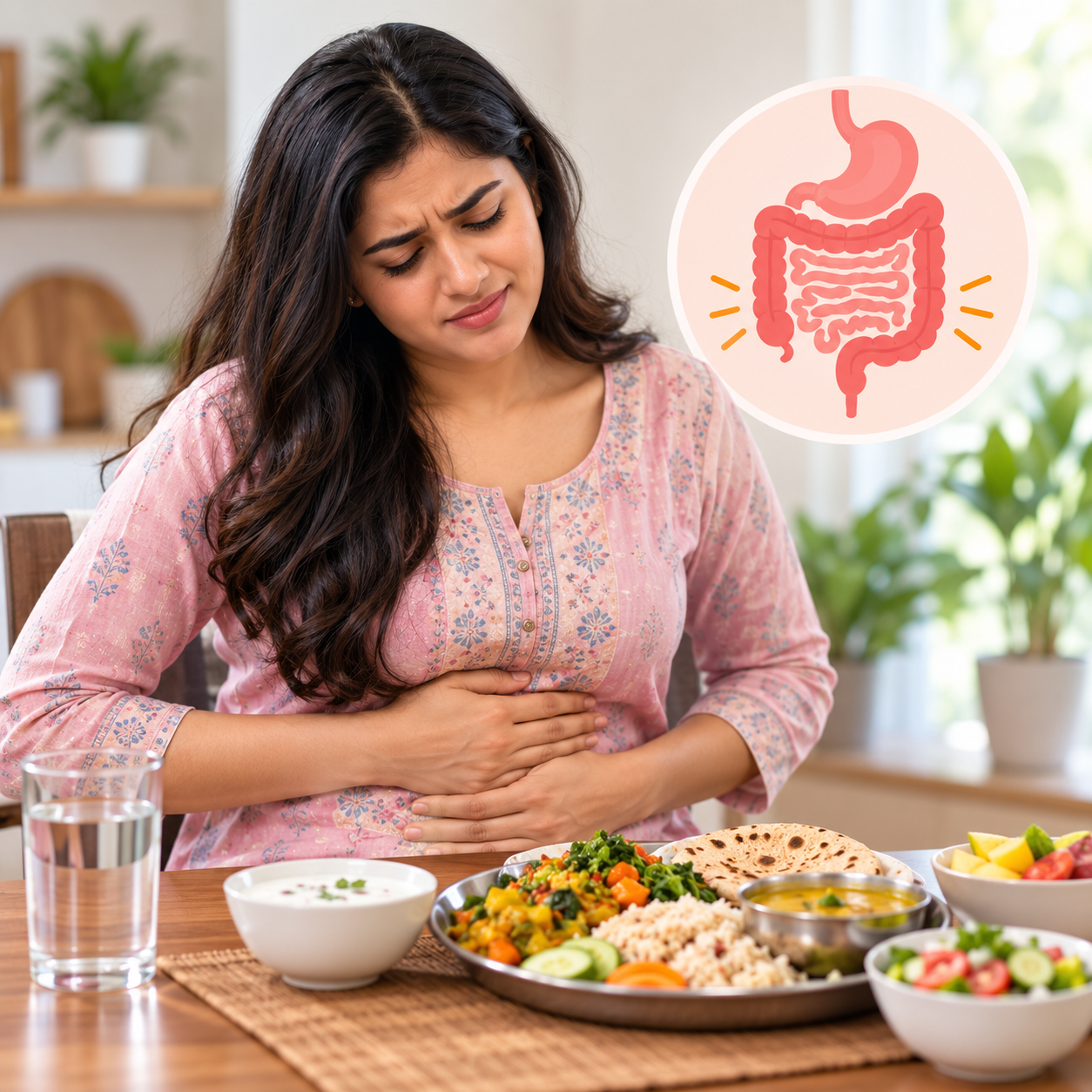
Gaining weight can be challenging when you experience bloating, early fullness, digestive discomfort, irregular bowel habits or reduced appetite. Simply increasing portion sizes may not feel comfortable or sustainable.
A personalized approach can focus on meal size, meal frequency, food choices, preparation methods and overall nutritional balance while considering the digestive concerns you experience.
If large meals feel uncomfortable, eating smaller portions at more manageable intervals may be considered.
Identify foods and meal patterns that you tolerate comfortably while maintaining nutritional variety.
Increase energy and nutrient intake gradually instead of relying only on large meals or highly processed foods.
Important: Persistent digestive symptoms, unexplained weight loss, blood in stool, repeated vomiting, severe abdominal pain, difficulty swallowing or other concerning symptoms should be evaluated by a qualified healthcare professional. A nutrition plan should complement, not replace, appropriate medical care.
Start with manageable portions rather than forcing very large meals when appetite or comfort is limited.
Additional meals or snacks can be considered when it is difficult to meet nutritional needs in a few meals.
Combine suitable protein, carbohydrates, fats and nutrient-rich foods according to your tolerance.
Cooking methods and preparation can be adjusted where certain preparations are less comfortable for you.
Use tolerated foods from different food groups rather than unnecessarily restricting the diet.
Introduce dietary changes progressively when appropriate instead of making many changes at once.

Hi, I’m Avni Kaul Best Dietician in Delhi, the founder of Nutri Activania. I’ve spent over 12 years as a clinical nutritionist. I hold a B.Sc. and M.Sc. in Food & Nutrition from Lady Irwin College, University of Delhi — where I was awarded the Gold Medal for academic excellence. I have also worked as a dietician in the Endocrinology Department at Max Hospital.
I’ve also worked as a dietician in the Endocrinology Department at Max Hospital.
Over the years, I’ve helped thousands of people across Delhi and India improve their healthy life.
All through simple, practical, and science-based nutrition.
At Nutri Activania, I personally guide every nutrition plans. From weight loss and weight gain to diabetes, PCOS, gut, and pregnancy care.
Each plans is made just for you—based on your body, lifestyle, and goals. My approach is simple.
Focus on long-term results, not quick fixes. No strict diets. No extreme restrictions.
Just balanced nutrition, better habits, and real lifestyle changes.
You get personal support, clear guidance, and plans that actually work.
Over time, I’ve been trusted and recommended by many mM in Delhi. You can check reviews, testimonials, and real success stories online.
Food selection should be individualized. If you tolerate them well, nutrient-dense foods can help increase overall intake without requiring extremely large portions.
Eggs, dal, pulses, curd, paneer, tofu, fish, chicken and other suitable protein sources can be considered according to dietary preference and tolerance.
Rice, roti, oats, potatoes, millets and other grains can provide energy as part of balanced meals.
Nuts, seeds, suitable oils and other tolerated fat sources can increase meal energy density.
Choose fruits that you tolerate comfortably and include them according to your individual eating pattern.
Milk, curd and other dairy foods or suitable alternatives can be included when tolerated.
Khichdi, dal-rice, roti-based meals and other familiar foods can be adapted according to individual tolerance.
If digestive discomfort limits your intake, the goal is not necessarily to keep adding food volume. A more practical strategy may be to improve the overall structure and nutritional value of the meals you can comfortably manage
A consistent routine can reduce the chance of repeatedly missing meals when appetite cues are unreliable.
Smaller meals can sometimes feel easier than trying to finish one very large plate.
Noting foods, meal timing and symptoms can help identify patterns to discuss during nutrition or medical consultations.
Include suitable protein foods regularly while considering individual digestive tolerance.
Use suitable nutrient-dense additions rather than relying mainly on low-nutrient high-calorie foods.
Adjust the plan according to weight, appetite, digestive comfort and consistency.
Use smaller, planned eating opportunities when hunger is limited.
Consider meal size, timing and food volume rather than forcing very large meals.
Review meal patterns and individual food tolerance rather than automatically eliminating broad food groups.
Build a balanced routine while identifying whether symptoms require professional assessment.
Plan manageable meals and snacks around work, commuting and daily responsibilities.
Use suitable vegetarian protein and energy sources while considering individual tolerance.
If you are looking for a dietician for weight gain in Delhi because digestive concerns make it difficult to eat enough, personalized nutrition guidance can help you create a practical routine around your symptoms, food preferences and lifestyle.
The goal is not to diagnose the cause of digestive symptoms through diet planning. Instead, nutrition guidance can work alongside appropriate medical care while helping you build a more manageable eating routine.
Plan meals around office hours, commuting and limited meal breaks.
Create practical meals around college, hostel and irregular study schedules.
Build balanced vegetarian meals with suitable protein and energy sources.
Use smaller meals and planned snacks when eating large portions is difficult.
Coordinate nutrition with strength training when appropriate.
Focus on consistent nutrition rather than relying mainly on processed high-calorie foods.
Discuss your weight goal, appetite, digestive concerns, food preferences, routine and current eating habits.
Review relevant dietary and lifestyle factors and identify practical barriers to adequate food intake.
Create a balanced meal structure based on your nutritional needs, preferences and digestive tolerance.
Apply manageable meal sizes, meal timing and suitable nutrient-dense choices.
Review weight, appetite, food intake, symptoms and challenges during follow-up.
Modify the nutrition approach according to progress, tolerance and changing requirements.
Very large meals may be uncomfortable when early fullness or digestive symptoms are present.
Removing many foods without a clear reason can unnecessarily reduce dietary variety.
Highly processed foods are not a substitute for a balanced nutrition plan.
Repeatedly missing meals can make it harder to reach consistent nutritional intake.
Ongoing digestive symptoms should not simply be treated as a diet problem without appropriate evaluation.
Gradual, trackable changes can make it easier to understand what works for your routine.
Need Help Gaining Weight Without Ignoring Your Digestion?
Speak with Nutri Activania’s Dietician Avni Kaul about your appetite, digestive concerns, food preferences and weight-gain goals.
It may be possible, but the appropriate approach depends on the nature of the digestive problem. A personalized plan can focus on foods and meal patterns you tolerate while ensuring appropriate medical evaluation when needed.
There is no single food that works for everyone. Foods can be selected according to your symptoms, tolerance, nutritional needs and dietary preferences.
For some people, smaller and more frequent meals may be easier to manage than a few large meals, particularly when early fullness affects intake.
A personalized eating routine may help improve consistency and nutritional intake, but persistent bloating or appetite changes should also be discussed with a healthcare professional.
Yes. Familiar Indian meals can be adapted according to individual tolerance, meal size, preparation methods and nutritional requirements.
Not necessarily. Fibre needs and tolerance vary, and broad food restriction is not appropriate for everyone. The right approach depends on your individual symptoms and nutritional requirements.
Persistent or worsening symptoms, unexplained weight loss, blood in stool, repeated vomiting, severe abdominal pain, difficulty swallowing or other concerning symptoms should be evaluated by a qualified healthcare professional.
Nutrition guidance can complement medical care, but diagnosis and treatment of an underlying digestive condition should be handled by an appropriate healthcare professional.
Book a Consultation with Dietician Avni Kaul
Get personalized nutrition guidance in Delhi based on your appetite, digestive concerns, food preferences, lifestyle and healthy weight-gain goals.
Phone: +91 99532 28642
Email: info@nutriactivania.com
Address: M-65, Saket Rd, near HDFC Bank, Block M, Saket, New Delhi, Delhi 110017, India
Consultation timings listed by Nutri Activania: Monday–Saturday, 10 AM–7 PM.


 Trustindex verifies that the original source of the review is Google.
 Trustindex verifies that the original source of the review is Google.
 Trustindex verifies that the original source of the review is Google.
 Trustindex verifies that the original source of the review is Google.
 Trustindex verifies that the original source of the review is Google.
 Trustindex verifies that the original source of the review is Google.
 Trustindex verifies that the original source of the review is Google.
 Trustindex verifies that the original source of the review is Google.
 Trustindex verifies that the original source of the review is Google.
Join 500+ Delhi clients” + 5‑star reviews
“Join 500+ Delhi clients” + 5‑star reviews & 15,000+
Happy Members and growing