
Introduction
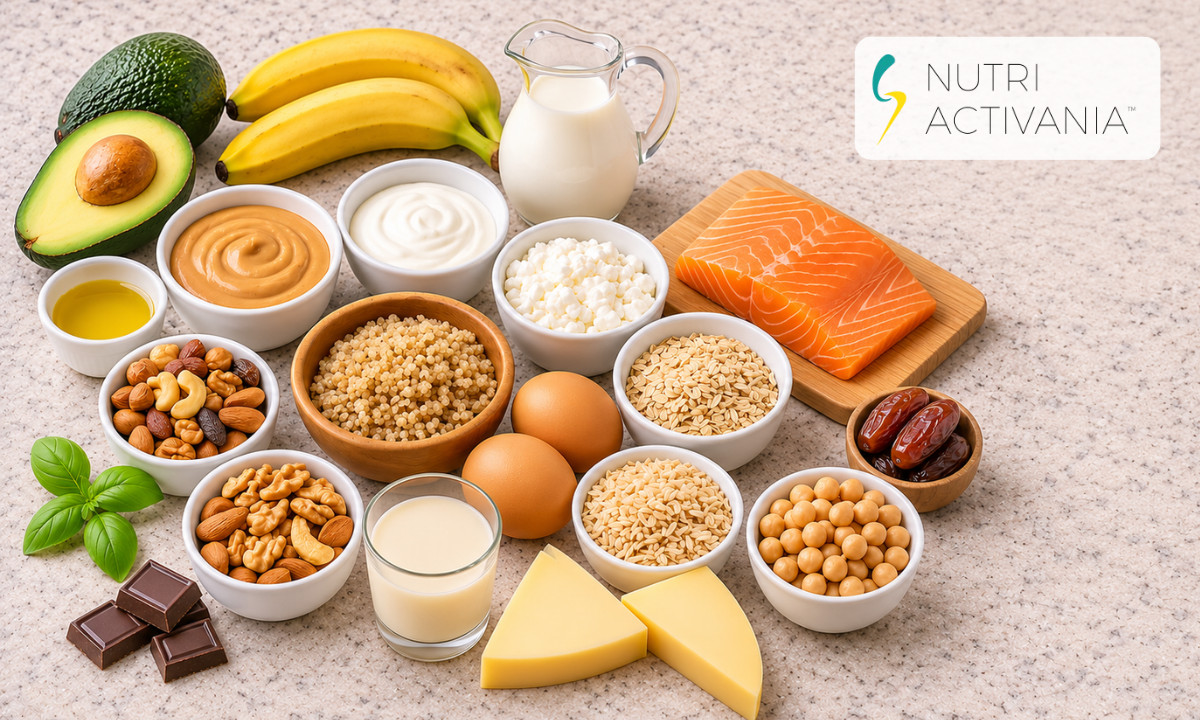
A sensible weight gaining foods list is built around nutrient-dense foods eaten in slightly larger portions, not deep-fried snacks and sweets. Avni Kaul, Founder of Nutri Activania and a practising dietitian in Delhi with over 12 years of experience, works with underweight adults, people recovering from illness, and gym-goers who want to add muscle. The approach that works is a modest calorie surplus of 250 to 500 kcal per day, protein at every meal, three main meals plus two or three snacks, and strength training two or three times a week.
This guide gives you a 25-food list across the main food groups, portion ideas for each food, a sample day, and the common mistakes to avoid.
Medical note: Sudden or unexplained weight loss, loss of appetite, or difficulty swallowing should be checked by a doctor before you start a weight-gain plan. People with diabetes, thyroid disorders, kidney disease or digestive conditions should work with a dietitian so the plan fits their health needs.
Key Takeaways
- Healthy weight gain is usually 0.25 to 0.5 kg per week.
- Aim for a daily calorie surplus of about 250 to 500 kcal above your maintenance needs.
- Eat three balanced meals plus two or three snacks across the day.
- Meet your individual protein needs. ICMR-NIN’s general adult RDA is about 0.83 g per kg of body weight; people who train regularly and aim to preserve or build muscle may benefit from a higher intake, individualised with a dietitian.
- Choose nutrient-dense foods: milk, curd, paneer, dal, eggs, nuts, seeds, whole grains, bananas, potatoes, chicken, fish.
- Avoid building the plan around fried foods, sweets and sugary drinks.
How Much Should You Eat to Gain Weight Safely?
A rough guide for adults who want to gain weight:
| Activity level | Maintenance calories | Possible starting range for weight gain |
|---|---|---|
| Sedentary (desk job, little exercise) | 1,800 to 2,200 kcal | 2,100 to 2,500 kcal |
| Lightly active | 2,000 to 2,500 kcal | 2,300 to 2,800 kcal |
| Moderately active (regular gym) | 2,300 to 2,800 kcal | 2,600 to 3,200 kcal |
| Very active or heavy training | 2,700 to 3,200 kcal | 3,000 to 3,700 kcal |
These are starting points. Adjust based on your weekly weight trend, hunger and energy levels. A gain of 0.25 to 0.5 kg per week is realistic; faster weight gain may include more fat and water retention rather than muscle.
How to Use This List
Do not try to eat all 25 foods every day. Choose two or three calorie-dense foods from different groups and add them to meals you already enjoy. For example, add peanut butter to oats, paneer to a curry, ghee to dal, or a banana smoothie between meals.
Portion note: For portion guidance, 1 bowl means approximately 150 to 200 ml, and 1 cup means approximately 200 ml. Actual calories vary with the food, brand, oil, ghee, sugar, and cooking method.
Weight Gaining Foods List: 25 Healthy Indian Options
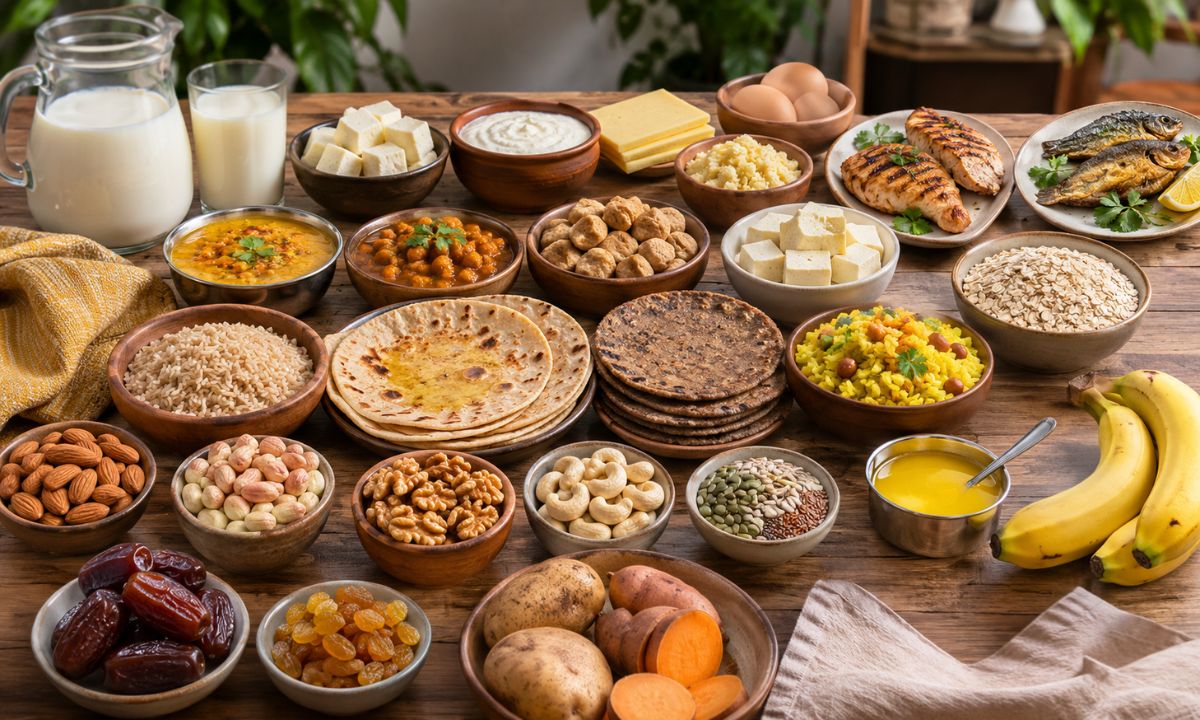
The list below is grouped by food category. Pick two to three items from each group across the week.
High-Calorie Dairy
1. Full-fat milk: A glass of full-fat milk provides around 150 kcal, 8 g of protein, calcium and vitamin B12. Two glasses a day is a simple way to add calories.
2. Paneer: 100 g of paneer offers around 265 kcal and 18 g of protein. Add to sabzi, parathas, wraps or scramble with vegetables.
3. Curd (whole milk): A bowl of full-fat curd provides around 100 kcal and 5 to 6 g of protein, with calcium and probiotics. Use with meals or in smoothies.
4. Cheese: A 30 g slice of cheese provides about 110 kcal and 7 g of protein. Add to toast, parathas or sandwiches.
5. Khoya: 25 g of khoya provides around 100 kcal and useful protein. Use in moderation in homemade sweets or stuffed parathas.
High-Protein Foods for Muscle Gain
6. Eggs: Two whole eggs provide about 150 kcal and 12 g of high-quality protein. Boiled, scrambled, omelette or egg curry all work.
7. Chicken: 100 g of cooked chicken breast gives around 165 kcal and 30 g of protein. Thigh pieces supply more calories per gram.
8. Fish: Fatty fish such as mackerel or sardineprovidees around 180 to 200 kcal per 100 g, with protein and omega-3 fats.
9. Dal and pulses: A bowl of dal, rajma, chole or chana provides around 180 to 220 kcal and 8 to 10 g of protein. Easy to combine with rice or chapati.
10. Soya chunks: 50 g dry soya chunks offer around 170 kcal and 25 g of protein once cooked. Add to curries or stir-fries.
11. Tofu: 100 g of tofu provides around 145 kcal and 15 g of protein. Useful for vegetarians and vegans.
Energy-Dense Whole Grains
12. Oats: A bowl of oats made with milk, nuts and banana provides around 350 to 450 kcal. Add peanut butter to boost calories further.
13. Brown rice: One cup of cooked brown rice is roughly 215 kcal. Pair with dal, curd and vegetables.
14. Chapati with ghee: A chapati brushed with 1 tsp ghee adds around 120 to 150 kcal. Two to three per meal is reasonable.
15. Millets: Ragi, jowar, bajra and foxtail millet offer energy, fibre and minerals. One roti is around 100 to 120 kcal.
16. Poha and upma: A bowl of poha or upma with peanuts and vegetables provides around 300 to 400 kcal, depending on oil and ghee.
Nuts, Seeds and Healthy Fats
17. Almonds: 28 g (around 23 almonds) provides about 165 kcal, 6 g of protein and vitamin E. Soak overnight if you prefer.
18. Peanuts and peanut butter: 30 g of peanuts offers about 170 kcal and 7 g of protein. 1 tbsp peanut butter adds around 95 kcal to toast or smoothies.
19. Walnuts: 28 g provides around 185 kcal and plant-based omega-3 fats.
20. Cashews: 28 g provides around 160 kcal and useful magnesium. Use in curries and stir-fries.
21. Mixed seeds: 1 tbsp of pumpkin, sunflower, chia or flax seeds adds around 50 to 60 kcal plus minerals and fibre.
22. Ghee: 1 tsp of ghee provides around 45 kcal. Use for cooking, on dal, or brushed on chapati.
High-Calorie Fruits and Starches
23. Bananas: One medium banana provides around 100 to 110 kcal. Add to oats, smoothies or have as a mid-morning snack.
24. Dates and raisins: 2 Medjool dates give around 130 to 150 kcal. 1 tbsp of raisins adds around 30 to 45 kcal.
25. Potatoes and sweet potatoes: One medium potato (150 g) provides around 130 kcal; sweet potato is similar with more vitamin A. Boil, bake or add to curries rather than deep-frying.
Sticky dried fruits can cling to teeth, so rinse with water afterwards and maintain regular dental hygiene.
Weight-Gain Smoothies and Snacks for Small Appetites
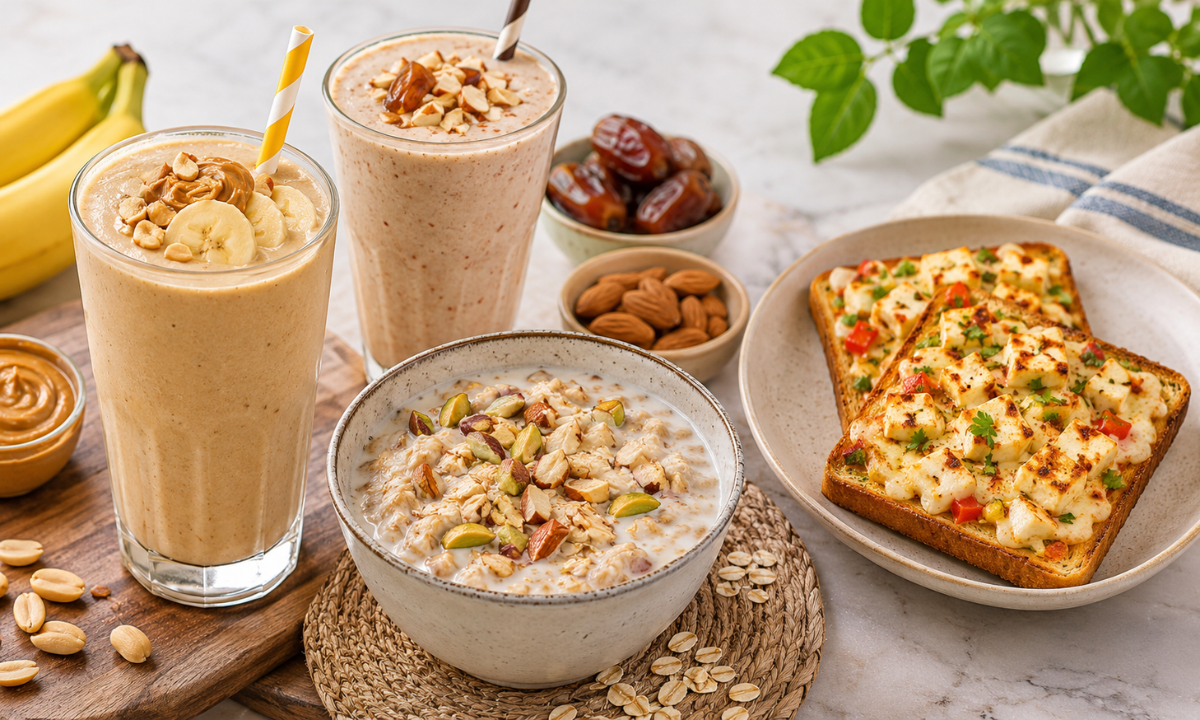
If you feel full quickly, use smaller meals and calorie-dense snacks. Smoothies, milk-based drinks, nut butters, cheese, dried fruit, and added ghee or oil can increase calories without requiring much more food volume. A few examples:
- Banana peanut butter smoothie: 1 banana, 1 tbsp peanut butter, 1 cup milk, 1 tsp mixed seeds (around 400 kcal)
- Date and almond milkshake: 1 cup milk, 2 dates, 6 almonds, 1 tsp cocoa (around 350 kcal)
- Oats with milk, 1 tbsp peanut butter and 1 banana (around 450 kcal)
- Paneer and cheese toast with 1 tsp ghee (around 350 kcal)
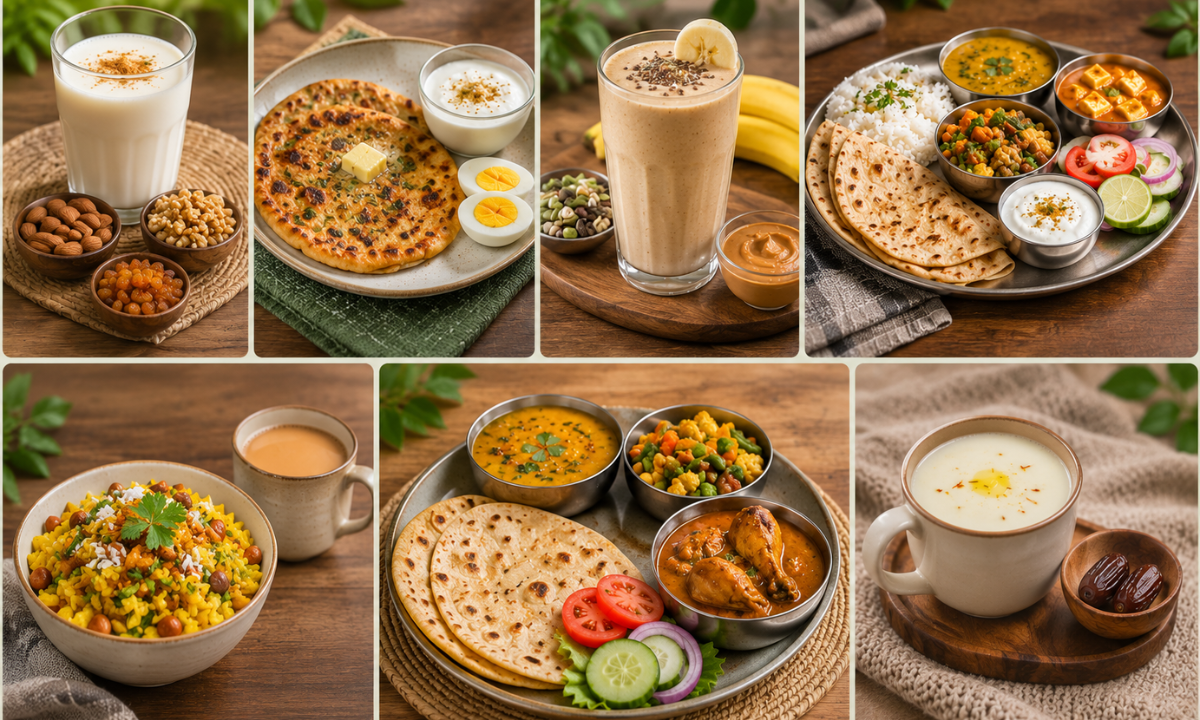
A Sample Day for Weight Gain (approx. 2,700 to 2,900 kcal)
| Meal | Food |
|---|---|
| Early morning (7:00 am) | 1 glass full-fat milk with 1 tsp dates syrup or jaggery; soaked almonds (8), 2 walnuts, 1 tbsp raisins |
| Breakfast (8:30 am) | Vegetable paratha (2) with 1 tsp ghee each; 1 bowl curd; 1 boiled egg or 50 g paneer |
| Mid-morning (11:00 am) | Banana peanut butter smoothie: 1 banana, 1 tbsp peanut butter, 1 cup milk, 1 tsp mixed seeds |
| Lunch (1:30 pm) | 2 chapatis with ghee, 1 cup rice, 1 bowl dal, 1 bowl paneer or chicken curry, 1 bowl sabzi, salad, 1 bowl curd |
| Evening (5:00 pm) | 1 bowl poha with peanuts; 1 cup masala chai (with full-fat milk) |
| Dinner (8:30 pm) | 2 chapatis, 1 bowl dal, 1 bowl mixed vegetables, 1 bowl chicken curry or soya chunks curry, salad |
| Before bed (10:00 pm) | 1 cup warm milk with 1 tsp ghee and 2 soaked dates (optional) |
Adjust portions up or down based on hunger, activity and weekly weight trend.
Vegetarian Foods for Weight Gain
Vegetarian core: full-fat milk, paneer, curd, dal, rajma, chole, soya chunks, tofu, eggs (ovo-vegetarians), nuts, seeds, bananas, dates, ghee, peanut butter.
Non-vegetarian add-ons: eggs, chicken (breast and thigh), fish (including fatty varieties), lean mutton in moderation.
Vegan options: soya chunks, tofu, soy milk, peanut butter, nuts, seeds, legumes, oats cooked in plant milk. Vegans should also plan reliable sources of calcium, iodine, and omega-3 fats, alongside vitamin B12 and vitamin D.
Foods and Habits to Limit
A weight-gain plan should not be an excuse for junk food. The following add calories but hurt long-term health:
- Deep-fried items as daily snacks (samosas, pakoras, bhujia, chips)
- Sugary soft drinks, packaged juices and sweetened energy drinks
- Processed meats and ready-to-eat meals
- Mithai and bakery products as the main source of extra calories
- Alcohol, which adds calories and may make it harder to meet nutrient needs
- Skipping meals and then overeating at one sitting
Lifestyle Habits That Help You Gain Weight Well

A food list only works if the daily routine supports it:
- Strength training: two to three sessions a week. Without resistance training, a larger share of weight gained may be fat rather than muscle. Strength training can help support muscle gain when combined with adequate calories and protein.
- Sleep: sleep supports recovery, appetite regulation, training performance, and overall health. Aim for 7 to 9 hours per night.
- Steady eating pattern: three meals plus two or three snacks, roughly every 2.5 to 3 hours.
- Hydration: drink regularly through the day, but avoid filling up on water right before meals.
- Stress and digestion: chronic stress and poor digestion can suppress appetite; address both with your dietitian or doctor if they are affecting your intake.
How Fast Should You Gain Weight?
A gradual gain of 0.25 to 0.5 kg per week is both safer and more sustainable than rapid gain. Track weekly averages rather than daily figures, which fluctuate with hydration, meal timing and bowel habits. Give the plan 12 to 16 weeks before judging results.
Common Mistakes to Avoid
- Relying on fried foods, mithai and bakery items for extra calories
- Skipping breakfast and trying to make up at dinner
- Drinking large amounts of water before meals, which reduces appetite
- Expecting more than 0.5 kg of gain per week
- Weighing yourself daily and reacting to normal fluctuations
- Taking weight-gain supplements without checking for added sugars, fillers or unverified ingredients
When to Consult a Dietitian
See a qualified dietitian if you are significantly underweight, have been unable to gain weight despite consistent effort for 8 to 12 weeks, or have a medical condition (diabetes, thyroid issues, PCOS, IBS, hyperthyroidism, cancer recovery, or any digestive disorder) that affects appetite or absorption. A tailored plan built around your calories, protein, meal timing and medical history works better than a generic list. Book a consultation with Avni Kaul at Nutri Activania for a personalised plan.
For related reading, see our guides on high calorie foods for weight gain and Indian diet plan for weight loss: what a balanced day can look like.
Conclusion
A good weight gaining foods list is built on nutrient-dense staples eaten in slightly larger portions, with protein at every meal and strength training to turn those extra calories into muscle. Aim for a 250 to 500 kcal daily surplus, build the day around milk, dal, paneer, eggs, chicken or soya, nuts, bananas, oats and whole grains, and limit the fried-and-sugary route. Expect 0.25 to 0.5 kg of gain per week, and give the plan 12 to 16 weeks before judging results.
Frequently Asked Questions
How quickly can I gain weight safely?
A healthy rate is 0.25 to 0.5 kg per week, or roughly 1 to 2 kg per month. Faster weight gain may include more fat and water retention rather than muscle.
Which Indian foods help with weight gain?
Full-fat milk, paneer, curd, dal, rajma, chole, soya chunks, eggs, chicken, fish, oats, rice, chapati with ghee, poha, bananas, dates, almonds, peanuts and ghee are among the most useful options.
How much protein do I need to gain muscle?
The ICMR RDA for healthy adults is about 0.83 g per kg of body weight per day. Adults who are physically active and aiming to gain muscle may benefit from a higher intake, often around 1.2 to 1.6 g/kg/day, depending on training, health status, and overall diet.
Should I take mass gainers or weight gain supplements?
Food should come first. Many commercial mass gainers are high in added sugar. If you struggle to eat enough, a simple homemade shake with milk, banana, peanut butter and oats usually does the job. Discuss supplements with a dietitian or doctor.
Can I gain weight without going to the gym?
You will gain weight from eating a surplus, but without strength training a larger share of the gain may be fat rather than muscle. Even bodyweight workouts at home help the result be muscle rather than only fat.
Are bananas good for weight gain?
Yes. Bananas are easy to eat, portable, and provide around 100 to 110 kcal each. Pair with milk, curd or peanut butter for more calories and protein.
Why am I not gaining weight even though I eat a lot?
Possible reasons include undereating relative to your actual needs, high daily activity, poor sleep, stress, undiagnosed thyroid issues, diabetes, digestive disorders or malabsorption. A dietitian or doctor can help identify the cause.
Important Disclaimer
This content is for informational and educational purposes only. It does not constitute medical or dietary advice. Please consult a qualified healthcare professional or registered dietitian before making changes to your diet or nutrition plan, especially if you are significantly underweight or managing a medical condition.
Sources
- Indian Council of Medical Research, National Institute of Nutrition. Dietary Guidelines for Indians, 2024.
- US Department of Agriculture. FoodData Central.
- UK National Health Service. Healthy Ways to Gain Weight.
- Mayo Clinic. Underweight: Add Pounds Healthfully.
- Harvard T.H. Chan School of Public Health. The Nutrition Source: Healthy Weight.