
Struggling to gain weight even after eating more than usual? A weight gain high calorie foods chart takes the guesswork out of it by showing exactly which foods give you the most calories without needing huge portions. Whether you have a fast metabolism, a small appetite, or have just never managed to put on weight despite trying, the right food choices matter more than eating blindly in bulk.
This is one of the most common concerns Avni Kaul, a dietician for weight gain in Delhi, hears from clients who feel stuck despite eating more. This guide covers the best high-calorie foods for weight gain, how much of each you need, common mistakes that slow progress, and a simple chart to refer to when planning your meals.
Why a High-Calorie Foods Chart Helps

Most people trying to gain weight simply eat larger portions of whatever they already eat. This works up to a point, but it is slow and often uncomfortable, since it means forcing down more rice or roti than your appetite naturally allows.
A better approach is choosing naturally calorie-dense foods, so you get more calories from a smaller, more manageable portion. This is exactly what a high-calorie foods chart is meant to do: help you swap low-density foods for higher-density ones without needing to eat significantly more volume.
This matters especially for people who are naturally light eaters, have a fast metabolism, or have struggled with low appetite for years. Instead of forcing three oversized meals, the goal becomes eating smarter within the appetite you already have.
What Makes a Food “High Calorie” for Weight Gain
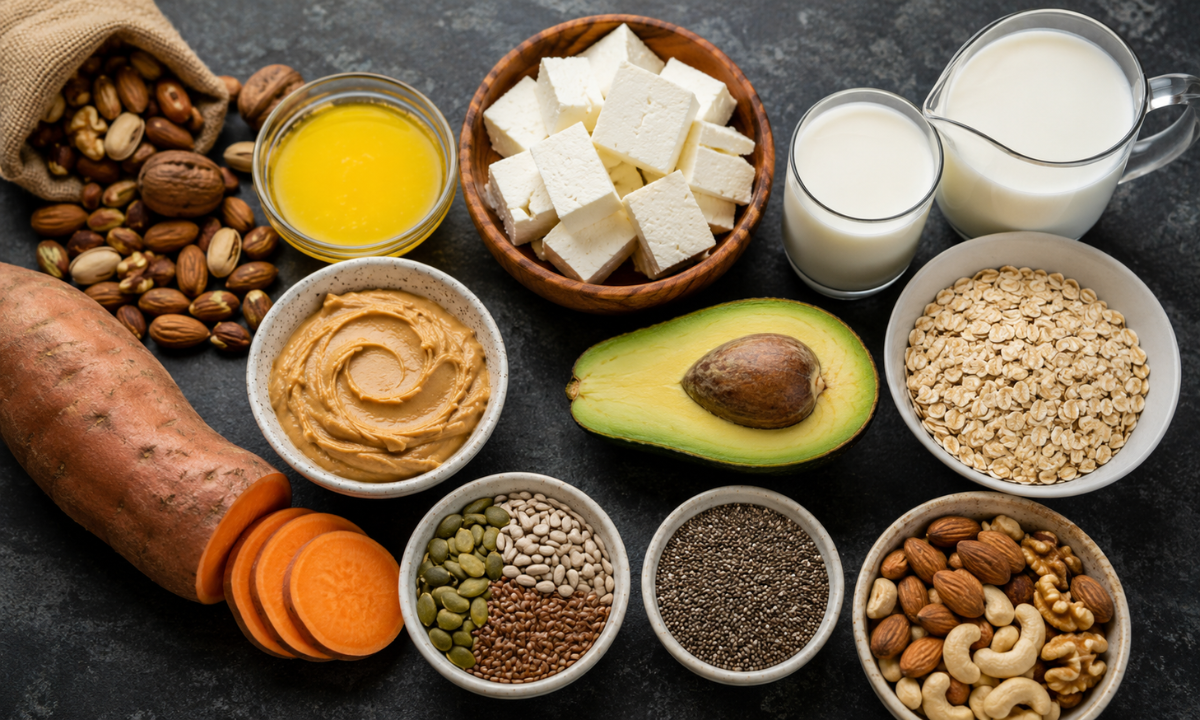
Not all high-calorie foods are equally useful. The best choices combine calories with genuine nutrition, rather than empty calories from sugar or fried food that add weight without supporting overall health.
Healthy Fats
Fats provide more than double the calories per gram compared to protein or carbohydrates, making them one of the most efficient ways to increase calorie intake without eating large portions. Sources like nuts, seeds, ghee, and avocado are calorie-dense while also supporting hormone health and nutrient absorption.
Complex Carbohydrates
Carbohydrates from whole grains, rice, and starchy vegetables provide steady energy and are usually easier to eat in larger quantities than fats or protein alone. These also help fuel workouts if strength training is part of your weight gain plan.
Protein-Rich Foods
Protein supports muscle growth alongside weight gain, which matters if the goal is healthy weight rather than just a higher number on the scale. Without enough protein, extra calories are more likely to be stored as fat rather than contributing to lean mass.
Why It Helps: This chart is meant as a general reference. Actual calorie needs vary depending on your age, current weight, and activity level, which is why a structured plan usually works better than guessing from a generic chart alone.
How to Use This Chart in Your Daily Diet
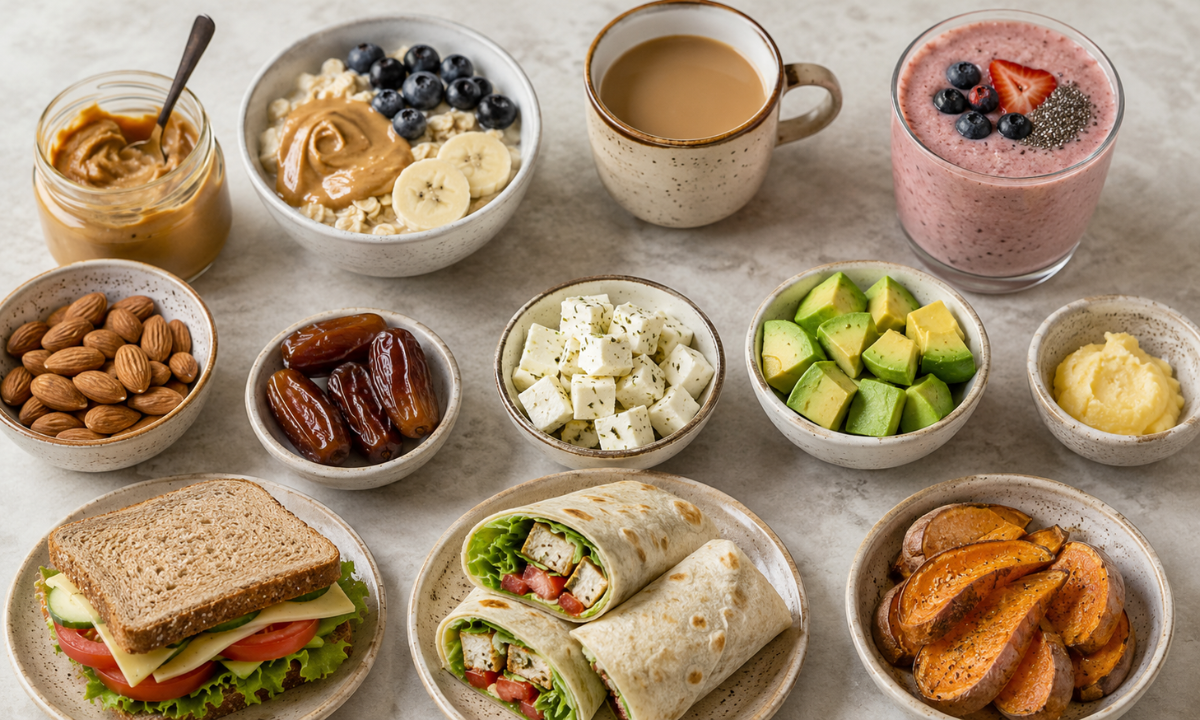
The easiest way to use this chart is to add two or three of these foods into meals you already eat, rather than overhauling your entire diet.
- Add a tablespoon of peanut butter or ghee to your breakfast
- Swap regular milk for whole milk in tea, coffee, or smoothies
- Add a handful of almonds or dates as a mid-morning snack
- Include paneer or avocado in at least one meal a day
- Add cheese to sandwiches or wraps instead of leaving them plain
- Choose sweet potato over regular potato occasionally for variety and added nutrients
Small, consistent additions like these add up to a meaningful calorie surplus over a week, without making any single meal feel overwhelming. The idea is not to add an entirely new meal, but to make your existing meals slightly more calorie-dense.
Sample Day Using the Chart
To make this more practical, here is what a single day might look like using foods from the chart above:
- Breakfast: Oats cooked in whole milk, topped with a banana and a spoon of peanut butter
- Mid-morning snack: A handful of almonds and two dates
- Lunch: Regular meal with an added portion of paneer or cheese
- Evening snack: Full-fat yoghurt with fruit
- Dinner: Regular meal with sweet potato instead of regular potato, cooked in ghee
This is only an example, and actual meals should be adjusted based on your regular diet, food preferences, and any dietary restrictions.
Common Mistakes When Trying to Gain Weight
Relying on Fried and Processed Foods
Fried snacks and processed foods are calorie-dense but offer little nutritional value and can lead to unhealthy weight gain concentrated as fat rather than lean mass. These foods are also harder on digestion over time compared to whole food sources.
Eating Randomly Instead of Consistently
A single high-calorie meal here and there does not create the sustained surplus needed for weight gain. Consistency across most days of the week matters far more than any one meal, since weight gain is a gradual process built on daily habits rather than occasional effort.
Ignoring Protein Intake
Focusing only on calorie-dense foods without enough protein can result in weight gain without proportional muscle growth, which affects overall body composition and strength. This is one of the most common gaps in self-designed weight gain plans.
Not Tracking Progress
Many people assume they are eating enough simply because they feel full, without actually tracking whether their weight is changing over time. Weighing yourself weekly and adjusting portions accordingly helps confirm whether your current plan is working.
Should You See a Dietician for Weight Gain
While a chart like this is a useful starting point, actual calorie and nutrient needs differ from person to person based on metabolism, medical history, and activity levels. This is where working with a dietician for weight gain in Delhi like Avni Kaul makes a meaningful difference, since a personalised plan accounts for these factors rather than applying a one-size-fits-all chart.
A dietician can also identify underlying reasons weight gain has been difficult, such as digestive issues, thyroid function, or stress-related appetite loss, none of which a generic chart can address on its own.
Avni Kaul, a dietician in Delhi, has worked with a wide range of clients, from adults trying to gain weight healthily to parents looking for a dietician for kids in Delhi to address slow growth or poor appetite in children. Having one dietician handle cases across age groups and goals means the underlying approach, sustainable habits over quick fixes, stays consistent regardless of who the plan is built for.
Conclusion
Healthily gaining weight comes down to choosing calorie-dense foods that also support overall nutrition, rather than simply eating more of everything. The chart above gives a practical starting point, and small, consistent additions to your existing meals matter more than following it perfectly or overhauling your entire diet overnight. If progress is slow despite eating well, working with a dietician and nutritionist in Delhi can help identify exactly where your plan needs adjusting, whether that is calorie intake, protein balance, or an underlying issue affecting your appetite.
Avni Kaul brings this personalised approach to every client, tailoring guidance to individual needs rather than relying on a generic plan.
Frequently Asked Questions
What is the fastest way to gain weight with high-calorie foods?
Adding calorie-dense foods like peanut butter, whole milk, and nuts to your existing meals is usually more effective and sustainable than trying to eat significantly larger portions of your regular food.
Are high-calorie foods bad for health?
Not if chosen carefully. Nutrient-dense high-calorie foods like avocado, paneer, and nuts support healthy weight gain, while relying mainly on fried or processed foods can lead to unhealthy weight gain.
How many extra calories do I need per day to gain weight?
This varies by individual, but a moderate surplus of 300 to 500 calories above your daily requirement is a common starting point for gradual, healthy weight gain.
Can children benefit from a high-calorie foods chart too?
Yes, though portion sizes and food choices need to be adjusted for a child’s age and needs, which is why parents dealing with slow weight gain in children often consult a dietician rather than applying an adult chart directly.
How long does it take to see results from eating high-calorie foods?
Most people notice gradual weight gain over four to eight weeks of consistent daily intake, provided the calorie surplus is maintained alongside adequate protein and rest.
Should I combine this chart with exercise?
Yes, particularly strength training, since it helps ensure the extra calories contribute to muscle mass rather than only fat gain, resulting in healthier and more proportional weight gain overall.



