
12+ Years
15,000+
300+
Saket, Delhi
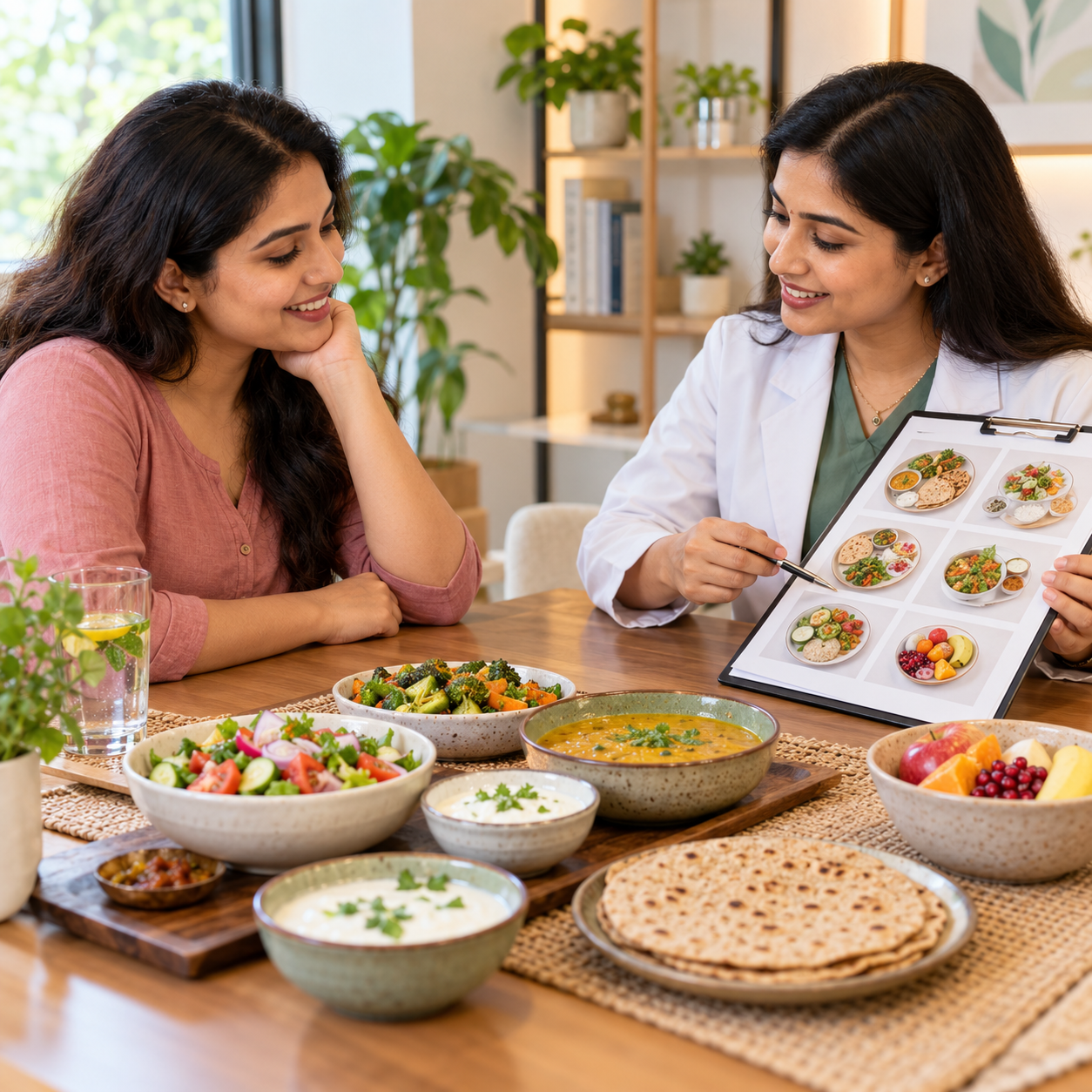
Yes. Weight loss does not require replacing Indian food with a completely different style of eating. A balanced Indian diet can include familiar foods while paying attention to portions, meal composition, protein, vegetables, fibre and overall eating patterns.
The right approach depends on your individual needs, preferences, lifestyle and health considerations. The aim is to make your food routine practical enough to continue over time.
Build meals around foods you already know and enjoy instead of depending on complicated diet recipes.
Learn how to combine carbohydrates, protein, vegetables and healthy fats in appropriate portions.
Review sleep, stress, eating patterns and daily routines that may affect consistMake room for social meals, favourite foods and eating outside while maintaining an overall balanced pattern.ency with your plan.
Indian cuisine includes a wide range of grains, pulses, vegetables, fruits, dairy foods, nuts, seeds and protein-rich options. The challenge is often not whether Indian food can be part of weight loss, but how meals, portions, preparation methods and frequency are organized.
There is no single “weight loss food.” A balanced diet can include many traditional Indian foods when portions and the overall meal pattern are appropriate.
Instead of completely eliminating rice, roti or other carbohydrate foods, focus on building a balanced meal with appropriate portions.
Include a generous variety of vegetables where suitable.
Add dal, pulses, eggs, dairy or another preferred protein source
Include an appropriate portion of rice, roti, millet or another grain.
Use nuts, seeds or cooking fats in sensible amounts.
Indian meals can be nutritious, but portion sizes, preparation methods, frequent snacks and calorie-dense additions can make weight management difficult.
Even nutritious foods can contribute to excess energy intake when portions are consistently larger than needed.
Frequent fried foods and generous amounts of cooking oil can substantially increase meal energy density.
Biscuits, namkeen, sweets and other snacks can add up when eaten frequently throughout the day.
Sugary drinks and other calorie-containing beverages can make it harder to manage total intake.
Frequent restaurant meals and larger portions on weekends can offset otherwise consistent weekday habits.
Long gaps followed by very large meals can make it harder for some people to manage hunger and portions.

Hi, I’m Avni Kaul Best Dietician in Delhi, the founder of Nutri Activania. I’ve spent over 12 years as a clinical nutritionist. I hold a B.Sc. and M.Sc. in Food & Nutrition from Lady Irwin College, University of Delhi — where I was awarded the Gold Medal for academic excellence. I have also worked as a dietician in the Endocrinology Department at Max Hospital.
I’ve also worked as a dietician in the Endocrinology Department at Max Hospital.
Over the years, I’ve helped thousands of people across Delhi and India improve their healthy life.
All through simple, practical, and science-based nutrition.
At Nutri Activania, I personally guide every nutrition plans. From weight loss and weight gain to diabetes, PCOS, gut, and pregnancy care.
Each plans is made just for you—based on your body, lifestyle, and goals. My approach is simple.
Focus on long-term results, not quick fixes. No strict diets. No extreme restrictions.
Just balanced nutrition, better habits, and real lifestyle changes.
You get personal support, clear guidance, and plans that actually work.
Over time, I’ve been trusted and recommended by many mM in Delhi. You can check reviews, testimonials, and real success stories online.
Weight loss does not automatically require removing individual staple foods. The suitability of a food depends on the overall eating pattern, portion, preparation and individual requirements.
| Food | Practical weight-management consideration |
|---|---|
| Rice | Can be included in suitable portions as part of a balanced meal with vegetables and protein. |
| Roti / Chapati | Can fit into a weight loss diet when portion size and the rest of the meal are considered. |
| Dosa | Can be included depending on preparation, portion and accompanying foods. |
| Idli | Can be part of a balanced meal; the overall meal composition matters. |
| Poha | Can be adapted as part of a balanced meal with suitable portions and additions. |
| Upma | Can fit within an overall balanced diet depending on preparation and portion. |
| Paratha | Can be eaten occasionally or incorporated strategically depending on ingredients, preparation and portions. |
| Dal | A useful source of plant protein and can be part of many balanced Indian meals. |
Plan office-friendly meals, snacks and eating-out choices around your work schedule.
Build a routine that works with family meals, cooking responsibilities and household schedules.
Use practical options for hostel, college, canteen and irregular study schedules.
Use flexible strategies for restaurants, hotels and changing meal timings.
Build meals around suitable plant and dairy protein sources according to individual preferences.
Learn how to make sensible portions and choices without preparing completely separate food.
Review your meals, activity, work schedule, sleep and eating patterns.
Understand appropriate portions for staple foods, protein, vegetables, snacks and calorie-dense foods.
Identify practical alternatives when a preferred food is unavailable or does not fit the planned meal.
Plan how to approach restaurants, celebrations, family functions and food delivery.
Reduce unplanned eating by preparing suitable snack options for your appetite and schedule.
Review progress and adjust the plan when your lifestyle, preferences or goals change.
Discuss your goals, current eating habits, food preferences, lifestyle and routine.
Review relevant dietary and lifestyle factors to understand where practical changes may help.
Create a meal structure using foods and eating patterns that suit your individual needs.
Follow the plan while learning practical strategies for portions, snacks and meals outside the home.
Discuss progress, challenges and adherence to identify what is working and what needs adjustment.
Adapt the nutrition strategy as your routine, goals or requirements change.
A sustainable Indian weight loss approach can involve more than changing individual foods. Daily movement, sleep, hydration, stress, meal timing and consistency can all be considered as part of the bigger picture.
Build realistic opportunities for movement into your regular day.
Maintain a consistent sleep routine where possible and consider how your schedule affects eating habits.
Maintain adequate fluid intake according to your individual needs.
Looking for Weight Loss Support with Indian Food in Delhi?
Speak with Dietitian Avni Kaul at Nutri Activania for personalised nutrition guidance tailored to your food preferences, lifestyle, weight-loss goals, body composition, and individual nutritional needs.
Yes. Indian food can be part of a weight loss diet. The overall pattern, portions, preparation methods, protein, vegetables and total intake are important considerations.
Not necessarily. Rice can be included in suitable portions as part of a balanced eating pattern. Individual requirements should be considered when planning portions.
Roti or chapati can fit into many weight loss diets. The amount and the rest of the meal should be considered as part of the overall eating pattern.
There is no single best food for weight loss. A balanced combination of protein sources, vegetables, suitable carbohydrates, fruits and healthy fats can be more useful than focusing on one food.
These foods can be included depending on the preparation, portion and what they are eaten with. A personalized plan can help determine how they fit your overall diet.
Sweets can be addressed as part of an overall flexible eating pattern. Frequency, portion and the rest of the day’s intake should be considered.
Yes. A vegetarian plan can be structured around suitable protein sources, vegetables, grains, fruits, dairy foods and other preferred foods based on individual requirements.
Yes. Meals can be adapted for office lunches, meal preparation, food delivery, travel and irregular work schedules.
If you are looking for a weight loss dietician in Delhi who can help you continue eating familiar Indian foods, a personalized approach can make the process more practical. Your plan can consider your daily routine, food preferences, meal timings, eating-out habits and weight-management goals.
Whether you live in Delhi, work in the city or have a busy schedule that makes regular meal planning difficult, the focus can be on realistic food choices that fit your routine.
Build your nutrition routine around work, commuting, family meals and your everyday schedule in Delhi.
Use familiar Indian meals and ingredients rather than depending on a completely unfamiliar diet.
Work with Dietician Avni Kaul to develop an approach based on your individual nutrition and lifestyle needs.
Book a Consultation with Dietician Avni Kaul
For Weight Loss With Indian Food in Delhi, contact Nutri Activania to discuss your nutrition goals and consultation options.
Phone: +91 99532 28642
Email: info@nutriactivania.com
Address: M-65, Saket Rd, near HDFC Bank, Block M, Saket, New Delhi, Delhi 110017, India
Consultation timings listed by Nutri Activania: Monday–Saturday, 10 AM–7 PM.


 Trustindex verifies that the original source of the review is Google.
 Trustindex verifies that the original source of the review is Google.
 Trustindex verifies that the original source of the review is Google.
 Trustindex verifies that the original source of the review is Google.
 Trustindex verifies that the original source of the review is Google.
 Trustindex verifies that the original source of the review is Google.
 Trustindex verifies that the original source of the review is Google.
 Trustindex verifies that the original source of the review is Google.
 Trustindex verifies that the original source of the review is Google.
Join 500+ Delhi clients” + 5‑star reviews
“Join 500+ Delhi clients” + 5‑star reviews & 15,000+
Happy Members and growing

