
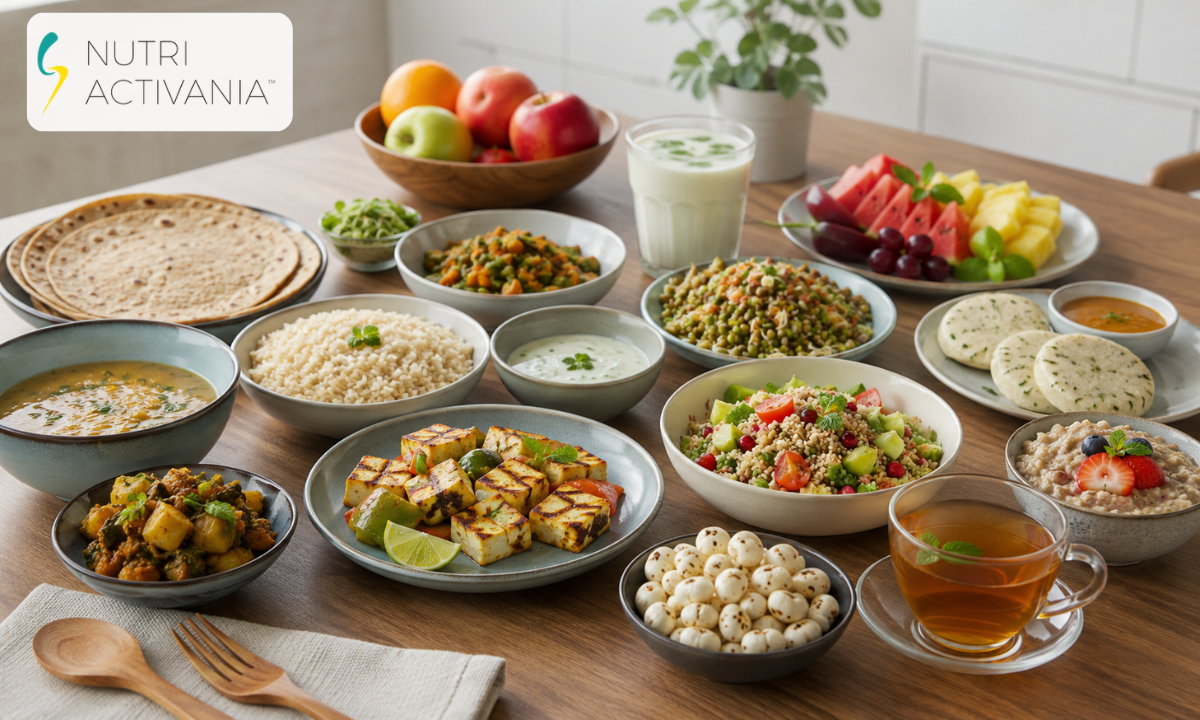
This 7-day Indian diet plan is a practical sample for generally healthy adults who want to organise familiar foods such as rice, roti, dal, idli, poha, paneer, eggs, chicken and fish into balanced meals. It includes approximate portions, recipe-based nutrition estimates, vegetarian and non-vegetarian swaps, meal-prep ideas and eating-out guidance.
It is not a universal 1,500-calorie prescription. Energy needs vary according to body size, age, sex, activity, medical history, medication and individual goals. You can use our BMI calculator or weight loss calculator as general starting-point tools, not as a substitute for personalised assessment. Use the chart as a framework, not as a substitute for personalised nutrition advice.
Written by Dietician Avni Kaul
Dietician and Nutritionist
B.Sc. and M.Sc. in Food & Nutrition, Lady Irwin College, University of Delhi
Gold Medal for academic excellence
12+ years of clinical nutrition experience
Quick Answer
A practical 7-day eating plan for weight loss can include everyday Indian foods such as dal, roti, rice, vegetables, curd, eggs, paneer, tofu, chicken, fish and whole fruit. The aim is not to eliminate rice or roti, but to build meals around suitable portions, protein-rich foods, vegetables and an eating pattern you can maintain.
The nutrition values in this article are estimates based on the ingredient and portion assumptions stated below. They are not laboratory measurements and should not be treated as an individual prescription.
Who This 7-Day Plan Is For
This sample plan is intended for generally healthy adults seeking a structured way to organise Indian meals. It is not designed to diagnose or treat a medical condition, and it does not establish an individual calorie target.
Important: This sample Indian diet plan is for general educational purposes only and is not a personalised prescription. Portion sizes, meal timing and food choices should be adjusted based on age, activity level, health conditions, medications, food preferences and individual weight-management goals.
People who are pregnant or breastfeeding, children and adolescents, people recovering from major surgery, or people experiencing significant unintentional weight loss should seek individual guidance before making major dietary changes. People managing diabetes, thyroid disease, PCOS, kidney or liver disease, gastrointestinal conditions, gallstones, food allergies or an eating disorder should seek individual guidance before making major dietary changes. People who develop severe nausea or vomiting while taking weight-loss medication should contact their prescribing clinician.
How an Indian Diet Can Support Weight Loss
Weight management depends on overall energy intake and expenditure, but the most appropriate eating pattern differs between people. WHO describes healthy diets in terms of adequacy, balance, moderation and diversity, with needs influenced by individual and cultural context.
For an Indian eating pattern, that can mean using vegetables, pulses, whole grains, fruit, dairy or suitable alternatives and protein foods while keeping portions, cooking fats, added sugars and highly processed foods appropriate for the individual. The ICMR-NIN Dietary Guidelines for Indians 2024 also emphasise dietary variety, healthy eating and related lifestyle factors.
A simple meal-building formula
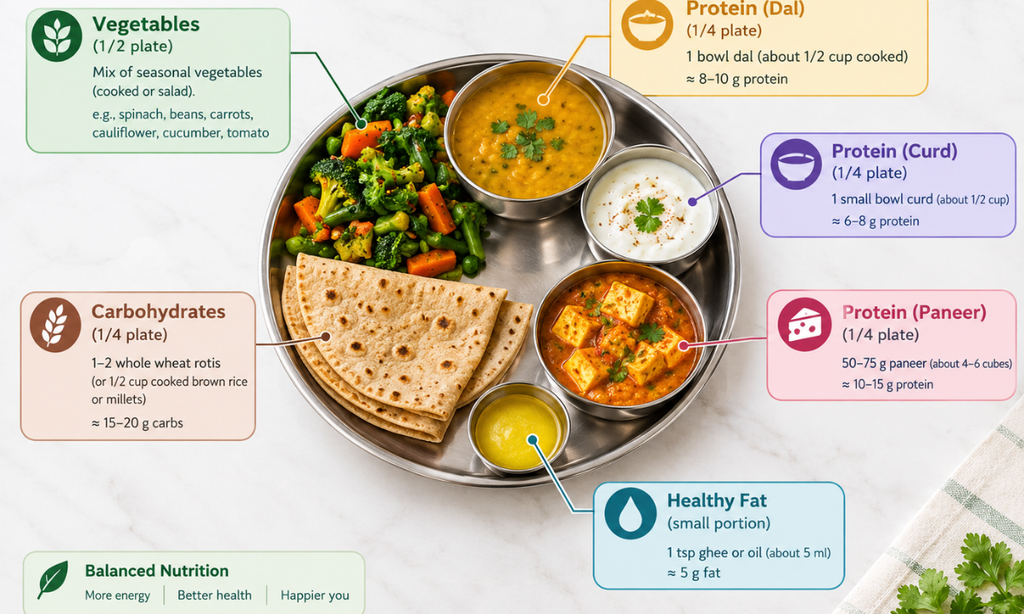
- Protein: dal, rajma, chana, soy, tofu, paneer, curd, eggs, chicken or fish.
- Vegetables: leafy greens and a variety of seasonal vegetables.
- Carbohydrates: roti, rice, oats, poha, daliya, idli, dosa, millet and other grain-based foods in suitable portions.
- Fruit: whole fruit as part of the day’s overall eating pattern.
- Fat: measured cooking oil, nuts and seeds rather than unlimited portions.
7-Day Indian Diet Chart: Week at a Glance
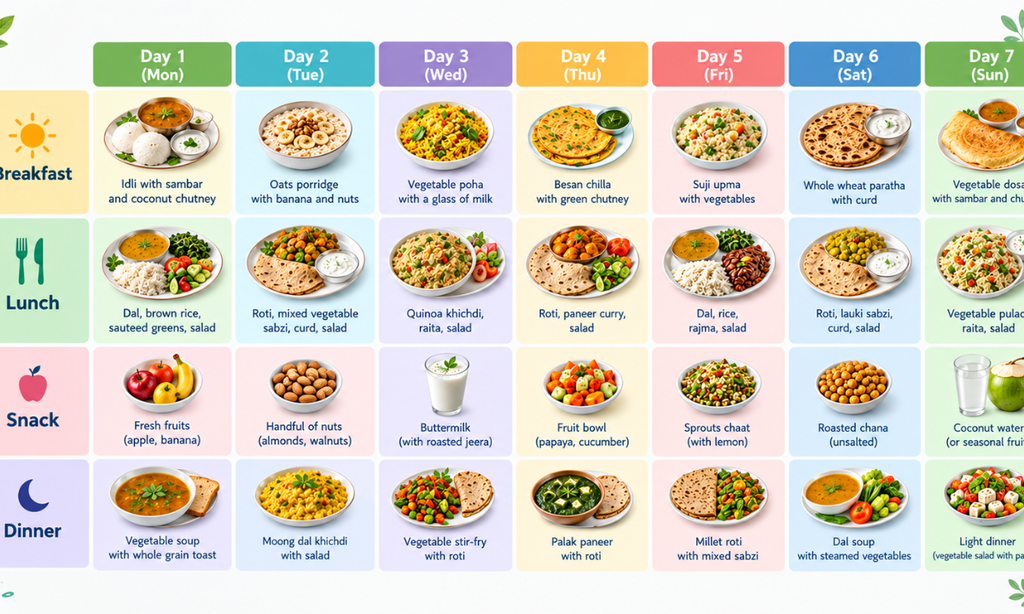
Important: The nutrition ranges in this table describe the sample recipes only. They are not a recommended calorie target and may not provide enough or appropriate energy for a particular person.
The overview provides a quick comparison. The detailed sections below explain the portions, recipe assumptions and available substitutions.
| Day | Breakfast | Lunch | Snack | Dinner | Estimated nutrition for these recipes* |
| 1 | Moong chilla + curd | Roti + dal + palak + salad | Guava + roasted chana | Paneer/tofu or chicken/fish + soup + small roti | ~1,400–1,600 kcalProtein varies by selected option |
| 2 | Vegetable poha + curd | Rice + rajma + vegetables | Buttermilk + almonds | Roti + paneer/tofu or chicken/fish + vegetables | ~1,400–1,600 kcalProtein varies by selected option |
| 3 | Oats-moong idli + sambar | Roti + bhindi + dal + curd | Apple + roasted chana | Moong dal khichdi + curd + vegetables | ~1,400–1,600 kcalProtein varies by recipe |
| 4 | Besan chilla + curd | Roti + lauki/chana dal + salad | Guava + mixed nuts | Paneer/tofu or grilled chicken/fish + vegetables + small roti | ~1,400–1,600 kcalProtein varies by selected option |
| 5 | Vegetable upma + eggs/tofu | Roti + dal + sabzi + curd | Coconut water + roasted chana | Egg/paneer/tofu bhurji + salad + small roti | ~1,400–1,600 kcalProtein varies by selected option |
| 6 | Methi paratha + curd | Rice + chole + salad | Buttermilk + nuts | Chicken/fish or tofu + vegetables + small roti | ~1,450–1,650 kcalProtein varies by selected option |
| 7 | Vegetable daliya + curd | Roti + mixed vegetables + dal | Fruit + roasted makhana | Vegetable khichdi + curd + vegetables | ~1,400–1,600 kcalProtein varies by recipe |
*These are planning estimates for the sample recipes, not laboratory-tested values. Actual nutrition varies with ingredient brands, recipe method, oil and portion size.
Detailed 7-Day Meal Plan
The detailed examples below use defined portions so readers can reproduce the meal structure. Where an ingredient has a large nutritional variation, such as paneer versus tofu or chicken versus fish, the alternatives are shown separately instead of being treated as identical foods.
Day 1: Moong Chilla, Dal and Tofu/Paneer
Breakfast: 60 g dry split moong dal, soaked and blended into 2 medium chillas; 5 g oil for cooking; 100 g plain curd; mint chutney without added sugar.
Lunch: 2 medium rotis made using 60 g whole-wheat flour in total; 1 medium katori cooked dal (approximately 150 ml); 1.5 cups palak sabzi using 5 g oil; cucumber-tomato salad.
Snack: 1 medium guava; 25 g roasted chana.
Dinner — vegetarian: 100 g regular paneer tikka or 120 g firm tofu tikka; 2 cups vegetable soup made without cream or noodles; 1 small roti.
Dinner — non-vegetarian: 120 g cooked grilled chicken or fish; 2 cups vegetable soup; 1 small roti.
Estimated nutrition for this recipe pattern: approximately 1,400–1,600 kcal. Protein varies by the selected protein, curd and recipe.
Day 2: Poha, Rajma and Paneer/Tofu
Breakfast: 60 g dry poha; mixed vegetables; 10 g peanuts; 5 g oil; 150 g plain curd.
Lunch: 1 cup cooked rice (approximately 150–160 g); 1 medium katori cooked rajma (approximately 150 ml); 1 cup mixed vegetables; salad.
Snack: 250 ml plain buttermilk; 15 g almonds.
Dinner — vegetarian: 2 medium rotis; 100 g regular paneer or 120 g firm tofu; 1.5 cups cooked vegetables; measured oil.
Dinner — non-vegetarian: 120 g cooked chicken or fish; 2 medium rotis; 1.5 cups cooked vegetables; measured oil.
Estimated nutrition for this recipe pattern: approximately 1,400–1,600 kcal. Protein varies by the selected dinner protein.
Day 3: Oats-Moong Idli, Dal and Khichdi
Breakfast recipe assumption: 2 medium idlis prepared from a batter containing approximately 40 g dry oats, 40 g dry split moong dal, 50 g mixed vegetables and water/spices, with the batter divided into 2 equal idli portions. Serve with 200 ml sambar.
Lunch: 2 medium rotis from 60 g flour in total; 1.5 cups bhindi sabzi using measured oil; 1 medium katori cooked dal; 100 g plain curd.
Snack: 1 medium apple; 25 g roasted chana.
Dinner recipe assumption: vegetable moong dal khichdi prepared from approximately 35 g dry rice + 35 g dry moong dal + 100 g mixed vegetables + 5 g oil; served with 100 g plain curd.
Estimated nutrition for this recipe pattern: approximately 1,400–1,600 kcal. Actual protein depends on the final idli batter and meal preparation.
Day 4: Besan Chilla, Chana Dal and Paneer/Tofu
Breakfast: 2 medium besan chillas made from approximately 60 g besan; vegetables; 5 g oil; 150 g plain curd.
Lunch: 2 medium rotis from 60 g flour in total; 1 medium katori lauki/chana dal; salad.
Snack: 1 guava; 15 g mixed nuts.
Dinner — vegetarian: 100 g regular paneer tikka or 120 g firm tofu tikka; 1.5–2 cups cooked vegetables; 1 small roti.
Dinner — non-vegetarian: 120 g cooked grilled chicken or fish; 1.5–2 cups vegetables; 1 small roti.
Estimated nutrition for this recipe pattern: approximately 1,400–1,600 kcal. Protein varies by the selected dinner protein.
Day 5: Upma, Eggs/Tofu and Dal
Breakfast: vegetable upma made from approximately 60 g dry rava, vegetables and 5 g oil; 2 whole eggs or 120 g firm tofu scramble.
Lunch: 2 medium rotis from 60 g flour in total; 1 medium katori cooked dal; 1–1.5 cups seasonal sabzi; 100 g plain curd.
Snack: 250 ml coconut water; 25 g roasted chana.
Dinner: Egg bhurji made with 2 whole eggs, or paneer/tofu bhurji made with approximately 100 g paneer or 120 g firm tofu, plus vegetables and measured oil.; large salad; 1 small roti.
Estimated nutrition for this recipe pattern: approximately 1,400–1,600 kcal. Protein varies according to the selected option.
Day 6: Methi Paratha, Chole and Chicken/Fish/Tofu
Breakfast recipe assumption: 2 small methi parathas made from 60 g whole-wheat flour in total, with approximately 5 g oil altogether for both parathas. The parathas are shallow-cooked on a tawa rather than deep-fried. Serve with 150 g plain curd.
Lunch: 1 cup cooked rice (approximately 150–160 g); 1 medium katori cooked chole; cucumber-onion-tomato salad.
Snack: 250 ml plain buttermilk; 15 g nuts.
Dinner — vegetarian: 120 g firm tofu; 1.5 cups cooked vegetables; 1 small roti.
Dinner — non-vegetarian: 120 g cooked chicken or fish; 1.5 cups cooked vegetables; 1 small roti.
Estimated nutrition for this recipe pattern: approximately 1,450–1,650 kcal. Protein and calories vary with the selected dinner protein and the paratha recipe.
Day 7: Daliya, Dal and Vegetable Khichdi
Breakfast: Vegetable daliya made from approximately 60 g dry broken wheat, vegetables and 5 g oil, served with 150 g plain curd.
Lunch: 2 medium rotis; 1 medium katori cooked dal; 1.5 cups mixed vegetable curry; salad.
Snack: 1 whole fruit; 20 g roasted makhana.
Dinner recipe assumption: vegetable moong dal khichdi prepared from approximately 35 g dry rice + 35 g dry moong dal + 100 g mixed vegetables + 5 g oil; served with 100–150 g plain curd and 1 cup cooked vegetables.
Estimated nutrition for this recipe pattern: approximately 1,400–1,600 kcal. Protein varies with the final recipe and curd used.
Vegetarian, Vegan and Egg-Free Options
A vegetarian Indian weight-management plan can be balanced without relying on salads alone. For more vegetarian meal ideas, see our vegetarian meal plan for weight loss. Include a deliberate protein source in main meals through pulses, soy, tofu, paneer, curd and other suitable foods. Our protein intake calculator can also help you explore a general protein starting point.
| Meal | Vegetarian | Vegan | Egg-free |
| Breakfast | Moong chilla + curd | Moong chilla + unsweetened fortified soy yogurt | No egg required |
| Lunch | Dal + roti + vegetables | Dal + roti + vegetables | Already egg-free |
| Snack | Roasted chana, sprouts or curd | Roasted chana or sprouts | Already egg-free |
| Dinner | Paneer or tofu | Tofu or suitable soy food | Tofu/paneer bhurji instead of egg bhurji |
Paneer and tofu are not nutritionally interchangeable. Their calories, fat and protein differ by type and brand, so the relevant label or recipe should be used when precise tracking is required.
Egg, Chicken and Fish Options
Eggs, chicken and fish can be used as protein options in a weight-management meal pattern. Preparation and portion size matter.
| Meal | Vegetarian version | Non-vegetarian version | Nutrition note |
| Dinner protein | 100 g regular paneer or 120 g tofu | 120 g cooked chicken or fish | Calculate each option separately. |
| Bhurji | 100 g paneer/tofu | 2 whole eggs | Oil and added ingredients change calories. |
| Snack | Roasted chana, sprouts or curd | Boiled egg with fruit or vegetables | Adjust the portion to the individual’s plan. |
Important: Paneer, tofu, eggs, chicken and fish should not be treated as nutritionally identical substitutions.
Indian Portion Guide
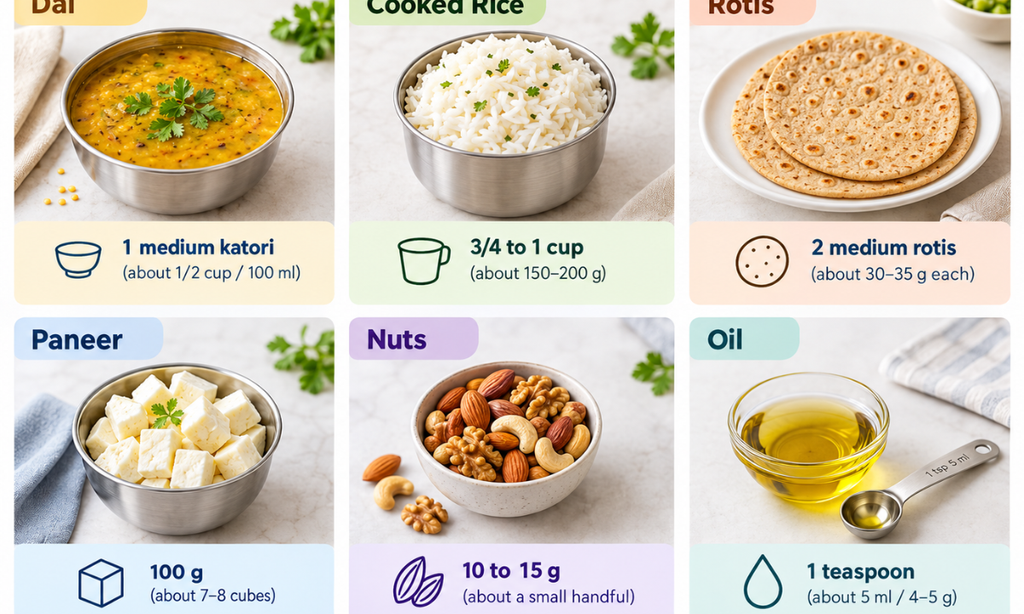
| Food | Suggested starting portion | Measurement basis |
| Roti | 1–2 medium | For calculation, use about 25–30 g whole-wheat flour per medium roti. |
| Rice | ¾–1 cup cooked | Use cooked weight in the meal chart; do not mix raw and cooked weights. |
| Dal | 1 medium katori cooked | For this article, approximately 150 ml cooked. |
| Paneer | 80–120 g | State regular or reduced-fat when calculating. |
| Tofu | 100–120 g | Use product label where available. |
| Chicken/fish | 100–120 g cooked | Use cooked edible portion; preparation affects calories. |
| Curd | 100–150 g | Plain, unsweetened curd. |
| Oil | Measured teaspoons/grams | Include cooking, tempering and marinades. |
| Nuts | 10–15 g | Weigh where possible instead of using “a handful.” |
Recipe and Nutrition Assumptions
Recipe assumptions used for the sample nutrition ranges:
- 1 teaspoon oil is counted as approximately 5 g.
- One medium roti is calculated from approximately 25–30 g whole-wheat flour.
- One cup cooked rice is approximately 150–160 g.
- Dal, rajma and chole are counted as cooked portions when the serving is described as cooked.
- Chicken and fish are counted as cooked edible portions in the non-vegetarian examples.
- Curd means plain, unsweetened curd.
- Paneer is treated as regular paneer unless otherwise stated; tofu uses a generic firm-tofu assumption and can vary by product.
- Vegetable soup is calculated as approximately 2 cups of non-cream soup made from vegetables, water or stock, and no more than 5 g oil per serving.
Nutrition values are estimates based on the ingredients and serving sizes listed. Actual values vary with recipe, oil, brand, preparation method and portion size.
The sources linked in this article support general nutrition, activity, sleep and safety principles. They do not endorse or validate this specific seven-day meal chart.
How to Adjust Portions
A weekly chart should not force everyone into the same portion sizes. Use the structure as a starting point and review the overall pattern.
- If you are frequently hungry or your intake seems inadequate: discuss whether additional vegetables, curd, dal, another protein serving or a suitable carbohydrate portion should be added.
- If progress is unchanged for several weeks: review cooking oil, snacks, beverages, weekend meals, restaurant portions and actual serving sizes before making major calorie cuts.
- If exercise volume increases: reassess food intake and recovery rather than automatically following a fixed calorie rule.
- After one unusual scale reading: do not make an aggressive dietary change based on a single day’s weight.
If you are trying to understand your starting calorie needs, our weight loss calculator can provide a general estimate. It should be treated as a starting tool rather than a prescription.
North Indian, South Indian and Regional Swaps
A useful Indian meal chart should work across regional food habits. Our weight loss with Indian food in Delhi page explains how familiar Indian meals can be incorporated into a personalised approach. rather than treating one cuisine as the only weight-management diet.
| Meal pattern | North Indian example | South Indian example | Other regional example |
| Breakfast | Moong/besan chilla + curd | Idli + sambar | Dhokla + curd/soy yogurt |
| Lunch | Roti + dal + sabzi | Rice + sambar + vegetables | Millet/bhakri + dal + vegetables |
| Snack | Roasted chana + fruit | Buttermilk + fruit | Sprouts or roasted makhana |
| Dinner | Paneer/tofu + vegetables + roti | Vegetable stew + appam or dosa with a protein side | Fish/chicken or tofu + vegetables + suitable grain portion |
Examples such as idli + sambar ↔ poha + curd, rice + rajma ↔ rice + sambar, and daliya ↔ millet upma can help preserve the same meal structure while respecting regional preferences.
7-Day Shopping List
Dals, beans and protein foods
- Moong dal
- Masoor/toor/chana dal
- Rajma
- Chole
- Roasted chana
- Tofu and/or paneer
- Plain curd
- Eggs, chicken and fish if included
Whole grains and staples
- Whole-wheat flour
- Rice
- Poha
- Oats
- Daliya
- Rava
- Millets if desired
Vegetables and fruit
- Leafy greens
- Palak, bhindi, lauki and mixed seasonal vegetables
- Cucumber, tomato, onion, carrots and beans
- Guava, apple, papaya, watermelon or other whole fruit
- Lemon, ginger, herbs and spices
Snacks and pantry items
- Makhana
- Almonds or mixed nuts
- Peanuts
- Chutney ingredients
- Measured cooking oil
7-Day Meal-Prep Plan
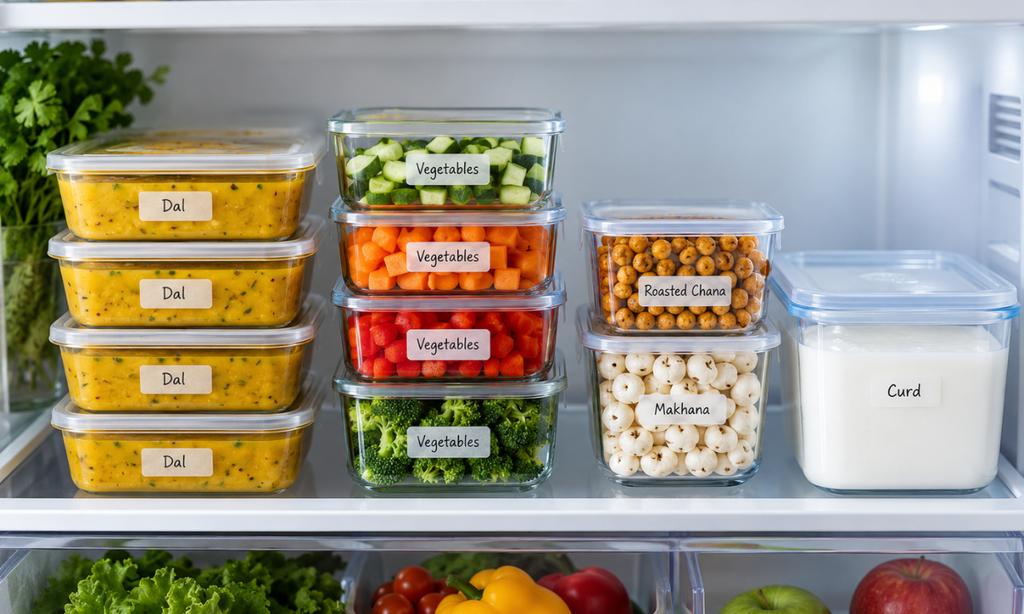
- Cook a manageable batch of dal for one to two days and refrigerate promptly.
- Soak and cook rajma or chole in planned quantities, then portion them.
- Wash and chop vegetables so a sabzi or salad can be assembled quickly.
- Roast makhana and chana, then divide them into measured snack portions.
- Keep plain curd ready for quick breakfasts and lunches.
- Prepare a basic mint or tomato chutney without relying on added sugar.
Office and Travel Options
Busy work schedules often make meal planning harder. Our weight loss guidance for working professionals covers practical strategies for office meals, travel and irregular routines.
- Fruit + plain curd.
- Roasted chana + unsweetened tea.
- 2 rotis + dry vegetable sabzi packed separately.
- Idli + sambar.
- Grilled chicken or paneer/tofu bowl with vegetables.
Indian Diet Plan When Eating Out
A weight-management meal plan should also work for office lunches, restaurants and family occasions. You do not need to skip meals all day to “save calories” for dinner.
North Indian restaurant
Choose dal, tandoori or grilled protein, roti, vegetables and plain curd. Keep butter-heavy gravies and deep-fried starters occasional.
South Indian restaurant
Idli with sambar, plain dosa with a protein-rich side, vegetable uttapam, or a rice meal with vegetables and dal can be fitted into a balanced day by adjusting portions.
Biryani restaurant
Use a controlled serving of biryani and add salad or plain curd. Do not turn one larger meal into a reason to skip the next meal.
Café or fast-casual outlet
Look for a protein source plus vegetables and a sensible carbohydrate portion. Choose water or an unsweetened beverage more often.
Wedding or buffet meal
Walk through the buffet first, choose the foods you most want, build one sensible plate, eat slowly and avoid automatic repeat servings.
Walking, Strength Training and Sleep
Regular physical activity supports health and can be part of a sustainable weight-management routine. WHO recommends adults aged 18–64 undertake at least 150 minutes of moderate-intensity aerobic activity per week, or an equivalent amount of vigorous activity, and muscle-strengthening activities on 2 or more days per week.
Sleep is also part of healthy lifestyle management. CDC guidance indicates that adults aged 18–60 generally need at least 7 hours of sleep per night; recommendations vary for other age groups.
- Start with regular walking at an intensity appropriate for you.
- Add resistance or strength training on suitable days.
- Break up long periods of sitting where practical.
- Protect a regular sleep schedule and seek healthcare advice for persistent sleep problems.
Common Mistakes That Can Slow Weight Loss
Cutting rice or roti automatically
Carbohydrates are not automatically incompatible with weight management. The meal’s portion, preparation, protein, vegetables and overall intake matter more than a blanket rule that a staple food must be banned.
Eating very little during the day
Severe restriction can make hunger harder to manage. A sustainable approach should be adequate for the individual rather than built around the smallest possible portions.
Ignoring oils and condiments
Cooking oil, tempering, sauces and toppings can materially change the calories in an otherwise healthy dish. Measure them when calculating a recipe.
Using vague snack portions
Nuts, makhana and roasted snacks are easier to manage when weighed or portioned rather than eaten directly from the packet.
Expecting a week’s scale change to equal fat loss
Weight can change because of water, glycogen and digestive contents as well as body fat. A 7-day plan is better used to establish a routine than to chase a fixed amount of scale loss.
When You Need a Personalised Plan
A generic 7-day diet plan cannot calculate your individual energy needs or account for every health, medication and dietary factor.
Individual support may be particularly important when managing diabetes, thyroid disease, PCOS, kidney or liver disease, gastrointestinal symptoms, pregnancy or breastfeeding, eating disorders, food allergies, post-surgical recovery or medication-assisted weight management. Nutri Activania also offers personalised weight loss support for men and women and online diet plans in Delhi for people who need a more individual approach.
For diabetes, current ADA Standards of Care state that nutrition recommendations should be individualised around the person’s preferences and nutritional needs. Major dietary changes for people taking diabetes medication should be discussed with the prescribing clinician and a qualified dietitian.
Nutri Activania also provides condition-specific nutrition guidance for PCOS, thyroid conditions and diabetes.
Frequently Asked Questions
Can I eat chapati and rice in the same day?
Yes. Both can fit into a balanced Indian eating pattern. Adjust portions according to the rest of the meal and your overall energy needs.
How much oil should I use?
There is no single oil quantity that fits every person or recipe. For transparent tracking, measure the oil used in cooking, tempering and marinades rather than estimating it.
Is brown rice necessary for weight loss?
No. Brown rice is one whole-grain option, but it is not mandatory for weight management. Portion size and the overall eating pattern still matter.
What can I use instead of paneer?
Tofu, soy-based foods, dal, chana, rajma, sprouts and curd can be alternatives depending on the meal and your dietary needs. Their nutrition profiles differ, so the portions should be recalculated when precision matters.
Is this plan suitable for Indian vegetarians?
Yes. The base plan includes vegetarian meals and substitutions. Vegetarians should pay deliberate attention to protein variety across the day.
Can I repeat this plan for four weeks?
You can repeat the meal structure, but a fixed chart should not automatically be treated as a four-week prescription. Review variety, portions and progress and make changes when needed.
What if I feel hungry?
Review meal portions, protein, fibre, sleep and meal timing. Persistent or severe hunger may be a reason to adjust the plan with a dietitian.
How should I adjust portions if I exercise?
Your energy needs can change with exercise volume and intensity. Consider recovery, hunger, performance and overall progress rather than using a fixed exercise-calorie rule.
Can I follow this plan with diabetes medication?
Not without individual guidance. Medication, meal timing, carbohydrate intake and glucose management may need to be coordinated with your prescribing clinician and qualified dietitian.
Can I follow this plan while taking semaglutide or tirzepatide?
These medicines can affect appetite and gastrointestinal symptoms, and their prescribing information includes important safety considerations. Do not use a generic chart to make medication decisions; ask your prescribing clinician and dietitian to personalise meals and portions. The prescribing-information links below are included for medication safety context, not as a source for the general meal plan.
Can I lose weight in seven days?
A change on the scale may occur within a week, but a specific amount of fat loss cannot be predicted for everyone. Water and digestive changes can influence short-term weight.
Need a Personalised Indian Diet Plan for Weight Loss?
A general 7-day Indian diet plan can show you how to structure meals, but it cannot replace an individual assessment. For one-to-one support, see our Dietician for Weight Loss in Delhi service. A personalised plan can take your food preferences, routine, activity level, health history, medications and nutrition goals into account.
Book a Weight Loss Consultation
Evidence and Sources
ICMR-NIN: Dietary Guidelines for Indians 2024
WHO: Physical activity guidance
CDC: Sleep guidance
American Diabetes Association: Standards of Care in Diabetes—2026, Section 5
FDA: Wegovy (semaglutide) prescribing information
FDA: Zepbound (tirzepatide) prescribing information
NIMH: Eating disorders information
Source note: These sources support the article’s general nutrition, activity, sleep, diabetes, medication and safety principles. They do not endorse or validate this specific 7-day meal chart.
Final Thoughts
The best 7-day eating plan for weight loss is not the most restrictive one. It is the one that gives you a workable structure, sensible portions, sufficient variety and meals you can continue beyond the first week.
Indian staples such as dal, roti, rice, idli, poha, vegetables, curd, paneer, tofu, eggs, chicken and fish can all have a place in a balanced weight-management pattern. Use this chart as a starting framework and adjust portions and food choices to your individual needs. You can also review your starting numbers with the macro calculator before discussing a personalised plan. rather than assuming the same calorie target works for everyone.
Important Disclaimer & Medical Policy
This content is for informational and educational purposes only. It does not constitute medical diagnosis, treatment or a personalised dietary prescription. Speak with a qualified healthcare professional before making significant dietary changes, especially if you have a medical condition, take medication, are pregnant or breastfeeding, are an adolescent, or have a history of disordered eating.
About Dietician Avni Kaul
Avni Kaul is a Dietician and Nutritionist with B.Sc. and M.Sc. qualifications in Food & Nutrition from Lady Irwin College, University of Delhi. She received a Gold Medal for academic excellence and has 12+ years of clinical nutrition experience, including work in the Endocrinology Department at Max Hospital. She is the founder of Nutri Activania.