
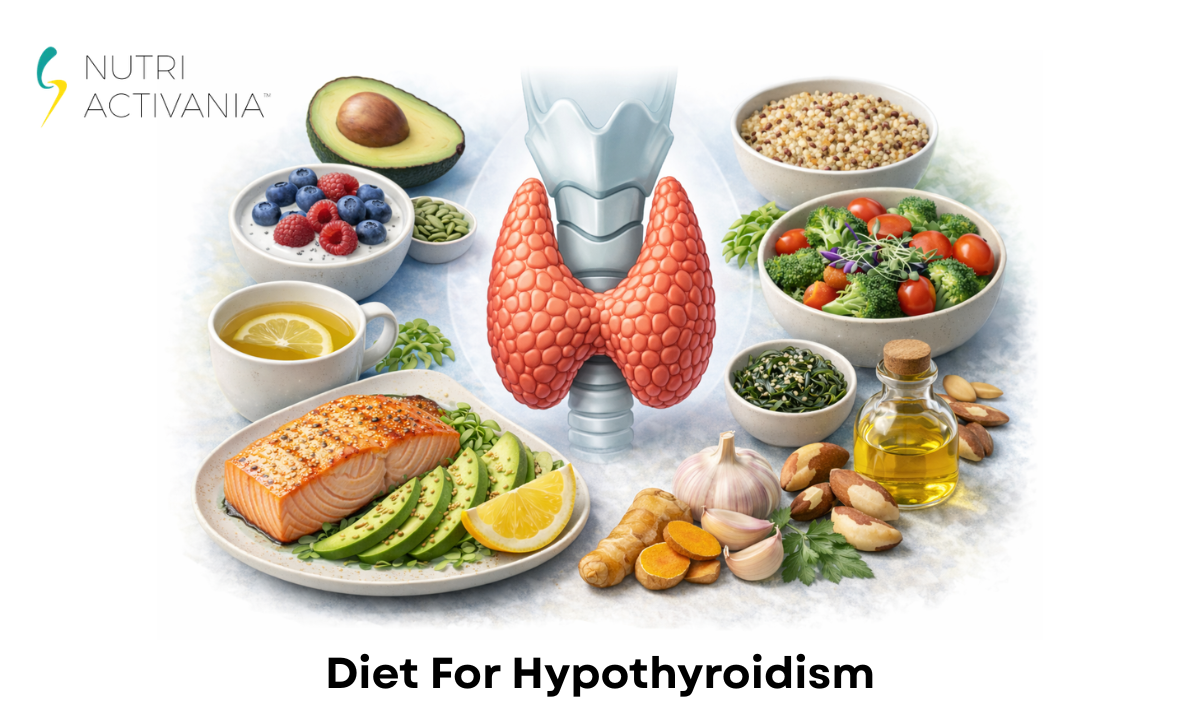
Living with an underactive thyroid often feels like a constant uphill battle against unexplained weight gain and chronic fatigue.
If you are currently searching for a specialized Dietician for thyroid in Delhi, you already know that simply eating less does not work. At Nutri Activania, led by the Best Dietician in Delhi, Avni Kaul, we understand your body requires a highly clinical approach to heal.
As the Best Nutritionist in Delhi, Avni emphasizes that a properly structured Diet for hypothyroidism is the missing link between merely taking your daily medication and actually feeling energized again.
When your thyroid gland fails to produce enough essential hormones, your entire metabolic engine slows down. This makes losing weight incredibly difficult and leaves you feeling completely drained, no matter how many hours you sleep.
While nutrition cannot replace your prescribed thyroxine medication, the foods you consume daily directly impact how well your body absorbs that medication and converts inactive hormones into active, usable energy.
In this comprehensive guide, we will break down the exact nutrients your thyroid desperately needs to function and the specific dietary triggers that might be secretly worsening your symptoms.
Why What You Eat Matters
To truly understand why a specific diet is necessary, you must first understand the biological job of this vital organ.
The thyroid is a small, butterfly-shaped gland located at the base of your neck. Its primary function is to produce hormones, specifically thyroxine (T4) and triiodothyronine (T3), which act as the master control system for your entire metabolism.
Every single cell in your body relies on these hormones to regulate energy usage, body temperature, and heart rate.
When you are diagnosed with hypothyroidism, your gland is simply not producing enough of these crucial hormones.
Consequently, your body’s engine slows down to a crawl. You begin burning fewer calories at rest, which explains the sudden, stubborn weight gain even if your eating habits have not changed. You also experience deep fatigue, brain fog, and constantly feel cold.
Your doctor will likely prescribe a synthetic thyroid hormone to replace what is missing. However, simply taking a pill is not enough to restore your energy.
Your body must convert the inactive T4 hormone from your medication into the active T3 hormone that your cells can actually use. This complex chemical conversion process takes place in your liver and your gut, and it relies entirely on a steady supply of very specific micronutrients.
If your daily meals are lacking these essential building blocks, your body cannot efficiently process the medication, leaving you stuck with all the frustrating symptoms of a sluggish metabolism.
Foods to Eat with Hypothyroidism
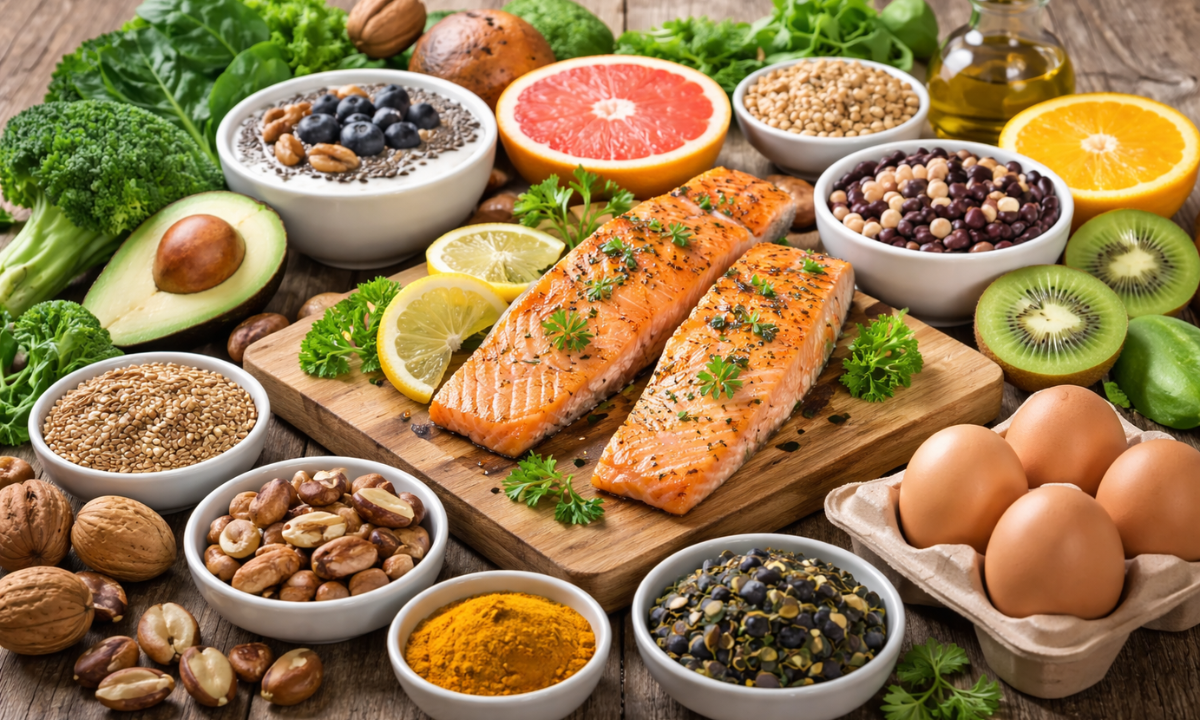
When it comes to restoring your metabolic rate, your body requires specific raw materials to synthesize and convert hormones effectively.
Adding the right foods to eat with hypothyroidism to your daily meals acts as a catalyst for this complex chemical process. While the thyroid gland itself needs certain minerals to produce thyroxine, your liver and gut desperately need other specific nutrients to convert that thyroxine into the active energy your cells crave.
The Three Pillars of Thyroid Nutrition
- Iodine: This is the fundamental building block of thyroid hormones. Your body cannot make T3 or T4 without it.
In an Indian diet, the most reliable sources include fortified iodized salt, dairy products like milk and fresh curd, and whole eggs.
- Selenium: This powerful antioxidant is absolutely critical for the conversion of inactive T4 to active T3.
It also protects the thyroid gland itself from oxidative stress and inflammation. Excellent sources include sunflower seeds, lentils, brown rice, and Brazil nuts, though you only need one or two Brazil nuts a day to meet your requirement.
- Zinc: This mineral helps your body actually absorb the activated thyroid hormones at the cellular level. It also plays a major role in regulating your immune system, which is vital if your hypothyroidism is caused by an autoimmune condition like Hashimoto’s.
You can boost your zinc intake through chickpeas (chana), pumpkin seeds, spinach, and cashews.
While these micronutrients are essential for your recovery, it is incredibly important to source them from whole foods rather than over-the-counter supplements.
Taking excessive amounts of synthetic iodine or selenium without clinical supervision can actually trigger further thyroid dysfunction and worsen your symptoms. A properly designed, personalized meal plan ensures you get exactly the right amount of these nutrients through safe, natural, and delicious Indian home cooking.
Foods to Avoid with Hypothyroidism
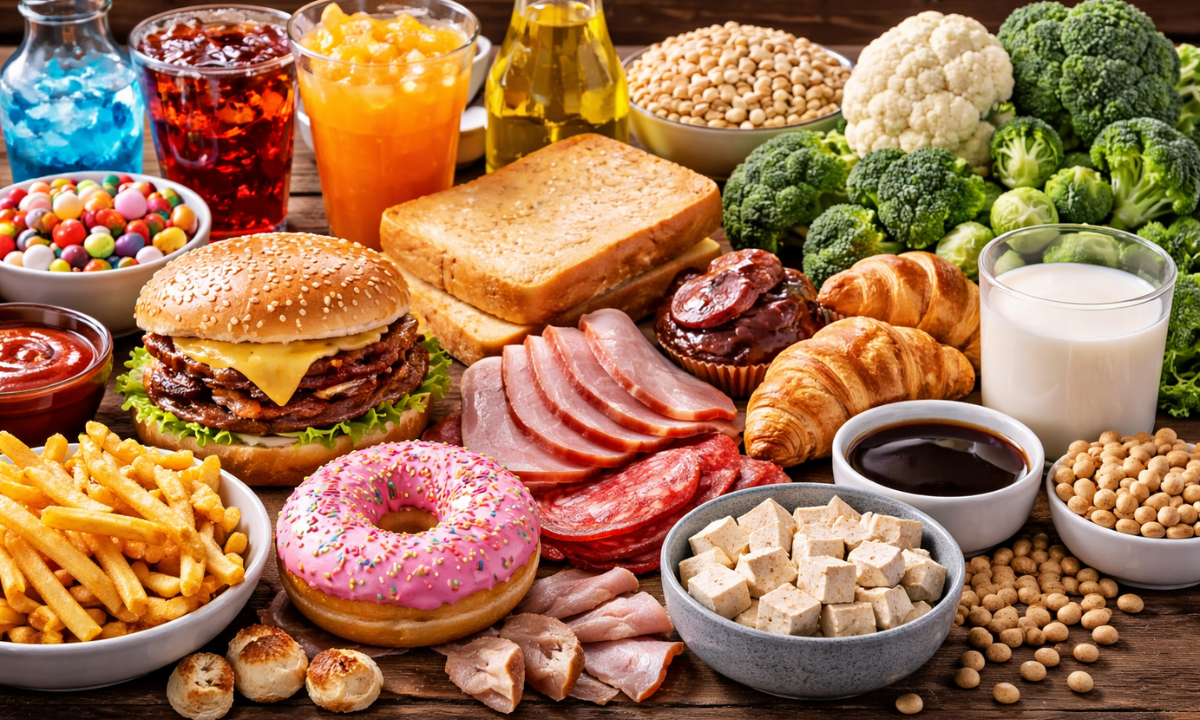
Perhaps the most confusing part of managing a thyroid condition is navigating the endless lists of foods to avoid with hypothyroidism found online.
Many patients unnecessarily restrict incredibly healthy vegetables out of fear and misinformation. The controversy primarily surrounds goitrogens. These are naturally occurring compounds that can interfere with the normal function of your thyroid gland by preventing it from absorbing the iodine it needs to create hormones.
Navigating Goitrogens and Inflammatory Triggers
- Raw Cruciferous Vegetables: Vegetables like cabbage, cauliflower, broccoli, and kale contain high levels of goitrogens when raw.
However, the cooking process completely neutralizes these compounds, making these nutrient-dense foods perfectly safe to eat in normal dietary amounts.
- Soy Products: Unfermented soy foods like soy milk, tofu, and soy chunks can interfere with your body’s ability to absorb your synthetic thyroid medication.
If you choose to consume soy, it is best to do so several hours after taking your morning pill.
- Gluten: For patients whose hypothyroidism is caused by Hashimoto’s thyroiditis, an autoimmune condition, gluten can trigger severe internal inflammation.
The molecular structure of gluten closely resembles thyroid tissue, causing a confused immune system to mistakenly attack the gland after consuming wheat products.
- Highly Processed Foods: Packaged snacks and sugary treats are loaded with hidden calories and inflammatory oils.
Since your basal metabolic rate is already extremely slow, these foods lead to rapid weight gain and significantly worsen the chronic fatigue associated with a sluggish thyroid.
The golden rule of a clinical thyroid diet is not about extreme, miserable deprivation. Instead of banning entire food groups, a professional nutritionist focuses on correct food preparation and precise meal timing.
Ensuring you take your thyroxine medication on an empty stomach and waiting at least forty-five minutes before consuming anything other than water is often far more impactful than permanently eliminating cooked cauliflower from your dinner plate.
A Sample Hypothyroidism Diet Plan
Understanding the science of your metabolism is only helpful if you can translate it into your daily meals.
A sustainable Hypothyroidism diet plan must fit seamlessly into your lifestyle without requiring exotic ingredients or hours of meal preparation. At Nutri Activania, we believe in the power of simple, traditional Indian home cooking to heal the body.
To give you a realistic idea of how these nutritional principles look in practice, we have outlined a basic framework below.
Sample Diet Chart for a Hypothyroid Patient
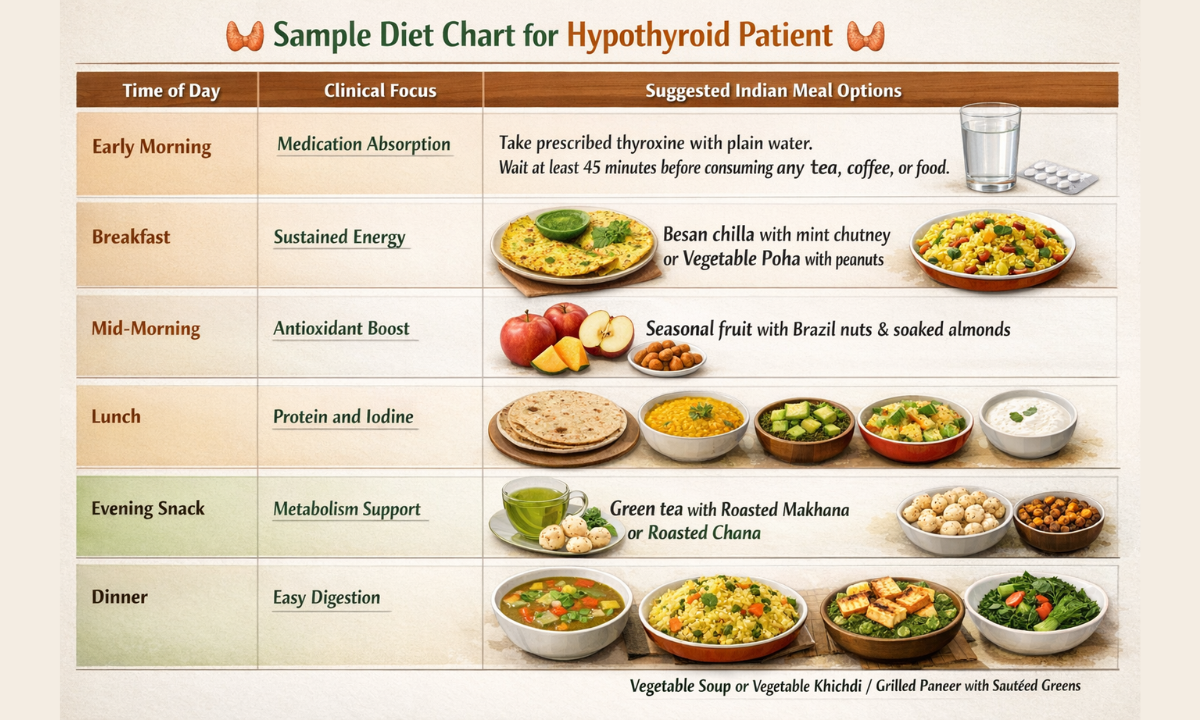
| Time of Day | Clinical Focus | Suggested Indian Meal Options |
|---|---|---|
| Early Morning | Medication Absorption | Take prescribed thyroxine with plain water. Wait at least 45 minutes before consuming any tea, coffee, or food. |
| Breakfast | Sustained Energy | Besan (chickpea flour) chilla with mint chutney, or a bowl of vegetable poha topped with roasted peanuts for added zinc. |
| Mid-Morning | Antioxidant Boost | One seasonal fruit, like an apple or a papaya, paired with two soaked Brazil nuts and a few soaked almonds. |
| Lunch | Protein and Iodine | Two jowar or multigrain rotis, a bowl of yellow moong dal, thoroughly cooked seasonal sabzi (like bottle gourd), and a portion of fresh homemade curd. |
| Evening Snack | Metabolism Support | A cup of green tea alongside a handful of dry-roasted makhana (fox nuts) or roasted chana (chickpeas). |
| Dinner | Easy Digestion | A light bowl of mixed vegetable soup followed by a moderate portion of vegetable khichdi or grilled paneer with sautéed greens. |
While this sample chart provides a solid foundation, it is vital to remember that a generic template cannot solve a complex medical condition.
Your specific caloric needs, your daily activity level, and your unique blood test results require a highly personalized approach to truly reverse your symptoms. If you have an autoimmune condition like Hashimoto’s, this baseline diet would need further modifications to eliminate specific inflammatory triggers like gluten or dairy.
Why Choose Nutri Activania & Why Personalized Guidance is Mandatory?
Managing a complex hormonal condition requires significantly more than just downloading a generic meal plan from the internet. Because hypothyroidism affects every system in your body, from your resting heart rate to your digestive speed, clinical precision is absolutely mandatory.
A template diet cannot account for your specific thyroid-stimulating hormone (TSH) levels, your current medication dosage, or any underlying autoimmune triggers like Hashimoto’s disease.
At Nutri Activania, Avni Kaul leverages over 12 years of specialized clinical experience, including her extensive tenure at Max Hospital’s Endocrinology Department, to design a highly specific protocol for your unique biology.
A true medical nutrition plan involves continuous monitoring of your blood work alongside your dietary changes. As your body begins to heal and absorb nutrients more efficiently, your endocrinologist may even need to adjust your thyroxine dosage.
This delicate balance requires the careful, ongoing supervision of a dedicated clinical nutritionist who understands the intricate relationship between the food on your plate and the hormones in your bloodstream.
Conclusion
Living with a sluggish thyroid does not mean you have to accept chronic fatigue, brain fog, and stubborn weight gain as your permanent reality.
While the internet is flooded with restrictive diets and confusing advice about goitrogens, the biological truth is much simpler. By partnering with the right clinical expert, you can use the power of simple, wholesome Indian food to optimize your metabolism, support your daily medication, and finally regain your lost energy.
If you are tired of fighting your own body, it is time to seek professional, science-backed guidance. Take back control of your metabolic health by booking a comprehensive assessment at Nutri Activania.
Whether you visit our premier clinic in Saket, South Delhi, or utilize our seamless online consultation platform from anywhere in India, Avni Kaul is ready to create a sustainable, personalized roadmap for your recovery. Contact us today to stop dieting and start healing.