

You are training hard. You are showing up consistently. You are putting in the work every single day.
But your performance has plateaued. Your recovery is slow. Your energy crashes halfway through your session. And no matter how hard you push, the results just are not matching your effort.
Here is what nobody tells you training is only half the equation. The other half is what you eat.
A well-structured performance enhancement diet is the single most powerful tool available to any athlete or gym-goer who wants to break through plateaus, recover faster, and consistently perform at their absolute best. As one of the leading dieticians in Delhi, Dt. Avni Kaul at Nutri Activania has helped hundreds of athletes, runners, weightlifters, and fitness enthusiasts unlock their true physical potential purely through the power of the right nutrition.
Key Points At A Glance
- Performance nutrition is not just for professional athletes it applies to anyone training seriously
- What you eat before, during, and after training directly determines your energy, strength, and recovery
- Protein timing is critical not just total daily protein intake
- Carbohydrates are not the enemy they are your primary performance fuel
- Micronutrients like iron, magnesium, and Vitamin D are frequently overlooked performance killers
- Hydration is a performance variable, not just a health tip
- A personalized plan from a qualified sports nutritionist delivers results that generic gym diets simply cannot
What Is a Performance Enhancement Diet?
A performance enhancement diet is a scientifically structured eating plan designed to fuel your training, maximize your physical output, accelerate recovery, and support long-term athletic development.
It is not a weight loss diet. It is not a bulking diet. It sits at the intersection of both giving your body exactly what it needs to perform, repair, and grow stronger with every session.
The Three Pillars of Performance Nutrition
| Pillar | What It Means | Why It Matters |
|---|---|---|
| Fuel | Eating the right macronutrients in the right quantities | Powers your training session from start to finish |
| Repair | Consuming adequate protein and micronutrients post-training | Rebuilds muscle fibers broken down during exercise |
| Adapt | Consistent long-term nutrition that supports progressive overload | Allows your body to get stronger, faster, and more resilient over time |
Most people focus entirely on the fuel pillar and completely ignore repair and adaptation which is exactly why their results stall despite consistent training.
Macronutrients and Performance: What You Actually Need

Carbohydrates – Your Primary Performance Fuel
Carbohydrates are the most misunderstood macronutrient in fitness culture. Low-carb trends have convinced many athletes and gym-goers to cut carbs and it is silently destroying their performance.
Your muscles run on glycogen which comes directly from carbohydrates. When glycogen stores are depleted, your strength drops, your endurance collapses, and your focus disappears mid-session.
Best performance carbohydrate sources:
- Brown rice and unpolished rice
- Sweet potato and regular potato
- Oats and daliya
- Banana especially pre-workout
- Jowar, bajra, and ragi rotis
- Whole grain bread
Protein – The Building Block of Every Adaptation
Protein is where most gym-goers focus but the timing and distribution matter as much as the total amount.
Consuming protein spread across 4–5 meals throughout the day is significantly more effective for muscle protein synthesis than eating all your protein in one or two large meals.
Best performance protein sources:
- Eggs complete amino acid profile
- Paneer and low-fat curd
- Chicken breast and lean fish
- Moong dal and sprouted legumes
- Whey protein if whole food intake is insufficient
General protein guideline for active individuals: 1.6–2.2g per kilogram of body weight daily, depending on training intensity.
Fats – The Underrated Performance Nutrient
Healthy fats support hormone production including testosterone and growth hormone, both of which are critical for athletic performance and muscle development. They also reduce systemic inflammation, which directly speeds up recovery between sessions.
Best performance fat sources:
- Desi ghee in controlled quantities
- Raw nuts almonds, walnuts, cashews
- Flaxseeds and chia seeds
- Cold-pressed mustard or groundnut oil
- Fatty fish like salmon or sardines
Pre-Workout, Intra-Workout, and Post-Workout Nutrition
This is where performance nutrition gets precise and where most people leave significant gains on the table.
Pre-Workout Nutrition (60–90 Minutes Before Training)
Your pre-workout meal should be moderate in carbohydrates, moderate in protein, and low in fat and fiber — so digestion does not compete with your training.
Good pre-workout meal examples:
- Banana with a small handful of nuts
- Brown rice with dal and light sabzi
- Oats with low-fat curd and fruit
- Two whole eggs with a slice of whole grain toast
Avoid heavy, oily, or high-fiber meals immediately before training they divert blood flow to digestion and significantly reduce your physical output.
Intra-Workout Nutrition (During Training)
For sessions under 60 minutes, water is sufficient. For sessions exceeding 90 minutes or high-intensity training, a simple carbohydrate source mid-session prevents glycogen depletion and maintains performance.
Good intra-workout options:
- Coconut water natural electrolytes
- A small banana
- Homemade electrolyte water with lemon, salt, and a pinch of sugar
Post-Workout Nutrition (Within 30–45 Minutes After Training)
The post-workout window is the most critical nutrition opportunity of your entire day. Your muscles are primed to absorb nutrients and what you eat here directly determines how well you recover and how quickly you adapt.
The ideal post-workout meal:
| Nutrient | Goal | Best Indian Sources |
|---|---|---|
| Fast-absorbing Protein | Initiate muscle protein synthesis immediately | Whey protein, boiled eggs, low-fat curd |
| Simple Carbohydrates | Replenish glycogen stores rapidly | Banana, white rice, potato |
| Hydration | Replace fluids lost through sweat | Water, coconut water, buttermilk |
Micronutrients That Silently Kill Performance
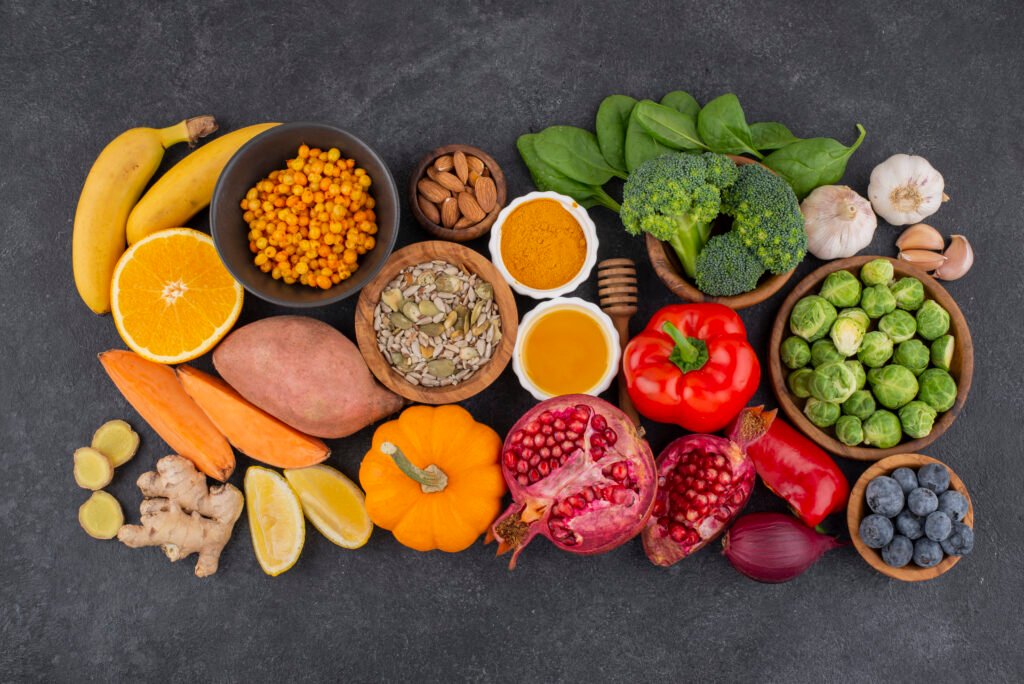
Most athletes obsess over protein and carbs while completely neglecting the micronutrients that quietly determine their energy levels, recovery speed, and injury resilience.
The Critical Performance Micronutrients
| Micronutrient | Why It Matters for Performance | Best Food Sources |
|---|---|---|
| Iron | Carries oxygen to working muscles deficiency causes chronic fatigue and poor endurance | Spinach, rajma, pomegranate, lean red meat |
| Magnesium | Regulates muscle contraction and sleep quality both critical for recovery | Pumpkin seeds, dark leafy greens, almonds |
| Vitamin D | Supports muscle function, bone strength, and testosterone levels | Sunlight, eggs, fatty fish, fortified foods |
| Zinc | Essential for testosterone production and immune function | Pumpkin seeds, chickpeas, meat, dairy |
| Vitamin C | Reduces exercise-induced oxidative stress and supports collagen synthesis | Amla, lemon, guava, bell peppers |
If your energy is consistently low despite adequate sleep and training, a micronutrient deficiency is frequently the overlooked cause. This is a pattern Dt. Avni Kaul identifies and corrects regularly in her weight loss program and performance consultations.
Hydration and Performance: More Critical Than You Think
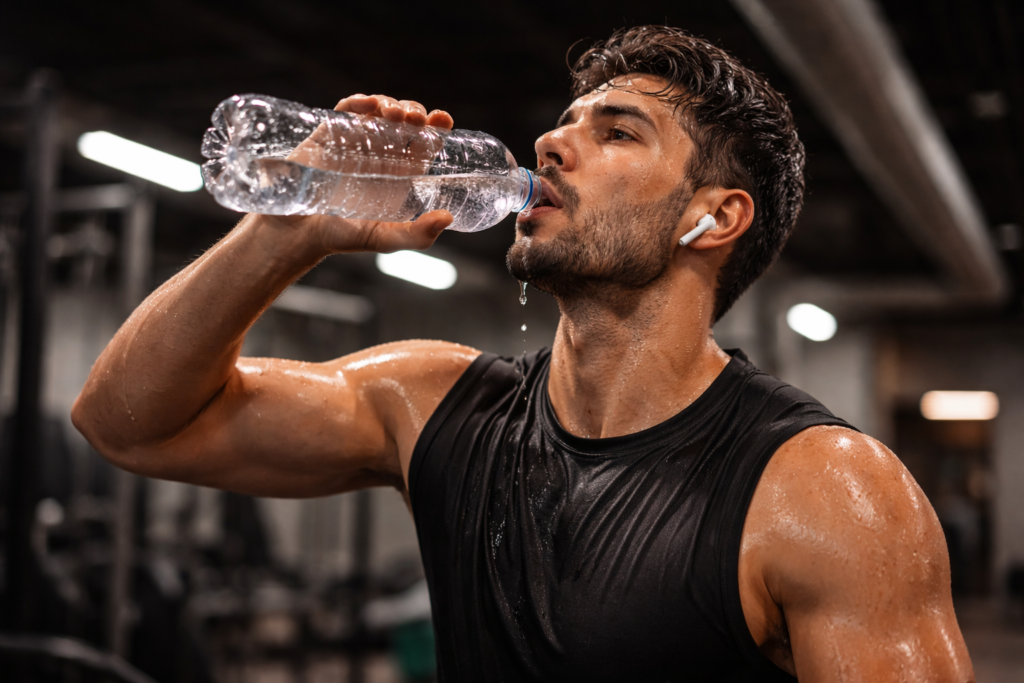
A mere 2% drop in body water levels causes a measurable decline in strength, endurance, and cognitive focus during training. Most people training in Indian conditions where heat and humidity accelerate sweat loss are operating in a mild state of dehydration without realizing it.
Daily hydration guidelines for active individuals:
- Minimum 3–4 litres of water daily on training days
- Add a pinch of rock salt and lemon to water post-training to replace electrolytes
- Monitor urine color pale yellow indicates good hydration, dark yellow signals dehydration
- Avoid training on caffeine alone without adequate prior hydration
Common Performance Nutrition Mistakes to Avoid
Image suggestion: A frustrated gym-goer looking tired mid-workout — representing the consequences of poor nutrition planning.
- Skipping breakfast before morning training training fasted without adequate glycogen leads to muscle breakdown, not fat loss
- Relying entirely on supplements real food always outperforms powders and pills for long-term performance adaptation
- Eating the same diet on rest days as training days your calorie and carbohydrate needs are significantly lower on rest days
- Ignoring sleep nutrition a small casein-rich snack like curd before bed supports overnight muscle repair
- Cutting carbs to lose weight while training hard this is one of the most performance-damaging mistakes active people make
If you are also curious about how diet drives results even without intense training, our blog on Weight Loss Diet Without Exercise explains the metabolic science behind it.
Why a Personalized Performance Diet Always Wins
Image suggestion: Dt. Avni Kaul reviewing a personalized nutrition plan with a client — warm, focused, and professional.
Generic gym diets high protein, low carb, six meals a day are built for a theoretical person who does not exist. Your body, your training schedule, your recovery capacity, and your health history are completely unique.
At Nutri Activania, Dt. Avni Kaul builds performance nutrition plans that account for your specific sport or training style, your body composition goals, your existing medical conditions, and your daily lifestyle. Whether you are a competitive athlete, a weekend runner, or a dedicated gym-goer, the plan is built entirely around you.
Ready to stop leaving performance on the table? Book your consultation with Dt. Avni Kaul today and find out exactly what your body needs to perform at its absolute best.
Frequently Asked Questions
What is a performance enhancement diet?
A performance enhancement diet is a structured nutrition plan designed to maximize your physical output during training, accelerate recovery between sessions, and support long-term athletic development through the right combination of macronutrients, micronutrients, and meal timing.
Should I eat before a morning workout or train fasted?
For most people training at moderate to high intensity, eating a small carbohydrate and protein-rich meal 60 minutes before training significantly improves performance compared to fasted training. Fasted training works for very light sessions but leads to muscle breakdown during intense workouts.
How much protein do I actually need for performance?
For active individuals training regularly, a general guideline is 1.6–2.2g of protein per kilogram of body weight daily. However, this varies based on your training type, intensity, body composition goals, and overall health — which is why a personalized assessment always gives better results than a generic number.
Are supplements necessary for performance?
Whole foods should always be your primary nutrition source. Supplements like whey protein or creatine can complement a well-structured diet but should never replace real food. Most performance gaps can be addressed through food choices and meal timing alone.
How is Nutri Activania different from following a standard gym diet plan?
Standard gym diet plans are generic templates that ignore your individual body, medical history, and lifestyle. Dt. Avni Kaul at Nutri Activania builds a completely personalized performance nutrition plan around your specific training goals, health profile, and daily routine — delivering results that generic plans simply cannot match.