
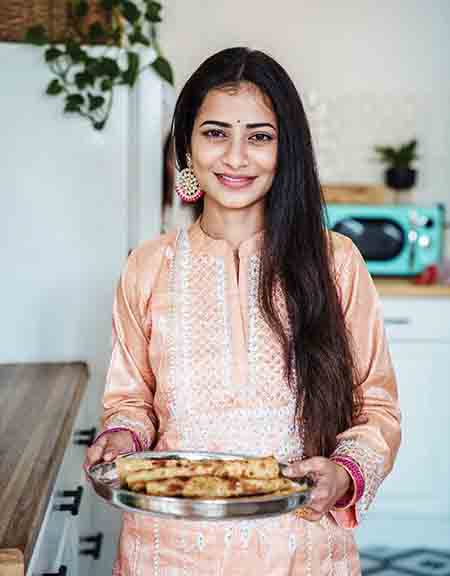
Gujarati cuisine, which is inspired by several civilizations, is famous all over the world. When one thinks about Gujarati food, dishes such as khakhra, dhokla, fafda, jalebi, thepla, and several others come to our mind.
How a typical Gujarati diet seems like?
Dietician Avni says it is vital to note that the geography, history, and culture of a region heavily impact cuisine. Being a predominantly vegetarian region, the people of Gujarat have near perfected the art of vegetarian cooking.
Geographically Gujarat is divided into 4 regions North Gujarat, South Gujarat, Kathiawad, and Kutch. There are small variations in eating habits and modes of preparation due to climatic and cultural differences.
Certain ingredients such as yogurt, buttermilk, millets, sesame seeds, groundnut, lemon juice, and jaggery are ever-present in Gujarati food. Apart from vegetarian dishes, there are a few communities that offer non-vegetarian dishes too.
Usually, a Gujarati thali consists of rice (bhat) or khichdi, farsans (1 or 2 steamed or fried snacks), 1 green vegetable, shaak (these are main courses using vegetables and spices mixed with sweet, spice curry or dry dish), braised pulses such as chickpeas, beans, or dry peas (a form of kathol), yogurt dish, kadhi, shrikhand or raita, daal (toor), and sweet dishes such as basundi, halwa etc.
The loaves of bread consumed with a thali meal will include thick and coarse bajra rotla, thin unleavened wheat rotlis, whole wheat flour rotis named bakhris, parathas, thepla, deep-fried puris, among others.
The meal is usually accompanied by sweet, sour, and spicy chutneys, pickles, ghee, and a salad of chopped vegetables served raw or steamed in spices.
How Gujarati food could be unhealthy?
Gujarati food is highly popular but it is cooked in a lot of oil. It is usually vegetarian but it lacks sufficient vegetables. As per the available data, Gujarat consumes lots of oil and fats. Also, as per NFHS (National Family Survey), there has been a significant rise in obesity among children between 2015-16 to 2019-20. India’s top Dietician for weight loss, Avni Kaul, says that these figures are enough to indicate that the increase in weight needs to be addressed at the earliest so that one can manage a healthy weight and lifestyle.
Several Gujarati dishes are deep-fried such as fafda, gathiya or ghughra. As a result, they could give rise to several health issues such as diabetes, heart disease, and obesity. But there are ways through which one can savour Gujarati cuisine with a healthy twist.

Alterations one can make to make Gujrati food healthy
If you take a look at the core of Gujarati cuisine, the staple food is quite healthy. The use of vegetables, pulses, grains, and nuts in authentic Gujarati food is exceptional. All of the said food groups are vital to the body and have micronutrients. There is a good blend of proteins and carbohydrates in Gujarati food.
It is the excessive usage of ghee, oil, butter, and sugar that is the major cause of the problem. Explore the ways how one can minimize or moderately use dairy products and switch to low-oil or oil-free cooking methods instead. Particularly, when you are cooking at home.
A healthy Gujarati food is balanced and nutritious which does not mean it is bland and tasteless. You can eat your regular dishes and still remain healthy at the same time.
The primary and foremost priority in this aspect is that one must be conscious of what one eats while trying for a healthy option. Try to consciously decrease the amount of ghee, butter, oil, sugar, and flour in your food.
Refrain from eating fried vegetables, deep-fried puris, and sweets having excessive ghee.
Gujarati staples such as khakhras, undhiyo, khandvi, and khichdi can be cooked with a little oil so that they are low in calories and therefore there is no need to stop eating them altogether.
General lifestyle changes to help with weight loss
Reducing weight does not always have to be related to completely quitting all the foods you love or a workout routine that you hate. Rather than getting on a short-term’ diet plan’, merely to bounce back quickly, why not bring permanent lifestyle alterations to reduce weight. It is possible to accomplish certain healthy habits with some normal lifestyle tweaks that will help you reduce weight while still enjoying some of your Gujarati delicacies. It has already been stated above by modifying your food preparation methods, you can savour the delicacies. While including the following points one is certain to achieve the weight loss goals:
- Have water before every meal and snack. Get into a healthy routine of drinking water, preferably 250 ml, before eating a meal or a snack to keep your appetite in control. This practice will help you eat less food during your meal.
- Include vegetables that are rich in fiber, low in calories, and contain vitamins and minerals that help fight belly bloat. Make certain to begin at least one meal with a cup of raw vegetables with a sufficient amount of seeds.
- Try to discard tea and coffee and replace them with herbal tea and infused water. Excessive milk is bad for you as are tea and coffee for one tends to add sugar to them making them harmful.
- It is important to include a minimum of 150 minutes of physical workout or activity each week. This may include things like, playing your favourite sport such as cricket, badminton or joining a local yoga class or go for cycling or running.
- Begin your dinner with soup. Studies suggest that beginning your meal with a bowl of oil-free soup makes sure that you consume up to 200 calories less for your main meal. Besides, soups made by using herbs and spices are healing to the body.
- Eat smaller portions using smaller plates.
You can manage a healthy weight in spite of eating Gujarati food if you follow the above-mentioned points and by bringing little changes to your meal preparation and daily habits.