
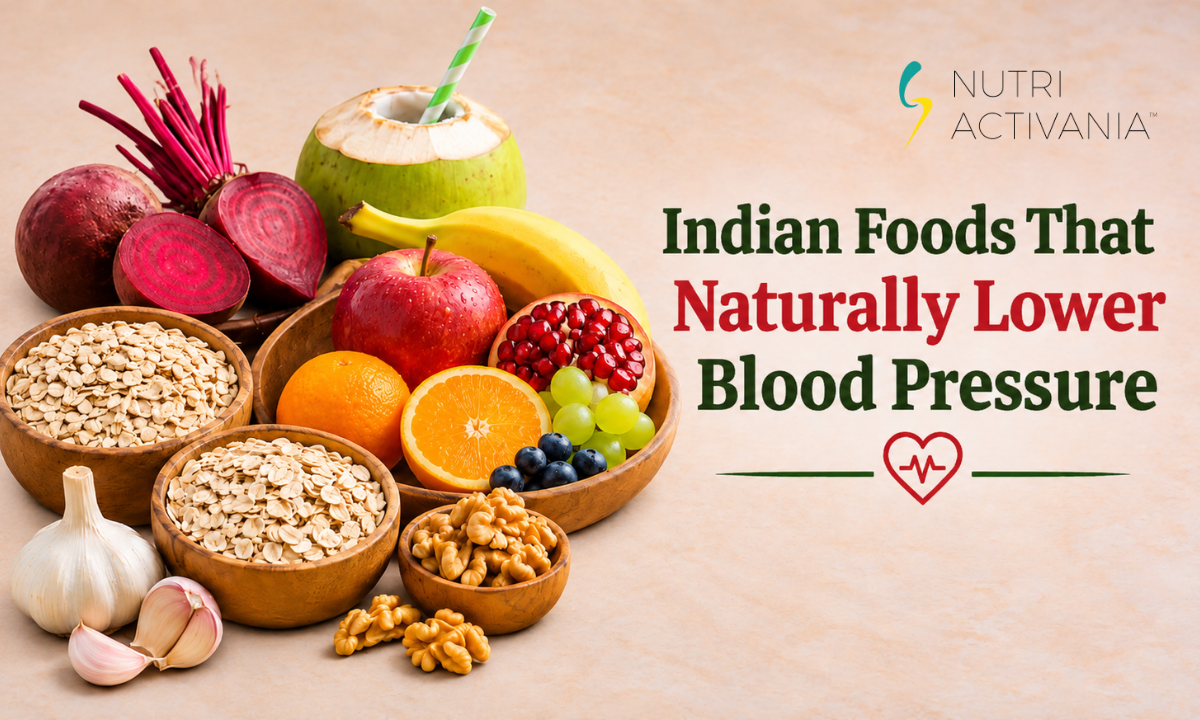
High blood pressure now affects more than 220 million Indians, and most are not even aware they have it until a routine check reveals the problem. The good news is that food, used correctly, is one of the most powerful tools to bring blood pressure down naturally. Over years of clinical practice with hypertensive patients in Delhi and across India, these are the 15 Indian foods that consistently deliver results.
Every food on this list is widely available in Indian kitchens, affordable, and backed by clinical research for its blood pressure benefits. Add them to the meal patterns in our 7-day Indian diet plan for high blood pressure and you have a complete, sustainable BP control system.
How Diet Affects Blood Pressure
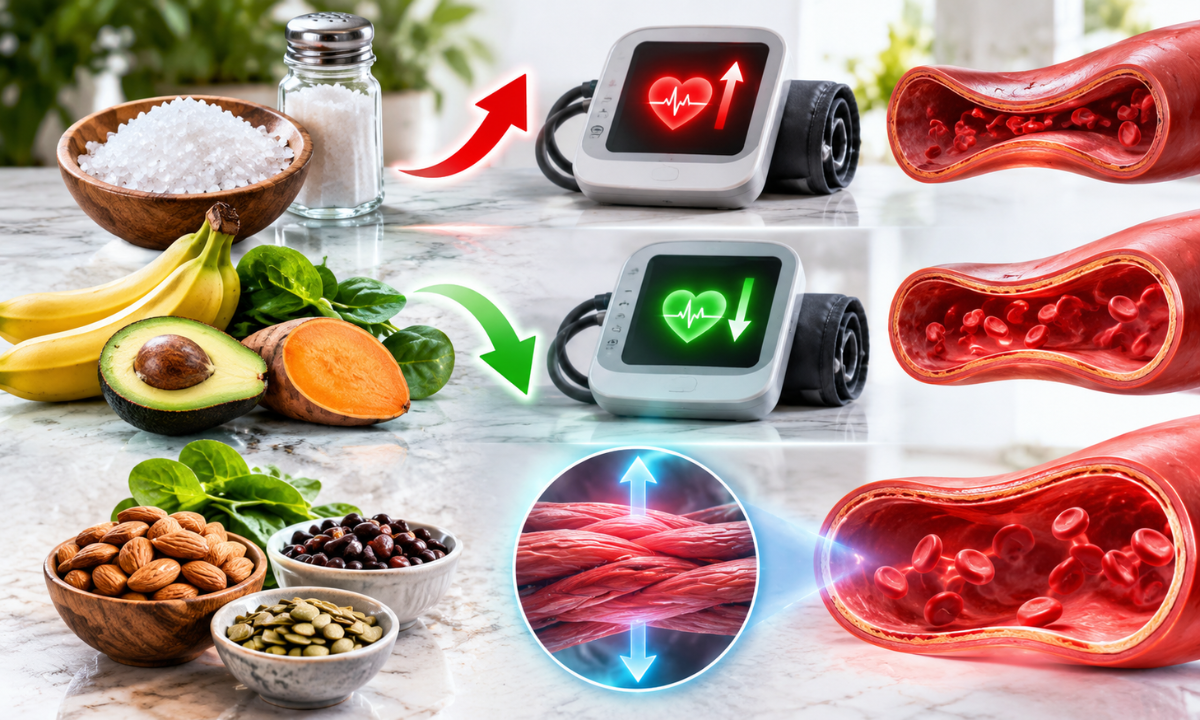
Blood pressure is controlled by three key minerals working in balance: sodium raises it, potassium lowers it, and magnesium helps blood vessels relax. Most Indians eat far too much sodium (through salt, pickles, papad, namkeen) and far too little potassium and magnesium. Correcting this imbalance alone can drop systolic pressure by 8 to 14 mmHg, which is equivalent to the effect of a mild BP medication.
The DASH principle (Dietary Approaches to Stop Hypertension) is simple: eat more fruits, vegetables, whole grains, low-fat dairy, nuts, and legumes, and cut processed and salty foods. The 15 foods below are the Indian application of this principle, rooted in ingredients and cooking methods that already exist in our kitchens. For the full science behind how diet and lifestyle choices improve heart health, the principles in this list extend to overall cardiovascular protection.
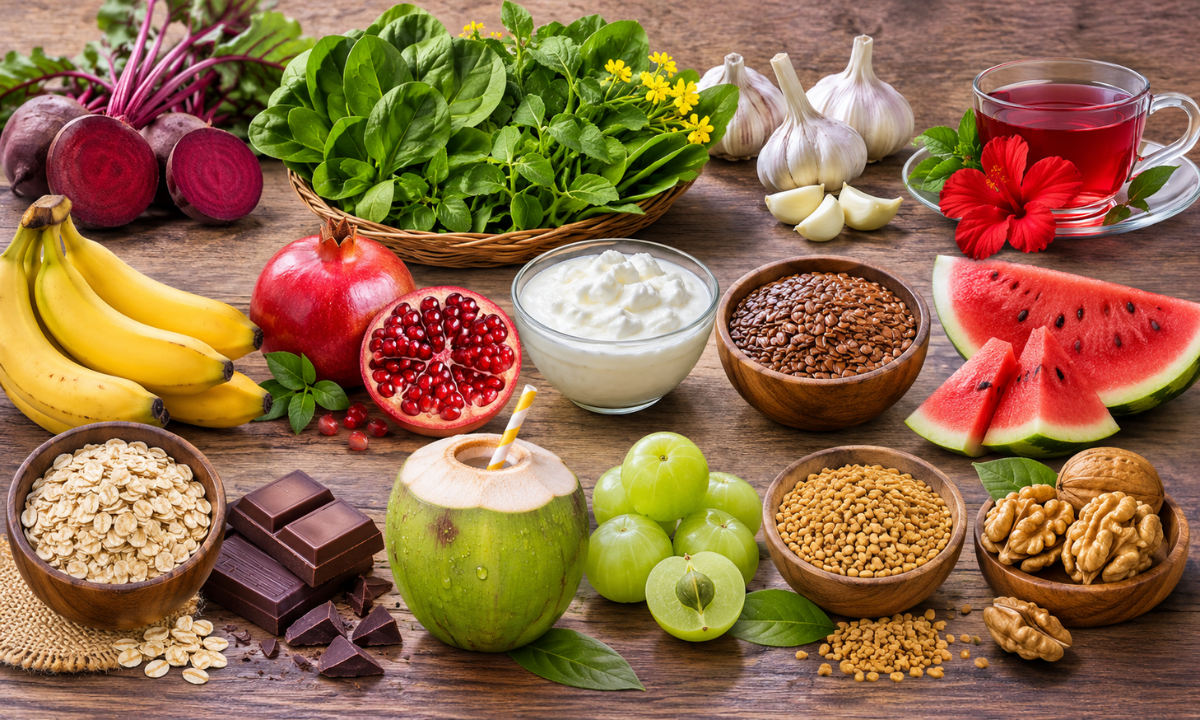
The 15 Indian Foods for Blood Pressure Control
1. Beetroot (Chukandar)
Beetroot is rich in dietary nitrates, which the body converts to nitric oxide. Nitric oxide relaxes blood vessels and lowers blood pressure. Clinical trials have shown that one cup of beetroot juice daily can reduce systolic BP by 4 to 10 mmHg within hours, with sustained benefits over weeks.
How to use: One cup beetroot juice daily, raw beetroot in salads, or beetroot added to sabzi, raita, and parathas.
Portion: 150 to 200 g raw beetroot or 200 ml juice per day.
Why it works for Indians: Easily available year-round across every Indian city, affordable at 40 to 60 rupees per kg, and absorbs Indian spices beautifully.
2. Spinach and Other Leafy Greens (Palak, Methi, Sarson)
Dark leafy greens are packed with potassium, magnesium, folate, and nitrates. A cup of cooked palak gives you 839 mg of potassium, more than a banana. Methi (fenugreek leaves) and sarson (mustard greens) carry similar benefits, and sarson is especially useful in winter.
How to use: Palak dal, methi paratha (minimum salt), sarson ka saag, spinach raita, palak soup.
Portion: At least one cup cooked greens daily.
Pro tip: Do not overcook. Lightly sauté or add to dal in the last two minutes to preserve potassium content.
3. Garlic (Lehsun)
Garlic contains allicin, which relaxes blood vessels and improves nitric oxide production. Multiple studies show garlic can reduce systolic BP by 7 to 16 mmHg and diastolic by 5 to 9 mmHg over 12 weeks of consistent use.
How to use: Two to three raw cloves on an empty stomach, crushed garlic in tadka (crush and let sit for 10 minutes before cooking to activate allicin), garlic chutney (minimum salt).
Portion: 2 to 4 cloves (about 600 to 1,200 mg) daily.
Caution: If you are on blood-thinning medication, consult your doctor before increasing garlic intake significantly.
4. Hibiscus (Gudhal) Tea
Hibiscus flowers brewed as tea contain anthocyanins and polyphenols that act as natural ACE inhibitors, the same mechanism as some BP medications. Clinical trials show daily hibiscus tea can lower systolic BP by 7 mmHg in hypertensive patients within six weeks.
How to use: Steep dried hibiscus flowers in hot water for 10 minutes, no sugar. Drink in the evening.
Portion: One to two cups daily.
Where to buy: Any organic store in Delhi, Bangalore, or Mumbai sells dried hibiscus flowers. Also available on Amazon and online spice retailers. For more herbs that control hypertension at home, our dedicated guide covers the full list.
5. Banana (Kela)
A medium banana provides 420 mg of potassium and almost zero sodium, making it one of the best natural BP-lowering snacks. Potassium helps the body excrete excess sodium through urine.
How to use: As a mid-morning snack, in smoothies with low-fat milk and flaxseed, or sliced over oats.
Portion: One medium banana daily.
Caution for diabetics and kidney patients: Diabetics should limit to half a banana at a time. Kidney patients (CKD stage 3 or above) should consult their nephrologist before increasing banana intake, as potassium needs restriction in advanced kidney disease.
6. Pomegranate (Anaar)
Pomegranate is rich in polyphenols and has been studied specifically for blood pressure. A 2012 meta-analysis found that pomegranate juice consistently reduced both systolic and diastolic BP in hypertensive patients across multiple clinical trials.
How to use: Fresh pomegranate seeds sprinkled over salads, raita, yoghurt bowls, or eaten whole. Fresh juice is more effective than packaged.
Portion: Half to one cup of seeds daily, or 150 ml fresh juice.
Pro tip: Buy whole pomegranates in winter when they are in peak season and most affordable. Freeze the seeds for off-season use.
7. Curd (Dahi, Low Fat)
Low-fat curd provides calcium, probiotics, and peptides that support healthy blood pressure. Studies show that two to three servings of low-fat dairy daily reduce hypertension risk by 20 percent.
How to use: Plain curd with meals, buttermilk (chaas without salt), raita with cucumber or beetroot, lassi (no sugar, no salt).
Portion: One to two katoris of low-fat curd daily, or one glass of buttermilk.
Critical rule: Set your own curd at home with low-fat milk. Shop-bought flavoured curds often contain sugar and additives.
8. Flaxseeds (Alsi)
Flaxseeds are the richest plant source of omega-3 fatty acids and also contain lignans and fibre, all of which lower blood pressure. A landmark clinical trial showed that 30 g of flaxseed daily reduced systolic BP by 10 mmHg and diastolic by 7 mmHg over 6 months, which is among the largest dietary BP reductions ever recorded in a trial.
How to use: One tablespoon of roasted flaxseed powder sprinkled on dal, curd, smoothies, or roti dough.
Portion: 15 to 30 g (one to two tablespoons) daily.
How to store: Dry roast whole flaxseeds, cool, grind to powder, store in an airtight jar in the fridge. Use within two weeks for maximum omega-3 benefit.
9. Watermelon (Tarbooz)
Watermelon contains citrulline, an amino acid that converts to arginine, which produces nitric oxide. It is also 92 percent water, so it hydrates without adding sodium, which matters for anyone on diuretic BP medication.
How to use: As a mid-morning or evening snack, in fruit chaat, or juiced (no sugar).
Portion: One to two cups of cubes daily.
Seasonal note: Peak Indian season is April to July. In winter, replace with orange and guava for similar vitamin C and hydration benefits.
10. Oats
Oats are rich in beta-glucan, a soluble fibre that lowers both cholesterol and blood pressure. A meta-analysis of 28 trials found that daily oat consumption reduces systolic BP by 2.7 mmHg and diastolic by 1.5 mmHg.
How to use: Vegetable oats upma, oats khichdi, overnight oats with banana and flaxseed, oats chilla, oats idli.
Portion: Half a cup of dry oats (one katori cooked) daily.
Buying tip: Choose rolled oats or steel-cut oats over instant oats. Instant oats have been processed and often contain added salt and sugar.
11. Dark Chocolate (70 Percent Plus)
Dark chocolate contains flavanols that improve blood vessel elasticity and lower blood pressure. Only chocolate with 70 percent cocoa or higher counts. Milk chocolate and dairy milk bars do not.
How to use: A small square after dinner as dessert, or shaved over fruit.
Portion: 20 to 30 g daily, not more.
Which brands: Lindt 70 or 85 percent, Amul Dark Signature 70 percent, and most 70 percent plus imported bars sold in Indian supermarkets.
12. Coconut Water (Nariyal Pani)
Tender coconut water gives you 600 mg of potassium per cup and almost zero sodium. A small clinical trial from Kerala showed that daily coconut water intake reduced systolic BP by 24 mmHg in 71 percent of hypertensive participants over two weeks.
How to use: Fresh tender coconut water in the morning or as a pre-workout drink.
Portion: One glass (250 ml) daily.
Critical rule: Only fresh tender coconut water. Packaged coconut water drinks often add sugar and preservatives that cancel the BP benefit.
13. Amla (Indian Gooseberry)
Amla is one of the richest natural sources of vitamin C, which reduces oxidative stress on blood vessels. Studies on amla extract show significant BP reduction in hypertensive patients over 12 weeks.
How to use: Raw amla with a pinch of black pepper, amla juice (fresh, no sugar), amla murabba (minimum sugar), or home-made amla candy (no salt).
Portion: One raw amla or 30 ml fresh juice daily.
Seasonal note: Peak Indian season is October to March. Freeze extra amla as whole fruit or grated to use year-round.
14. Fenugreek Seeds (Methi Dana)
Methi seeds are rich in soluble fibre and compounds that improve insulin sensitivity and lower blood pressure. They are particularly effective for people with both diabetes and hypertension, a very common combination in Indian patients.
How to use: Soak one teaspoon overnight and drink the water on an empty stomach, or sprout and add to salads, or add to dal tadka.
Portion: One teaspoon (about 5 g) daily.
Caution: Pregnant women should limit methi seeds, as high doses can affect the uterus. Our dedicated guide on diet to reduce high blood pressure during pregnancy covers safe pregnancy-specific options.
15. Walnuts (Akhrot)
Walnuts are rich in alpha-linolenic acid, an omega-3 fat that lowers blood pressure and reduces arterial stiffness. They also contain magnesium, which supports vessel relaxation.
How to use: Four to six halves as a mid-morning or evening snack, or chopped over curd, oats, or salads.
Portion: 25 to 30 g (4 to 6 halves) daily.
How to store: Keep in an airtight jar in the fridge to prevent the natural oils from going rancid. If walnuts taste bitter, they have oxidised and should be discarded.
How to Include These Foods in Daily Indian Meals
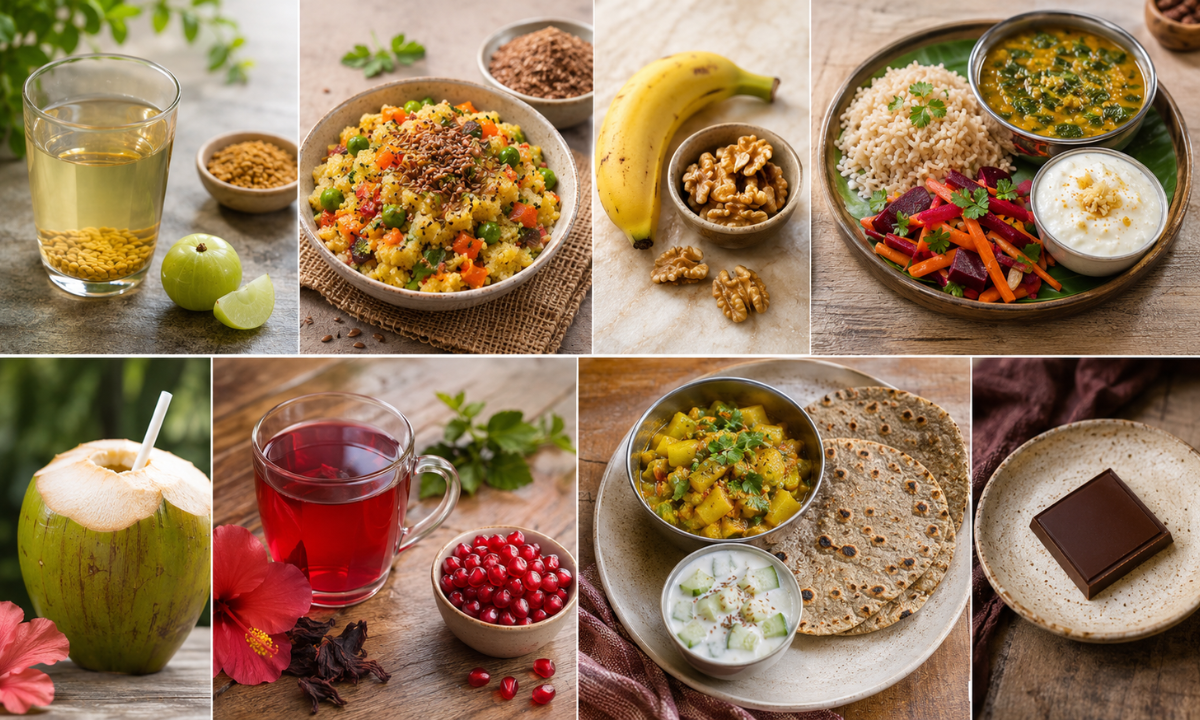
A practical day using these 15 foods looks like this.
Morning (7 am): Warm water with soaked fenugreek seeds, followed by one raw amla or 30 ml amla juice.
Breakfast (8.30 am): Vegetable oats upma with a tablespoon of flaxseed powder sprinkled on top.
Mid-morning (11 am): One banana and 5 walnut halves.
Lunch (1.30 pm): Palak dal with brown rice, beetroot and carrot salad, one katori low-fat curd with raw crushed garlic stirred in.
Afternoon (4 pm): One glass tender coconut water.
Evening (6 pm): One cup hibiscus tea with a small bowl of pomegranate seeds.
Dinner (8 pm): Lauki curry with two bajra rotis, cucumber raita with roasted cumin.
Post-dinner (9 pm): One square (20 g) of 70 percent dark chocolate.
This single day hits 14 of the 15 foods. Watermelon can be rotated in on alternate days replacing banana or pomegranate when in season.
Foods to Pair With These for Better Results
Blood pressure control is as much about what you remove as what you add. Even the best 15 foods will not work if you keep eating these alongside.
Avoid completely: Pickles (achar), papad, namkeen, bhujia, Maggi, packaged soups, bottled sauces, pizza, burgers, bakery biscuits, salted butter, processed cheese, salted cashews, salted peanuts.
Limit heavily: Deep-fried snacks (samosa, pakoda, kachori), mithai with vanaspati, red meat (mutton), full-cream dairy, maida-based items, sugar-sweetened drinks.
Replace smartly: Replace table salt with a pinch of hing and lemon, replace sugar with dates in small quantities, replace refined oil with mustard oil or groundnut oil in moderation, replace white rice with brown rice or millets.
Read our detailed guide on hidden salt in Indian diets and its side effects for the full list of sodium traps that can undo every benefit from the 15 foods above. For a wider food list and daily rotation, see our heart-healthy Indian foods guide and the complete top 30 heart-healthy foods.
When Food Alone Is Not Enough
Diet is foundational, but not always sufficient. If your systolic BP is consistently above 160 or diastolic above 100, if you have had a cardiac event, or if you have kidney disease or diabetes along with hypertension, food will support but not replace medication.
Diet plus medication is the standard of care, not diet instead of medication. Many of our patients are able to reduce their medication dose by 25 to 50 percent after 3 to 6 months of consistent diet and lifestyle changes, but this must happen under a doctor’s supervision with regular BP monitoring.
Equally, blood pressure needs more than just food. Regular exercise (30 minutes of brisk walking daily), 7 to 8 hours of sleep, stress management, and weight control all work together with diet. Smoking and heavy alcohol use will undo every benefit these 15 foods provide.
The long-term goal of BP control is preventing complications like stroke and heart attack. Our guide on foods that prevent stroke covers how sustained BP control reduces lifetime stroke risk by up to 40 percent. For patients with coexisting high cholesterol, our foods to lower cholesterol naturally guide pairs with this list.
For a personalised BP diet based on your current readings, medication, Indian regional preferences, and other health conditions, a one-on-one consultation with Avni Kaul is the fastest path to sustainable control.
FAQs
How quickly can these foods lower my blood pressure?
Noticeable reductions begin within 1 to 2 weeks of consistent daily intake. Expect a 5 to 10 mmHg drop in systolic BP within 4 to 6 weeks when combined with reduced salt and regular walking. Beetroot and hibiscus can show measurable drops within 24 to 48 hours.
Can I eat all 15 foods every day?
Yes, in small portions. Most of them can be rotated within a single day as shown in the sample schedule above. The key is variety and consistency, not quantity of any one food.
Which of these foods is the single most effective?
Beetroot and garlic have the strongest clinical evidence for immediate and sustained BP reduction. Hibiscus tea is the most underused and underrated.
Are these foods safe if I am on BP medication?
Generally yes, but monitor your BP closely. If your readings start dropping below 110 over 70 consistently, speak to your doctor about adjusting medication. Never stop medication on your own.
Can diabetic patients eat all these foods?
Yes, with adjustments. Limit banana to half a banana, replace pomegranate with amla and guava, skip dark chocolate or limit to 10 g, and consult your dietician for specific portions. Read our full guide on diet tips for managing diabetes and high blood pressure together.
Are there any foods on this list to avoid during pregnancy?
Fenugreek seeds should be limited during pregnancy as they can affect the uterus in large doses. Hibiscus tea is also best avoided in the first trimester. For pregnancy-specific BP management, read our guide on diet for high blood pressure during pregnancy.
Can kidney patients eat these foods?
If you have chronic kidney disease, many high-potassium foods on this list (banana, coconut water, spinach, pomegranate) need to be restricted. Consult a nephrologist and a renal dietician before following this list.
Is tomato on this list? I have heard it helps.
Tomato is a very useful BP food and would be number 16 if the list was longer. See our dedicated guide on tomato juice and blood pressure for the evidence and how to use it.
How do I know if the 15 foods are actually working?
Measure your BP twice daily (morning fasting and evening) at the same time each day, for at least 4 weeks. A home BP monitor is a one-time investment of around 1,500 to 3,000 rupees and essential for anyone on this journey. Track the readings in a notebook or app.
Download Free BP Diet Chart and Book a Consultation
Want a printable chart of these 15 foods with portions, timings, and a weekly rotation plan? Download our free BP diet chart designed by Avni Kaul.
For a personalised plan built around your current BP readings, medical reports, medication, and lifestyle, book a one-on-one consultation with Avni Kaul, Delhi’s trusted certified nutritionist and dietician. Thousands of hypertensive patients across India have reduced their BP sustainably with Avni’s food-first approach.
Download free BP diet chart | Book your consultation with Avni Kaul today.