

Migraines can cause throbbing head pain, nausea, and sensitivity to light or sound. Although food is not the cause of every migraine, certain foods, drinks, and eating habits may trigger attacks in some people.
There is no universal list of foods that everyone with migraine needs to avoid. Tracking possible food triggers can help you make informed dietary choices without unnecessarily restricting your diet. Regular meals, adequate hydration, and a balanced eating routine may also help support migraine management. If you want personalised guidance, you can consult a dietitian in Delhi, or read Best Dietician in Delhi to learn what to expect from a consultation.
Key Takeaways
- Alcohol, irregular caffeine intake, and skipping meals are commonly reported migraine triggers.
- Aged cheese, processed meats, chocolate, and foods containing MSG may trigger symptoms in some individuals, but evidence varies.
- Eating meals regularly and maintaining adequate hydration may help reduce common lifestyle-related triggers.
- A food and headache diary can help identify patterns.
- No single diet prevents migraines for everyone, and dietary changes should not replace prescribed medical treatment.
How Can Food Affect Migraine Headaches?
The relationship between diet and migraine is complex. Some people notice that particular foods or drinks are followed by a migraine attack, while others experience no clear connection.
Migraine triggers can also include stress, poor sleep, hormonal changes, dehydration, and environmental factors. Several triggers may occur together, making it difficult to identify the exact cause of an attack.
Food cravings can sometimes occur during the early phase of a migraine, before the headache begins. For example, craving chocolate before an attack does not necessarily mean that chocolate caused it.
Instead of eliminating several foods at once, focus on identifying consistent patterns and maintaining regular eating habits.
Foods to Avoid for Migraine Headaches
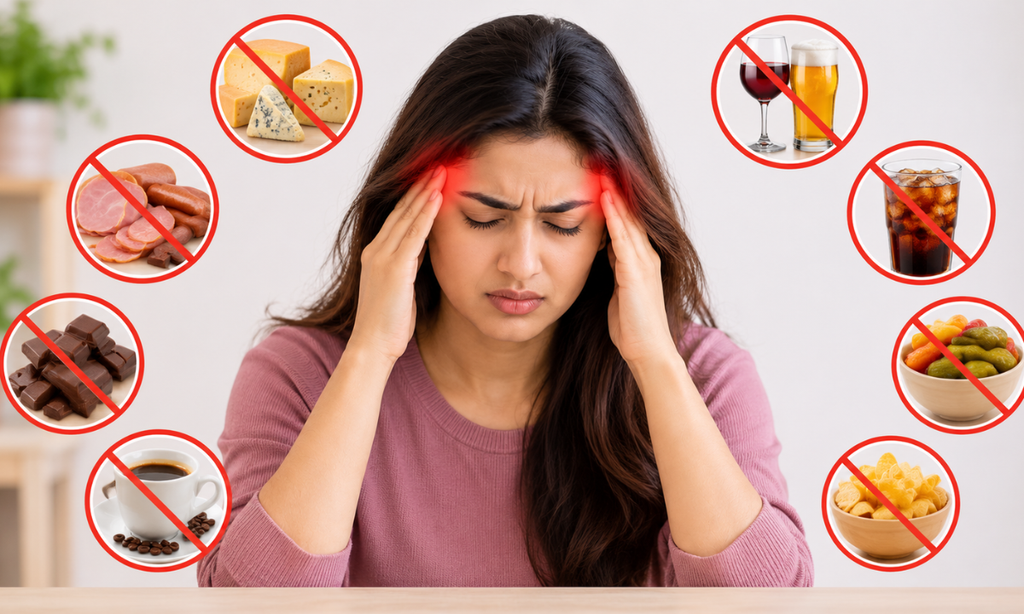
The following foods and drinks may be worth monitoring if you suspect a dietary connection. They are potential triggers, not foods that everyone with migraine must avoid.
1. Aged Cheese
Certain aged cheeses contain tyramine, a compound formed as some foods mature. Tyramine has been investigated as a possible migraine trigger, but the evidence is inconclusive.
Examples include:
- Cheddar
- Blue cheese
- Parmesan
- Other aged cheeses
Monitor your personal response rather than avoiding cheese by default. If you repeatedly notice a connection between a particular cheese and migraine attacks, discuss your observations with a healthcare professional.
2. Processed Meats
Processed meats may contain nitrates or nitrites used for preservation. Some people report headaches after eating particular processed meats, although these foods do not trigger migraine in everyone.
Examples include:
- Bacon
- Sausages
- Ham
- Salami
- Other cured or processed meats
If you suspect these foods are associated with your headaches, record what you eat and when your symptoms occur. Freshly prepared meat, eggs, dal, beans, and other protein sources can provide alternatives as part of a balanced diet.
3. Alcohol
Alcohol is a commonly reported migraine trigger. Wine and beer are frequently mentioned, although individual responses differ.
If alcohol consistently precedes your migraine attacks, avoiding it is a practical choice. You do not need to drink alcohol as part of a balanced diet.
If you do not consume alcohol, there is no reason to start.
4. Excessive or Irregular Caffeine Intake
Caffeine can affect migraine symptoms in different ways. Some people find that a small amount helps relieve a headache, while others experience attacks after consuming too much caffeine.
Abruptly reducing regular caffeine intake can also cause withdrawal headaches.
Common sources include:
- Coffee
- Tea
- Energy drinks
- Cola and other caffeinated soft drinks
- Some chocolate products
Try to keep your caffeine intake consistent. If you want to reduce it, gradually lowering your intake may help avoid withdrawal symptoms. If you use caffeine to manage headaches frequently, discuss an appropriate approach with your healthcare professional.
5. Chocolate
Chocolate is often reported as a possible migraine trigger, but the relationship is not straightforward.
Some people notice headaches after eating chocolate. However, chocolate cravings may also occur during the early phase of a migraine, before the pain starts.
You do not necessarily need to eliminate chocolate. Record the timing of your cravings, consumption, and symptoms to see whether a consistent pattern emerges.
6. Foods Containing MSG
Monosodium glutamate (MSG) is a flavour enhancer used in some packaged foods, seasonings, sauces, and restaurant dishes.
Some people report headaches after consuming foods containing MSG, but research does not establish it as a universal migraine trigger.
If you suspect MSG affects you, check food labels and note whether symptoms repeatedly occur after particular meals. Avoid broad food restrictions unless you have identified a consistent personal association.
7. Artificial Sweeteners
Aspartame and certain other artificial sweeteners have been investigated for a possible relationship with headaches. However, the evidence is inconsistent.
Artificial sweeteners do not trigger migraine in everyone. If you suspect a particular product is associated with your symptoms, record the product, quantity, and timing rather than eliminating every food containing sweeteners.
8. Fermented and Pickled Foods
Some fermented or aged foods contain biogenic amines, including tyramine. These compounds have been studied for their potential role in headaches, but the evidence is not conclusive for all foods or individuals.
Examples include:
- Certain fermented foods
- Pickled vegetables
- Aged or cured products
- Some fermented sauces
Monitor your personal response rather than automatically removing these foods from your diet.
9. Foods You Have Personally Identified as Triggers
Your own trigger pattern may be more useful than a general list of foods to avoid.
For example, one person may report symptoms after drinking wine, while another may experience attacks after skipping lunch or consuming a large amount of caffeine.
Look for repeated associations over time. A single headache after eating a particular food does not prove that the food caused it.
Eating Habits That May Trigger Migraine
Food choices are only one part of migraine management. The timing and consistency of meals can also matter.
Skipping Meals or Fasting for Long Periods
Going for long periods without eating may trigger headaches in some people. Skipping breakfast or delaying lunch can make it harder to maintain a regular eating routine.
To support consistent energy intake:
- Eat meals at reasonably regular times.
- Carry a suitable snack when you expect to be away from home for several hours.
- Avoid prolonged fasting if it consistently triggers headaches.
- Adjust meal timing to your daily routine and nutritional needs.
Not Drinking Enough Water
Dehydration can contribute to headaches and may be a trigger for some people with migraine.
Practical habits include:
- Drinking water regularly throughout the day.
- Carrying a reusable water bottle.
- Drinking more when activity or hot weather increases your fluid needs.
- Paying attention to thirst and your usual hydration patterns.
A water intake calculator can offer a general starting point, but individual fluid requirements vary. If you have kidney disease, heart failure, or another condition requiring fluid restriction, follow your healthcare professional’s advice instead of relying on a generic calculator.
Changing Caffeine Intake Suddenly
A sudden reduction in caffeine can cause withdrawal headaches, especially in people who regularly consume large amounts.
If you plan to cut down on coffee or tea, consider reducing your intake gradually. Maintaining a consistent routine may be more helpful than repeatedly switching between high and very low caffeine consumption.
Eating at Irregular Times
Frequently delaying meals may contribute to headaches in some individuals.
Try to establish a practical routine that fits your work schedule. If you have a desk job, for example, setting reminders for lunch and keeping a suitable snack available may help prevent long gaps between meals. For meal ideas that fit a regular routine, read Women’s Weight Loss Diet Chart
Foods to Eat for Migraine Support
No food can reliably stop a migraine attack or prevent every future episode. However, a balanced diet provides essential nutrients and supports general health.
1. Whole Grains
Whole grains provide carbohydrates and fibre and can form part of a balanced meal.
Options include:
- Oats
- Whole-wheat chapati
- Brown rice
- Millet-based dishes
- Other whole-grain foods you enjoy
Choose options that suit your nutritional needs and usual eating pattern.
2. Leafy Green Vegetables
Leafy greens provide nutrients, including folate and magnesium.
Examples include:
- Spinach
- Amaranth leaves
- Methi
- Other locally available leafy vegetables
Include a variety of vegetables in your meals rather than relying on a single food for migraine management.
3. Nuts and Seeds
Nuts and seeds provide nutrients such as magnesium, healthy fats, and protein.
Suitable options include:
- Almonds
- Peanuts
- Pumpkin seeds
- Sunflower seeds
- Walnuts
Choose portions that fit your nutritional needs. Avoid any nuts or seeds that cause an allergic reaction or are otherwise unsuitable for you.
4. Fruits and Vegetables
Fruits and vegetables provide vitamins, minerals, fibre, and water.
Examples include bananas, oranges, apples, carrots, cucumber, tomatoes, and seasonal produce.
Fresh, frozen, and appropriately prepared vegetables can all contribute to a balanced diet. Choose foods you tolerate well and enjoy eating regularly.
5. Protein-Rich Foods
Protein supports many normal body functions and helps make meals more balanced.
Useful options include:
- Dal and other pulses
- Chickpeas and beans
- Eggs
- Milk and curd
- Paneer
- Fish or lean meat, if included in your diet
Including a protein source in meals may help you maintain a practical and satisfying eating routine.
6. Foods Containing Omega-3 Fatty Acids
Omega-3 fatty acids are found in certain fish, nuts, and seeds.
Sources include:
- Fatty fish such as sardines and salmon
- Walnuts
- Flaxseeds
- Chia seeds
These foods can contribute to a balanced diet, but eating them should not be presented as a guaranteed way to prevent migraine attacks.
7. Ginger
Ginger is used in many Indian dishes and beverages. Some studies have explored its potential role in migraine-associated nausea, but evidence remains limited.
You can include ginger in food or tea if you enjoy it and tolerate it well. It should not replace prescribed migraine medicines or professional medical advice.
A Simple Indian Eating Routine to Support Regular Meals
Eating at regular intervals may help you avoid long gaps between meals, which some people report as a migraine trigger.
The following is an example of a balanced eating routine, not a migraine treatment plan.
| Meal | Example | Practical purpose |
| Breakfast | Vegetable poha with peanuts and curd, or oats with milk and fruit | Provides energy and can include protein |
| Mid-morning | Banana or another seasonal fruit | Offers a convenient snack between meals |
| Lunch | Rice or chapati, dal, vegetables and curd | Provides carbohydrates, protein and fibre |
| Evening snack | Roasted chana, fruit or a small portion of nuts | Helps manage hunger before dinner |
| Dinner | Chapati or rice with vegetables and dal, paneer, eggs, chicken or fish | Supports a balanced evening meal |
| Throughout the day | Drink water at regular intervals | Helps maintain hydration |
Adjust portions and food choices to your appetite, nutritional needs, allergies, medical conditions, and personal food triggers.
There is no single migraine diet suitable for everyone. If you need help planning meals around your nutritional requirements, a qualified dietitian can help you develop an appropriate approach.
How to Identify Your Migraine Food Triggers
Keeping a headache and food diary can help you identify patterns without eliminating several foods unnecessarily.
Record the following information:
- What you ate and drank, including approximate quantities.
- The times you ate your meals and whether you skipped any.
- Your caffeine and alcohol intake, if applicable.
- When your headache began and how severe it was.
- Your sleep patterns, stress levels, hydration, and other possible contributing factors.
- Any medicines taken and whether they helped.
Review your diary over time to see whether the same food or habit repeatedly coincides with migraine attacks.
Remember that a food eaten before a headache does not necessarily mean it caused the attack. Migraine symptoms can begin before the headache itself, and cravings during this early phase may influence what you eat.
Avoid eliminating multiple food groups without a clear reason, as unnecessary restrictions can make it harder to obtain adequate nutrients.
For additional guidance, read NutriActivania’s article on personalised diet planning. Dietary changes should complement, not replace, appropriate medical care.
When to Seek Medical Advice
Consult a healthcare professional if your headaches are frequent, worsening, interfering with daily activities, or not responding to your current treatment.
Seek medical advice if you are unsure whether your symptoms are migraine or another type of headache. A healthcare professional can assess your symptoms and discuss suitable treatment options.
Seek emergency medical care for a sudden, severe “worst-ever” headache, or a headache accompanied by new weakness, confusion, fainting, difficulty speaking, sudden vision loss, fever with a stiff neck, or other new neurological symptoms.
Do not stop prescribed migraine medicines or start supplements, including high-dose magnesium, without speaking to your healthcare professional. Food sources of nutrients and concentrated supplements are not interchangeable, and supplements may have side effects or interact with medicines.
Frequently Asked Questions
1. What foods should I avoid if I have migraine headaches?
Alcohol, irregular caffeine intake, skipped meals, aged cheese, and processed meats are among the commonly reported potential triggers. However, triggers vary between individuals, and you do not necessarily need to avoid all these foods.
2. Can chocolate trigger migraine?
Chocolate is reported as a possible trigger by some people, but the evidence is mixed. Chocolate cravings can also occur during the early phase of a migraine, so the timing of the craving and headache matters.
3. Is coffee bad for migraine?
Not necessarily. Caffeine may help some people with headaches, but high intake and sudden withdrawal can trigger headaches in others. Maintaining a consistent caffeine routine may help you understand your individual response.
4. Can skipping meals cause migraine headaches?
Skipping meals or fasting for long periods can trigger headaches in some people. Eating at regular intervals may help reduce this potential trigger.
5. Which foods are good for people with migraine?
A balanced diet can include whole grains, vegetables, fruits, pulses, nuts, seeds, dairy products, eggs, and other suitable protein sources. No particular food is guaranteed to prevent migraine attacks.
6. Does drinking water help with migraine?
Maintaining adequate hydration may help if dehydration contributes to your headaches. However, drinking water is not a guaranteed treatment for migraine, and individual fluid needs vary.
7. Should I follow a strict migraine diet?
Not necessarily. There is no single migraine diet suitable for everyone. Start by maintaining regular meals, drinking adequate fluids, and tracking possible triggers. Seek professional advice before making major dietary changes.
8. Can a dietitian help identify migraine food triggers?
A qualified dietitian can help you review your eating habits, identify possible dietary patterns, and maintain a nutritionally balanced diet. Dietary support should complement medical assessment and treatment.
Conclusion
Identifying foods to avoid for migraine headaches starts with understanding your own symptoms rather than following a strict list of prohibited foods.
Alcohol, irregular caffeine intake, skipped meals, and certain aged or processed foods may be worth monitoring. At the same time, regular meals, adequate hydration, and a varied, balanced diet can support your overall health.
Keep a headache and food diary, avoid unnecessary dietary restrictions, and consult a healthcare professional if your headaches are frequent, severe, or changing.
Medical disclaimer: This article provides general educational information and is not a substitute for professional medical advice, diagnosis, or treatment. Migraine triggers and treatment needs vary between individuals. Consult a qualified healthcare professional for personalised guidance.
Last updated: 5 November 2026.