Introduction
A balanced diet chart for women aiming to lose weight should support gradual fat loss while preserving energy, muscle mass, and nutritional adequacy. You do not need to eliminate rice, roti, dosa, idli, or other familiar Indian foods. What matters is how meals fit together, the portions you eat, your activity level, and whether the pattern supplies the nutrients your body needs.
Women’s nutrition needs can vary with menstruation, pregnancy, breastfeeding, perimenopause, menopause, activity, and health conditions. This guide focuses on those considerations and gives a flexible meal framework, not a fixed calorie prescription. If you would like personalised guidance from a dietitian and nutritionist in Delhi, our weight loss program can help you build a plan around your routine and health needs. For a detailed day-by-day menu with portion guidance, use our 7-day Indian diet plan for weight loss.
Key Takeaways
- Weight loss does not require cutting out rice, roti, or other carbohydrate-rich foods.
- Build meals around vegetables, protein-rich foods, whole grains, and suitable portions.
- Iron, calcium, vitamin D, and protein deserve particular attention at different life stages.
- Menstrual-cycle changes can temporarily affect scale weight; short-term fluctuations are not necessarily fat gain.
- Pregnancy, breastfeeding, PCOS, thyroid disease, diabetes, anaemia, and other medical conditions may require individual advice.
- Avoid crash diets and severe food restriction.
What Should a Woman Eat to Lose Weight?
The aim is to create a manageable energy deficit while continuing to eat enough to meet nutritional needs. A balanced pattern can include:
- Protein-rich foods: dal, rajma, chana, other beans, curd, milk, paneer, tofu, eggs, fish, and chicken.
- Vegetables: leafy greens, beans, carrots, gourds, cucumber, cauliflower, and seasonal vegetables.
- Whole fruits: guava, oranges, apples, papaya, and other fruits you enjoy.
- Grains and starchy foods: rice, whole-wheat roti, oats, millets, idli, dosa, and poha.
- Sources of healthy fats: nuts, seeds, and measured amounts of cooking oil.
- Calcium-rich foods: milk, curd, paneer, and suitable fortified alternatives.
There is no single best diet for every woman. Meal portions and food choices should reflect body size, activity, preferences, budget, health status, and goals. For a simple meal-building approach, see our guide to a balanced Indian diet plan for weight loss.
How to Build a Balanced Weight-Loss Plate
Use this visual guide as a starting point rather than a strict rule.
| Plate section | Example foods |
| About half the plate | Salad and cooked vegetables, including leafy greens |
| About one-quarter | Protein-rich foods such as dal, rajma, chana, curd, paneer, tofu, eggs, chicken, or fish |
| About one-quarter | Rice, roti, millet roti, or another grain |
| Added fats | A measured amount of oil, plus nuts or seeds in suitable portions |
The exact proportions may need to change based on your appetite, activity, medical needs, and the type of meal. A bowl of dal or sambar may contribute both fluid and protein, but the amount of protein varies with the recipe and portion. Try to include a clear protein source at each main meal.
Sample 7-Day Indian Meal Framework for Women
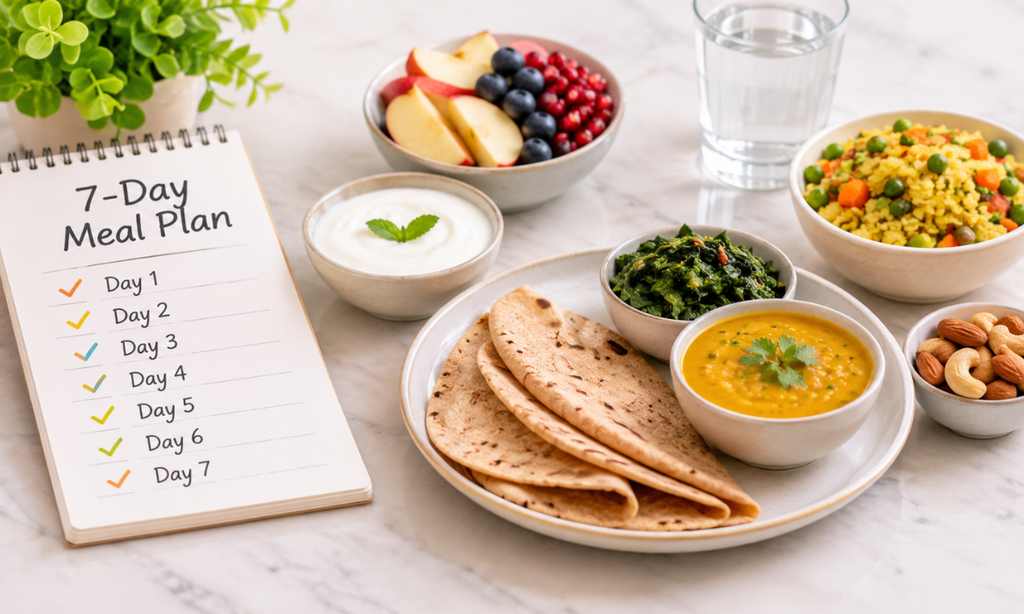
This is a flexible framework, not a complete prescribed diet. Adjust quantities to your needs and include enough food to feel adequately nourished. The chart deliberately provides examples rather than duplicating the detailed portions and nutrition estimates in our full 7-day Indian meal plan.
| Day | Breakfast | Lunch | Snack, if hungry | Dinner |
| Day 1 | Idli with sambar | Roti, dal, sabzi, and curd | Guava with roasted chana | Vegetable khichdi with curd or tofu |
| Day 2 | Vegetable oats with milk or curd | Rice, rajma, and salad | Fruit and a small portion of nuts | Roti with paneer or tofu bhurji and vegetables |
| Day 3 | Dosa with sambar | Roti, chana curry, and vegetables | Plain curd or buttermilk | Vegetable dalia with dal or another protein source |
| Day 4 | Eggs with whole-wheat toast, or moong dal chilla | Rice, dal, sabzi, and curd | Papaya or another fruit | Roti with chicken, fish, paneer, or tofu and vegetables |
| Day 5 | Vegetable poha with curd | Roti, mixed dal, and sabzi | Roasted chana or makhana with curd | Vegetable soup plus a protein-rich dish and a grain if needed |
| Day 6 | Moong dal chilla with curd | Rice, sambar, vegetables, and curd | Fruit and a few nuts | Roti with rajma or chana and vegetables |
| Day 7 | Vegetable upma with a protein-rich side | Roti, dal, vegetables, and salad | Buttermilk and roasted chana | Vegetable pulao with raita and dal, tofu, paneer, eggs, or another protein source |
Adjusting the framework
- Vegetarian: Rotate dal, beans, chana, rajma, soy foods, paneer, milk, and curd rather than relying on one source every day.
- Egg-eating: Eggs can be used at breakfast or as part of another meal.
- Fish- or chicken-eating: These can replace paneer or tofu in suitable meals; retain vegetables and a suitable grain portion.
- Busy schedule: Prepare beans, dal, chopped vegetables, and basic meal components ahead of time.
- Different appetite or activity levels: Adjust portions rather than skipping meals or following an arbitrary calorie limit.
Women-Specific Nutrition Priorities
Iron and menstrual health
Menstruating women may need to pay particular attention to iron intake, especially if periods are heavy. Sources include lentils, beans, chickpeas, leafy greens, and iron-fortified foods where available. Vitamin C-rich foods—such as guava, citrus fruits, tomatoes, and capsicum—can help the body absorb iron from plant foods.
Fatigue can have many causes, including iron deficiency, but symptoms alone cannot confirm the cause. If you have persistent tiredness, dizziness, breathlessness, heavy periods, or concerns about anaemia, seek medical advice and ask whether testing is appropriate. Do not start iron supplements without suitable guidance.
Calcium, vitamin D, and bone health
Calcium and vitamin D support bone health. Milk, curd, paneer, and suitable fortified alternatives can contribute calcium. Vitamin D status depends on factors including sunlight exposure, diet, absorption, and health; food alone may not meet everyone’s needs. A clinician can advise whether testing or supplementation is appropriate.
Bone health becomes especially important during perimenopause and menopause, when hormonal changes can affect bone loss. Depending on your health and ability, weight-bearing activity and strength training can also help support bone and muscle health.
Protein and muscle maintenance
Protein supports tissue repair and helps maintain muscle. During weight loss, adequate protein and appropriate strength exercise can help preserve lean mass. Protein needs depend on body weight, activity, age, health status, and goals. Women who exercise regularly, are older, or are trying to preserve muscle may benefit from a dietitian’s individual assessment.
Include a source such as dal, beans, curd, paneer, tofu, eggs, fish, or chicken in meals. If you have kidney disease or another condition that affects protein requirements, seek individual medical advice before increasing protein intake.
Fibre and digestive health
Vegetables, whole fruit, pulses, beans, oats, and whole grains provide fibre. Increase fibre gradually if your current intake is low and drink fluids regularly, unless you have been told to restrict fluids. Individual tolerance varies, especially with certain gastrointestinal conditions.
Menstrual-cycle weight fluctuations
Some people notice temporary bloating or changes in scale weight around menstruation. Fluid retention, digestion, and other normal fluctuations can affect weight over a short period. A quick increase on the scale does not automatically mean body fat has increased. If weighing yourself feels stressful, consider tracking less frequently and focus on longer-term patterns and sustainable habits.
PCOS, Thyroid Disease, Diabetes, and Anaemia
Nutrition advice should be individualised when a medical condition affects appetite, energy, blood glucose, nutrient status, or medication needs.
- PCOS: A balanced eating pattern and regular physical activity may support metabolic health, but needs vary. PCOS nutrition should be individualised; do not use a generic chart to replace medical care. See our PCOS diet plan for weight loss for more condition-specific information.
- Thyroid disease: Meal planning should complement—not replace—prescribed treatment. Some medicines have timing and food-interaction instructions, so follow your clinician’s directions.
- Diabetes: Meal timing, carbohydrate portions, medicines, and activity may need to be coordinated to reduce the risk of high or low blood glucose.
- Anaemia: The cause matters. Food choices can help improve nutrient intake, but they may not be enough to treat every type of anaemia.
- Kidney or liver disease, gastrointestinal conditions, food allergies, or a history of an eating disorder: Seek an individual plan rather than following a generic weight-loss chart.
Pregnancy and Breastfeeding
Do not follow a weight-loss diet during pregnancy or breastfeeding without individual medical and dietetic guidance. Nutritional and energy needs change during these periods, and an appropriate plan depends on the person’s circumstances. Contact your healthcare professional for advice tailored to you.
Physical Activity and Everyday Habits
Walking and other forms of regular activity can support health and weight management, but the effect varies. Start at a level suitable for your fitness and increase gradually. If appropriate, include strength-training activities to support muscle and bone health.
Other useful habits include:
- Keep a meal routine that works for your schedule.
- Sleep regularly and address persistent sleep difficulties.
- Drink fluids throughout the day, adjusting for weather and activity.
- Avoid using exercise to compensate for eating or treating food as something to earn.
- Judge progress over time rather than by a single day’s weight.
Common Mistakes to Avoid
Skipping meals to lose weight faster
Skipping meals is not required for weight loss and may leave some people overly hungry later. Choose a pattern that helps you meet nutritional needs.
Eating too little protein
Meals based mainly on grains and vegetables may not provide enough protein for some people. Add pulses, curd, paneer, tofu, eggs, fish, or chicken according to your preferences and needs.
Following a very low-calorie diet
Severe restriction can make it difficult to get enough protein, iron, calcium, and other nutrients and may contribute to fatigue or muscle loss. Very low-calorie diets require appropriate medical supervision.
Cutting out all carbohydrates
Rice, roti, oats, idli, dosa, and other carbohydrate-rich foods can fit into a balanced plan. Portion size and the overall eating pattern matter more than banning an entire food group.
Expecting the scale to fall every day
Body weight changes with hydration, digestion, and menstrual-cycle-related fluctuations. Look at longer-term trends rather than interpreting every daily change as fat loss or gain.
Frequently Asked Questions
What is a good diet chart for weight loss for women?
A useful chart combines vegetables, fruit, protein-rich foods, whole grains, and suitable portions. It should reflect the woman’s age, activity, preferences, health status, and nutritional needs rather than using the same calorie target for everyone.
Can women eat rice and roti while losing weight?
Yes. Rice and roti can fit into a weight-management plan. Combine appropriate portions with vegetables and protein-rich foods.
Should women skip dinner for weight loss?
No. Skipping dinner is not necessary. A balanced dinner can include vegetables, a protein source, and rice, roti, or another grain in a portion that suits your needs.
Which breakfast is suitable for weight loss?
Idli with sambar, moong dal chilla with curd, oats with milk, or eggs with whole-wheat toast are examples. Choose an option you enjoy and pair carbohydrate-rich foods with a protein source where possible.
Is a fruit-only diet a good idea?
A fruit-only diet is not a balanced long-term approach because it may not provide enough protein, essential fats, and other nutrients. Include whole fruit alongside other food groups.
Can women lose weight without going to a gym?
Yes. A gym is not essential. Everyday activity, walking, and home-based strength exercises may help support health, while food intake and other individual factors also affect weight change.
How quickly should women expect to lose weight?
The rate varies according to starting weight, eating pattern, activity, health, and other factors. Gradual progress is generally more sustainable than rapid loss achieved through severe restriction.
Conclusion
A women-focused weight-loss plan should do more than list meals. It should support gradual fat loss while paying attention to iron, calcium, vitamin D, protein, menstrual changes, and different life stages. You can keep familiar Indian foods such as rice, roti, idli, dosa, dal, curd, vegetables, beans, eggs, paneer, fish, or chicken in a balanced eating pattern.
If you need exact portions for a full week, use our 7-day Indian diet plan for weight loss. For support tailored to your circumstances, explore our weight-loss support for men and women or speak with a registered dietitian or qualified healthcare professional.