
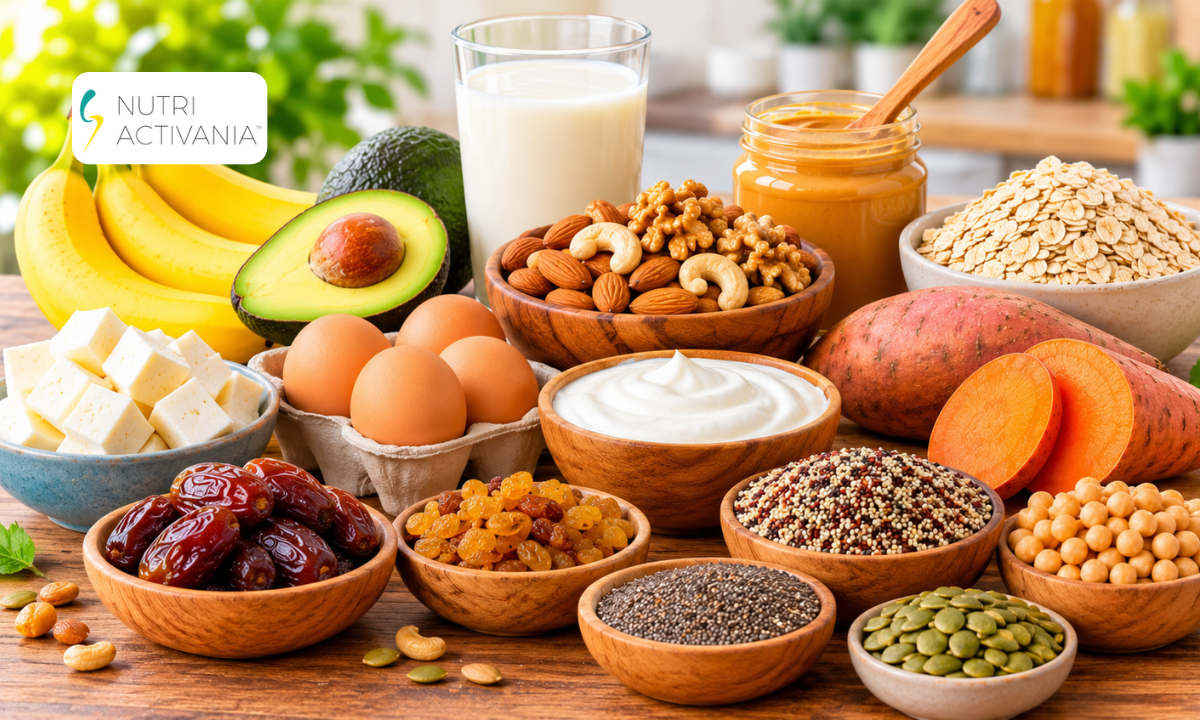
Gaining weight can be challenging, especially if you have a low appetite or feel full quickly. Eating larger portions is not always practical, so choosing calorie-rich foods for weight gain can help you increase your daily calorie intake without forcing yourself to eat very large meals.
Foods such as nuts, peanut butter, whole milk, paneer, eggs, rice, oats and dried fruits provide energy along with important nutrients. Including them in balanced meals and snacks can make it easier to gain weight gradually.
The goal is not simply to eat more calories. A balanced diet should also provide adequate protein, carbohydrates, healthy fats, vitamins and minerals to support overall health.
What Are Calorie-Dense Foods?
Calorie-dense foods provide a relatively high amount of energy in a small serving. They can be useful for people who want to gain weight but struggle to eat large quantities of food.
For example, a tablespoon of oil contains approximately 120 calories, while a medium banana provides around 100 calories. Both contribute energy, but they offer different nutrients.
For healthy weight gain, prioritise foods that provide calories alongside protein, healthy fats or other essential nutrients.
Examples include:
- Nuts and seeds
- Peanut butter and other nut butters
- Whole milk and full-fat curd
- Paneer and cheese
- Eggs, chicken and fish
- Rice, oats and whole-grain foods
- Bananas, dates and raisins
- Avocados and cooking oils
Combining different food groups helps create balanced meals rather than relying on one high-calorie food.
Healthy Foods to Gain Weight: What to Prioritise
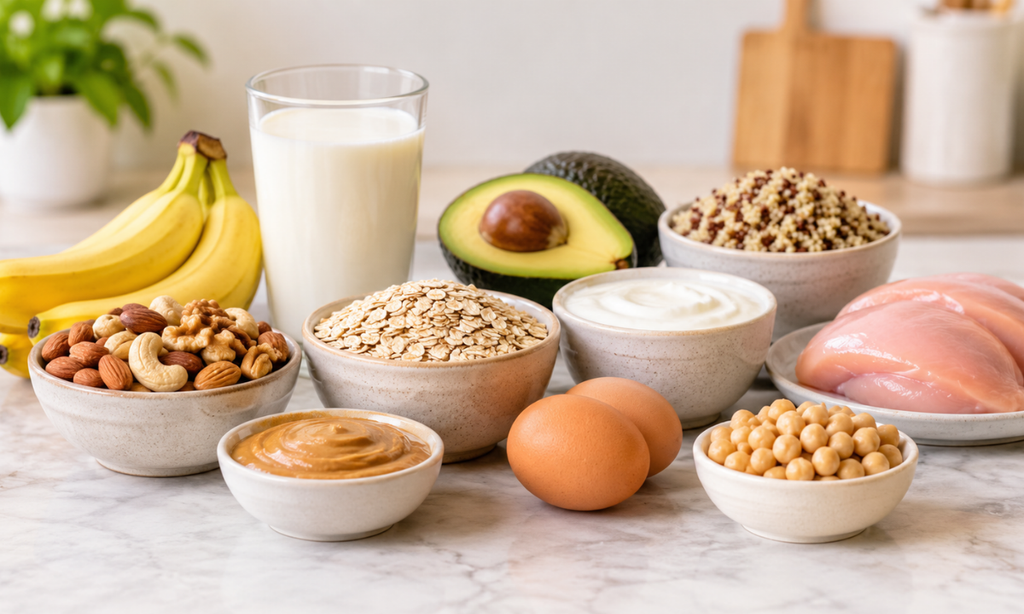
Choosing the right foods can make weight gain more manageable. Focus on the following groups.
1. Energy-Dense Foods
Nuts, seeds, nut butters and oils provide plenty of calories in relatively small portions. Adding them to meals can increase your calorie intake without substantially increasing food volume.
For example, you can add peanut butter to toast, almonds to oats or a small amount of oil to a homemade meal.
2. Protein-Rich Foods
Protein supports muscle repair and growth. Useful sources include eggs, paneer, milk, curd, chicken, fish, tofu, soya and lentils. .
If your goal is to build muscle, combine adequate protein and calories with suitable resistance training.
3. Carbohydrate-Rich Foods
Rice, oats, potatoes, bread and other grains provide energy for daily activities and exercise.
Including these foods in regular meals can help you meet your calorie needs without depending entirely on fats.
4. Fruits and Other Nutrient-Rich Foods
Bananas, dates, raisins and other dried fruits provide energy in relatively small servings. Fruits, vegetables and legumes also contribute vitamins, minerals and fibre.
A healthy weight-gain diet should include a variety of foods rather than relying only on calorie-dense snacks.
25 Calorie-Rich Foods for Weight Gain
The following foods can help increase your calorie intake. The calorie figures are approximate and may vary with the brand, variety, portion size and preparation method.
Nuts and Seeds
Nuts and seeds provide energy, unsaturated fats and other nutrients. They are convenient snacks and can be added to breakfast, smoothies or homemade meals.
| Food | Serving size | Approximate calories |
| Almonds | 28 g | 165 kcal |
| Peanuts | 28 g | 160 kcal |
| Walnuts | 28 g | 185 kcal |
| Cashews | 28 g | 155 kcal |
| Peanut butter | 2 tablespoons (32 g) | 190 kcal |
| Pumpkin seeds | 28 g | 150–160 kcal |
How to include them: Add almonds or walnuts to oats, eat peanuts as a snack, or spread peanut butter on whole-wheat toast. Choose unsalted or lightly salted varieties when possible.
Dairy Products
Dairy foods can provide calories, protein and calcium. Full-fat varieties may be particularly useful when you need more energy in a smaller serving.
| Food | Serving size | Approximate calories |
| Whole milk | 250 ml | 145–155 kcal |
| Full-fat curd | 200 g | 120–180 kcal |
| Paneer | 100 g | 250–330 kcal |
| Cheese | 28 g | 90–120 kcal |
| Plain Greek yoghurt | 170 g | 100–180 kcal |
How to include them: Use milk in oats or smoothies, serve paneer with roti or rice, and add curd to lunch or dinner. Check product labels because fat content and calories vary considerably between brands.
Protein-Rich Foods
Protein-rich foods can support muscle growth when combined with adequate energy intake and appropriate exercise.
| Food | Serving size | Approximate calories |
| Egg | 1 large | 70–80 kcal |
| Cooked chicken | 100 g | 165–230 kcal |
| Cooked fatty fish | 100 g | 180–230 kcal |
| Cooked soybeans | 100 g | 170–200 kcal |
| Tofu | 100 g | 70–150 kcal |
How to include them: Add eggs to breakfast, prepare chicken or fish for lunch, or include tofu and soybeans in vegetarian meals.
Chicken calories depend on the cut, whether the skin is included and the cooking method. For more detail, read our guide to country chicken nutrition facts per 100 g.
Carbohydrate-Rich Foods
Carbohydrates provide energy and can make it easier to increase your total calorie intake.
| Food | Serving size | Approximate calories |
| Cooked rice | 1 cup (about 160 g) | 200–210 kcal |
| Dry oats | 40 g | 150–155 kcal |
| Boiled potato | 1 medium | 130–160 kcal |
| Whole-wheat bread | 1 slice | 80–110 kcal |
| Ragi flour | 30 g | 100–110 kcal |
How to include them: Eat rice with dal or paneer, prepare oats with milk and nuts, or serve potatoes alongside a protein-rich meal. Ragi can be used for dosa, porridge or ragi mudde as part of a balanced diet.
Fruits and Healthy Fats
Certain fruits and fats provide concentrated energy and are easy to add to meals or snacks.
| Food | Serving size | Approximate calories |
| Banana | 1 medium | 100–110 kcal |
| Avocado | 100 g edible portion | 160 kcal |
| Dates | 2 medium | 40–60 kcal |
| Olive oil | 1 tablespoon | 120 kcal |
| Raisins | 28 g | 80–90 kcal |
How to include them: Add banana to a milk smoothie, combine dates with nuts for a snack, or use a measured amount of oil when preparing meals.
Remember that oils provide calories but little protein, fibre or other essential nutrients. Use them to complement a varied diet rather than as your main source of extra calories.
High-Calorie Indian Foods for Weight Gain
You do not need expensive imported foods or supplements to gain weight. Many familiar Indian foods can help you increase your calorie intake.
1. Rice with Dal and Ghee
Rice provides carbohydrates, while dal contributes protein and other nutrients. A measured amount of ghee adds extra calories.
For a more balanced meal, include vegetables and adjust the portions to your appetite and energy needs.
2. Paneer Paratha with Curd
Paneer paratha combines carbohydrates, protein and fat. Serving it with curd adds more protein and calcium.
The total calories depend on the amount of paneer, flour, oil or ghee used.
3. Dosa with Peanut Chutney
Dosa provides carbohydrates, while peanut chutney contributes additional calories and unsaturated fats. Add sambar for more protein and fibre.
4. Ragi Malt with Milk
Ragi malt prepared with milk can provide carbohydrates, protein and calcium. You can add a banana or a small amount of nut butter if you need more calories.
5. Poha with Peanuts
Poha is an easy breakfast option. Peanuts add calories, while vegetables can contribute fibre and micronutrients.
6. Rajma or Chole with Rice
Kidney beans and chickpeas provide plant protein, carbohydrates and fibre. Serving them with rice creates a filling meal with a useful combination of nutrients.
7. Egg Bhurji with Roti
Egg bhurji provides protein and can be served with roti for additional energy. Add vegetables to improve the meal’s nutrient variety.
8. Curd Rice with a Protein-Rich Side
Curd rice can be a convenient meal, particularly when you prefer familiar foods. Add a side of dal, eggs, paneer or another suitable protein source to make the meal more balanced.
9. Banana and Milk Smoothie
Blend a banana with milk and oats or peanut butter. This creates a calorie-containing drink that may be easier to consume than a large meal.
If you prefer vegetarian Indian meals, explore our meal plan for vegetarians to gain weight for more ideas.
High-Calorie Vegetarian Foods for Weight Gain
Vegetarian diets can support healthy weight gain when meals provide enough calories, protein and essential nutrients.
Some useful options include:
| Food | How it can help |
| Paneer | Provides protein and calories |
| Whole milk | Supplies energy, protein and calcium |
| Full-fat curd | Provides protein and calcium |
| Peanut butter | Adds calories in a small serving |
| Almonds and walnuts | Provide energy and unsaturated fats |
| Dal and lentils | Supply plant protein and carbohydrates |
| Chickpeas and rajma | Provide protein, carbohydrates and fibre |
| Tofu and soya | Offer plant-based protein |
| Oats | Provide carbohydrates and fibre |
| Banana | Adds energy and carbohydrates |
| Rice | Provides an easy-to-adjust source of energy |
| Dates and raisins | Supply concentrated energy in small portions |
Tips for Vegetarian Weight Gain
- Include a protein source in each main meal.
- Combine rice or roti with dal, beans, paneer, tofu or curd.
- Add nuts and seeds to breakfast or snacks.
- Use milk or curd in meals if you tolerate dairy.
- Choose a variety of foods instead of relying only on paneer or nuts.
For a vegan diet, fortified plant-based milk can be useful. If it forms a major part of your diet, choose products fortified with nutrients such as calcium and vitamin B12, and make sure your overall diet provides adequate protein and other essential nutrients.
High-Calorie Snacks for Weight Gain
Snacks can help you increase your daily calorie intake without making every main meal larger.
Here are some practical options:
| Snack | Approximate calories |
| Peanut butter on 2 slices of bread | 250–350 kcal |
| Banana with 1 tablespoon of peanut butter | 180–220 kcal |
| Mixed nuts, 28 g | 160–190 kcal |
| Whole milk, 250 ml | 145–155 kcal |
| Full-fat curd, 200 g | 120–180 kcal |
| Dates with a small handful of nuts | 150–250 kcal |
| Oats prepared with whole milk | 250–400 kcal |
| Homemade banana smoothie | 250–450 kcal |
Actual calories depend on the ingredients and serving sizes.
Choose snacks that fit your appetite and usual eating routine. If you feel full quickly, smaller snacks between meals may be easier to manage than trying to eat much larger portions at lunch and dinner.
Easy High-Calorie Smoothie for Weight Gain
A homemade smoothie can provide calories, protein and carbohydrates in a convenient form.
Ingredients
- 1 medium banana
- 250 ml whole milk
- 2 tablespoons peanut butter
- 30 g oats
- A pinch of cinnamon, if desired
Method
- Add the banana, milk, peanut butter and oats to a blender.
- Blend until smooth.
- Add a little water or extra milk if you prefer a thinner consistency.
- Serve immediately.
Approximate calories: 450–550 kcal, depending on the ingredients and brands used.
This smoothie provides energy from carbohydrates and fats, along with protein from milk and peanut butter. It can be used as a snack or alongside your usual meals.
If you have diabetes, kidney disease, lactose intolerance or another medical condition that affects your dietary needs, check whether the ingredients and portion sizes are suitable for you. A high-calorie smoothie is not automatically appropriate for everyone.
How to Increase Your Calorie Intake for Healthy Weight Gain
Choosing calorie-rich foods is only one part of gaining weight. Your overall eating pattern also matters.
1. Eat Regular Meals and Snacks
If you struggle to eat enough at three large meals, try eating smaller meals more frequently.
For example, you could have breakfast, lunch and dinner, with one or two snacks between meals.
Choose a schedule that fits your appetite and daily routine.
2. Increase Portions Gradually
You do not have to double your meal portions overnight.
Start by adding a small amount of food to your usual meals. You might include an extra serving of rice, add nuts to breakfast or drink milk with a snack.
Gradual changes can make it easier to maintain the habit.
3. Add Calorie-Dense Ingredients
Small additions can increase the energy content of meals.
Examples include:
- Adding peanut butter to toast.
- Mixing nuts and seeds into oats.
- Serving paneer with roti.
- Adding a measured amount of oil to cooked vegetables.
- Preparing porridge with milk instead of water.
Choose additions that also fit your nutritional needs and preferences.
4. Include Protein Throughout the Day
Spread protein sources across your meals instead of relying on one large serving at dinner.
Milk, curd, eggs, paneer, lentils, chickpeas, tofu, fish and chicken can all contribute to your daily protein intake.
Protein needs vary according to body weight, age, activity, health status and goals. People who are physically active or aiming to build muscle may benefit from approximately 1.2–2.0 grams of protein per kilogram of body weight per day, but this is not a universal target. Individual requirements can differ, particularly with certain medical conditions. You can use a protein intake calculator to get a general starting estimate.
5. Consider Strength Training
If your goal is to gain muscle as well as weight, suitable resistance training can help support muscle growth.
For many adults, strength training at least twice a week is a reasonable general goal. Start at a level appropriate for your fitness and health, and increase the challenge gradually.
Eating more calories alone does not guarantee that the additional weight will be muscle.
6. Track Your Progress
Monitor your weight and eating habits over several weeks rather than judging progress from day to day. A BMI calculator can give you a general starting point.
If your weight is not increasing, review your portions, snacks and consistency. You may need to adjust your intake, but avoid making large changes based on a single weigh-in.
Aim for gradual, sustainable progress rather than rapid weight gain.
How Many Extra Calories Do You Need to Gain Weight?
Weight gain generally requires consuming more calories than your body uses.
For many adults, adding approximately 300–500 calories per day above their usual maintenance needs can be a reasonable starting point. This is a general guide, not an individual prescription. A calorie calculator can help you estimate your maintenance needs first.
Your requirements depend on factors such as:
- Current body weight and height
- Age
- Activity level
- Health status
- Appetite
- Weight-gain goals
For example, someone who has a small appetite may find it easier to add a smoothie and a handful of nuts than to increase the size of every meal.
Review your progress over time and adjust your intake as needed. A registered dietitian can help estimate your individual energy and nutrient requirements.
If you have lost weight unexpectedly, continue losing weight despite eating more, or have persistent digestive symptoms or poor appetite, consult a healthcare professional to investigate the cause rather than relying only on a higher-calorie diet.
Common Mistakes to Avoid When Trying to Gain Weight
1. Relying Mainly on Junk Food
Fried snacks, sweets and sugary drinks can increase calorie intake, but relying on them may leave your diet short of important nutrients.
Choose a variety of energy-dense foods that also provide protein, vitamins, minerals or healthy fats.
2. Skipping Meals
Missing meals regularly can make it difficult to consume enough calories throughout the day.
If you have a busy schedule, plan convenient snacks such as nuts, fruit, yoghurt or a homemade sandwich.
3. Eating Too Much at Once
Very large meals can be uncomfortable, particularly if you feel full quickly.
Smaller meals and snacks may be more manageable.
4. Ignoring Protein
Increasing calories without considering protein may not support your muscle-building goals effectively.
Include suitable protein sources across your meals.
5. Expecting Immediate Results
Body weight can fluctuate because of changes in hydration, digestion and other factors.
Focus on consistent eating habits and gradual progress over several weeks rather than expecting a large increase in a few days.
Frequently Asked Questions
1. What are the best calorie-rich foods for weight gain?
Nuts, peanut butter, whole milk, paneer, eggs, rice, oats, bananas, dates and avocados are useful options. Choose a combination of calorie-dense foods and nutrient-rich meals to support balanced weight gain.
2. Which foods help you gain weight quickly?
Foods such as nut butter, nuts, full-fat dairy, rice and smoothies can help increase calorie intake. However, the rate of weight gain depends on your overall calorie intake, activity level, health and consistency.
Gradual weight gain is generally preferable to trying to increase weight rapidly.
3. What are the best vegetarian foods for weight gain?
Paneer, whole milk, curd, nuts, peanut butter, lentils, chickpeas, soya, tofu, rice and oats can all contribute to a vegetarian weight-gain diet.
Combining protein-rich foods with adequate carbohydrates and fats can make meals more balanced.
4. Can bananas help with weight gain?
Yes. A medium banana provides approximately 100–110 calories, mainly from carbohydrates. You can combine it with milk, yoghurt, oats or peanut butter to make a more energy-dense snack.
Eating bananas alone does not guarantee weight gain; your total calorie intake matters.
5. Is peanut butter good for weight gain?
Peanut butter is calorie-dense and provides unsaturated fats and some protein. Two tablespoons contain approximately 190 calories, depending on the product.
You can spread it on toast, add it to oats or blend it into a smoothie.
6. How many meals should I eat to gain weight?
There is no single meal frequency that works for everyone. Some people prefer three main meals, while others find three meals and one or two snacks easier to manage.
Choose a routine that helps you meet your calorie and nutrient needs comfortably.
7. Can I gain weight without eating meat?
Yes. Vegetarian diets can support weight gain when they provide sufficient calories, protein and essential nutrients. Paneer, dairy products, lentils, beans, nuts, seeds, tofu and soya are useful options.
8. Should I take supplements to gain weight?
Not everyone needs supplements to gain weight. Many people can increase their calorie intake through regular foods and drinks.
If you are considering a supplement, discuss it with a qualified healthcare professional or dietitian, particularly if you have an underlying medical condition.
Conclusion
Calorie-rich foods for weight gain can help you increase your energy intake without relying on very large meals. Nuts, peanut butter, milk, paneer, eggs, rice, oats, bananas and other nutrient-rich foods are practical options to include in your daily routine.
Start by adding manageable portions to your usual meals, eating regular snacks and including protein throughout the day. If building muscle is your goal, combine adequate nutrition with suitable strength training.
Most importantly, aim for gradual, sustainable progress rather than rapid weight gain. If you are underweight, have unexplained weight loss or struggle to gain weight despite eating more, seek professional guidance to identify the cause and plan an appropriate approach. A qualified dietitian and nutritionist in Delhi can review your health history, food preferences and routine to create a personalised plan that fits your goals.
Medical Disclaimer
This article is for informational and educational purposes only. It is not a substitute for individual medical or dietary advice. Consult a qualified healthcare professional or registered dietitian before making significant dietary changes, particularly if you have an underlying health condition or unexplained weight loss.