

Introduction
Choosing the right immune boosting foods for adults is one of the most practical steps you can take to support everyday health. A balanced diet gives your body the nutrients it needs to maintain a healthy immune system, and Avni Kaul, a trusted dietician in Delhi, recommends focusing on consistent, varied eating patterns rather than quick fixes. Adults need a mix of vitamins, minerals, protein, fibre and other nutrients to support normal immune function. No single food can prevent infections or make the immune system instantly stronger, but eating a varied diet can help your body function as it should.
You do not need expensive powders, juices or so-called superfoods to eat well. Everyday foods such as guava, citrus fruits, leafy vegetables, dal, beans, curd, eggs, nuts and seeds can all contribute to a nutritious eating pattern.
This guide covers 15 foods that support immune health, how to include them in Indian meals, the nutrients that matter most, what to know about supplements, and the lifestyle habits that make the biggest difference.
Key Takeaways
- No single food or supplement can prevent infection.
- A varied diet provides nutrients involved in normal immune function.
- Include fruits, vegetables, pulses, whole grains, protein foods, nuts, and seeds.
- Do not take high-dose vitamin C, zinc, vitamin D, or vitamin A without professional advice.
- Sleep, physical activity, vaccinations, and avoiding smoking also matter for immune health.
Foods That Support Immune Health
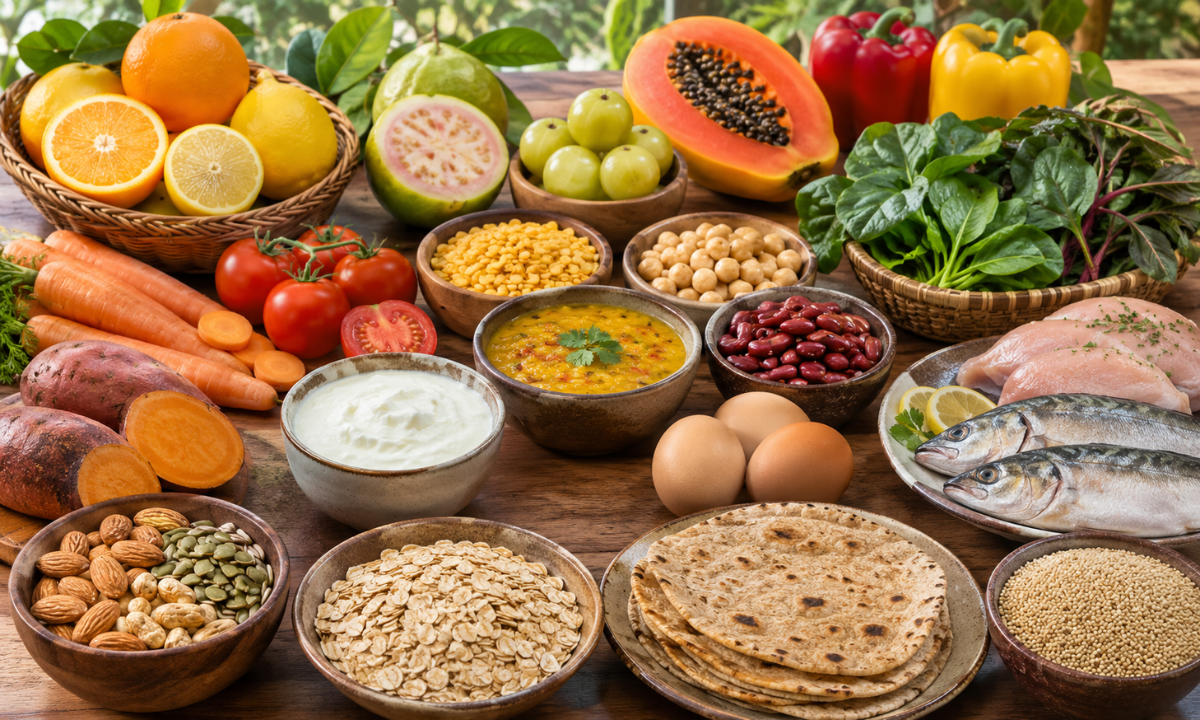
Below are 15 everyday foods that supply nutrients involved in normal immune function. Rotate them across the week rather than relying on any single item.
1. Citrus Fruits
Oranges, sweet lime, lemons and mosambi provide vitamin C, which helps immune cells function normally and supports the skin and other tissues that act as barriers to germs.
How to eat them: Have a whole orange or sweet lime as a snack, or add lemon to food for flavour. Whole fruit is generally a better everyday choice than juice because it provides fibre and is more filling.
2. Guava
Guava is a useful source of vitamin C and fibre. It is an affordable fruit option in many parts of India and can be eaten without complicated preparation.
How to eat it: Wash well and eat it whole, sliced, or with a meal. If you have a sensitive digestive system, adjust the portion to what you tolerate comfortably.
3. Amla
Amla, also known as Indian gooseberry, contains vitamin C and other plant compounds. It can add variety to a diet, but it should not be treated as a cure for colds or infections.
How to eat it: Try a small portion fresh, grated into chutney, or included in a meal. Amla pickles can contain considerable salt, so keep portions moderate.
4. Papaya
Papaya provides vitamin C, carotenoids and fibre. A range of colourful fruits helps supply different nutrients rather than relying on one fruit alone.
How to eat it: Add chopped papaya to breakfast or have it as a snack. Choose whole fruit more often than sweetened fruit drinks.
5. Red and Yellow Capsicum
Capsicum, especially red and yellow varieties, supplies vitamin C and carotenoids. Green capsicum and other vegetables can also contribute to a varied diet.
How to eat it: Add capsicum to vegetable stir-fries, omelettes, sandwiches, poha or salads. Cooking methods and duration affect nutrient retention, so avoid overcooking when practical.
6. Leafy Green Vegetables
Spinach, amaranth leaves, methi and other leafy greens provide folate, carotenoids and several other nutrients. Their fibre also contributes to a healthy overall eating pattern.
How to eat them: Include greens in dal, sambar, palya, saag, soups or chapati dough. Rotate different greens during the week rather than depending on just one type.
7. Carrots and Sweet Potatoes
Carrots and sweet potatoes contain beta-carotene, which the body can convert into vitamin A. Vitamin A is important for the normal function of the immune system and for maintaining healthy tissues.
How to eat them: Use carrots in salads, sabzi or soup. Bake, steam or roast sweet potatoes, or add them to a balanced meal. They do not need to be eaten raw to be nutritious.
8. Tomatoes
Tomatoes provide vitamin C and carotenoids, including lycopene. They are easy to include in everyday Indian cooking.
How to eat them: Add tomatoes to dal, sambar, curries, chutney or salads. A mixture of cooked and fresh vegetables can help add variety to meals.
9. Lentils and Dal
Moong dal, masoor dal, toor dal and other pulses provide protein, folate, iron and fibre. Protein supplies amino acids the body uses to build and maintain immune cells and other tissues.
How to eat them: Include dal, sambar or another pulse dish in regular meals. Pair plant sources of iron with vitamin C-rich foods, such as lemon, guava or capsicum, to help the body absorb iron.
10. Beans and Chickpeas
Chickpeas, rajma, black-eyed peas and other beans provide protein, fibre and a range of minerals. They can help make meals more filling and add variety to a largely plant-based diet.
How to eat them: Use cooked beans in curries, sundal, salads or chaat. Soak and cook dried beans properly, and choose preparations with moderate amounts of salt and oil.
11. Curd and Other Fermented Foods
Curd provides protein, calcium and vitamin B12, although nutrient levels vary by product. Live-culture curd may also contribute beneficial microorganisms. Evidence does not mean that every fermented food or probiotic product prevents infection.
How to eat it: Have plain curd with lunch, use it in raita, or choose unsweetened yoghurt. If you are lactose-intolerant, choose a suitable lactose-free option if tolerated.
12. Eggs
Eggs provide protein and nutrients such as vitamin B12. They can be a practical way for people who eat eggs to add protein to meals.
How to eat them: Try boiled eggs, an omelette with vegetables, or an egg alongside whole-grain toast or chapati. People who do not eat eggs can obtain protein from dal, beans, soy foods, dairy or other suitable foods.
13. Fish, Chicken and Other Protein Foods
Fish and poultry provide high-quality protein and several vitamins and minerals. Some fish, such as sardines and salmon, also provide vitamin D; availability and nutrient levels vary by species.
How to eat them: Choose grilled, steamed, baked or lightly cooked preparations more often than deep-fried versions. If you follow a vegetarian diet, combine different protein sources such as pulses, soy, dairy, nuts and seeds across the day.
14. Nuts and Seeds
Almonds, peanuts, sunflower seeds, pumpkin seeds and other nuts and seeds supply healthy fats and nutrients such as vitamin E, magnesium or zinc, depending on the food. Zinc and vitamin E are involved in normal immune function.
How to eat them: Add a small handful of unsalted nuts or seeds to breakfast, curd or a snack. They are energy-dense, so portions matter if you are managing your calorie intake. Avoid nuts that trigger an allergy.
15. Whole Grains
Oats, whole-wheat chapati, millets and other whole grains provide energy, fibre and B vitamins, with nutrient content varying by grain and processing. Fibre supports gut health, which is one part of overall health.
How to eat them: Rotate grains according to your preferences and needs. Pair rice, chapati or millet with vegetables and a protein source instead of making most of the meal a large serving of starch alone.
Nutrients Involved in Immune Function
The immune system relies on many nutrients working together. The sections below cover the ones that come up most often in questions about immunity.
Foods Rich in Vitamin C for Immune Health
Vitamin C supports immune cell function and the skin and mucosal barriers that keep germs out. Reliable Indian sources include guava, amla, oranges, sweet lime, lemons, capsicum, papaya and tomatoes. Including one or two vitamin C-rich foods daily is usually enough for most adults.
Zinc-Rich Foods for Immune Support
Zinc contributes to normal immune cell development and signalling. Food sources include pulses, chickpeas, dairy, eggs, meat, seafood, nuts and seeds. For most adults, a varied diet provides adequate zinc without a supplement.
Vitamin D and Immune Health
Vitamin D is found naturally in some foods, including oily fish and egg yolks, and is added to certain fortified foods. Food alone may not meet everyone’s needs. Vitamin D status can vary widely depending on sun exposure, skin tone, age and body weight. Do not start high-dose vitamin D based on general immunity claims; ask a healthcare professional whether testing or supplementation is appropriate for you.
Vitamin A
The body can make vitamin A from beta-carotene in foods such as carrots, sweet potatoes and leafy greens. Eggs and dairy also provide vitamin A in varying amounts.
Vitamin B12
Vitamin B12 is found naturally in animal foods such as dairy, eggs, fish and meat. People following a vegan diet generally need a reliable fortified food or a supplement.
Protein
Protein supplies amino acids the body uses to build and maintain immune cells. Sources include dal, beans, chickpeas, soy foods, dairy, eggs, fish and meat.
Folate and Iron
Folate and iron are found in pulses, leafy vegetables and other foods. Iron is also found in meat and seafood. Pairing plant iron with vitamin C-rich foods helps absorption.
The goal is to meet your nutritional needs consistently, not to consume unusually large quantities of one nutrient.
A Simple Indian Diet Plan to Support Immune Health
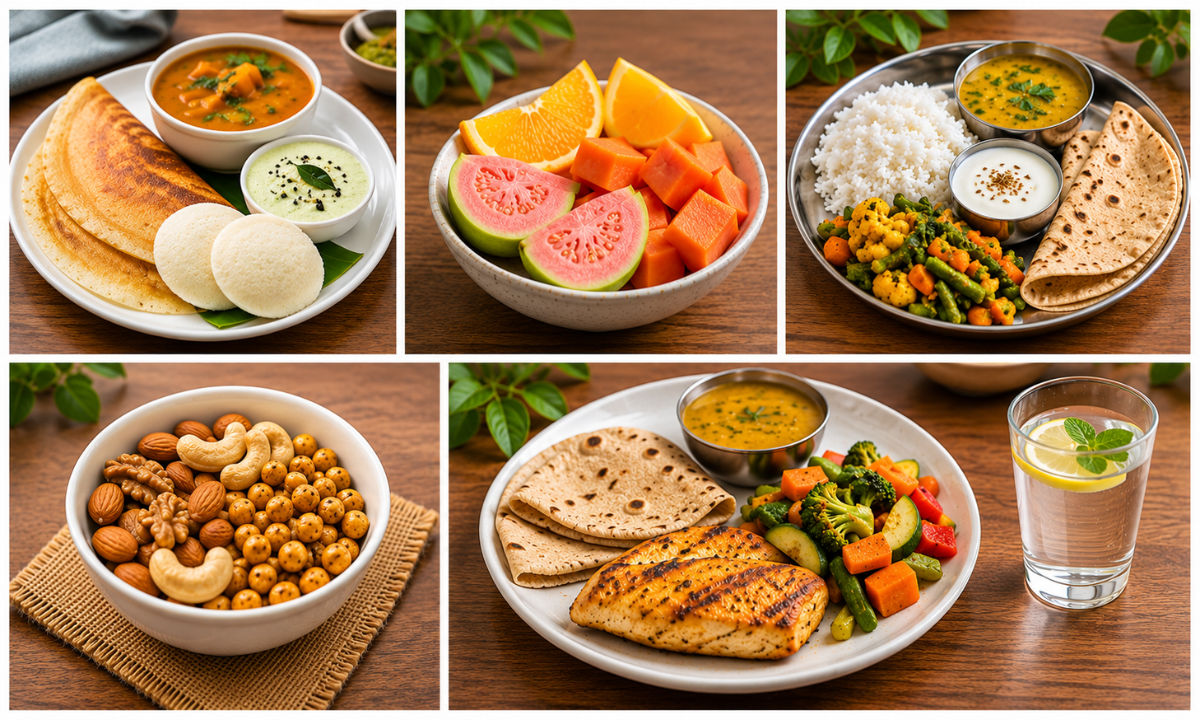
There is no special meal plan that guarantees protection from illness. The following example shows how to include a variety of food groups in a normal day. Adjust portions to your appetite, activity level, health needs and cultural preferences.
| Meal | Example |
|---|---|
| Breakfast | Vegetable dosa or idli with sambar; or oats with curd and fruit |
| Mid-morning | Guava, orange, papaya or another seasonal fruit |
| Lunch | Rice or chapati, dal or beans, cooked vegetables and curd if tolerated |
| Evening snack | A small portion of nuts or roasted chana |
| Dinner | Chapati or rice with vegetables and dal, eggs, fish, chicken or tofu |
| Drinks | Water throughout the day; choose unsweetened drinks most often |
For more meal-planning ideas, see Nutri Activania’s 7-day Indian diet plan for weight loss and balanced Indian diet plan. These are general meal-planning resources, not immune-treatment plans.
What About Ginger, Garlic, Turmeric and Honey?
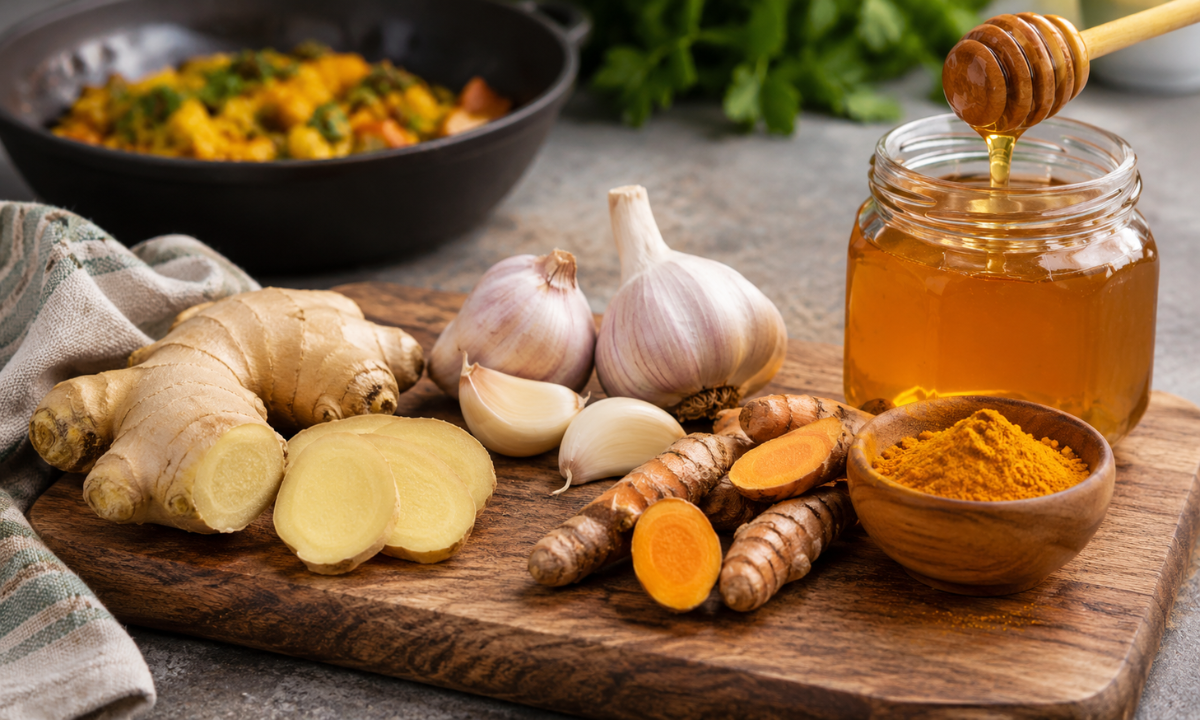
Ginger, garlic and turmeric can add flavour and variety to meals. They contain plant compounds that are being studied for different biological effects, but eating them does not guarantee stronger immunity or prevent infections.
Honey can soothe a cough for some people, but it is still a source of sugar and is not an immune booster. Adults with diabetes may need to account for it in their overall carbohydrate intake. Never give honey to infants under 12 months of age because of the risk of infant botulism.
Use these ingredients as part of normal cooking rather than relying on concentrated preparations, “immunity shots” or home remedies in place of appropriate medical care.
Do Superfoods Boost Immunity?
The term “superfood” is a marketing label, not a nutritional category. No single food, powder, juice or shot can rebuild or supercharge the immune system. Adults are better served by a steady eating pattern that includes a wide range of fruits, vegetables, pulses, whole grains, dairy or alternatives, and protein foods. Spending on exotic imports is rarely necessary; everyday Indian foods already cover most of the ground.
Supplements: What Adults Should Know
Do Adults Need Immune-Support Supplements?
Not everyone needs an immunity supplement. If your diet is varied and you do not have a nutrient deficiency, taking high doses of vitamins or minerals is unlikely to provide extra protection from infections. Excessive doses of some nutrients can be harmful and may interact with medicines.
A supplement may be appropriate when a deficiency, dietary restriction, medical condition or other risk factor makes it difficult to meet nutritional needs. Vitamin B12 may be particularly important for people who avoid all animal products; vitamin D needs can also vary. Ask a qualified healthcare professional whether testing or supplementation is appropriate for you.
Vitamin C Supplements
Regular high-dose vitamin C supplementation does not reliably prevent colds in the general population. It may modestly shorten the duration of a cold for some people, but it is not a substitute for a balanced diet or medical advice.
Zinc Supplements
Do not take high-dose zinc lozenges or supplements for prolonged periods without medical advice. Excess zinc over time can interfere with copper status, lower HDL cholesterol, and may paradoxically impair immune function.
Vitamin D Supplements
Regular vitamin D supplementation may slightly reduce respiratory-infection risk in some people with low vitamin D levels, but evidence is mixed and supplements do not appear to treat active respiratory infections. Testing and dosage should be guided by a healthcare professional rather than general immunity claims.
Lifestyle Habits That Support Immune Health
Food is only one part of maintaining health. Adults can also:
- Get enough regular sleep.
- Stay physically active according to their abilities.
- Manage stress where possible.
- Avoid smoking and limit alcohol.
- Follow recommended vaccinations and basic hygiene practices.
- Seek medical advice for persistent, severe or unusually frequent infections.
A healthy diet supports normal immune function, but it cannot guarantee that you will never become ill.
When to See a Doctor for Frequent Infections
Repeated infections, infections that take unusually long to clear, or symptoms such as unexplained weight loss, persistent fatigue, recurring fevers or swollen lymph nodes should be assessed by a healthcare professional. These can sometimes point to an underlying condition, a nutrient deficiency or a medication side effect that a change of diet alone cannot address. Food choices should sit alongside appropriate medical care, not replace it.
Conclusion: Build a Varied Diet, Not a Superfood Routine
The most practical way to support immune health is to eat a varied diet that includes fruits, vegetables, pulses, whole grains, nuts, seeds and adequate protein. Guava, citrus fruits, leafy greens, dal, curd, eggs and other everyday foods can help provide nutrients involved in normal immune function.
No single food, drink or supplement can guarantee protection from infections. Focus on consistent eating habits, adequate sleep, regular activity and appropriate preventive healthcare rather than quick fixes. If you would like a personalised plan built around your health needs and preferences, book a consultation with Avni Kaul at Nutri Activania.
Frequently Asked Questions
Which food is best for immunity in adults?
There is no single best food. Guava, citrus fruits, leafy greens, pulses, curd, eggs, nuts, seeds and other nutrient-rich foods can all contribute to a balanced diet. Variety matters more than relying on one item.
Which Indian foods support the immune system?
Everyday options include guava, amla, citrus fruits, papaya, leafy greens, carrots, tomatoes, dal, chickpeas, rajma, curd, eggs, nuts and seeds. Choose a variety across the week to obtain different nutrients.
Does vitamin C prevent colds?
Vitamin C is necessary for normal immune function, but taking extra vitamin C does not reliably prevent colds in the general population. Regular supplementation may modestly shorten cold duration for some people, but it is not a substitute for a balanced diet or medical advice.
Can I improve immunity in seven days?
There is no reliable seven-day food plan that can guarantee a stronger immune system or prevent illness. Eating balanced meals, sleeping well and maintaining healthy routines can help you meet your body’s needs over time.
Should I take a multivitamin every day?
Not everyone needs one. The right choice depends on your diet, health, age, medicines and risk of deficiency. Ask a healthcare professional before starting high-dose supplements or combining multiple products.
What should adults eat when they keep getting infections?
Repeated or unusually severe infections should not be managed with food alone. A healthcare professional can assess possible causes, including underlying conditions or nutrient deficiencies. Continue eating balanced meals, but seek medical advice rather than relying on supplements or home remedies.
Sources
- Harvard T.H. Chan School of Public Health. Nutrition and Immunity.
- US National Institutes of Health, Office of Dietary Supplements. Dietary Supplements for Immune Function and Infectious Diseases: Consumer Fact Sheet.
- US National Institutes of Health, Office of Dietary Supplements. Zinc: Consumer Fact Sheet.
- US Centers for Disease Control and Prevention. Healthy Habits: Enhancing Immunity.