
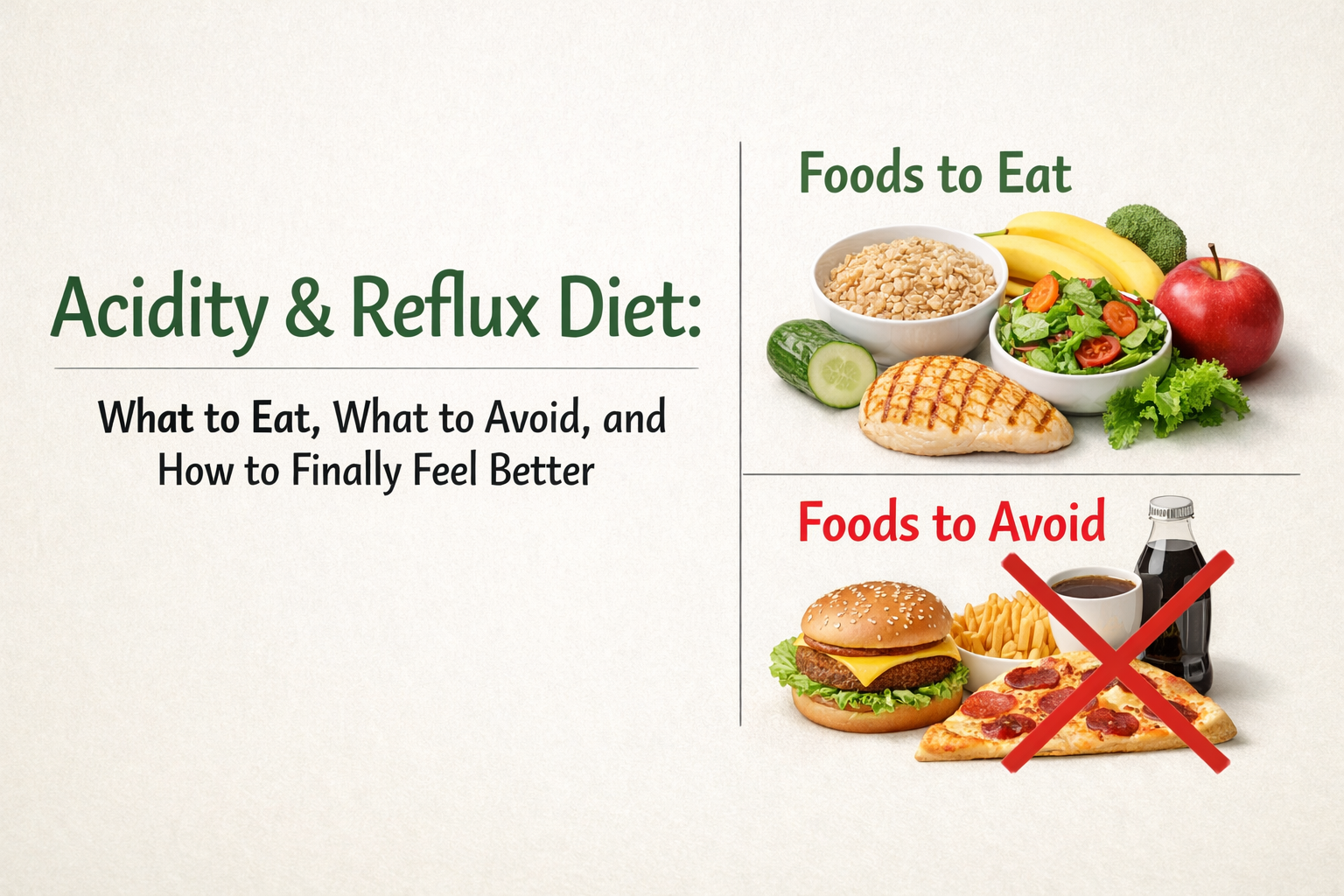
Quick Answer: Acidity and acid reflux are largely triggered by what you eat and how you eat. The right diet plan for acidity and reflux can reduce symptoms dramatically without relying on antacids every single day.
That burning sensation in your chest after a meal. The sour taste creeping up your throat. The bloating that just won’t go away. If this sounds familiar, you are not alone acidity and acid reflux affect millions of Indians every single day. The good news? A lot of it can be controlled through the right food choices. As a dietician in Delhi, one of the most common concerns I see in my clinic is acidity that people have been managing with antacids for years when all they really needed was a proper acidity and reflux diet plan. Let’s fix that today.
What Actually Causes Acidity and Acid Reflux?
Before we get into the food, let’s quickly understand what’s happening inside your body. Your stomach produces acid to digest food. When this acid travels back up into the oesophagus (your food pipe), it causes that familiar burning feeling this is acid reflux or GERD (Gastroesophageal Reflux Disease).
Common triggers include eating too fast, eating large meals, lying down right after eating, stress, and most importantly the specific foods you’re choosing every day.
The great news is that your diet is the one trigger you have complete control over.
The Acidity and Reflux Diet: Your Complete Food Guide
Here’s a simple, practical table of what to eat more of and what to cut down on. This is based on clinical dietary guidelines and what actually works for patients in real life:
| ✅ EAT MORE OF THIS | ❌ AVOID THIS |
|---|---|
| Oatmeal, brown rice, whole wheat roti | Maida, white bread, fried puris |
| Bananas, melons, papaya | Citrus fruits, tomatoes, pineapple |
| Boiled/steamed vegetables | Onions, garlic, chillies, peppers |
| Low-fat curd, buttermilk | Full-fat paneer, cream, cheese |
| Coconut water, plain water | Tea, coffee, carbonated drinks, alcohol |
| Ginger tea (mild), fennel water | Spicy curries, pickles, chutneys |
| Grilled/baked lean protein | Fried snacks, pakodas, samosas |
Important: Everyone’s triggers are slightly different. What causes reflux for one person may not affect another. Keeping a simple food diary for a week can help you identify YOUR personal trigger foods.
Best Foods for Acidity Relief
1. Bananas and Melons
These are naturally low-acid fruits that actually help coat the lining of the oesophagus. Banana is your best friend when acidity strikes keep one handy as a quick snack.
2. Oatmeal
A bowl of plain oatmeal in the morning is one of the best things you can do for your gut. It absorbs excess stomach acid and keeps you full without triggering reflux.
3. Ginger
Ginger has natural anti-inflammatory properties that help reduce acid production. A mild ginger tea not too strong works well. Avoid ginger in large amounts as it can sometimes act as a trigger in sensitive people.
4. Coconut Water
Coconut water is naturally alkaline, which means it helps neutralise stomach acid. It’s also gentle on the gut lining. Have a glass mid-morning or between meals.
5. Buttermilk (Chaas)
This is one of the most underrated remedies for acidity. A glass of plain chaas after lunch cools the stomach lining and aids digestion. Skip the salt and spices if your acidity is severe.
6. Fennel Seeds (Saunf)
Chewing a small spoon of fennel seeds after meals is a traditional remedy that genuinely works. Fennel helps relax the muscles in the stomach and reduces gas and bloating alongside acidity.
Foods That Worsen Acidity Avoid These
Spicy and Fried Food
This one is obvious but worth repeating. Spicy curries, chillies, and anything deep-fried relax the lower oesophageal sphincter (the valve between your food pipe and stomach), making it easier for acid to travel upward.
Tea and Coffee
Both stimulate acid production. If you can’t give them up completely, have them with a light snack rather than on an empty stomach, and limit yourself to one cup a day.
Citrus Fruits and Tomatoes
Oranges, lemons, tomatoes, and tamarind are highly acidic and directly irritate the oesophagus. Avoid them during flare-ups completely.
Carbonated Drinks
The gas in carbonated drinks increases stomach pressure, which pushes acid upward. This includes both sugary sodas and even sparkling water when your reflux is active.
Chocolate and Mint
Surprisingly, both chocolate and mint despite feeling soothing relax the oesophageal sphincter and can actually worsen acid reflux. Yes, even mint chutney!
Eating Habits That Matter as Much as the Food
What you eat matters but how you eat matters just as much. Here are the habits that make a huge difference:
- Eat smaller, more frequent meals instead of 3 large ones. A full stomach puts more pressure on the sphincter.
- Don’t lie down for at least 2–3 hours after eating. Gravity helps keep acid down.
- Eat slowly and chew your food properly. Rushed eating leads to more air swallowing and poor digestion.
- Elevate your head slightly when sleeping if nighttime reflux is a problem.
- Avoid eating right before bed. Your last meal should be at least 2–3 hours before you sleep.
- Manage stress stress directly increases acid production. Even a 10-minute walk after meals helps.
A Simple One-Day Acidity-Friendly Meal Plan
Here’s what a day of eating could look like when you’re managing acidity:
Early Morning:
1 glass of warm water with a pinch of jeera (cumin) or plain coconut water
Breakfast:
Oatmeal with banana and a handful of almonds, OR 2 whole wheat rotis with low-fat curd
Mid Morning:
A banana or a small bowl of papaya
Lunch:
Brown rice or 2 rotis + dal (not too spicy) + boiled/steamed sabzi + glass of plain chaas
Evening:
Fennel seed water or mild ginger tea with a small bowl of murmura (puffed rice)
Dinner:
Khichdi or light dal-roti + steamed vegetables. Keep it light and finish by 8 PM.
This is a general plan. For a personalised acidity and reflux diet tailored to your body, health history, and lifestyle, a one-on-one consultation with a nutritionist in Delhi is always recommended.
When Should You See a Dietician for Acidity?
If you are popping antacids more than twice a week, if acidity is disturbing your sleep, or if you’ve been dealing with this for months without improvement it’s time to get proper help. A nutritionist in Delhi can assess your full diet, identify your specific triggers, and create a personalised plan that actually works for your body and lifestyle not just a generic list of dos and don’ts.
At Nutri Activania, our Gastrointestinal Plan is specifically designed for people dealing with acidity, GERD, IBS, and other gut health concerns. We look at your complete health picture before creating a plan that fits into your real life.
Tired of Dealing With Acidity Every Day?
Get a personalised acidity and reflux diet plan from Avni Kaul — one of Delhi’s most trusted dieticians. Stop guessing and start healing with food that actually works for your body.
Book a Consultation → nutriactivania.com/contact-us
Frequently Asked Questions
1. What is the best diet for acidity and reflux?
A diet rich in low-acid foods like oatmeal, bananas, boiled vegetables, and buttermilk while avoiding spicy, fried, and citrus foods works best. Eating smaller, more frequent meals and not lying down after eating are equally important habits.
2. Is curd good or bad for acidity?
Plain, low-fat curd and buttermilk (chaas) are generally good for acidity as they have a cooling effect on the stomach. However, full-fat curd or flavoured yoghurt can sometimes worsen symptoms. Stick to plain, diluted chaas for best results.
3. Can acidity be cured through diet alone?
Mild to moderate acidity can often be significantly reduced or even resolved through dietary changes alone. Severe or chronic GERD may require medication alongside dietary management. Consulting a dietician in Delhi helps you find the right approach for your specific condition.
4. Is milk good for acid reflux?
While milk may provide temporary relief because of its alkaline nature, full-fat milk can actually worsen reflux later because fat stimulates more acid production. Low-fat milk in small quantities is a better option if you want to include it.
5. How quickly does an acidity diet work?
Most people notice improvement within 1–2 weeks of consistently following an acidity-friendly diet and eating habits. For chronic cases, it may take 4–6 weeks of consistent changes to see significant results.
Disclaimer: This blog is for informational purposes only and is not a substitute for professional medical or dietary advice. Please consult a qualified healthcare provider before making significant changes to your diet, especially if you have a diagnosed medical condition.