
Obesity is no longer just a cosmetic concern. It is a complex, chronic medical condition affecting millions of people across India cutting across age groups, genders, and lifestyles. From young adults gaining weight due to desk jobs and poor eating habits, to children dealing with early-onset obesity, to women battling weight issues linked to PCOD or thyroid disorders obesity today is everywhere.
And yet, it remains one of the most misunderstood and stigmatised health conditions. People are told to simply “eat less and move more” as if it were that simple. The reality is far more nuanced and far more hopeful.
The good news? With the right nutritional guidance, personalised support from a weight loss dietician in Delhi, and a sustainable approach to food and lifestyle, obesity is not just manageable it is reversible.
What is Obesity? More Than Just a Number on the Scale
Obesity is clinically defined as having a Body Mass Index (BMI) of 30 or above. In the Indian context, health risks associated with excess weight often begin at a BMI of 25 or above, making early attention even more critical for Indians.
BMI Classification Table (Indian Guidelines):
| BMI Range | Category | Health Risk Level |
|---|---|---|
| Below 18.5 | Underweight | Moderate |
| 18.5 – 22.9 | Normal Weight | Low |
| 23.0 – 24.9 | Overweight (Indian threshold) | Increased |
| 25.0 – 29.9 | Obese Class I | High |
| 30.0 – 34.9 | Obese Class II | Very High |
| 35 and above | Obese Class III (Severe) | Extremely High |
But obesity is not just about weight. It is about what excess body fat —especially around the abdomen does to your body over time. Carrying visceral fat puts enormous pressure on nearly every organ system:
- Heart & Cardiovascular System: Increased risk of heart disease, high blood pressure, and stroke
- Liver: Fatty liver disease (NAFLD) is directly linked to obesity
- Pancreas: insulin resistance and Type 2 diabetes
- Joints: Knee pain, back pain, and reduced mobility
- Hormones: Disrupted hormonal balance leading to PCOD, thyroid issues, and infertility
- Mental Health: Anxiety, depression, low self-esteem, and social withdrawal
- Sleep: Obstructive sleep apnea and poor sleep quality
Obesity in India – A Growing Public Health Crisis
India is currently facing an obesity epidemic of alarming proportions. The numbers paint a sobering picture:
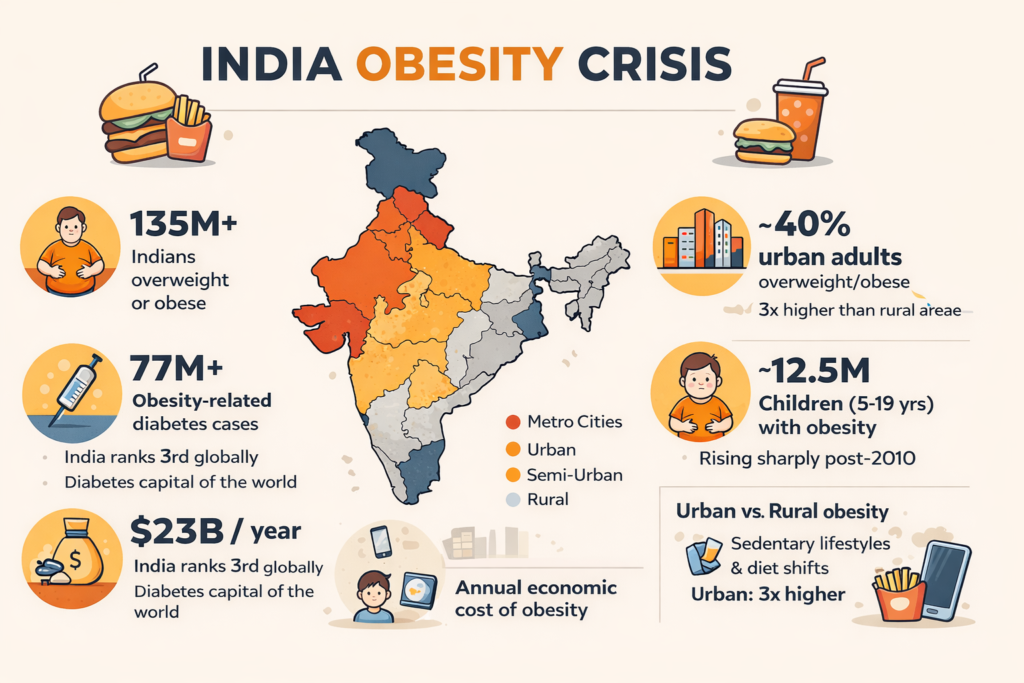
| Statistic | Data | Source/Context |
|---|---|---|
| Indians classified as obese | Over 135 million | One of the highest globally |
| Adults overweight or obese | ~40% of urban adults | Rising sharply post-2010 |
| Children (5–19 years) with obesity | ~12.5 million | India ranks 3rd globally |
| Obesity-related diabetes cases | Over 77 million | India is diabetes capital of the world |
| Annual economic cost of obesity | ~$23 billion USD | Lost productivity + healthcare costs |
| Urban vs rural obesity prevalence | Urban: 3x higher | Driven by sedentary lifestyles & diet shifts |
What makes this particularly alarming is the rapid rise of obesity among:
- Children & teenagers: driven by junk food culture, screen addiction, and reduced outdoor activity
- Young working professionals: long work hours, irregular meals, stress eating, and sedentary desk jobs
- Women with PCOD/PCOS: hormonal imbalances making weight loss especially difficult without expert guidance
- Middle-aged adults: slowing metabolism combined with poor dietary habits leading to rapid weight gain
The Indian diet, once considered one of the healthiest in the world, has undergone a dramatic shifttraditional wholesome foods replaced by refined, processed, and calorie-dense alternatives.
What Really Causes Obesity? It Is Not Just About Willpower
One of the most damaging myths around obesity is that it results from laziness or lack of discipline. This is incorrect and harmful. Obesity is a multifactorial condition influenced by dietary, lifestyle, hormonal, genetic, and environmental factors.
| Root Cause | How It Contributes to Obesity | Dietary Solution Area |
|---|---|---|
| Poor dietary habits | Excess refined carbs, sugar & fried food increase fat storage | Whole food, high-fibre diet plan |
| Sedentary lifestyle | Low activity = low calorie burn = fat accumulation | Portion control + activity guidance |
| Hormonal imbalances (PCOD, thyroid) | Directly trigger weight gain & fat retention | Hormone-balancing nutrition plan |
| Chronic stress | Elevated cortisol drives belly fat storage | Anti-inflammatory, stress-reducing foods |
| Poor sleep | Disrupts ghrelin & leptin — triggers overeating | Sleep nutrition + meal timing guidance |
| Insulin resistance | Excess glucose stored as fat instead of energy | Low-GI, blood sugar balancing diet |
| Gut microbiome imbalance | Affects metabolism and fat absorption | Probiotic & fibre-rich nutrition plan |
| Emotional eating | Food used as a coping mechanism | Mindful eating coaching |
| Genetic predisposition | Increases risk but does not make it inevitable | Personalised metabolic diet planning |
This is precisely why a personalised consultation with a dietician in Delhi is far more effective than any generic online diet plan your cause of obesity is unique to you, and so must be the solution.
How the Right Diet Helps Manage & Reverse Obesity
Here is the single most important thing to understand: reversing obesity is not about eating less it is about eating right.
Crash diets, extreme calorie restriction, and fad diets may produce short-term results, but they almost always lead to weight regain, nutritional deficiencies, and metabolic slowdown. What your body needs is a structured, balanced, and personalised nutritional approach.
Key Nutritional Principles for Obesity Management
| Principle | What to Focus On | Why It Works |
|---|---|---|
| High-fibre foods | Vegetables, fruits, whole grains, legumes, seeds | Keeps you full longer, feeds good gut bacteria, regulates blood sugar |
| Lean protein at every meal | Dal, paneer, eggs, chicken, fish, tofu | Preserves muscle mass during weight loss, boosts metabolism |
| Healthy fats (not zero fat) | Nuts, seeds, avocado, olive oil, ghee in moderation | Supports hormones, reduces inflammation, keeps you satiated |
| Low glycaemic index carbs | Oats, millets, sweet potato, brown rice | Prevents blood sugar spikes that lead to fat storage |
| Hydration | 8–10 glasses of water daily, herbal teas, buttermilk | Supports metabolism, reduces false hunger signals |
| Meal timing & frequency | 3 structured meals + 1-2 smart snacks | Regulates hunger hormones, prevents overeating |
| Reduce ultra-processed foods | Avoid chips, biscuits, packaged snacks, sugary drinks | These foods are engineered to cause overeating |
Obesity & Its Connection to Other Health Conditions
Obesity rarely exists in isolation. It is deeply connected to several other chronic health conditions that require specialised dietary attention:
- Obesity & Diabetes: Excess body fat, especially visceral fat, is the leading driver of insulin resistance and Type 2 diabetes. A personalised diabetes diet plan can help manage both conditions simultaneously
. - Obesity & Heart Disease: High cholesterol, high blood pressure, and inflammation all linked to obesity significantly increase cardiovascular risk. Our heart disease diet plan addresses this holistically.
- Obesity & PCOS: Weight gain and PCOS are closely interlinked excess fat worsens hormonal imbalance, which in turn makes weight loss harder. Our PCOS diet plan in Delhi is specifically designed to break this cycle.
- Obesity & Thyroid: Hypothyroidism slows metabolism and causes weight gain. A targeted thyroid diet plan helps manage both weight and thyroid health.
- Obesity & Fatty Liver: NAFLD affects over 38% of obese individuals in India. Diet is the most powerful tool to reverse it both weight and liver health can be addressed together.
- Obesity in Children: Early-onset obesity has long-term consequences. Our child nutrition programme provides safe, age-appropriate dietary guidance for children.
What Does a Personalised Obesity Diet Plan Look Like?
At Nutri Activania, no two diet plans are the same. Here is what a personalised obesity management plan typically includes:
| Plan Component | Details |
|---|---|
| Initial Assessment | Full health history, lab reports (HbA1c, lipid profile, thyroid), body composition |
| Calorie & Macro Planning | Customised targets based on your weight, age, activity level & goals |
| Meal Structure | 3 main meals + 1–2 snacks, timed for your daily routine |
| Indian Food Integration | Plans built around Indian cuisine — no foreign foods or bland meals |
| Eating Out Guidance | Smart choices at Delhi restaurants, dhabas & social events |
| Supplement Recommendations | Only if clinically required based on your reports |
| Progress Tracking | Weekly weigh-ins, measurements & report reviews |
| Follow-Up & Adjustments | Plan evolves as your body responds and health improves |
Whether you prefer to visit us at our clinic in Saket, Delhi or connect online, our online dietician consultation makes expert guidance accessible from anywhere in India.
Common Myths About Obesity & Diet – Busted
| Myth | The Truth |
| “Just eat less and exercise more” | Obesity is multifactorial. Calorie restriction alone without the right food quality rarely works long term. |
| “Carbs cause obesity” | Refined carbs do. Whole food carbs like millets, oats & legumes are essential for gut health and sustained energy. |
| “Fat-free foods help you lose weight” | Fat-free products are often loaded with sugar. Healthy fats are essential for hormones and satiety. |
| “Skipping meals speeds up weight loss” | Skipping meals disrupts hunger hormones and slows metabolism – leading to overeating later. |
| “Supplements and detox teas work” | No supplement replaces a real food diet. Many “detox” products are unregulated and ineffective. |
| “Thin people can’t have obesity-related issues” | Metabolic obesity (normal weight but high body fat %) is increasingly common and just as risky. |
| “A diet that worked for someone else will work for me” | Every body is different. Personalised diet plans based on your reports and lifestyle are far more effective. |
Related Blogs From Nutri Activania
Explore our related articles for deeper insights into managing weight and related health conditions:
- Non-Veg Weight Loss Diet in Delhi
A practical guide for non-vegetarians looking to lose weight without giving up their favourite foods - Weight Loss Diet for Men
Targeted nutrition strategies for men dealing with belly fat and metabolic slowdown. - Weight Loss Diet Without Exercise
For busy professionals who cannot commit to regular workouts - Hormonal Imbalance Diet
Understanding how hormones drive weight gain and how diet can help restore balance - How to Choose the Best Dietician for Consultation in Delhi
A guide to finding the right nutrition expert for your goals - Nutritionist vs Dietician in Delhi – What’s the Difference? Know who you actually need before booking a consultation
Take the First Step Towards a Healthier, Lighter You
Obesity is not a life sentence. It is a health condition one that responds powerfully to the right nutrition, the right mindset, and the right support.
At Nutri Activania, we have helped hundreds of clients across Delhi and India take back control of their health through personalised, science-backed dietary guidance without extreme diets, without deprivation, and without judgment.
Whether you are dealing with weight gain linked to PCOD, diabetes, thyroid, fatty liver, or simply years of poor dietary habits our weight loss dietician in Delhi, Avni Kaul, is here to build a plan that works for your body, your life, and your goals.
Frequently Asked Questions
Q1. What is the fastest way to lose weight if you are obese?
There is no healthy shortcut, but there is a smart way. A personalised diet plan with a moderate calorie deficit, combined with basic activity like walking, gives the best results. Aim for 0.5 to 1 kg loss per week consistent, sustainable, and long-lasting. Crash diets only lead to weight regain and nutritional deficiencies.
Q2. Can obesity be cured permanently?
Yes – obesity can be reversed and maintained for life with the right approach. It requires a permanent shift in eating habits, not a temporary diet. People who follow a structured nutrition plan with expert guidance successfully maintain healthy weight for years. The key is building sustainable food habits, not chasing quick fixes.
Q3. What foods should I avoid if I am obese?
Significantly reduce or eliminate sugary drinks, maida-based foods, fried snacks, packaged and ultra-processed foods, excess sweets, and alcohol. These are high in empty calories and directly drive fat storage. Replace them with whole grains, dal, vegetables, lean proteins, and healthy fats for steady, sustainable weight loss results.
Q4. Is obesity a disease or just poor lifestyle habits?
Obesity is officially recognised as a chronic disease by the WHO. While lifestyle plays a role, it is also influenced by genetics, hormonal imbalances like thyroid and PCOD, stress, sleep, and medications. It is never just about willpower which is why a personalised, medically informed diet plan is always more effective.
Q5. How much weight loss per week is healthy?
Losing 0.5 to 1 kg per week is safe, healthy, and realistic for most people. That is 4 to 6 kg per month with a proper diet plan. Faster weight loss usually means losing muscle and water not fat. Slow, steady loss gives lasting results and allows your metabolism and hormones to adjust properly.
Reference
- Lancet Global Health Study – India Obesity Prevalence Data
- World Health Organization – Obesity & Overweight Fact Sheet
- International Diabetes Federation – India Diabetes Atlas