

If you are above 35 and your doctor has told you your blood sugar is high or you have already been diagnosed with Type 2 diabetes you are not alone. India is home to over 101 million people living with diabetes, making it one of the largest health challenges our country faces today.
The good news? A well-planned sugar control diet can make a world of difference. As a dietitian in Delhi and a Certified Diabetes Educator trained with the International Diabetes Federation, I have personally guided hundreds of patients over 35 to take charge of their blood sugar without giving up the Indian food they love.
This guide covers everything you need to know: what to eat, what to avoid, meal timing, Indian-friendly food swaps, and how to build a sustainable diabetes diet that actually works for your lifestyle.
Quick Summary: This blog is for adults above 35 with Type 2 diabetes or high blood sugar looking for a practical, Indian diet-based sugar control plan.
Disclaimer: This blog is intended for general informational and educational purposes only. It is not a substitute for professional medical advice, diagnosis, or treatment. Always consult your doctor or a Registered Dietician before making any significant dietary changes, especially if you are on medication for diabetes.
Why Does Blood Sugar Control Become Harder After 35?
After the age of 35, several body changes happen together that can make blood sugar management more challenging:
• Metabolism slows down, meaning your body burns carbohydrates less efficiently
• Insulin resistance increases, especially with a sedentary lifestyle and high-carb Indian diet
• Muscle mass begins to decline, which reduces glucose uptake from the blood
• Stress and hormonal changes (especially in women approaching perimenopause) can spike cortisol, which raises blood sugar
• Years of eating refined carbohydrates white rice, maida, sugary snacks take a cumulative toll
A 2024 study published in Nature Medicine analysed over 18,000 Indian adults and found that high intake of low-quality carbohydrates is associated with a 14–30% higher risk of Type 2 diabetes. This is directly relevant to the typical Indian diet.
The answer is not to stop eating Indian food. The answer is to eat smarter. Working with an experienced nutritionist in Delhi can help you build a personalised plan that fits your culture, taste preferences, and medical history.
What Is a Sugar Control Diet?
A sugar control diet is not a crash diet or a starvation plan. It is a structured, balanced way of eating that:
- Keeps your blood glucose levels stable throughout the day
- Prevents dangerous spikes and crashes after meals
- Supports a healthy weight, which directly improves insulin sensitivity
- Reduces your risk of diabetes complications such as heart disease, kidney issues, and nerve damage
According to the American Diabetes Association 2024 Standards of Care, nutrition plans should be individualised and focus on high-fibre foods, quality carbohydrates, lean protein, and healthy fats. There is no one-size-fits-all approach.
6 Core Principles of a Diabetes Diet That Works
1. Choose Low Glycaemic Index (GI) Carbohydrates
The Glycaemic Index (GI) tells you how quickly a food raises your blood sugar. High-GI foods cause rapid spikes; low-GI foods cause slow, steady rises which is exactly what you want.
| Food Category | High GI (Avoid or Limit) | Low GI (Prefer) |
|---|---|---|
| Grains & Roti | White rice, maida roti, white bread | Multigrain atta, bajra, jowar, oats |
| Rice Options | Polished white rice | Brown rice, hand-pounded rice, parboiled rice |
| Snacks | Biscuits, namkeen, fried snacks | Roasted chana, makhana, nuts, seeds |
| Sweets & Drinks | Sugar, fruit juice, cola, mithai | Fresh whole fruits, buttermilk, nimbu pani (no sugar) |
| Vegetables | Potato, yam, colocasia (large portions) | Methi, karela, palak, broccoli, beans, tomatoes |
2. Never Skip Meals – Especially Breakfast
Skipping meals causes blood sugar to drop too low, which then triggers cravings for sugary, high-GI foods. For diabetics above 35, maintaining a 3 meal + 2 snack pattern is non-negotiable. Your body works best on a predictable schedule.
3. Control Portions, Not Flavour
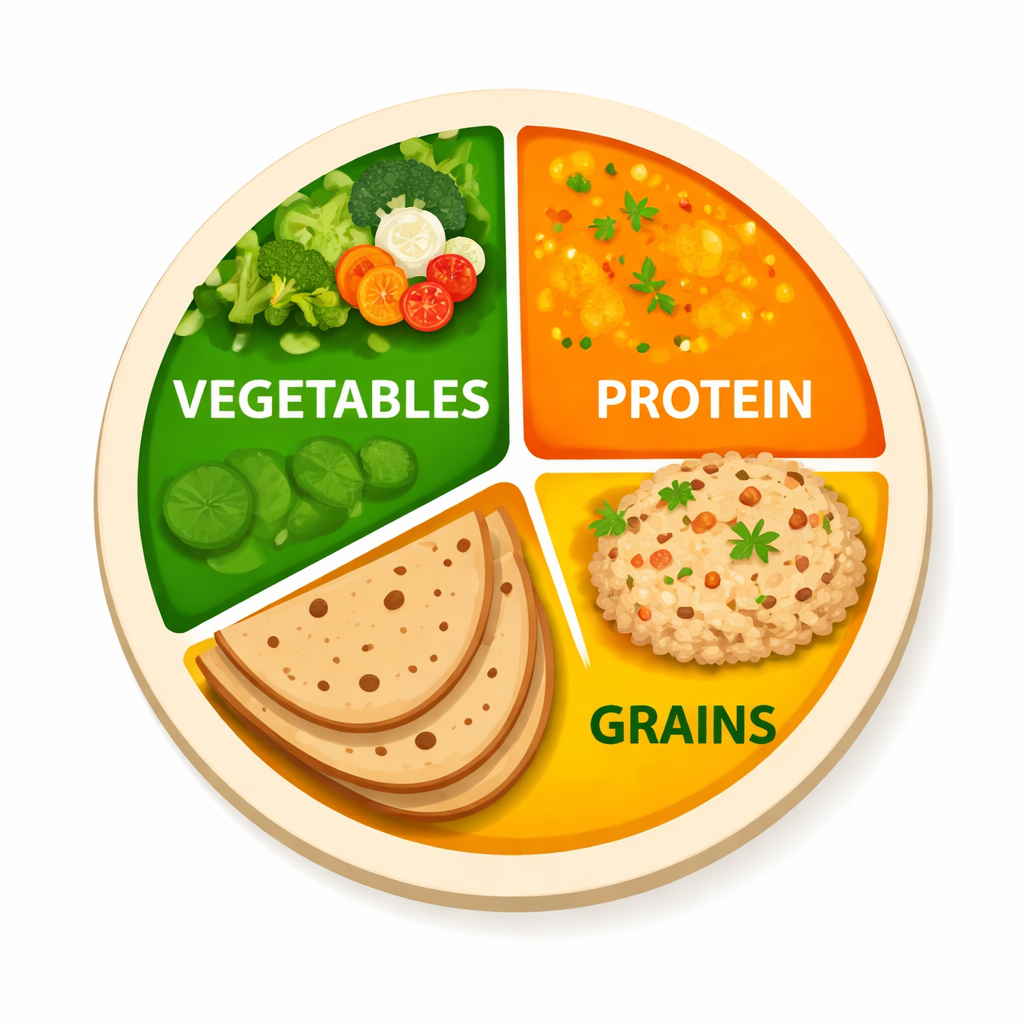
You do not have to give up dal, sabzi, or even occasional roti. Portion control is the real game-changer. Use the plate method as a simple guide:
• Half your plate: non-starchy vegetables (palak, bhindi, beans, salad)
• One quarter: lean protein (dal, paneer, egg whites, chicken, tofu)
• One quarter: complex carbohydrates (1–2 rotis or a small serving of brown rice)
4. Pair Carbohydrates With Protein and Fibre
Eating carbohydrates alone spikes blood sugar fast. When you pair them with protein and fibre, the rate of glucose absorption slows down significantly. For example: instead of eating plain white rice, have brown rice with dal and a vegetable. Instead of a fruit alone, have it with a small handful of almonds.
5. Stay Hydrated But Avoid Sugary Drinks
Sugary drinks packaged juices, colas, flavoured water, energy drinks are one of the biggest causes of blood sugar spikes. Research from the National Centre for Biotechnology Information (NCBI) links sugar-sweetened beverage consumption directly to increasing rates of Type 2 diabetes in India.
Aim for 8–10 glasses of plain water per day. You can also have:
- Unsweetened green tea or herbal tea
- Buttermilk (chhachh) excellent for digestion and blood sugar
- Nimbu pani without sugar
- Coconut water in moderation (1 small glass, not a full tender coconut)
6. Watch Your Fat Quality
Not all fats are equal. For diabetics, healthy fats from nuts, seeds, avocado, mustard oil, and olive oil are beneficial. Saturated fats from ghee (in moderation), full-fat dairy, and fried foods should be limited. Trans fats in processed foods and packaged snacks should be eliminated entirely.
7-Day Sugar Control Indian Meal Plan (For Adults 35+)
Below is a sample meal plan designed specifically for Indian adults managing blood sugar. This is a general guide for a personalised plan, please consult a certified diabetes dietitian.
| Day | Breakfast | Mid-Morning | Lunch | Evening | Dinner |
|---|---|---|---|---|---|
| Mon | 2 moong dal chilla + mint chutney | 1 small guava + 4 almonds | 2 multigrain rotis + dal + sabzi + salad | Roasted makhana | Paneer stir-fry + methi sabzi + brown rice (small) |
| Tue | Oats upma with veggies + buttermilk | 1 apple + 1 tsp chia seeds | Rajma + 1 bajra roti + cucumber salad | Sprout chaat | Grilled fish/tofu + spinach sabzi + salad |
| Wed | Besan chilla + tomato + green chutney | Handful walnuts + 1 pear | Brown rice + dal + karela sabzi | Roasted chana | Chicken soup/dal soup + 1 jowar roti |
| Thu | Poha (with less potato, add peas) + lemon water | 1 small orange + 5 almonds | 2 rotis + palak paneer + salad | Makhana + green tea | Moong dal khichdi (light) + curd |
| Fri | Ragi dosa + sambar (no sugar) | Buttermilk + 1 banana (small) | Chole + 1 multigrain roti + raita | Sprouts + nimbu pani | Baked chicken + stir-fried veggies |
| Sat | Vegetable daliya (broken wheat) + curd | 4 walnuts + 1 kiwi | Masoor dal + 2 rotis + lauki sabzi | Roasted chana + herbal tea | Egg bhurji/paneer + salad + 1 roti |
| Sun | Idli (2–3) + sambar + coconut chutney | 1 small guava + seeds | Brown rice + kadhi + mixed sabzi | Makhana or fruit | Dal soup + sauteed mushrooms + 1 roti |
Note: This meal plan is for educational purposes only and is not a substitute for personalised medical nutrition therapy. If you have kidney disease, hypertension, or are on insulin, your needs will differ. Book a consultation with our dietitian for diabieites in Delhi for a plan built around your specific health reports.
Best Foods for Blood Sugar Control in India
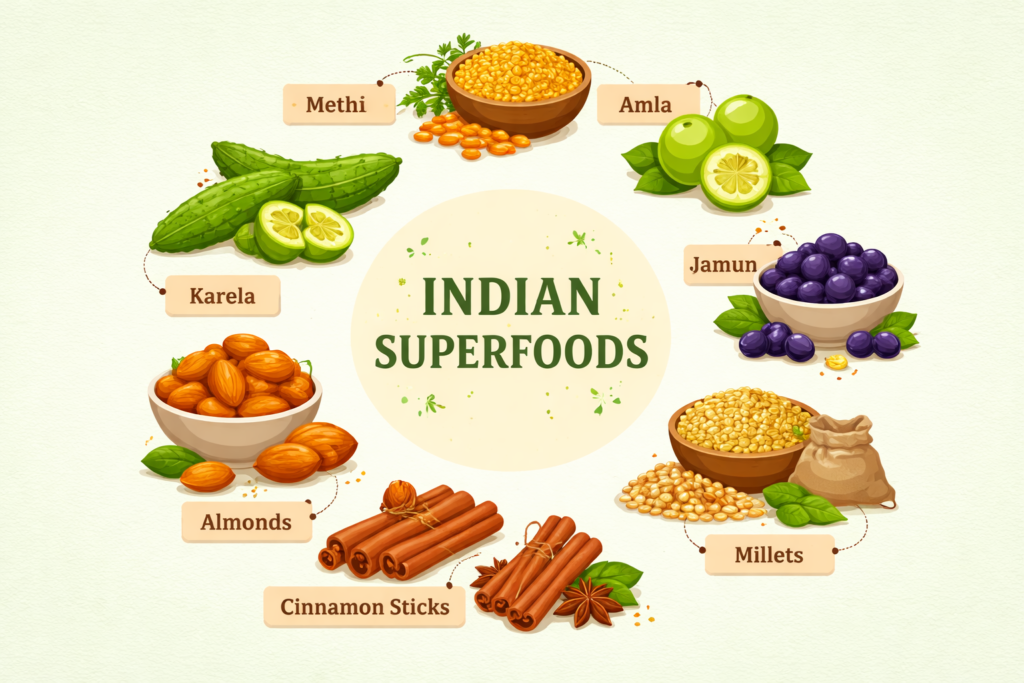
Superfoods for Diabetics
- Karela (Bitter Gourd): Contains polypeptide-p, a plant insulin that helps lower blood sugar naturally
- Methi Seeds (Fenugreek): Rich in soluble fibre; soaking overnight and consuming daily has shown blood glucose benefits
- Jamun (Indian Blackberry): Seeds in powdered form are traditionally used to manage sugar levels
- Amla (Indian Gooseberry): High in Vitamin C and chromium; chromium supports insulin action
- Millets (Bajra, Jowar, Ragi): Lower GI than wheat and rice; rich in fibre and minerals
- Cinnamon (Dalchini): Small amounts may improve insulin sensitivity; great in chai without sugar
- Nuts and Seeds: Almonds, walnuts, flaxseeds, chia seeds all slow glucose absorption
Protein Sources That Help Stabilise Blood Sugar
- Moong dal, masoor dal, toor dal, chana dal
- Paneer (in moderation avoid processed or full-fat in large amounts)
- Tofu and soy products
- Eggs (especially egg whites)
- Chicken breast and fish (especially fatty fish like mackerel and sardines for omega-3)
Foods That Spike Blood Sugar What to Avoid or Limit
| Food Type | Examples | Why It Spikes Sugar |
| Refined grains | White rice, maida, white bread, sooji | Quickly converts to glucose in the bloodstream |
| Sugary drinks | Cola, packaged juice, flavoured milk, energy drinks | Liquid sugar absorbs even faster than solid food |
| Fried snacks | Samosa, pakora, namkeen, chips | High in refined carbs + bad fats; causes prolonged elevation |
| Indian sweets | Gulab jamun, jalebi, barfi, rasgulla | Extremely high in sugar and refined carbs |
| Hidden sugars | Ketchup, pickles, biscuits, cornflakes, flavoured yoghurt | Added sugar often disguised in ‘healthy’ labels |
| Fruits (high GI) | Mango (large portions), chikoo, grapes, dates (large amount) | High fructose; eat in small controlled portions only |
Special Conditions: Gestational Diabetes and PCOS
If you are a woman above 35 dealing with gestational diabetes or PCOS, blood sugar control becomes even more critical. Both conditions involve insulin resistance at their core, and a targeted diet can significantly improve outcomes.
For pregnant women, managing blood sugar through diet is especially important to protect both mother and baby. Our blog on Pregnancy Diet for Gestational Diabetes covers this in detail, with trimester-wise guidance for Indian women.
For PCOS, a low-GI, anti-inflammatory diet works best. Our team at Nutri Activania has helped many women manage PCOS through nutrition learn more at our PCOS dietitian.
Lifestyle Habits That Make Your Sugar Control Diet Work Faster
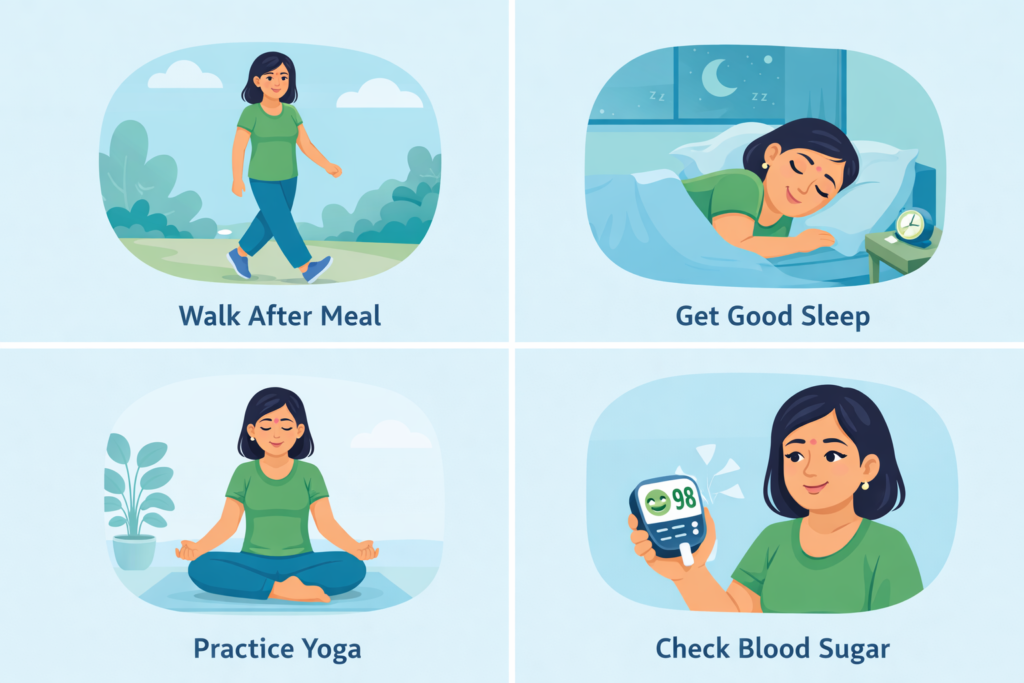
Diet alone is powerful but when combined with these habits, results come much faster:
- 30-minute walk after meals: Post-meal walks reduce the glucose spike by up to 30%, especially after lunch and dinner
- Sleep 7–8 hours: Poor sleep raises cortisol and insulin resistance even one night of bad sleep can affect the next morning’s fasting sugar
- Manage stress: Chronic stress raises cortisol, which directly raises blood glucose. Yoga, meditation, and deep breathing are clinically proven to help
- Monitor your blood sugar: Regular tracking (especially fasting sugar + 2-hour post-meal sugar) helps you understand which foods are affecting you personally
- Stay consistent: The biggest mistake people make is following the diet only for a few weeks. Blood sugar management is a lifestyle, not a temporary fix
When Should You See a Diabetes Dietician in Delhi?
You should consider booking a consultation with a certified diabetes educator and dietitian if:
- Your HbA1c is above 6.5% or your fasting sugar is consistently above 126 mg/dL
- You have been on diabetes medication and want to reduce your dependency through diet
- You are confused about what to eat there is too much conflicting information online
- You have diabetes along with another condition (thyroid, blood pressure, kidney issues, PCOS)
- You have tried multiple diets but not seen sustained improvement in your sugar levels
At Nutri Activania, our founder Avni Kaul is a Certified Diabetes Educator with the International Diabetes Federation and has over 12 years of clinical experience, including work at Max Hospital’s Endocrinology Department. As a leading dietitian in Delhi and nutritionist, she specialises in building practical, sustainable, Indian-food-friendly diabetes plans.
👉Book your personalised dietitian for diabietes consultation today and take real control of your blood sugar.
Related Conditions: Thyroid and Blood Pressure
Uncontrolled blood sugar often goes hand in hand with thyroid dysfunction and high blood pressure in adults above 35. If you are managing multiple conditions simultaneously, a coordinated nutrition plan is essential. Explore our thyroid dietitian service and blood pressure diet plan for more specialised guidance.
Conclusion: Your Blood Sugar Is in Your Hands
Managing diabetes after 35 is absolutely possible and it does not mean a life of bland, joyless food. With the right knowledge, the right foods, and consistent habits, you can keep your blood sugar stable, feel more energetic, and reduce your risk of long-term complications significantly.
Start with the basics: switch to low-GI grains, pair carbs with protein, cut out sugary drinks, and walk after meals. If you want expert, personalised guidance from an experienced best dietitian nutritionist in Delhi and Certified Diabetes Educator, we are here to help.
You can also explore more expert nutrition advice on our blog page covering topics from weight loss to heart health, PCOS, and pregnancy nutrition.
Frequently Asked Questions (FAQs)
Q1. What is the best diet for controlling blood sugar in India?
The best diet for blood sugar control in India is based on low-GI carbohydrates like millets, multigrain atta, and brown rice; high-fibre vegetables; lean protein from dal and paneer; and healthy fats from nuts and mustard oil. Avoiding refined grains, sugary drinks, and fried snacks is equally important. A personalised plan from a diabetes dietitian will work best for your specific needs.
Q2. Can diabetes be controlled through diet alone?
In early-stage Type 2 diabetes and prediabetes, diet and lifestyle changes can significantly reduce or even normalise blood sugar levels without medication. For more advanced stages, diet works alongside medication but it almost always reduces the required dose over time. Always consult your doctor before making changes to medication.
Q3. Is rice bad for diabetics?
White rice in large portions has a high glycaemic index and can spike blood sugar rapidly. However, you do not have to eliminate rice completely. Switching to brown rice or hand-pounded rice, eating smaller portions, and pairing it with dal and vegetables significantly lowers its impact on blood sugar.
Q4. What is a good breakfast for a diabetic Indian?
Good breakfast options include moong dal chilla, oats upma with vegetables, ragi dosa with sambar, or besan chilla with chutney. Avoid sweet cereals, fruit juices, white bread, and parathas made with maida. Always pair your breakfast with a protein source.
Q5. How often should I consult a dietitian for diabetes management?
Initially, monthly consultations are recommended to adjust your plan based on blood sugar reports. Once your levels are stable, quarterly follow-ups help maintain progress and adapt your diet to any new health changes.
Q6. Is jaggery or honey better than sugar for diabetics?
While jaggery and honey are less refined than white sugar, they still raise blood sugar. They should not be used freely by diabetics. Natural sweeteners like stevia can be used in limited amounts. The goal is to gradually reduce dependence on sweetness in general.
Q7. Where can I find the best diabetes dietitian in Delhi?
Nutri Activania, founded by Avni Kaul a Certified Diabetes Educator with 12+ years of experience offers personalised diabetes diet plans in Delhi and online. Visit our diabetes diet consultation page to book your appointment.