

Metabolism gets blamed for a lot. Stubborn weight that will not budge, constant fatigue, and the frustrating feeling that your body is working against you, no matter how carefully you eat.
Most advice out there is either oversimplified or designed to sell you something. Detox teas, fat burners, and crash diets do not fix your metabolism. In many cases, they make it significantly worse.
What actually works is understanding what is slowing your metabolism down and making targeted changes that address the real cause. If unexplained weight gain, low energy, or difficulty losing weight despite eating right sound familiar, this guide is for you. And if you want a personalised plan built around your specific health picture, our weight management nutrition programme has helped hundreds of clients get real, lasting results.
What Is Metabolism and Why Does It Slow Down

Metabolism is not one thing. It is the total of all the chemical processes your body uses to convert food into energy and keep you alive. The part that matters most for weight is your Basal Metabolic Rate, or BMR, which is the number of calories your body burns at rest just to keep your organs functioning.
BMR accounts for roughly 60 to 70 percent of all the calories you burn in a day. The rest comes from digestion and physical movement.
When people say they have a slow metabolism, they usually mean their BMR has dropped below what it should be. Here is why that happens:
- Age: After 30, metabolic rate drops by 1 to 2 percent every decade, mainly because muscle mass decreases
- Crash dieting: Eating too little for too long forces the body to lower its energy output as a survival response. This is called metabolic adaptation
- Thyroid dysfunction: Hypothyroidism directly reduces metabolic rate and is extremely common among Indian women
- Insulin resistance: When cells stop responding to insulin properly, the body shifts into fat-storage mode, and energy production slows
- Muscle loss: Sedentary lifestyles and low-protein diets reduce muscle mass, which directly lowers your resting calorie burn
- Poor sleep: Disrupted sleep raises cortisol, impairs insulin sensitivity, and throws off hunger hormones like ghrelin and leptin
Understanding the cause matters because the fix is different depending on what is driving the slowdown. A thyroid issue requires medical management alongside diet. Insulin resistance responds well to specific dietary changes. Muscle loss requires strength training. There is no single magic solution.
The Biggest Myths About Metabolism You Should Stop Believing
Before jumping into what works, it helps to clear out what does not.
Myth 1: Eating less always speeds up fat loss: Not true. Below a certain calorie threshold, your body adapts by burning fewer calories. Extreme restriction triggers metabolic adaptation and muscle breakdown, both of which slow your metabolism further. This is the primary reason crash diets produce short-term results and long-term metabolic damage.
Myth 2: Metabolism supplements and detox teas work: No supplement on the market meaningfully raises your metabolic rate in a safe, sustained way. Most fat-burning products contain stimulants that temporarily raise heart rate but do nothing for your actual metabolic function.
Myth 3: Cardio is the best way to fix a slow metabolism: Cardio burns calories during the session. But it does not significantly raise your resting metabolic rate. Strength training does, and the difference matters enormously over the long run.
Myth 4: Eating at night causes a slow metabolism: Meal timing matters far less than meal composition and total calorie intake. The idea that food eaten after 8 pm automatically turns into fat is not supported by evidence.
How to Boost Your Metabolism Naturally: What Actually Works
Eat Enough Protein at Every Meal
Protein has the highest thermic effect of any macronutrient. Your body burns 20 to 30 percent of protein calories just to digest and process them, compared to 5 to 10 percent for carbohydrates and almost nothing for fat. A high-protein meal is inherently more metabolically demanding than a high-carb one.
In Indian diets, great protein sources include:
- Dal, rajma, chana, moong, and all lentils
- Paneer, curd, and low-fat milk
- Eggs, chicken, and fish for non-vegetarians
- Tofu and soy for vegetarians
Aim for a protein source at every single meal, not just dinner. Most Indians, especially vegetarians, eat the majority of their protein in one meal and fall significantly short of the recommended 0.8 to 1.2 grams per kilogram of body weight per day.
Do Not Skip Breakfast
Skipping breakfast, especially for long periods, sends a starvation signal to the body. Cortisol is already at its highest in the morning, and going without food extends this stress state, which promotes fat storage and muscle breakdown.
Eating within 60 to 90 minutes of waking up keeps the metabolic engine active through the day. Simple options that work well in an Indian context include a two-egg omelette with vegetables, a bowl of moong dal chilla, sprouts chaat, or paneer with a small portion of roti.
Build Muscle Through Strength Training
This is the single most powerful long-term strategy for raising your metabolic rate. Muscle tissue burns more calories at rest than fat tissue. Every kilogram of muscle you build permanently raises your BMR.
You do not need to spend hours at a gym. Two to three sessions of 30 to 40 minutes per week using weights, resistance bands, or even bodyweight movements are enough to build and preserve muscle mass meaningfully, particularly when combined with sufficient protein.
Many women in particular, avoid strength training out of fear of bulking up. This concern is largely unfounded. What strength training does is make you leaner, more toned, and metabolically stronger.
Stay Consistently Hydrated
Dehydration slows metabolic processes. Research has shown that drinking 500ml of water raises metabolic rate by approximately 24 to 30 percent for up to an hour. Many people in India, particularly those working in air-conditioned offices, are chronically mildly dehydrated without realising it because the sensation of thirst is dulled in cool environments.
Aim for 2.5 to 3 litres of water daily. Replacing chai, packaged juices, and cold drinks with water makes a measurable difference not just to metabolism but to hunger regulation and energy levels too.
Prioritise Sleep
Seven to nine hours of quality sleep is non-negotiable for metabolic health. Sleep deprivation raises cortisol, increases cravings for high-sugar foods, worsens insulin sensitivity, and reduces muscle recovery after exercise. All of these things directly slow metabolism.
If sleep quality is poor, no diet or exercise programme will deliver its full potential. This is something I see consistently in clinical practice: clients who clean up their diet and add exercise but continue sleeping poorly make significantly slower progress than those who address all three together.
Foods That Support a Healthy Metabolism
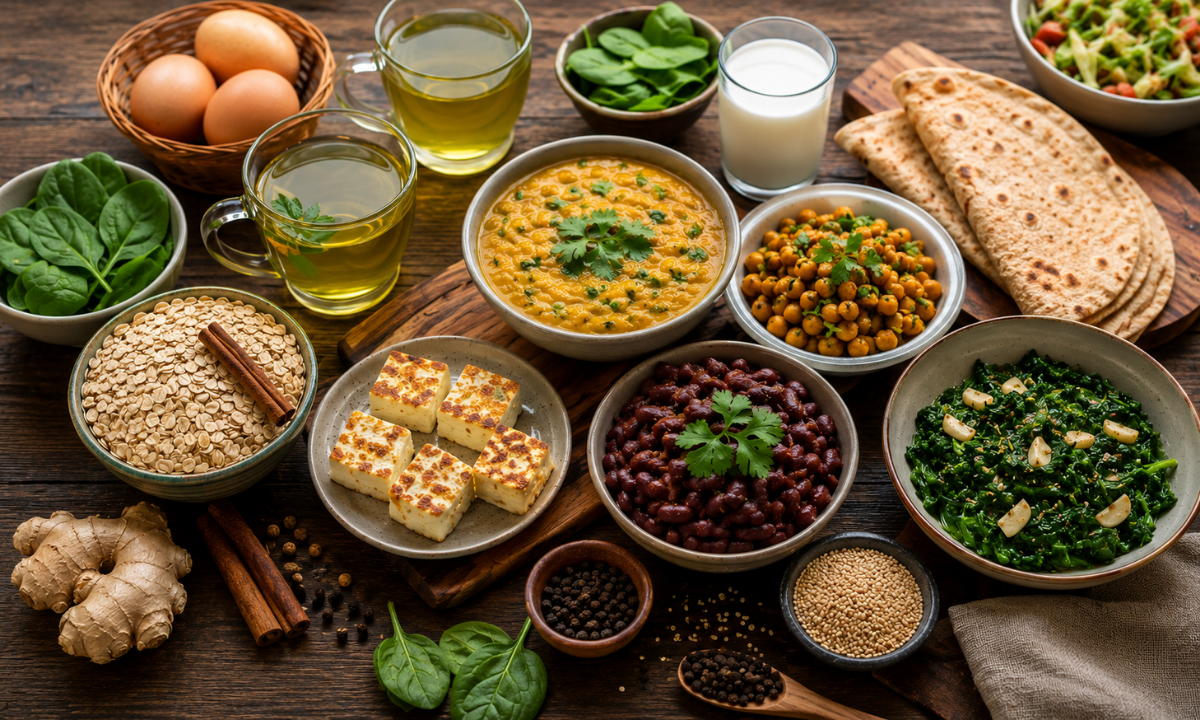
The table below covers the most effective food-based strategies with a practical view of how to include them in everyday Indian eating:
| Food or Nutrient | How It Helps Metabolism | Easy Indian Way to Include |
|---|---|---|
| High-protein foods (dal, paneer, eggs) | Highest thermic effect; preserves muscle mass | At every meal, as the base |
| Green tea | Catechins and caffeine increase fat oxidation by 10 to 16 percent | 1 to 2 cups daily between meals |
| Ginger and black pepper | Mild thermogenic effect; improves digestion and insulin sensitivity | In chai, sabzi, and soups daily |
| Cinnamon | Improves blood sugar regulation and insulin response | In oats, smoothies, or warm milk |
| Legumes and pulses | High fibre feeds gut bacteria and slows glucose absorption | Dal or chana at least once daily |
| Iron-rich foods (spinach, rajma, sesame) | Iron deficiency directly impairs oxygen transport and energy production | Palak sabzi, rajma curry, til chutney |
| Vitamin D sources (eggs, fortified milk, sunlight) | Vitamin D deficiency is linked to slower metabolism and thyroid dysfunction | Morning sun exposure plus dietary sources |
The Role of Gut Health in Metabolism
This is an area that does not get enough attention. Your gut microbiome, the trillions of bacteria that live in your digestive tract, plays a direct role in how efficiently your body extracts energy from food, regulates blood sugar, and manages fat storage.
A disrupted gut microbiome is increasingly being linked to metabolic slowdown, weight gain, and inflammation. Foods that support a healthy gut include curd and buttermilk, which are natural probiotics common in Indian diets, along with high-fibre foods like vegetables, fruit, and whole grains that act as prebiotics to feed beneficial bacteria.
Reducing ultra-processed foods, refined sugar, and excess refined carbohydrates is equally important. These feed harmful gut bacteria and promote the kind of gut imbalance that contributes to insulin resistance and metabolic dysfunction.
When to See a Nutritionist or Dietician
If you have been making consistent dietary and lifestyle changes for 8 to 12 weeks and are still not seeing results, it is worth investigating further. A qualified dietician in Delhi can run a detailed assessment, review your blood work, including thyroid, fasting insulin, vitamin D, and iron levels, and identify whether an underlying condition is contributing to your metabolic slowdown.
Many people spend months trying to fix a thyroid-related or insulin-resistance-related metabolic issue through diet alone without knowing the root cause. A personalised plan built around your actual clinical picture will always work better than a generic programme.
India has a very high prevalence of subclinical hypothyroidism and insulin resistance, both of which are frequently undiagnosed. Working with a trusted nutrition expert and weight management specialist means these factors get properly accounted for, not guessed at.
Conclusion
Boosting your metabolism is not about quick fixes. It is about consistently doing the right things: eating enough protein, not skipping meals, building muscle, sleeping well, staying hydrated, and supporting your gut health through food.
The biology is straightforward. The execution requires consistency and the right guidance.
If you are struggling with unexplained weight gain, persistent fatigue, or a metabolism that feels stuck despite your best efforts, speaking with a nutritionist in India who understands your individual clinical picture is the most direct path to real answers and sustainable results.
Frequently Asked Questions
What are the first signs of a slow metabolism?
The most common signs include unexplained weight gain despite no major change in diet, persistent fatigue, feeling cold frequently, constipation, dry skin, hair thinning, and difficulty losing weight even with exercise. Many of these symptoms overlap with thyroid dysfunction, which is why a proper diagnosis matters.
Can Indian food boost metabolism?
Yes. Several staples of the Indian diet are genuinely metabolically supportive. Dal and legumes are high in protein and fibre. Spices like ginger, turmeric, and black pepper have mild thermogenic and anti-inflammatory effects. Curd supports gut health. The challenge is that many Indian diets are also high in refined carbohydrates and low in protein, which works against metabolic health.
Does drinking warm water in the morning boost metabolism?
Warm water does support digestion and hydration, and hydration itself has a positive effect on metabolic rate. However, the temperature of the water makes a marginal difference. The more important habit is simply drinking enough water throughout the day consistently.
How long does it take to see results after improving metabolic health?
Most people notice improvements in energy, digestion, and hunger regulation within 2 to 4 weeks of making consistent dietary changes. Weight-related changes typically become visible over 8 to 12 weeks. Metabolism is a long-term system and responds to sustained habits, not short-term interventions.
Is it possible to permanently increase metabolic rate?
Yes. Building muscle mass through strength training permanently raises your resting metabolic rate. Maintaining adequate protein intake, managing thyroid health, improving insulin sensitivity, and supporting gut health all contribute to a higher and more stable metabolic rate over the long term.
Should I consult a dietician if I think my metabolism is slow?
Absolutely. A qualified dietician or nutritionist can assess your full clinical picture, including blood markers for thyroid function, insulin levels, vitamin deficiencies, and gut health, and build a plan that addresses the actual cause rather than symptoms. Self-diagnosing and trying generic programmes often delays real progress.