
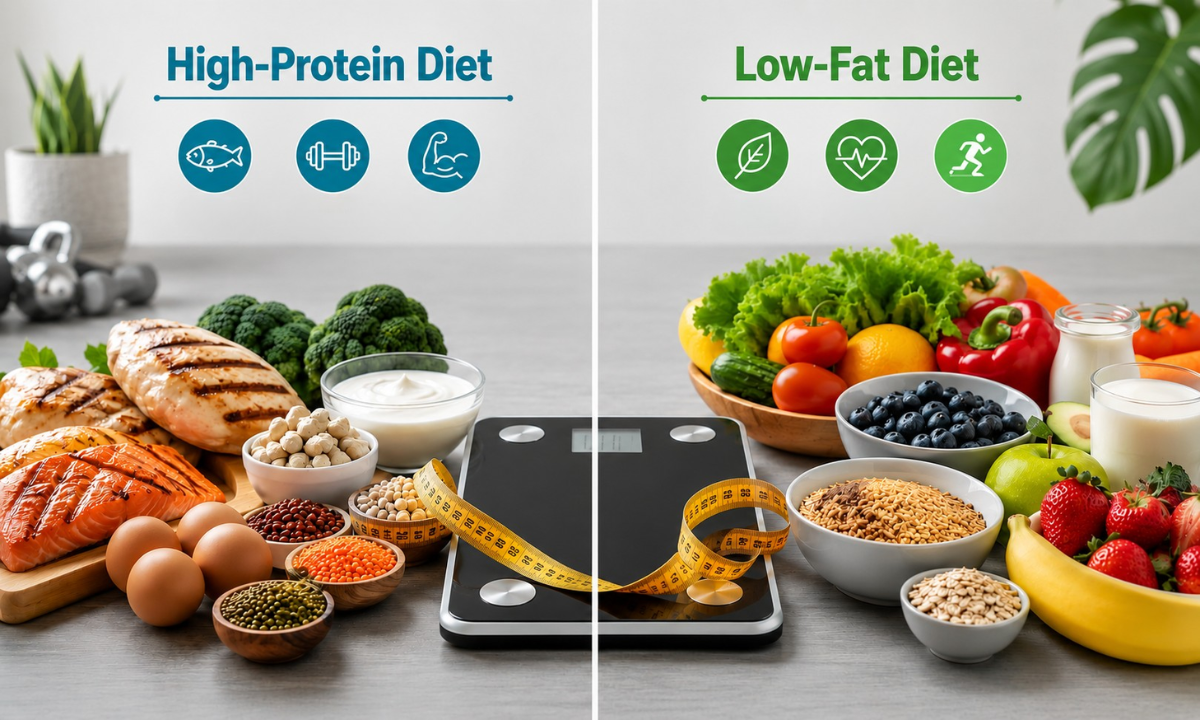
Losing weight often begins with a single decision, then quickly turns into a series of confusing choices. One of the most common is this: should you follow a high-protein diet or a low-fat diet?
Both are widely recommended, both are supported by research, and both have helped people reach their goals. Yet they work in different ways, and the right choice depends far more on your body, health, and lifestyle than on whichever diet is trending.
This is also why many people choose to work with a dietician for weight loss in Delhi, like Dietician Avni Kaul at Nutri Activania, so the decision is based on their individual needs rather than guesswork. This article compares both approaches honestly, so you can make an informed, sustainable choice.
Understanding the two approaches
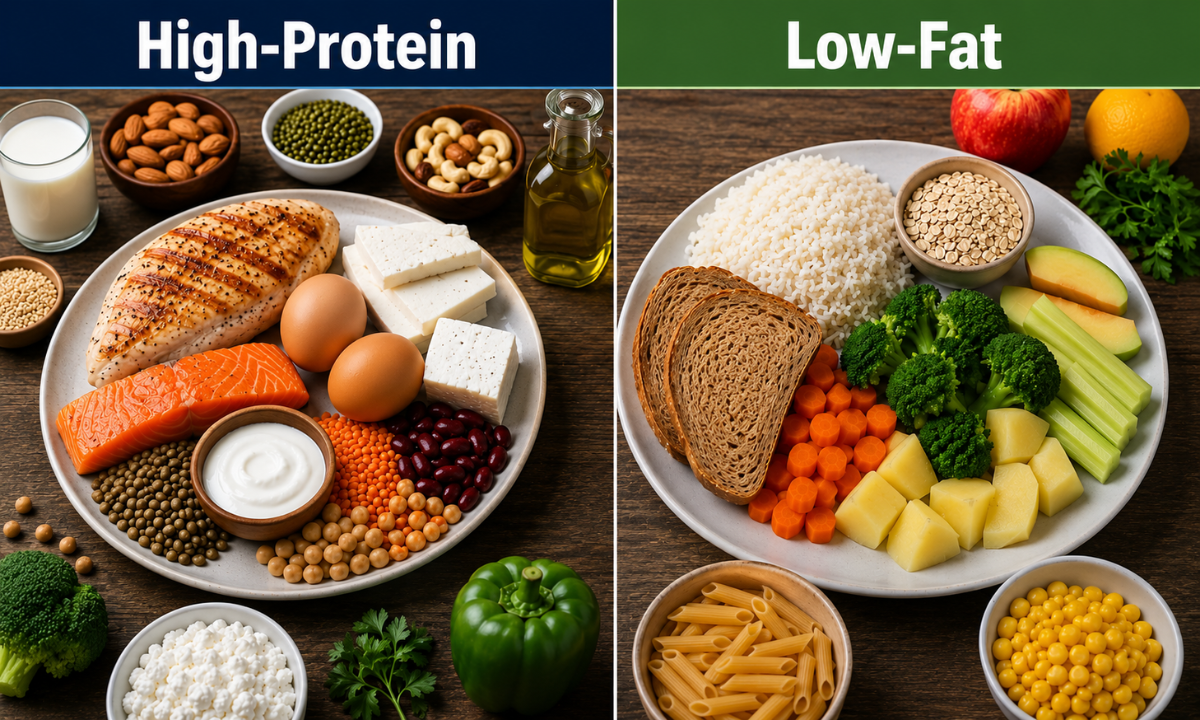
A high-protein diet increases the share of your daily calories that comes from protein sources such as eggs, dairy, paneer, dals, legumes, fish, and lean meats, usually while keeping fat moderate and reducing refined carbohydrates. The idea is to use the protein’s effects on appetite and muscle to support fat loss.
A low-fat diet focuses on reducing total fat intake, particularly fried foods, fatty cuts of meat, and high-fat processed items, while drawing more calories from carbohydrates and protein. Its roots lie in heart health, since reducing saturated fat was long linked to lowering cardiovascular risk.
Both are usually run within an overall calorie reduction, because that is what ultimately drives weight loss.
How Each One Supports Weight Loss
High-protein diets are known for keeping you fuller for longer. Protein is the most satiating of the three macronutrients, and studies consistently show that people on higher-protein plans report more satisfaction and less hunger than those on higher-carbohydrate plans. Protein also helps the body preserve lean muscle while losing fat, which matters because holding on to muscle keeps your metabolism healthier during weight loss.
Low-fat diets work largely by cutting calorie density. Fat carries more than double the calories per gram of protein or carbohydrate, so reducing it can lower your overall intake without you eating less food by volume. This approach can suit people who prefer carbohydrate-rich meals and those advised to limit fat for specific health reasons.
What the research actually says
Here is the part that surprises most people. When researchers compare these diets directly, the differences in actual weight lost are often smaller than the marketing suggests. In one major long-term trial, diets with very different fat, protein, and carbohydrate ratios, including higher and lower fat versions, all produced similar reductions in body weight, around 6 kg on average at six months, with participants tending to regain some after a year. regardless of which diet they followed. You can read that landmark study in the New England Journal of Medicine.
The takeaway is consistent: the calorie deficit and how well you can stick to the plan matter more than the specific diet label, whether you favour high-protein or high-fat diets. That said, higher-protein approaches do show some advantages for appetite control and muscle retention, which is supported by research indexed on PubMed showing both diets were equally effective for weight loss, while the high-protein group felt more satisfied and less hungry.
High-protein diet
The strengths are real: better appetite control, muscle preservation, and easier adherence for many people because they feel less deprived. The cautions are worth knowing too. Very high-protein intake is not suitable for everyone, particularly people with existing kidney disease, and a protein-heavy plan can become unbalanced if it crowds out vegetables, fibre, and other nutrients. Quality and balance matter as much as quantity.
Pros:
- Keeps you fuller for longer and helps control appetite
- Preserves lean muscle while you lose fat
- Often easier to stick to, since you feel less deprived
- Supports steadier energy through the day
Cons:
- Cons: Not suitable for people with kidney disease or reduced kidney function
- Can become unbalanced if it crowds out vegetables and fibre
- May feel heavy or repetitive for some people
- Quality of protein matters, not just quantity
Low-fat diet
A low-fat diet can be effective and heart-friendly when it emphasises whole foods. The risk is that “low-fat” often gets confused with “low calorie,” and many packaged low-fat products replace fat with sugar, which undermines weight loss. Cutting fat too aggressively can also affect satiety and the absorption of certain vitamins, so some healthy fats should always remain in the plan.
Pros:
- Lowers overall calorie density, often without eating less food
- Can support heart health when based on whole foods
- Suits people who prefer carbohydrate-rich meals
- Simple and familiar approach to follow
Cons:
- “Low-fat” packaged foods often hide added sugar
- Cutting fat too far can leave you less satisfied
- May affect the absorption of certain fat-soluble vitamins
- Needs some healthy fats kept in to stay balanced
So which one should you choose?
There is no universal winner, only the approach that fits you. The right choice depends on your current health, any medical conditions such as metabolic syndrome, your food preferences, your routine, your body mass, and, crucially, which plan you can realistically maintain for the long term. A diet that works brilliantly for a colleague may be difficult or even unsuitable for you.
This is where individual guidance makes a genuine difference. Dietician Avni Kaul, a trusted dietician in Delhi, assesses your body type, health markers, and overall health before recommending an approach, rather than applying the same template to everyone.
Here’s the expanded section with a table comparing Indian foods for each approach:
The Indian food angle
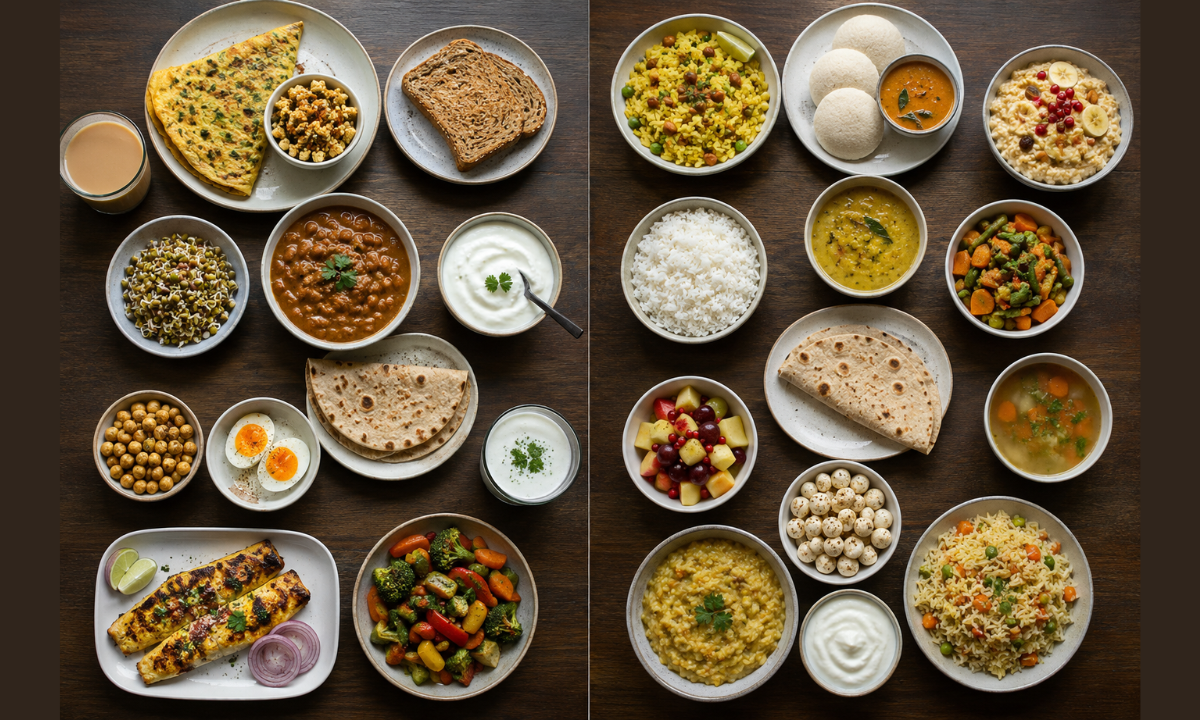
A diet only works if you can follow it, and the most common reason people quit is that the plan feels foreign to how they actually eat. The good news is that you do not have to choose between high-protein, low-fat, and Indian food. Both approaches fit comfortably into an everyday Indian kitchen, which is often what decides whether you stick with your choice or abandon it.
If you lean towards higher protein, the building blocks are already familiar: dals, rajma, chana, paneer, curd, eggs, sprouts, and fish, worked into every meal rather than saved for dinner. If you lean lower in fat, the change is less about removing foods and more about how you cook them, choosing grilled, steamed, and roasted preparations over deep-fried, and lighter gravies instead of heavy cream and butter. The same familiar meals can be nudged in either direction.
Here is how the two approaches look on the same Indian plate:
| Meal | Higher Protein | Lower Fat |
|---|---|---|
| Breakfast | Moong dal chilla, paneer bhurji, or egg with multigrain toast | Vegetable poha, idli with sambar, or oats with fruit |
| Lunch | Roti with dal or rajma, curd, and sprouts | Rice or roti with a light sabzi and dal, minimal oil |
| Snack | Roasted chana, boiled egg, or buttermilk | Fruit, makhana, or vegetable soup |
| Dinner | Grilled fish or paneer with sautéed vegetables | Khichdi or vegetable pulao with curd |
Notice that the difference between the two columns is rarely a whole new menu; it is the same Indian food adjusted slightly towards protein or away from fat. That is exactly why the high-protein versus low-fat decision is less about willpower and more about which small, sustainable shift fits your routine, your preferences, and your health. And it is why a personalised plan usually beats a rigid template, it tunes the food you already eat towards your goal instead of replacing it.
Frequently Asked Questions
Is a high-protein or low-fat diet better for fast weight loss?
Neither is reliably faster. Research shows similar weight loss across both when calories are controlled. What makes the biggest difference is how consistently you can follow the plan over time.
Can I combine high-protein and low-fat?
Yes. Many balanced, effective weight loss plans are moderately higher in protein and moderately lower in fat at the same time. A dietician for weight loss in Delhi often blends the strengths of both into a personalised plan, rather than pushing you towards one extreme.
Is a high-protein diet safe?
For most healthy people, yes, when it is balanced with vegetables and fibre. People with kidney conditions or other medical concerns should always get professional advice before significantly increasing protein.
How do I know which diet suits me?
A qualified dietician in Delhi can match the approach to your body and lifestyle, which is far more effective than following generic online advice.