
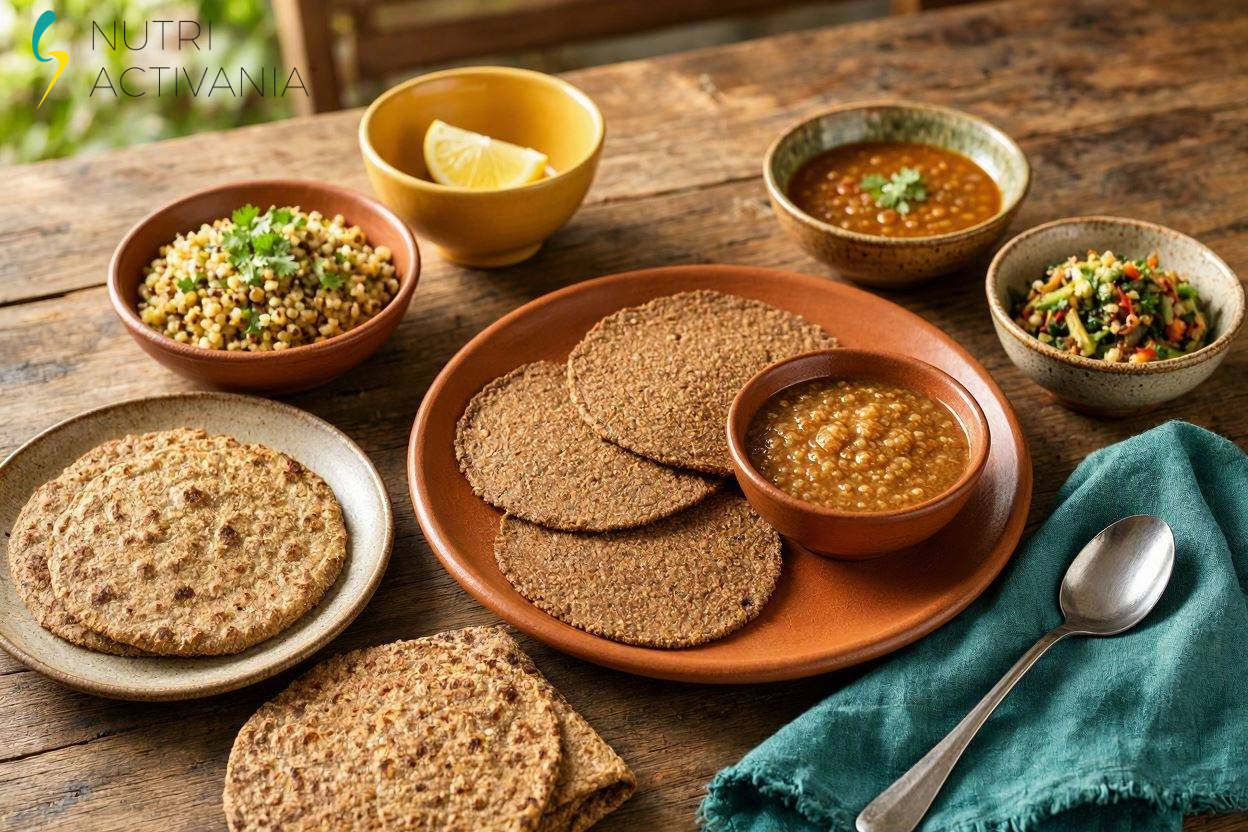
Are you trying to lose weight and not seeing the results you hoped for? You are not alone; losing weight is genuinely difficult, and those extra kilos can feel stubborn no matter what you try.
But what if a simple, traditional change to your plate could quietly support your progress? Millets, the humble whole grains our grandparents grew up on, are making a strong comeback for exactly this reason. They are filling, nutrient-rich, and easy to slot into everyday Indian meals.
Of course, not every millet works the same way, and no single grain will burn fat on its own. With the right guidance, however, you can choose the varieties that fit your goals and use them in a way that actually helps.
In this blog, you’ll get the answer to the question every dieter asks: which millet is good for weight loss? We’ll walk through the 5 best millets for weight management, their nutrition profiles, and simple ways to include them in your daily meals, so you can eat mindfully and get your progress moving again.
Let’s start by understanding why millets support weight loss in the first place.
Why Millets Support Weight Loss
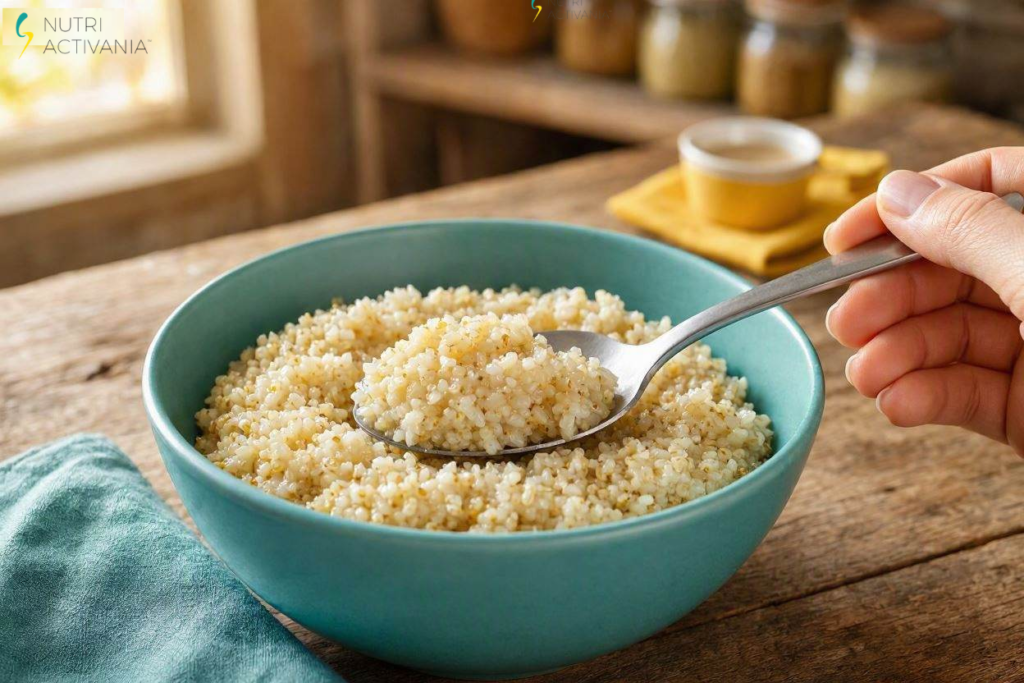
Millets differ from refined grains in a few key ways that matter specifically for weight loss. They retain more of their natural fibre, since they are typically consumed in a less processed form than polished rice or refined flour, and this fibre content directly affects fullness and blood sugar response.
Nutritional Benefits of Millets for Weight Management
Millets can be a useful addition to a weight-management diet because they provide a combination of fibre, protein, and essential nutrients while working well in everyday Indian meals. Their nutritional profile can help you build meals that are filling and balanced without feeling overly restrictive.
Here’s how millets can support your diet:
- High in fibre: Fibre can promote fullness and may help you manage hunger between meals and reduce unnecessary snacking.
- Provides plant-based protein: Millets contribute protein to your diet, which is important for maintaining muscle as part of a calorie-controlled eating plan.
- Nutrient-dense: Millets provide nutrients such as magnesium, iron, and B vitamins, depending on the variety.
- A wholesome alternative to refined grains: Replacing some refined grains with whole-grain millets can increase the fibre and nutrient content of your meals.
- Easy to include in everyday meals: Millets can be used in dosa, idli, porridge, upma, rotis, and other familiar dishes.
When it comes to millet and weight management, the main benefit is not that millets directly burn fat, but that they can help you create more satisfying and nutrient-rich meals. For example, a High Fibre Millet Mix can be included as part of a balanced diet when you want to increase your overall fibre intake and add variety to your meals.
But There’s One Important Thing to Remember
Not all millet products are processed in the same way. Some millet grains may be polished or processed, which can remove part of the outer layers and reduce their fibre and nutrient content.
When possible, choose whole or minimally processed millets from a trusted source. Check the ingredient label and avoid products with unnecessary added ingredients.
You can also choose whole-grain millets and have them cleaned or freshly ground before use. This simple approach can help you retain more of the grain’s natural nutritional value while enjoying millets in their traditional form.
Top 5 Millets for Weight Loss
1. Little Millet (Kutki / Samai)
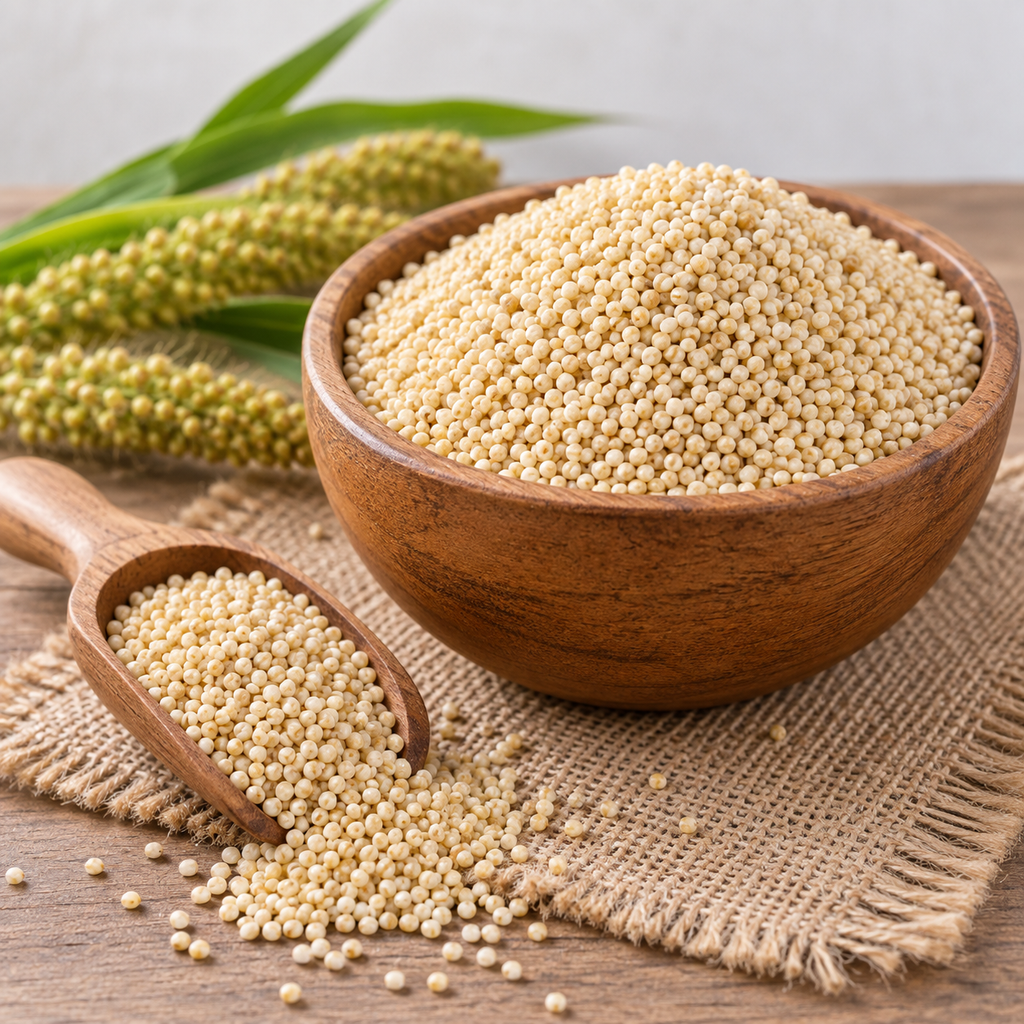
Little millet is a nutritious whole grain that can fit well into a balanced weight-management diet. It provides dietary fibre, plant-based protein, and several essential minerals and B vitamins. Its fibre content can contribute to fullness, which may help with appetite management when consumed as part of an overall calorie-controlled diet.
Little Millet Nutrition Facts — Approx. per 100 g
| Nutrient | Amount |
|---|---|
| Calories | ~350 kcal |
| Carbohydrates | ~67 g |
| Protein | ~7.7 g |
| Dietary fibre | ~7.6 g |
| Fat | ~4.7 g |
| Iron | ~9.3 mg |
| Calcium | ~17 mg |
| Magnesium | ~133 mg |
Little millet can be used instead of rice in several everyday dishes. It works particularly well in recipes where you would normally use rice or other grains.
Try it in:
- Little millet upma
- Little millet khichdi
- Little millet salad
- Little millet dosa
2. Foxtail Millet (Kangni / Thinai)
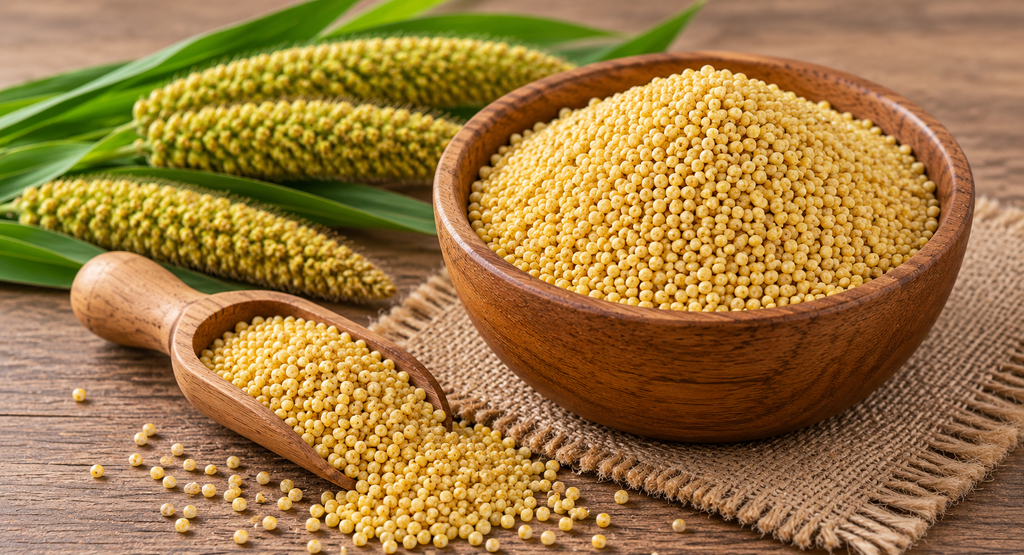
Foxtail millet, also known as kangni in Hindi, is another nutrient-rich whole grain that can be included in a weight-management diet. It provides complex carbohydrates, fibre, plant-based protein, and important micronutrients. The combination of fibre and carbohydrates can contribute to a more satisfying meal, particularly when paired with vegetables and a protein source.
Foxtail Millet Nutrition Facts — Approx. per 100 g
| Nutrient | Amount |
|---|---|
| Calories | ~331 kcal |
| Carbohydrates | ~60.9 g |
| Protein | ~12.5 g |
| Dietary fibre | ~8 g |
| Fat | ~4.3 g |
| Iron | ~2.8 mg |
| Calcium | ~31 mg |
| Magnesium | ~81 mg |
Try it in:
- Foxtail millet upma
- Foxtail millet pongal
- Foxtail millet stir-fry
- Foxtail millet dosa
Note: Nutrition values can vary depending on the millet variety, growing conditions, processing, and cooking method. These figures are intended as general nutritional estimates rather than exact values for every product.
3. Kodo Millet (Kodra / Koden)
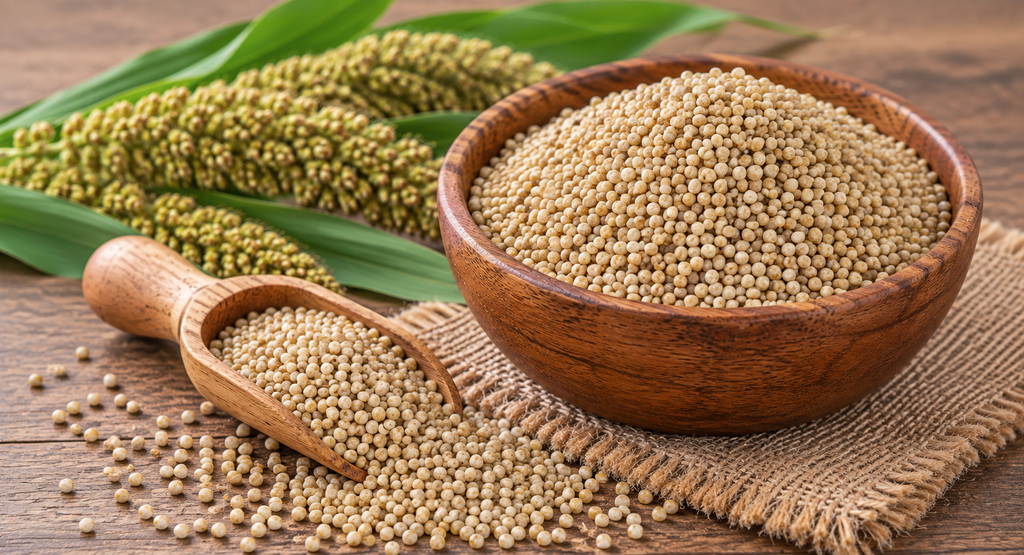
Kodo millet is a nutritious whole grain that can be a useful addition to a balanced weight-management diet. It is a good source of dietary fibre and provides plant-based protein, complex carbohydrates, and several essential minerals. Its fibre content can help support fullness, making it easier to manage hunger between meals.
Kodo millet can be used as an alternative to rice and other refined grains. It has a mild flavour and can be incorporated into several traditional Indian dishes.
Kodo Millet Nutrition Facts — Approx. per 100 g
| Nutrient | Amount |
|---|---|
| Calories | ~353 kcal |
| Carbohydrates | ~66.6 g |
| Protein | ~8.3 g |
| Dietary fibre | ~9 g |
| Fat | ~3.6 g |
| Iron | ~2.6 mg |
| Calcium | ~27 mg |
| Magnesium | ~130 mg |
Why Include Kodo Millet for Weight Management?
- Good source of fibre: May help you feel fuller after meals.
- Provides plant-based protein: Supports a balanced diet when combined with other protein-rich foods.
- Nutrient-rich: Provides minerals such as iron, magnesium, phosphorus, and calcium.
- Versatile: Can replace rice in many everyday meals without making your diet feel restrictive.
Try it in:
- Kodo millet upma
- Kodo millet khichdi
- Kodo millet pulao
- Kodo millet dosa
Remember, Kodo millet does not directly burn fat or cause weight loss on its own. Portion size, total calorie intake, protein intake, physical activity, and your overall eating pattern are more important for long-term weight management.
3. Barnyard Millet (Sanwa / Udalu)
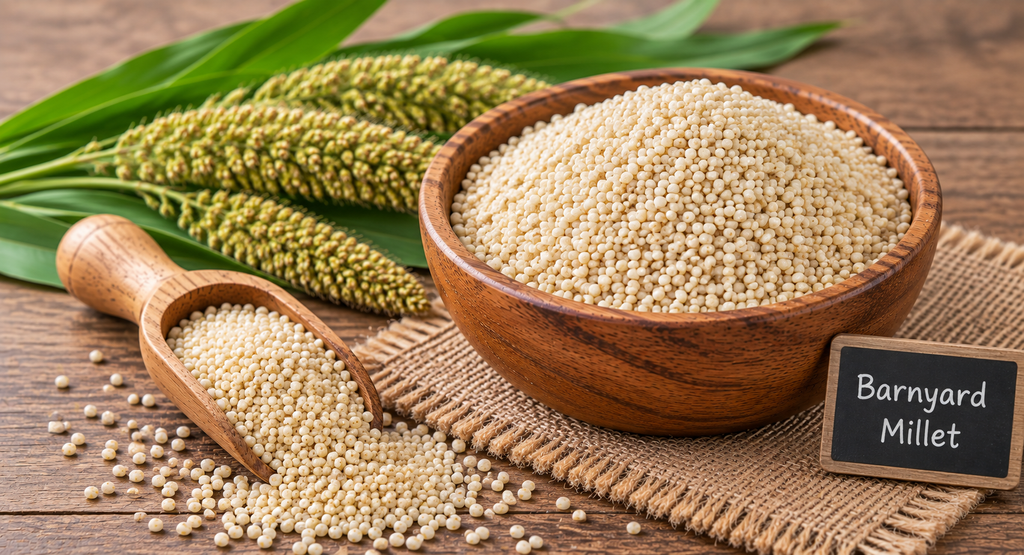
Barnyard millet is a nutritious, gluten-free whole grain that can be included in a balanced weight loss management diet. It provides dietary fibre, plant-based protein, and important micronutrients while offering a wholesome alternative to refined grains.
Barnyard millet can support weight management, digestion, and fullness while providing essential nutrients as part of a balanced diet
Its fibre content can help support fullness after meals, while its complex carbohydrates provide a source of energy. When paired with vegetables, legumes, dairy, eggs, or other protein-rich foods, barnyard millet can form part of a balanced and satisfying meal.
Barnyard Millet Nutrition Facts — Approx. per 100 g
| Nutrient | Amount |
|---|---|
| Calories | ~300 kcal |
| Carbohydrates | ~65 g |
| Protein | ~6.2 g |
| Dietary fibre | ~9.8 g |
| Fat | ~1.1 g |
| Iron | ~15.2 mg |
| Calcium | ~20 mg |
| Magnesium | ~81 mg |
Why Include Barnyard Millet for Weight Management?
- High in fibre: Can help support fullness and appetite management.
- Provides plant-based protein: Adds to your daily protein intake.
- Nutrient-rich: Contains minerals such as iron and magnesium.
- Gluten-free: Suitable for people who need or prefer gluten-free grains.
- Versatile: Can be used in place of rice in several Indian recipes.
Try it in:
- Barnyard millet upma
- Barnyard millet khichdi
- Barnyard millet pulao
- Barnyard millet dosa
- Barnyard millet pongal
As with other millets, barnyard millet is not a weight-loss food by itself. The overall quality and quantity of your diet, along with regular physical activity, play a greater role in weight management.
4. Adlay Millet (Job’s Tears / Coix)
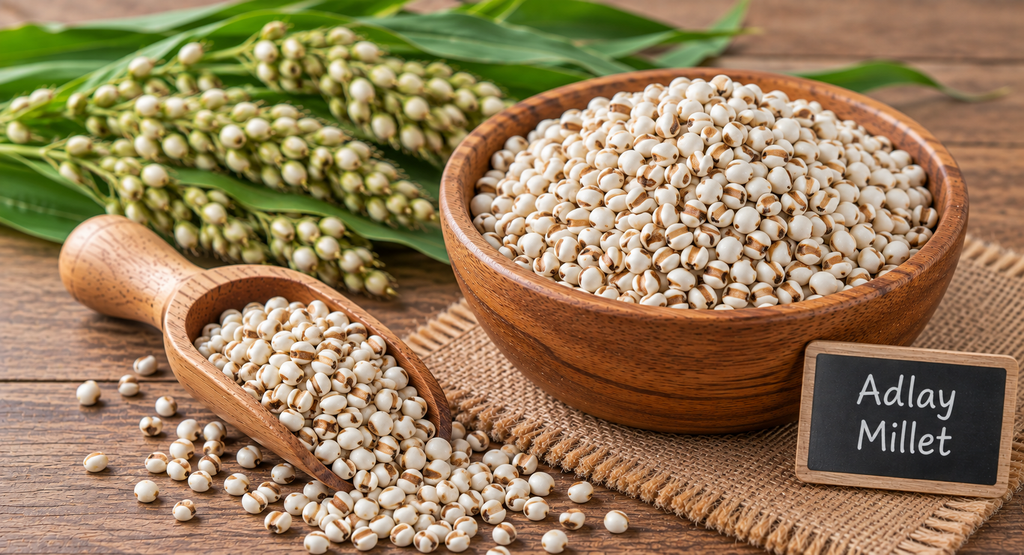
Adlay millet, also known as Job’s tears, can be included in an Indian diet as an alternative to commonly used grains. It provides carbohydrates, plant-based protein, and minerals, and can be combined with vegetables and protein-rich foods to create a filling meal.
For weight management, the benefit comes from using it as part of a balanced meal rather than treating it as a weight-loss food on its own. Keep portions appropriate and pair it with vegetables, dal, curd, paneer, eggs, or other protein sources.
Nutrition Facts — Approx. per 100 g
| Nutrient | Approximate Amount |
|---|---|
| Calories | ~350 kcal |
| Carbohydrates | ~70–72 g |
| Protein | ~12–13 g |
| Dietary fibre | Varies by processing |
| Fat | ~5–6 g |
| Magnesium | ~150–170 mg |
| Iron | ~4–5 mg |
How to Include Adlay Millet in Indian Meals:
- Adlay millet upma
- Adlay millet khichdi
- Adlay millet dosa
- Adlay millet pongal
- Adlay millet vegetable pulao
- Adlay millet curd rice-style bowl
- Adlay millet lemon rice
- Adlay millet vegetable porridge
When preparing Adlay millet for weight management, focus on portion size and what you pair it with. Adding vegetables and a protein source can make the meal more balanced and satisfying.
5. Finger Millet (Ragi) for Weight Management (Ragi / Nachni / Mandua)
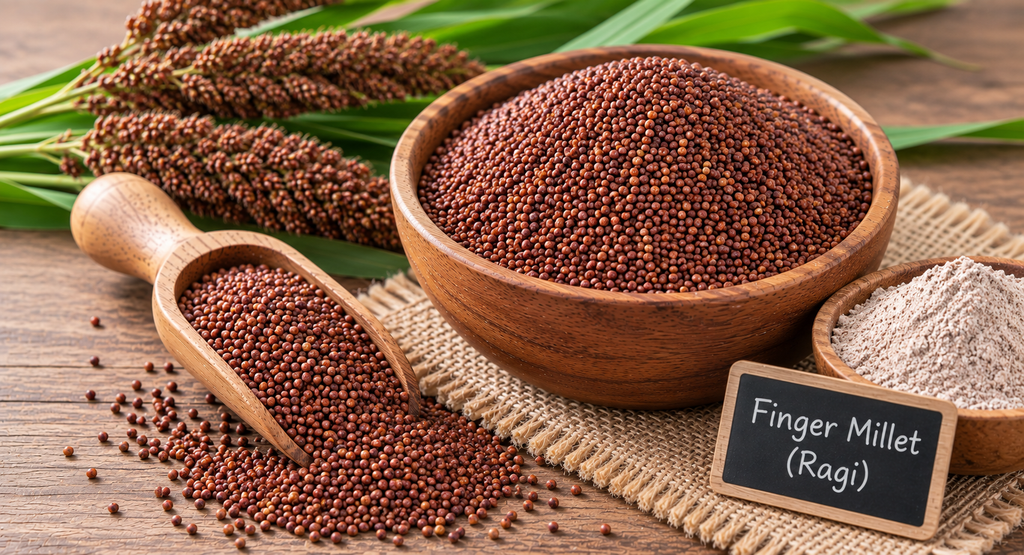
Finger millet, commonly known as ragi, is one of the most popular millets in Indian diets. It is a good source of dietary fibre, plant-based protein, calcium, iron, and other essential nutrients. Its fibre content can help support fullness, making it a useful grain to include in a balanced weight-management diet.
Ragi can be particularly convenient for Indian meals because it can be used in traditional dishes such as ragi mudde, ragi dosa, ragi roti, and ragi porridge. However, ragi itself does not directly burn fat or guarantee weight loss. The portion size and ingredients used in the overall meal are important.
Ragi Nutrition Facts — Approx. per 100 g of raw grain
| Nutrient | Approximate Amount |
|---|---|
| Calories | ~336 kcal |
| Carbohydrates | ~72 g |
| Protein | ~7.3 g |
| Dietary fibre | ~3.6 g |
| Fat | ~1.3 g |
| Calcium | ~344 mg |
| Iron | ~3.9 mg |
| Magnesium | ~137 mg |
Why Include Ragi in a Weight-Management Diet?
- Good source of calcium: Ragi is particularly rich in calcium compared with many other cereals.
- Provides dietary fibre: Can contribute to fullness and better meal satisfaction.
- Contains plant-based protein: Adds some protein to your daily diet.
- Nutrient-rich: Provides calcium, iron, magnesium, and other micronutrients.
- Easy to use in Indian meals: Ragi works well in both traditional and modern recipes.
How to Include Ragi in Your Indian Diet:
- Ragi mudde with sambar or vegetable curry
- Ragi dosa with sambar and chutney
- Ragi roti with vegetables or dal
- Ragi porridge with milk or curd
- Ragi idli
- Ragi upma
For weight management, choose preparations that are not loaded with added sugar, ghee, or oil, and combine ragi with vegetables and a protein source for a more balanced meal.
How to Introduce Millets Into a Weight Loss Diet Practically
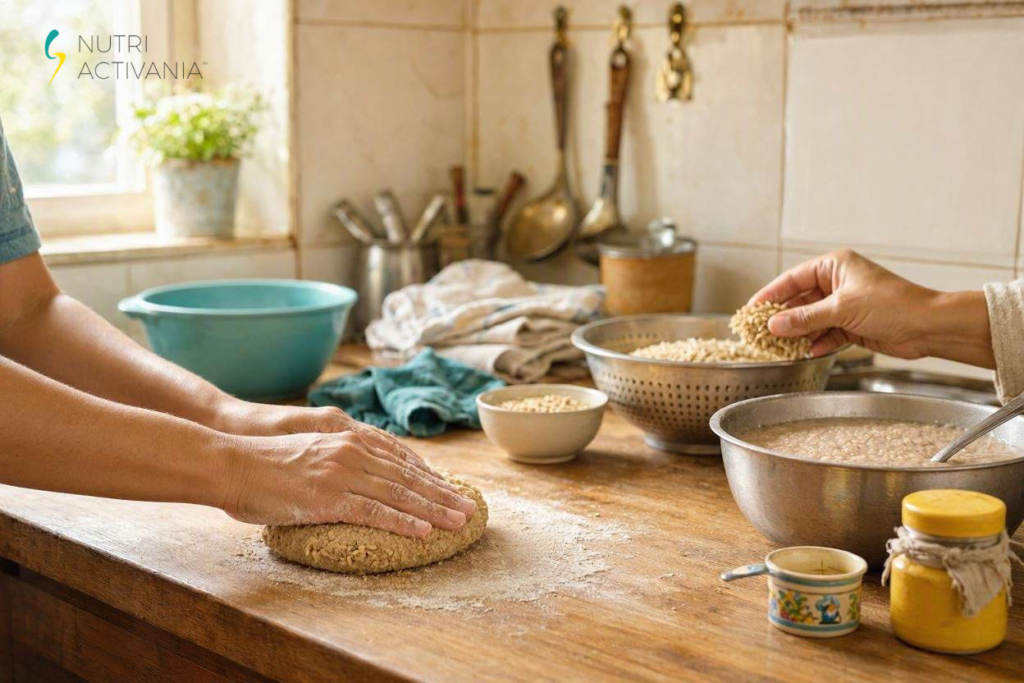
Start with one meal a day. Replacing white rice with a millet like foxtail or little millet at one meal is an easy starting point that does not require overhauling the entire diet at once.
Try millet roti alongside wheat roti. Bajra or jowar roti can be introduced gradually alongside regular wheat roti, allowing the palate to adjust without a sudden, complete switch.
Use ragi for breakfast. Ragi porridge or ragi dosa makes for a filling, fibre-rich start to the day, often more satisfying than a similarly sized portion of a refined-grain breakfast.
Cook millets with vegetables and protein. Combining millets with dal, vegetables, or a protein source in dishes like khichdi maximises both fibre and protein content in a single meal.
Allow time to adjust. Millets have a different texture and sometimes a slightly different digestive effect compared to rice or wheat, so introducing them gradually tends to work better than a sudden, complete switch.
Conclusion
Maintaining a healthy weight can support overall health and well-being. While Body Mass Index (BMI) is one useful measure for assessing weight in relation to height, it does not provide a complete picture of individual health.
Modern work routines and sedentary lifestyles can make healthy eating and regular physical activity challenging. Even when you cannot change your work schedule, making practical improvements to your eating habits and daily routine can help support a healthier lifestyle.
Rather than an all-or-nothing switch, introducing millets like ragi, bajra, or jowar gradually alongside rice and wheat tends to be the most sustainable way to bring their benefit into a weight loss diet.
Combined with the other high-fibre foods already worth building meals around, millets round out a practical, traditional foundation for sustainable weight management.
Frequently Asked Questions
Which millet is best for weight loss?
Foxtail, little, and barnyard millet can be good choices for a weight-management diet because they provide dietary fibre and other essential nutrients. When eaten in appropriate portions and as part of a balanced diet, they can help create filling and nutritious meals.
Which Is the Best Time to Eat Millets for Weight Loss?
Millets can be included at breakfast, lunch, or dinner depending on your routine and overall diet. Many people prefer having them at breakfast or lunch because their fibre and carbohydrate content can contribute to a filling meal and provide energy throughout the day.
For weight management, the portion size and what you pair with the millet are more important than the specific time you eat it. Combine millets with vegetables and a good source of protein, and avoid excessive oil, sugar, or calorie-dense toppings.
Does Millet Help in Weight Gain?
Millets can contribute to weight gain when they are eaten in large portions or prepared with calorie-dense ingredients such as excess oil, ghee, sugar, or nuts. However, eating millet does not automatically cause weight gain or weight loss.
For weight management, focus on portion size, total calorie intake, and the overall balance of your meals. When eaten in appropriate portions and paired with vegetables and protein-rich foods, millets can be part of a balanced diet.
Which Millet Is Best for Belly Fat Loss?
No single millet has been proven to specifically burn belly fat. However, millets such as Kodo millet, ragi, little millet, barnyard millet, and foxtail millet can be included in a balanced weight-management diet.
These millets provide varying amounts of dietary fibre, plant-based protein, vitamins, minerals, and other beneficial nutrients. Their fibre content can help support fullness and appetite management, which may make it easier to maintain an appropriate calorie intake.
For reducing overall body fat, including abdominal fat, focus on your total calorie intake, portion sizes, protein intake, regular physical activity, sleep, and overall eating pattern rather than relying on one particular millet.
Which Millet Can Be Eaten Every Day?
There is no single millet that you need to eat every day. Millets can be part of a healthy diet, but dietary variety is important because different grains provide different amounts of fibre, protein, vitamins, and minerals.
You can rotate different millets according to your preferences and meals, such as ragi, little millet, barnyard millet, bajra, proso millet, kodo millet, and foxtail millet. You can also alternate millets with other whole grains, legumes, vegetables, and protein-rich foods to maintain a balanced diet.
Eating a varied diet is generally a better approach than relying on one particular grain for all your nutritional needs.



