
When you search for an Indian diet plan for weight loss, you will often find strict diet charts telling you to stop eating rice, avoid roti, skip dinner or follow the same menu every day.
I don’t believe weight loss has to work that way.
Indian food can absolutely be part of a practical weight-management routine. What matters is how your meals are structured, how portions are managed, whether you are getting appropriate protein and fibre, and whether the plan fits your everyday life.
At Nutri Activania, I focus on making nutrition practical rather than turning it into a list of foods you cannot eat.
Written by Dietician Avni Kaul
Dietician and Nutritionist, Gold Medalist, M.Sc. Food & Nutrition, Lady Irwin College, University of Delhi
Avni Kaul has over 12 years of clinical experience in nutrition and dietetics. Pasted markdown(7)
Last reviewed: October 7, 2026
What Makes an Indian Diet Plan for Weight Loss Effective?
A good Indian diet plan for weight loss should be realistic enough to follow consistently.
When I plan nutrition for someone, I look at the whole person rather than handing over a generic diet chart. Your daily routine, food preferences, activity level, meal timing, hunger pattern and relevant health information can all influence the plan.
Your Total Food Intake
Weight management is influenced by the amount of energy you consume compared with what your body uses.
That does not mean you need to count every calorie forever. It does mean that portions matter.
Rice, roti, dosa, paneer, nuts and even nutritious homemade foods contribute to your overall intake. Instead of completely removing these foods, I prefer helping you understand how to include them in quantities that suit your needs.
Protein at Regular Meals
Protein is an important part of a balanced meal.
Depending on your food preferences, protein can come from dal, beans, chickpeas, rajma, curd, paneer, tofu, eggs, chicken or fish.
A meal that contains only rice or roti may not be as satisfying as one that combines an appropriate protein source with vegetables and carbohydrates.
Vegetables and Fibre
Including vegetables generously can add fibre and volume to meals.
You can use everyday foods such as spinach, beans, carrot, cucumber, cauliflower, cabbage, tomato, capsicum, gourds and other seasonal vegetables.
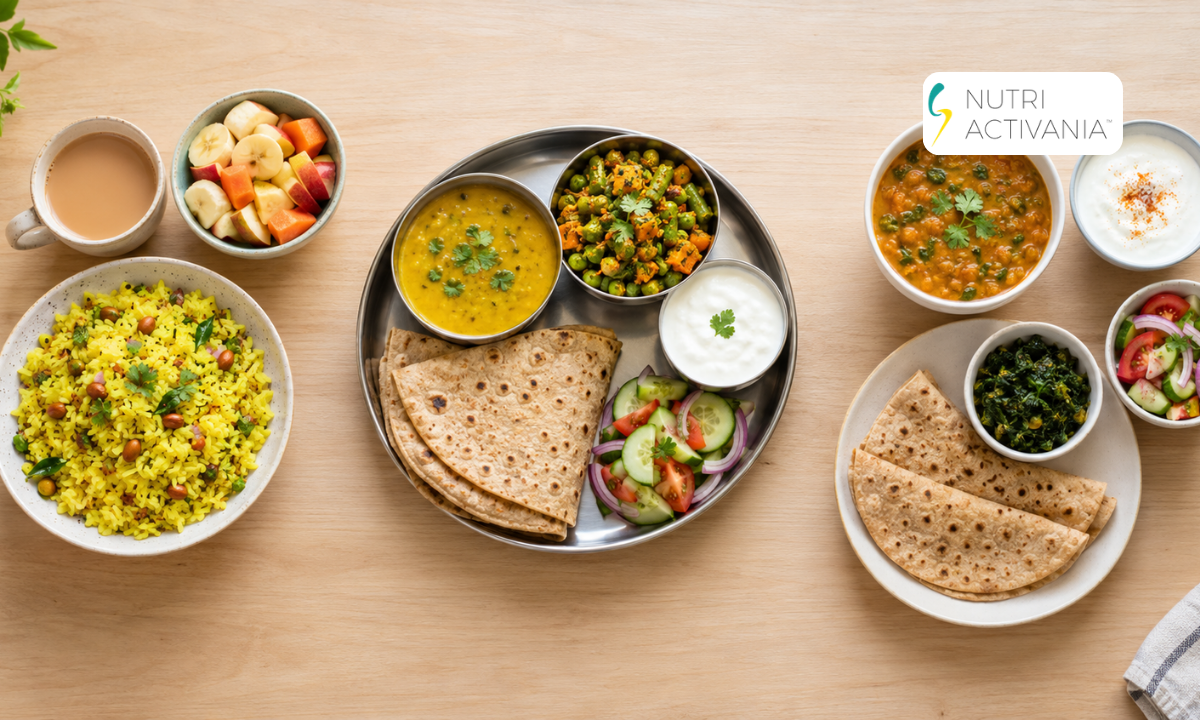
A wide variety of familiar Indian foods can fit into a balanced weight-management routine.
Foods You Already Enjoy
This is one of the most important principles for me.
If you regularly eat Indian food at home, your weight-loss plan should not suddenly become a completely different cuisine.
I prefer working with foods that are already familiar to you and making practical adjustments to portions, preparation methods and meal combinations.
Consistency Over Perfection
You do not need to eat perfectly every day.
There will be birthdays, travel, restaurant meals, family functions and celebrations. The goal is to develop a routine that can accommodate real life.
A realistic plan followed consistently is more useful than a highly restrictive plan that becomes difficult to maintain.
What Does a Balanced Diet for Weight Loss Look Like?
When people search for a balanced diet for weight loss chart, they often expect one fixed menu.
I prefer a flexible structure.
A main meal can include:
- A protein source
- Vegetables or salad
- An appropriate carbohydrate portion
- A moderate amount of fat
For example, lunch could include roti, dal, vegetable sabzi, salad and curd.
Another person may prefer rice, sambar, vegetables and curd.
Someone else may prefer chicken, vegetables and roti.
There is no need for everyone to eat exactly the same combination.
Your age, activity level, body size, food preferences and individual health requirements can all influence what is appropriate for you.
That is why copying a diet chart from social media is not the same as having a personalised nutrition plan.
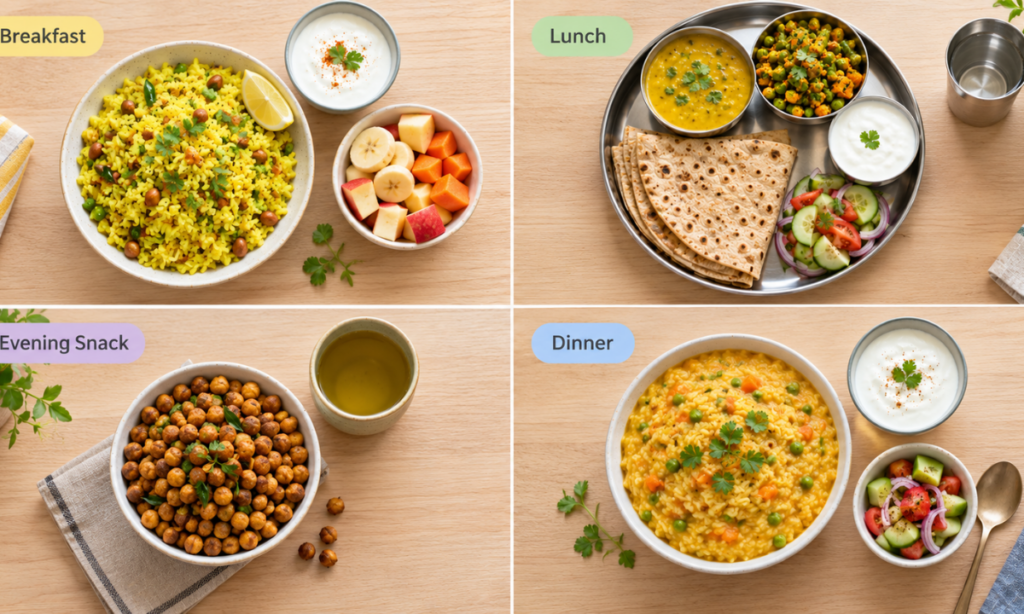
A Sample Indian Diet Plan for Weight Loss for One Day
Important: This sample Indian diet plan is for general educational purposes only and is not a personalised prescription. Portion sizes, meal timing and food choices should be adjusted based on age, activity level, health conditions, medications, food preferences and individual weight-management goals. If you are pregnant, breastfeeding, managing diabetes, thyroid disease, PCOS, kidney disease, gastrointestinal conditions, or have a history of disordered eating, seek personalised guidance from a qualified healthcare professional.
This example shows how a balanced day can be structured. It is not intended to replace an individual nutrition assessment.
Early Morning
Simple options:
- Water
- Unsweetened tea
- Unsweetened coffee
- A small portion of nuts, if it suits your hunger level and individual meal plan
For many people, starting the day with water is enough. You do not need a special detox drink to begin a weight-loss journey.
What matters much more is how your meals are structured across the rest of the day.
Breakfast
Balanced Indian options:
- Vegetable poha paired with curd, sprouts, eggs or another suitable protein source
- Moong dal chilla with curd
- Two idlis with sambar
- Vegetable upma with curd
- Dosa with sambar
- Eggs with vegetables and an appropriate carbohydrate portion
Breakfast should not simply be as small as possible.
I want it to be satisfying and nutritionally balanced. For example, dosa with sambar gives you a different meal structure from eating dosa alone.
The right portion will depend on your individual requirements.
Mid-Morning Snack
Possible options:
- One whole fruit
- Plain curd
- Buttermilk without added sugar
- Roasted chana
- A small portion of nuts
You don’t have to eat a snack simply because it is mid-morning.
If you are not hungry, there may be no need to add another eating occasion. If you are hungry, a planned option can help you stay comfortable until lunch.
Lunch
Balanced Indian lunch options:
- Two rotis with dal, vegetable sabzi, salad and curd
- A suitable portion of rice with sambar, vegetable sabzi, salad and curd
- Two rotis with chicken, vegetables and salad
- Rice with rajma or chana, vegetables and curd
The aim is not to remove carbohydrates. It is to create a balanced meal and keep the portion appropriate for your needs.
Evening Snack
Practical choices:
- Fruit
- Roasted chana
- Makhana
- Sprouts
- Plain curd
- Nuts in an amount that suits your overall needs
- Unsweetened tea or coffee
Evening is often when unplanned snacking can make it harder to follow a routine.
The issue is not necessarily the tea. It is what gets added alongside it every day.
Dinner
Balanced dinner options:
- Two rotis with dal and vegetables
- Vegetable dosa with sambar
- Paneer with vegetables and a suitable roti portion
- Grilled chicken or fish with vegetables and a suitable carbohydrate portion
- Khichdi with vegetables and curd
Dinner does not automatically have to be carbohydrate-free.
What matters is how it fits into your overall day.
Before Bed
Possible approach:
- No snack if you are comfortable and not hungry
- Milk or another suitable option if it fits your individual plan
You do not automatically need a bedtime meal.
If you regularly feel very hungry before going to bed, I would rather look at the structure of your earlier meals instead of simply adding more food at night.
Indian Foods You Can Include for Weight Loss
A wide variety of familiar Indian foods can fit into a balanced weight-management routine.
Protein Foods
- Dal
- Chickpeas
- Rajma
- Sprouts
- Paneer
- Tofu
- Curd
- Eggs
- Chicken
- Fish
Vegetables
- Spinach
- Beans
- Carrot
- Cucumber
- Cauliflower
- Cabbage
- Tomato
- Capsicum
- Bottle gourd
- Ridge gourd
- Other seasonal vegetables
Fruits
- Guava
- Apple
- Orange
- Papaya
- Melon
- Other whole fruits suitable for your plan
Carbohydrate Sources
- Rice
- Roti
- Oats
- Poha
- Idli
- Dosa
- Upma
- Millets
Healthy Fat Sources
- Nuts and seeds
- Measured amounts of cooking oils
- Ghee, when included in suitable quantities
I don’t want you to become obsessed with finding foods labelled “diet food.”
Regular home-cooked Indian meals can work well when portions and meal combinations are appropriate.
Indian Vegetarian Diet Plan for Weight Loss
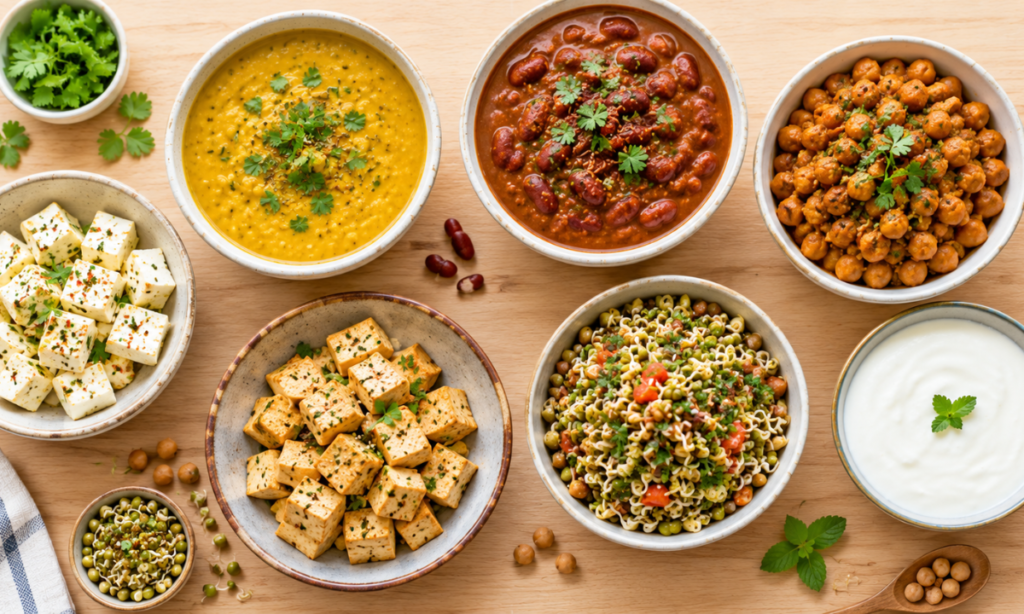
A vegetarian diet can be structured effectively for weight management.
The important thing is not to replace meat or eggs with a diet made almost entirely of rice, roti and vegetables.
When creating an Indian vegetarian diet plan for weight loss, I pay attention to suitable protein sources as well.
Vegetarian Protein Options
- Dal
- Lentils
- Chickpeas
- Rajma
- Sprouts
- Soy
- Tofu
- Paneer
- Curd
- Milk
- Beans
- Nuts and seeds
For example, instead of having only rice and vegetable sabzi, you could combine rice with dal, vegetables and curd.
Instead of having only roti and sabzi, adding paneer, tofu, dal or curd can make the meal more complete.
You can also explore our weight loss support for men and women when your nutrition needs differ according to your individual lifestyle and goals.
South Indian Diet Plan for Weight Loss
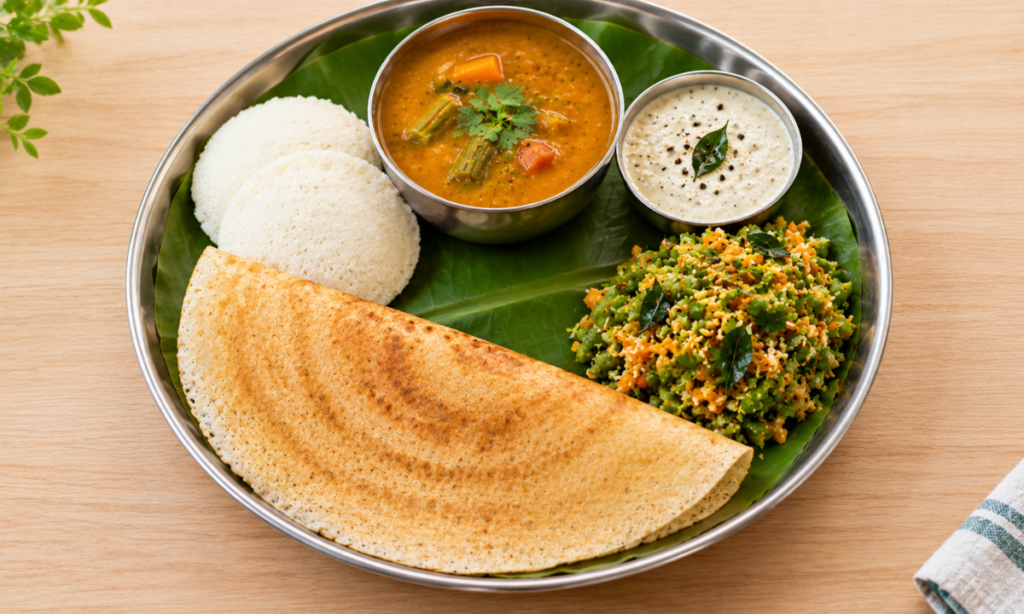
You do not need to stop eating South Indian food to work toward your weight-management goals.
A practical South Indian diet plan for weight loss can include familiar foods such as:
- Idli
- Dosa
- Pesarattu
- Upma
- Sambar
- Rasam
- Rice
- Curd
- Vegetable poriyal
- Sundal
- Seasonal vegetables
The key is the overall meal pattern, portion size and the foods you pair together.
For example, idli with sambar gives you a different meal structure from eating idli on its own.
Similarly, dosa can be included with sambar and a suitable protein-rich accompaniment.
You can also adjust the amount of added oil and keep an eye on portion sizes without giving up your regional foods.
Indian Diet Plan for Weight Loss When Eating Out
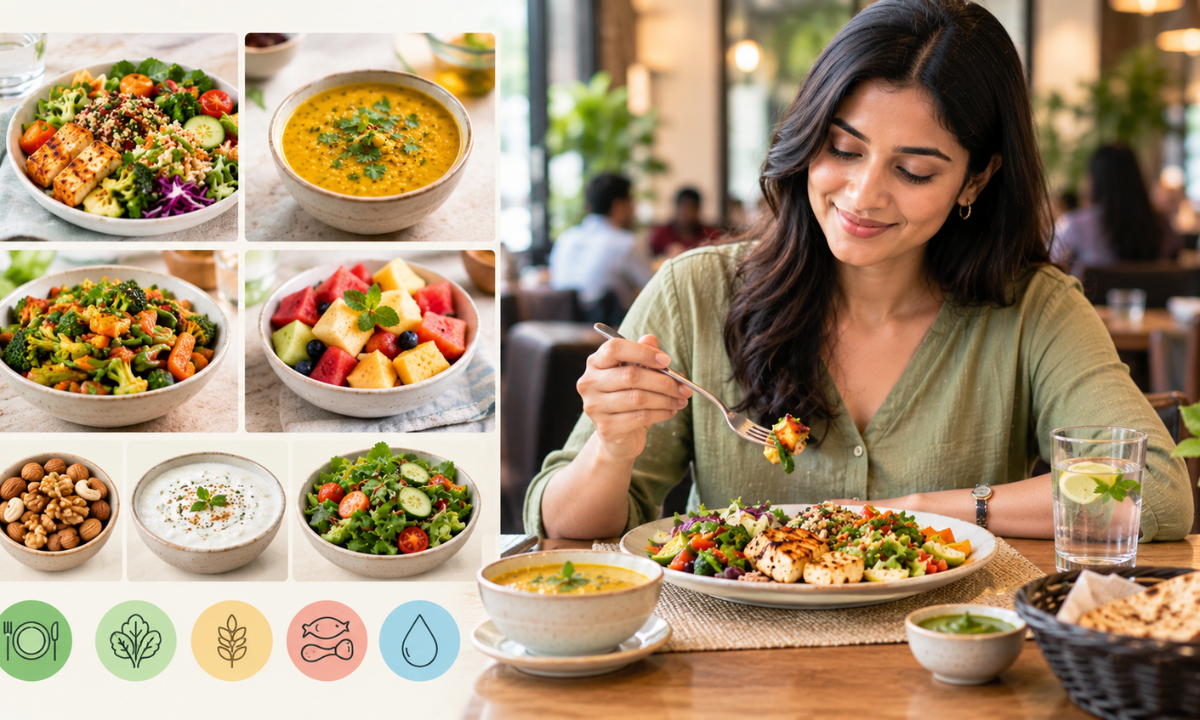
Eating out does not mean you have failed your weight-loss plan.
The goal is to make a reasonably balanced choice most of the time rather than searching for a “perfect” restaurant meal.
When possible, choose a meal that includes a protein source, vegetables and an appropriate carbohydrate portion.
Examples of practical restaurant choices
- Dal with roti and sabzi
- Grilled chicken or fish with vegetables
- Paneer with roti and vegetables
- A balanced bowl-based meal with curd
- A South Indian meal with sambar and vegetables
Try not to arrive extremely hungry, because strong hunger can make portion control more difficult.
You also don’t need to starve the next day to compensate for one restaurant meal. Return to your normal routine at your next meal.
For people with demanding office schedules, our weight loss support for working professionals can be structured around office lunches, meetings, commuting and changing schedules.
How to Build a Balanced Weight-Loss Plate
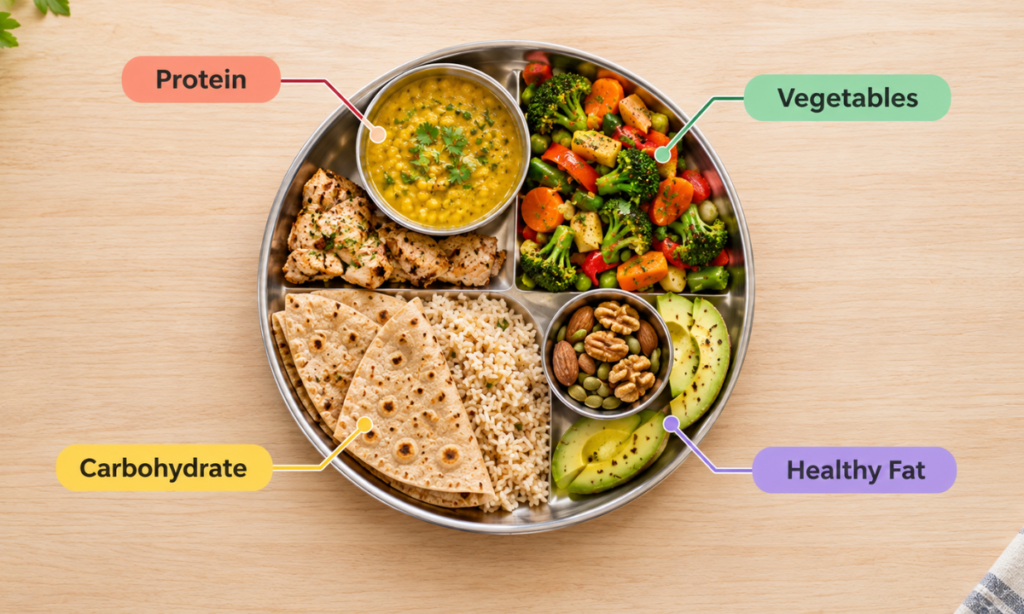
You don’t need to memorise a hundred diet rules.
Learn how to build your own plate.
Start With Protein
Ask yourself: where is my protein?
Choose dal, curd, paneer, tofu, eggs, chicken, fish or another suitable source.
Add Vegetables
Include cooked vegetables, salad or both.
Choose Your Carbohydrate
Use rice, roti, dosa, idli, poha or another carbohydrate source in an amount that suits your needs.
Check Your Added Fats
Oil, ghee, butter, nuts and fried foods can increase the energy content of a meal quickly, so quantities matter.
Once you understand this structure, you are no longer dependent on following the same diet chart every day.
You can make better choices at home, at work, while travelling or during family functions.
Common Mistakes People Make With an Indian Diet Plan for Weight Loss
Completely Removing Rice
Rice is not automatically responsible for weight gain. Portion size, meal composition and your overall eating pattern matter.
Eating Only Salads
A salad by itself may not be satisfying enough for everyone, especially if it lacks protein and an appropriate carbohydrate source.
Skipping Meals to Save Calories
Some people eat very little during the day and then experience strong hunger later. A more balanced routine may be easier to follow.
Regularly Consuming Sugary Drinks Without Considering Portions
Sugary tea, sweetened coffee, juices and other beverages can add calories without providing the same satisfaction as a balanced meal.
Eating Healthy Foods Without Considering Portions
Nuts, seeds, paneer, ghee and oils can all have a place in a nutritious diet, but the amount still matters.
Following an Extreme Diet
A restrictive diet may look attractive because it promises rapid results, but it can be difficult to maintain.
Copying Someone Else’s Diet Chart
The best Indian diet plan for weight loss for one person may not be the right approach for another.
Your food preferences, routine, activity and health requirements all need to be considered.
FAQs About Indian Diet Plans for Weight Loss
Can I Eat Rice During Weight Loss?
Yes. Rice can be included in a balanced eating pattern. The portion, meal composition and your overall dietary intake are important considerations.
Is an Indian Diet Good for Weight Loss?
Yes. Indian meals can be structured around appropriate portions, protein, vegetables, fibre and a balanced overall eating pattern.
What Is the Best Indian Diet Plan for Weight Loss?
There is no single plan that is automatically best for everyone. A suitable plan should consider your nutritional needs, food preferences, routine, activity and individual goals.
Can I Follow an Indian Vegetarian Diet Plan for Weight Loss?
Yes. Vegetarian meals can include dal, legumes, paneer, tofu, curd, soy, sprouts, vegetables and other suitable foods while maintaining an appropriate overall intake.
Can I Eat Roti and Still Lose Weight?
Yes. Roti can be included in a weight-loss diet. The portion and the foods you combine with it matter more than simply eliminating it.
Can I Eat Dosa During Weight Loss?
Yes. Dosa can fit into a balanced meal. Pairing it with sambar and an appropriate protein source can make the meal more complete.
Is a South Indian Diet Suitable for Weight Loss?
Yes. A balanced South Indian diet plan for weight loss can include idli, dosa, sambar, rice, vegetables, curd and other traditional foods.
Should I Follow a 7-Day Indian Diet Chart for Weight Loss?
A seven-day chart can provide meal ideas, but a fixed chart may not match your individual nutritional requirements. I prefer using a flexible structure that can continue beyond one week.
Can I Eat Rice at Night During Weight Loss?
Rice can fit into a balanced eating pattern at any time of day. The more important considerations are your overall intake, portion, activity, hunger, meal composition and individual requirements.
Is Intermittent Fasting Necessary for Weight Loss?
No. Intermittent fasting is not necessary for everyone. Some people may find a time-restricted eating pattern convenient, while others may prefer a more conventional meal schedule. The approach should fit your routine, nutritional needs and ability to follow it consistently.
Can I Lose Weight Without Going to the Gym?
Yes. Weight management does not depend only on gym workouts. Food intake, daily movement, activity level, sleep, stress and overall routine can all be relevant. The appropriate activity strategy depends on your individual circumstances.
Can I Follow an Indian Diet Plan if I Have PCOS, Thyroid Disease or Diabetes?
A general diet chart should not be used as a substitute for personalised guidance when you have a health condition.
Nutrition planning may need to take account of your condition, medications, treatment plan and individual requirements. Nutri Activania also provides specialist nutrition pages for PCOS, thyroid and diabetes nutrition support.
Need a Personalised Indian Diet Plan for Weight Loss?
A generic diet chart may give you meal ideas, but it cannot account for your daily routine, food preferences, medical history, activity level, hunger pattern or individual goals.
A personalised nutrition plan can help you make practical changes that are easier to follow consistently.
At Nutri Activania, I focus on creating a nutrition approach that can work with familiar Indian foods, your lifestyle and your individual requirements.
When you need structured support, you can speak with a dietician for weight loss in Delhi for personalised guidance.
Book a Weight Loss Consultation
Final Thoughts
An Indian diet plan for weight loss does not need to remove everything you enjoy eating.
You can eat rice. You can eat roti. You can have dosa, idli, dal, vegetables, paneer, curd and many other familiar foods.
What I focus on is the bigger picture: portion awareness, protein, vegetables, meal structure, food choices and consistency.
Your diet should work with your life rather than making your life revolve around dieting.
At Nutri Activania, my approach is to help you understand how to build meals that fit your routine, preferences and weight-management goals so that healthy eating becomes something you can actually maintain.