
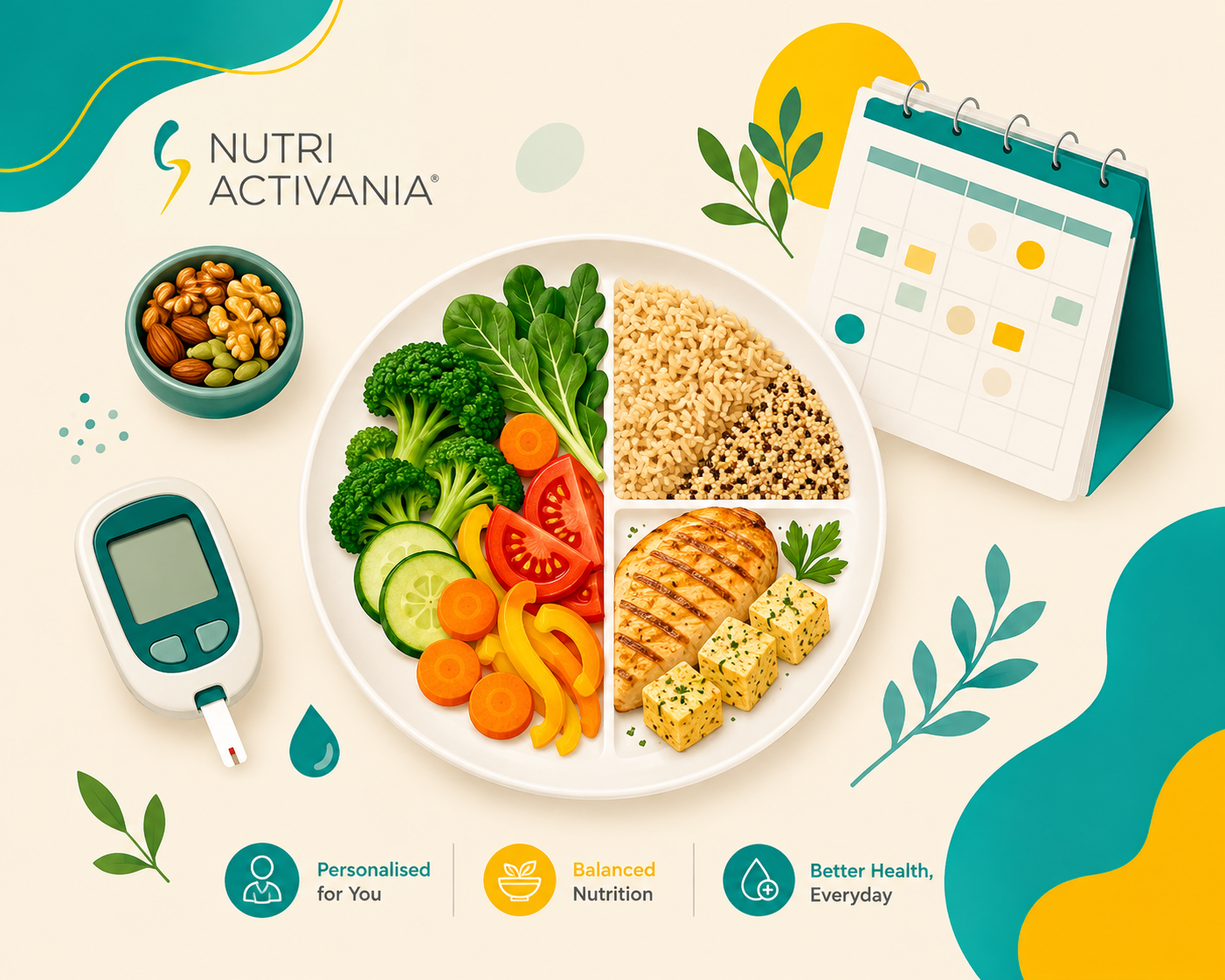
Customised diabetic meal planning is the process of designing daily meals around an individual’s blood sugar patterns, medication, and food preferences, rather than following a fixed diet chart. Avni Kaul, a dietician in Delhi, builds these meal plans for diabetes patients who need something more practical than a generic list of dos and don’ts, working from actual blood work and daily routine to decide what goes on the plate each day.
A lot of diabetic meal advice stops at the level of food groups: eat more vegetables, less rice, avoid sugar. Useful in theory, but not especially helpful at seven in the morning when deciding what to actually cook. Customised meal planning goes a step further, turning general principles into specific meals, specific portions, and a specific structure for the week, built around the person eating them rather than a textbook patient.
Why Diabetic Meal Planning Needs to Be Customised

Two patients with the same HbA1c reading can have completely different daily routines, food preferences, and cooking habits. A meal plan that works well for one may be impossible to follow for the other, not because the nutrition science is wrong, but because it does not fit their life.
Customised meal planning addresses this gap directly by accounting for:
- Blood sugar and HbA1c patterns specific to the individual
- Current medication and how it interacts with meal timing
- Cultural food preferences and regional cooking habits
- Daily schedule, including work hours, exercise timing, and family meal patterns
- Any other health conditions, such as high cholesterol or thyroid disorders, that affect food choices
Meal planning built without this context tends to fail quietly. The patient does not necessarily reject it outright; they simply stop following it a few weeks in because it never quite matched how they actually eat.
What Customized Diabetic Meal Planning Actually Involves
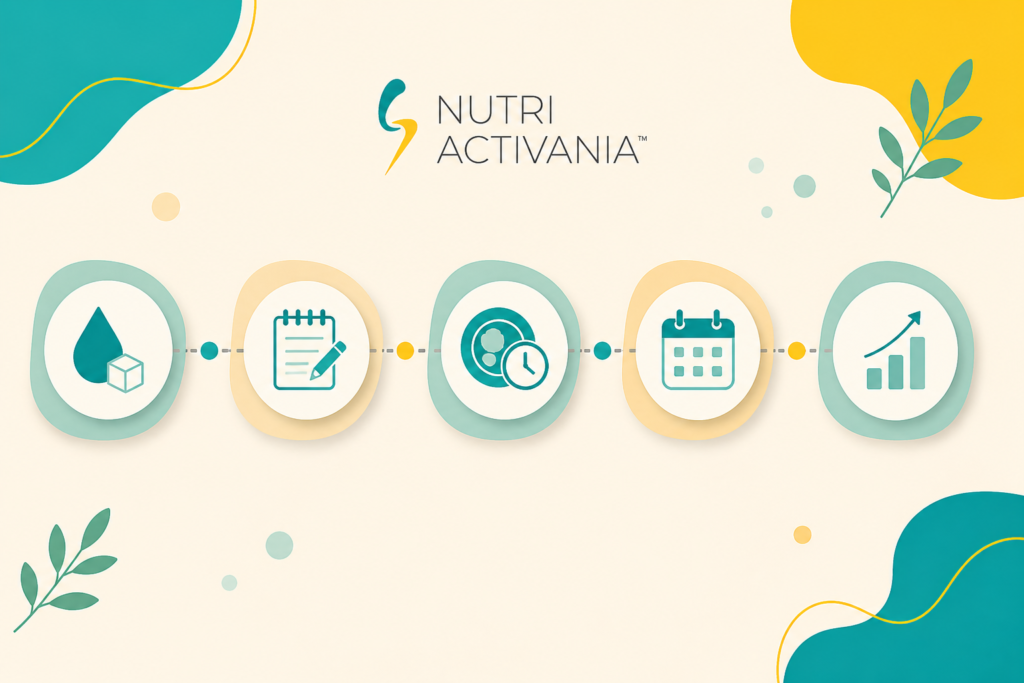
Step 1: Understanding blood sugar patterns. The process starts with a review of recent blood sugar readings, HbA1c, and any patterns the patient has noticed, such as spikes after specific meals or times of day.
Step 2: Mapping current eating habits. Rather than starting from a blank slate, the dietician reviews what the patient currently eats, identifying which meals and habits can stay largely as they are and which need adjustment.
Step 3: Structuring meals around the day, not just around food groups. Breakfast, lunch, dinner, and snacks are planned as a connected sequence, with carbohydrate distribution spread sensibly across the day rather than concentrated in one large meal.
Step 4: Building in flexibility for real life. Meal plans account for eating out, festivals, travel, and the occasional day that does not go as planned, since a plan that only works in ideal conditions rarely gets followed consistently.
Step 5: Reviewing and adjusting over time. As blood sugar readings change, or as the patient’s routine shifts, the meal plan is revisited and refined, rather than treated as a fixed document handed over once.
What a Customised Meal Plan Typically Looks Like
Rather than a single fixed chart, customised meal planning usually produces a flexible weekly structure built around a few core principles applied to real dishes.
Breakfast: Built around protein and fibre to avoid a mid-morning energy crash, using familiar options such as vegetable-loaded besan chilla, moong dal cheela, or eggs with whole-grain toast, rather than a single fixed dish repeated daily.
Lunch and dinner: Structured around a consistent template, roughly half the plate as vegetables, a quarter as protein, and a quarter as measured whole grains or roti, applied flexibly across different regional cuisines rather than a single rigid menu.
Snacks: Chosen to bridge gaps between meals without causing a spike, such as a small portion of nuts, roasted chana, or a piece of low-glycaemic fruit, timed to the individual’s routine rather than a generic snack list.
Beverages: Adjusted to reduce hidden sugar, replacing sugary tea, packaged juices, or soft drinks with lower-impact alternatives, while still allowing for occasional exceptions rather than an outright ban.
The specific dishes vary considerably from one plan to the next, since the whole point of customisation is that the underlying principles get applied to what the patient actually likes to eat, not the other way around.
Foods Commonly Emphasised and Limited
While every plan differs in the details, most customised diabetic meal plans lean on similar broad categories.

Generally emphasised:
- High-fibre vegetables, to slow glucose absorption
- Whole grains in measured portions, rather than refined alternatives
- Lean protein at each meal, from dal, paneer, eggs, and fish
- Healthy fats from nuts, seeds, and cold-pressed oils
- Low-glycaemic fruits, spaced away from other carbohydrate-heavy meals

Generally limited:
- Refined carbohydrates and sugary beverages
- Deep-fried and highly processed foods
- Large, uncounted portions of white rice or refined flour
- Packaged snacks and sauces with hidden sugar
Who Benefits Most from Customized Meal Planning
- People who have tried generic diet charts without success
- People managing diabetes alongside a demanding or irregular work schedule
- Families looking to plan meals that work for a diabetic member without cooking separately for everyone else
- People who eat out or travel frequently and struggle to apply generic advice to those situations
- Anyone who understands the broad principles of diabetic eating but struggles to translate them into daily meals
This last group is larger than it might seem. Many patients already know they should eat more fibre and less sugar; what they lack is a practical structure for turning that knowledge into what actually gets cooked and eaten each day.
Why Choose Avni Kaul for Customised Diabetic Meal Planning
Avni Kaul is a Gold Medallist from the University of Delhi and received the Best Dietician Award in 2019. Her approach to meal planning starts from what the patient already eats and enjoys, adjusting portions, combinations, and timing rather than replacing familiar dishes with unfamiliar ones. This makes the resulting plan easier to follow consistently, since it never feels like eating someone else’s diet.
Conclusion
Customised diabetic meal planning turns general dietary advice into something that actually fits a person’s day, their routine, their preferences, and their blood sugar patterns together. A plan built this way tends to be followed for longer and produces steadier results than a generic chart, simply because it was built around the person eating it rather than an average patient who does not exist. If general advice has not translated into real changes at the dinner table, a customised meal plan is a practical next step.
Frequently Asked Questions
How is customised meal planning different from a standard diabetic diet chart?
A standard chart applies the same food list to every patient, while customised meal planning is built around an individual’s blood sugar patterns, routine, and food preferences.
Will the meal plan include the foods I already eat?
In most cases, yes. Familiar dishes are typically adjusted in portion, combination, and timing rather than removed entirely, which tends to make the plan easier to follow.
How often is the meal plan reviewed and updated?
Meal plans are generally reviewed as blood sugar patterns, routine, or medication change, often every few months, to keep the plan relevant to current circumstances.
Can a customised meal plan work for the whole family, not just the diabetic member?
Often, yes. Many customised plans are built so the core meals work for the whole household, with small individual adjustments for the person managing diabetes.
Does customised meal planning account for eating out or travel?
Yes. A well-built plan includes guidance for eating out, festivals, and travel, since a plan that only works at home is difficult to sustain long-term.
Is customised meal planning suitable for prediabetes as well as diagnosed diabetes?
Yes. The same principles of blood sugar pattern review and meal structuring apply equally well to prediabetes, adjusted for the specific goals of that stage.