
Pregnancy is a time when your nutritional needs change to support your health and your baby’s growth and development. A balanced pregnancy diet should provide a variety of foods, including fruits, vegetables, whole grains, protein-rich foods, dairy or suitable alternatives, nuts and seeds.
Indian diets already offer many nutritious choices, such as dal, vegetables, fruits, curd, milk, eggs, fish, whole grains, millets, nuts and seeds. The important thing is to combine these foods in a balanced way and choose portions according to your individual nutritional needs.
If you need personalized nutrition guidance during pregnancy, Nutri Activania provides nutrition support based on your dietary preferences and individual requirements.
What and How Much Should You Eat During Pregnancy?
Pregnancy does not mean that you need to eat large quantities of food throughout the day. Instead, focus on getting enough variety and nutrients from different food groups.
Your daily meals can include:
- Fresh fruits
- Green leafy and other vegetables
- Whole grains such as oats, brown rice and whole wheat
- Millets such as ragi and jowar
- Dal, beans, chickpeas and other legumes
- Milk, curd, paneer and suitable fortified alternatives
- Eggs, fish, chicken or other protein sources
- Nuts and seeds
- Healthy unsaturated fats
For example, a balanced Indian lunch could include dal, roti or rice, vegetables, curd and salad. Breakfast options could include vegetable upma with curd, idli with sambar, moong dal chilla or oats with milk, fruit and nuts.
Dry fruits can also be included in pregnancy. Almonds, walnuts, pistachios, cashews, raisins and dates can provide useful nutrients, but portion size matters.
Dried fruits are more concentrated than fresh fruits because their water content has been removed. Therefore, it is easy to eat more than intended.
For a practical meal structure, see our Indian Pregnancy Diet Chart.
Pregnancy Nutrition for Vegetarians and Vegans
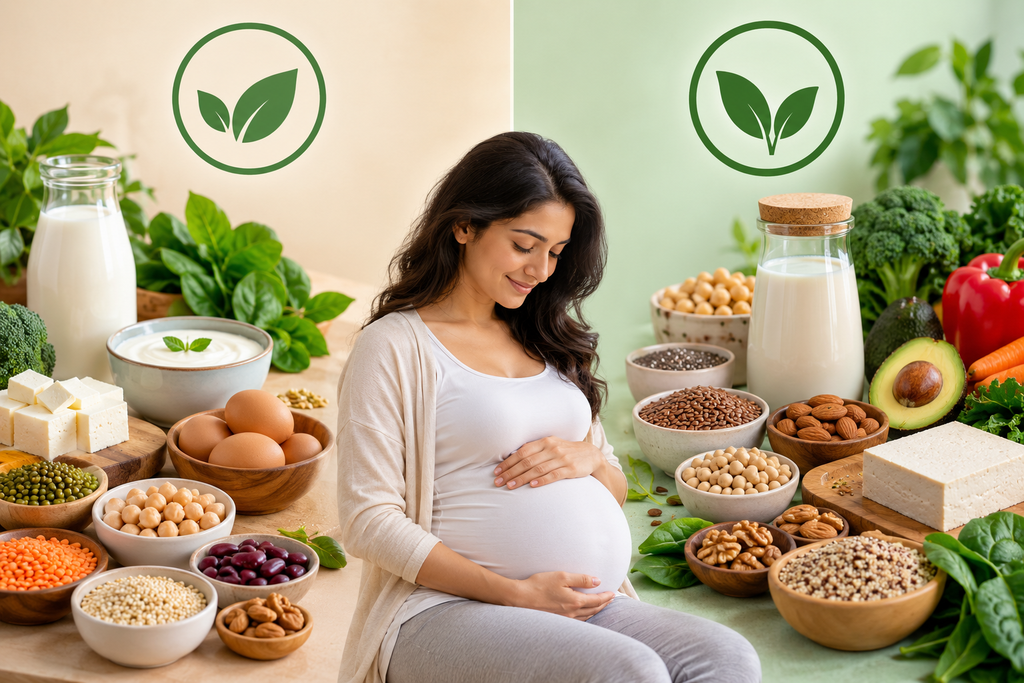
A vegetarian diet can provide the nutrients required during pregnancy when meals are planned carefully.
Indian vegetarian foods provide several useful sources of protein, including:
- Dal
- Rajma
- Chole
- Moong
- Soybeans
- Tofu
- Paneer
- Curd
- Milk
- Nuts and seeds
If you consume eggs and dairy products, they can provide additional sources of protein and other nutrients.
Women following a vegan diet need to pay particular attention to nutrients such as vitamin B12, iron, calcium, iodine, vitamin D and protein.
Vitamin B12 deserves special attention because naturally occurring vitamin B12 is limited in plant foods.
If you follow a vegetarian diet, read our Vegetarian Pregnancy Diet Plan for Indian Women for more practical guidance.
If you follow a strict vegan diet or have nutritional deficiencies, discuss your dietary requirements and supplements with your doctor or dietitian.
Essential Nutrients You Need During Pregnancy
Pregnancy increases the importance of several vitamins, minerals, protein and healthy fats. Instead of relying on a single “superfood,” aim for variety across your meals.
Folate and Folic Acid
Folate is important during pregnancy because it supports cell development and helps reduce the risk of certain birth defects.
Food sources include:
- Green leafy vegetables
- Lentils and beans
- Fruits
- Whole grains
- Fortified cereals
- Nuts
Food alone may not always provide enough folate during pregnancy, which is why folic acid supplementation is commonly recommended.
The appropriate dose can vary according to individual circumstances. Speak with your doctor about the supplement and dosage suitable for you.
Iodine During Pregnancy
Iodine plays an important role in thyroid function and your baby’s development.
Food sources can include:
- Iodised salt
- Dairy products
- Fish
- Fortified foods
Some pregnancy supplements also contain iodine.
Do not take iodine supplements without professional advice, as your requirements depend on your individual diet and circumstances.
Protein Requirements During Pregnancy
Protein provides the building blocks required for growth and development.
Try to include a protein-rich food with your main meals.
Indian options include:
- Dal
- Rajma
- Chole
- Moong
- Paneer
- Tofu
- Curd
- Milk
- Eggs
- Fish
- Chicken
- Lean meat
- Nuts and seeds
A meal such as dal with rice or roti and vegetables can provide a combination of carbohydrates, protein and other nutrients. Adding curd, paneer, eggs or another protein source can further improve the meal depending on your dietary pattern.
Iron-Rich Foods During Pregnancy
Iron becomes particularly important during pregnancy because your blood volume increases and your baby’s blood supply is developing.
Iron-containing foods include:
- Lentils
- Beans
- Chickpeas
- Green leafy vegetables
- Nuts and seeds
- Whole grains
- Eggs
- Fish
- Chicken
- Lean meat
When consuming plant-based sources of iron, combine them with vitamin C-rich foods. Examples include guava, amla, oranges, tomatoes, lemon and capsicum.
If your blood tests show low iron levels, your doctor may recommend an iron supplement.
Calcium-Rich Foods During Pregnancy
Calcium supports the development of your baby’s bones and teeth and is also important for your own bone health.
Good food sources include:
- Milk
- Curd
- Paneer
- Cheese
- Calcium-fortified plant milk
- Tofu
- Fish with edible bones
If you avoid dairy products, a dietitian can help you identify suitable calcium-rich alternatives.
Vitamin D During Pregnancy
Vitamin D supports bone health and helps the body absorb calcium.
Dietary sources include:
- Egg yolks
- Oily fish
- Fortified foods
The body can also produce vitamin D through exposure to sunlight.
If a blood test shows that your vitamin D levels are low, your doctor can advise whether supplementation is needed and what dose is appropriate.
Omega-3 Fatty Acids During Pregnancy
Omega-3 fatty acids are important for your baby’s developing brain, nerves and eyes.
Food sources include:
- Walnuts
- Chia seeds
- Flaxseeds
- Soybeans
- Oily fish
If you eat fish during pregnancy, choose pregnancy-safe varieties and follow appropriate guidance about fish that may contain higher levels of mercury.
You can also read our Trimester-Wise Pregnancy Diet for Indian Women to understand how nutritional needs can vary throughout pregnancy.
Do You Need Supplements During Pregnancy?
A nutritious diet is the foundation of pregnancy nutrition, but some women may require supplements.
Common pregnancy supplements may provide nutrients such as:
- Folic acid
- Iron
- Iodine
- Vitamin D
- Vitamin B12
The supplements you need depend on factors such as your diet, pregnancy stage, blood test results and individual nutritional requirements.
Taking more supplements does not necessarily mean better nutrition. Some nutrients can be harmful when taken in excessive amounts.
Choose pregnancy-specific supplements when recommended and discuss the appropriate dose with your doctor or dietitian.
If you need individualized support, explore our Pregnancy Dietitian & Nutritionist in Delhi service.
Food Safety and Hygiene During Pregnancy
Food safety deserves extra attention during pregnancy because some foodborne infections can affect both the mother and developing baby.
Follow these basic precautions:
- Wash your hands before preparing or eating food.
- Wash fruits and vegetables thoroughly.
- Keep kitchen surfaces and utensils clean.
- Cook meat thoroughly.
- Avoid raw or undercooked eggs.
- Avoid unpasteurised dairy products.
- Store food correctly.
- Eat freshly prepared food when possible.
- Follow pregnancy-specific guidance regarding seafood.
- Avoid foods that appear spoiled or contaminated.
For packaged nuts and dry fruits, check the expiry date and packaging before consuming them. Store them properly to maintain freshness and reduce the risk of contamination.
When Eating Well During Pregnancy Feels Difficult
Eating well during pregnancy can sometimes be difficult because of nausea, vomiting, food cravings, food aversions, heartburn, constipation or changes in appetite.
You do not need to force yourself to eat large meals if they make you uncomfortable.
Instead, try smaller meals and nutritious snacks throughout the day.
Some options include:
- Fruit with curd
- A small portion of nuts
- Vegetable poha
- Idli with sambar
- Oats with milk and fruit
- Whole-wheat toast with egg
- Dal with rice
- Roti with vegetables and curd
- Homemade soup
- Chana or sprouts
- Paneer or tofu with vegetables
If nausea or other pregnancy symptoms are making it difficult to maintain a balanced diet, discuss the problem with your doctor or dietitian.
For practical snack ideas, read 10 Healthy Indian Snacks for Pregnant Women.
Healthy Eating Tips for a Healthy Pregnancy
A nutritious pregnancy diet does not need to involve expensive ingredients or complicated recipes.
Try to:
- Include vegetables in your main meals.
- Eat a variety of seasonal fruits.
- Include a protein source regularly.
- Choose whole grains and high-fibre foods.
- Include nuts and seeds in sensible portions.
- Choose plain dry fruits instead of heavily sugar-coated varieties.
- Prefer unsalted or lightly salted nuts.
- Drink enough fluids throughout the day.
- Limit foods high in added sugar.
- Avoid excessive salt.
- Follow food-safety precautions.
- Take supplements according to professional advice.
Hydration is another important part of pregnancy nutrition. Read our guide on Pregnancy Hydration and Water Intake for additional information.
Easy Indian Meals and Snack Ideas During Pregnancy
Simple Indian foods can form part of a balanced pregnancy diet.
Some options include:
- Vegetable poha with curd
- Idli with sambar
- Vegetable dosa with sambar
- Oats with milk, fruit and nuts
- Moong dal chilla with curd
- Roti with dal and vegetables
- Brown rice with rajma and salad
- Vegetable khichdi with curd
- Paneer or tofu with vegetables
- Fruit with a small portion of almonds
- Yoghurt with fruit and seeds
- Chana salad with vegetables
- Homemade vegetable soup with whole-grain toast
The aim is to create variety throughout the day rather than relying on one food, including dry fruits.
Related Pregnancy Nutrition Topics
Pregnancy nutrition involves many areas, from meal planning and hydration to trimester-specific dietary needs.
Explore these related Nutri Activania resources:
- Indian Pregnancy Diet Chart
- First Trimester Pregnancy Nutrition Guide
- Vegetarian Pregnancy Diet Plan for Indian Women
- Trimester-Wise Pregnancy Diet for Indian Women
- 10 Healthy Indian Snacks for Pregnant Women
- Pregnancy Hydration and Water Intake
- The Role of Balanced Nutrition in Supporting a Healthy Pregnancy
Frequently Asked Questions About Nutrition and Foods in Pregnancy
Which Foods Are Best During Pregnancy?
A balanced pregnancy diet can include vegetables, fruits, whole grains, legumes, dairy or suitable alternatives, eggs, fish, lean meat, nuts and seeds. Variety is more important than relying on one particular food.
Can I Eat Dry Fruits During Pregnancy?
Yes. Almonds, walnuts, pistachios, cashews, raisins, dates and other dried fruits can be included in appropriate portions. Plain and unsalted or unsweetened varieties are preferable.
Which Dry Fruits Are Good During Pregnancy?
Almonds, walnuts, pistachios and cashews provide protein and healthy fats, while dried fruits such as raisins and dates provide carbohydrates and other nutrients. Portion size is important.
Can I Eat Dry Fruits Every Day During Pregnancy?
Dry fruits and nuts can be included regularly, but the quantity should fit into your overall meal plan. Nuts are energy-dense, while dried fruits contain concentrated natural sugars.
Which Foods Are Rich in Iron During Pregnancy?
Iron can be obtained from lentils, beans, chickpeas, green leafy vegetables, nuts, seeds, whole grains, eggs, fish, chicken and lean meat. If your blood tests show iron deficiency, your doctor may recommend supplementation.
Can Vegetarians Get Enough Protein During Pregnancy?
Yes. Vegetarian diets can provide protein through dal, beans, chickpeas, soy, tofu, paneer, curd, milk, nuts and seeds. Proper meal planning helps ensure adequate overall nutrition.
Can I Eat Dates During Pregnancy?
Dates can be included in moderation. They contain naturally occurring sugars, so portion size is particularly important if you have been advised to monitor your blood glucose.
How Much Water Should I Drink During Pregnancy?
Fluid requirements can vary depending on factors such as your diet, activity level, weather and individual health circumstances. Drink fluids regularly throughout the day and discuss your requirements with your healthcare professional if you have specific concerns.
Do I Need Pregnancy Supplements?
Some supplements are commonly recommended during pregnancy, but the nutrients and doses you need depend on your individual circumstances. Speak with your doctor or dietitian before starting or changing supplements.
Which Foods Should I Avoid During Pregnancy?
Food-safety precautions are particularly important during pregnancy. Avoid raw or undercooked foods and unpasteurised products that may pose food-safety risks, and follow current guidance regarding seafood and high-mercury fish.
Get Personalized Pregnancy Nutrition Guidance
Good nutrition during pregnancy is not about finding one perfect food. It is about building a varied eating pattern that provides protein, fibre, healthy fats, vitamins and minerals from different food groups.
Indian foods can easily form the foundation of a nutritious pregnancy diet. Dal, vegetables, fruits, whole grains, curd, paneer, eggs, fish, nuts and seeds can all be incorporated into balanced meals.
Your nutritional needs may also change throughout pregnancy. Factors such as dietary restrictions, nutritional deficiencies, gestational diabetes or other individual requirements may call for personalized guidance.
If you need help planning your pregnancy meals, Nutri Activania provides personalized nutrition guidance based on your dietary preferences and nutritional needs.
You can also learn more about our Pregnancy Dietitian & Nutritionist in Delhi services.