

A PCOS weight loss nutrition program is a diet plan built specifically around the hormonal and insulin-related factors that make weight loss harder for women with polycystic ovary syndrome, rather than a standard calorie-deficit diet applied without accounting for the condition. Avni Kaul, a dietician in Delhi, builds these programs by starting with insulin resistance and hormonal patterns specific to PCOS, rather than assuming the same approach that works for weight loss generally will work equally well here.
Many women with PCOS have a familiar, frustrating experience: strict calorie counting, regular exercise, real discipline, and still the scale barely moves, or moves painfully slowly compared to what the effort would suggest. This is not imagined, and it is not a failure of willpower. PCOS frequently involves insulin resistance, which changes how the body processes food and stores fat, meaning a standard weight loss approach often needs real adjustment to work at all.
Why PCOS Makes Weight Loss Harder, and Why Standard Diets Often Fall Short

Insulin resistance is present in a large proportion of women with PCOS, even those who are not overweight. When cells respond less effectively to insulin, the body compensates by producing more of it, and higher insulin levels tend to promote fat storage, particularly around the abdomen, while also making fat loss more difficult. This is the core reason a simple calorie-deficit diet, without addressing insulin, often underperforms for PCOS patients compared to how it works for others.
Beyond insulin resistance, several other PCOS-related factors complicate standard weight loss advice:
- Hormonal imbalances can affect appetite regulation and cravings, particularly for refined carbohydrates and sugar
- Irregular cycles and related symptoms can affect energy levels and motivation to stay consistent
- Weight loss itself can improve PCOS symptoms, creating a cycle where the condition makes the goal harder while the goal, once achieved even partially, helps the condition
- Standard low-calorie diets can sometimes worsen hormonal imbalance if too aggressive or nutritionally inadequate
- Generic advice rarely addresses the insulin component directly, focusing on calories alone rather than the underlying resistance driving weight gain
What a PCOS Weight Loss Nutrition Program Does Differently
It addresses insulin resistance directly, not just calories. Managing blood sugar spikes through food choice, timing, and combination is treated as central to the plan, not a side consideration, since improving insulin sensitivity often makes weight loss noticeably easier.
It pays close attention to carbohydrate quality and timing. Rather than cutting carbohydrates broadly, the focus is on choosing slower-releasing sources and spacing them through the day to avoid the insulin spikes that PCOS bodies handle less efficiently.
It sets realistic expectations around pace. Weight loss with PCOS is often genuinely slower than for someone without insulin resistance, even with excellent adherence. A program built around this reality prevents the discouragement that comes from comparing progress to a pace that was never realistic to begin with.
It factors in related symptoms. Cravings, fatigue, and mood shifts linked to PCOS are acknowledged and planned around, rather than treated as separate from the diet plan or, worse, as a lack of discipline.
It supports broader hormonal health, not weight alone. Since weight loss and symptom improvement in PCOS tend to reinforce each other, the program is built with both in mind, rather than treating the scale as the only measure of success.
How a PCOS Weight Loss Nutrition Program Is Built

Step 1: Assessment of insulin and hormonal markers. The program starts with a review of relevant blood work, including fasting insulin and glucose where available, alongside PCOS symptoms such as cycle irregularity, and current weight and activity level.
Step 2: Identifying insulin-related eating patterns. Current eating habits are reviewed specifically for patterns likely to be worsening insulin resistance, such as large refined-carbohydrate meals or long gaps between meals followed by overeating.
Step 3: Structuring meals around blood sugar stability. Meals are planned to include consistent protein, fibre, and healthy fat alongside carbohydrates, reducing the sharp insulin spikes that make fat storage and cravings worse.
Step 4: Setting a realistic, sustainable pace. Calorie targets, where relevant, are set conservatively and combined with insulin-focused strategies, rather than relying on aggressive restriction alone to produce results.
Step 5: Ongoing review against both weight and symptoms. Progress is tracked not just through weight but through related markers such as cycle regularity and energy levels, since these often shift before significant weight loss becomes visible.
What the Diet Typically Includes

Commonly emphasised:
- High-fibre vegetables and legumes, which slow glucose absorption and support insulin sensitivity
- Lean protein at each meal, from dal, eggs, paneer, and fish, to reduce cravings and support fullness
- Whole grains in controlled, consistent portions, rather than refined alternatives
- Healthy fats from nuts, seeds, and cold-pressed oils, which support hormonal balance
- Low-glycaemic fruits, spaced away from other carbohydrate-heavy meals
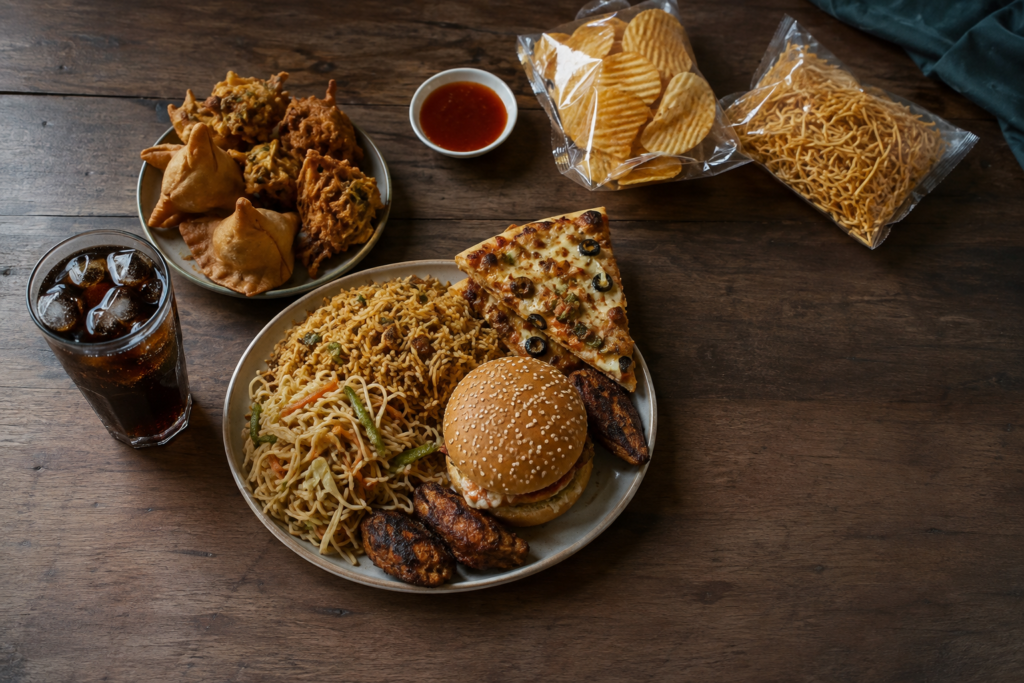
Commonly reduced:
- Refined carbohydrates and sugary beverages, which drive the insulin spikes most likely to worsen PCOS symptoms
- Deep-fried and highly processed foods
- Large, infrequent meals that lead to overeating later
- Packaged snacks and sauces with hidden sugar
Consistency in meal timing tends to matter more here than in a general weight loss plan, since long gaps between meals can worsen the blood sugar swings already complicated by PCOS-related insulin resistance.
Who Should Consider a PCOS Weight Loss Nutrition Program
- Women diagnosed with PCOS struggling to lose weight despite consistent calorie restriction and exercise
- Women with PCOS and confirmed or suspected insulin resistance
- Women experiencing PCOS-related cravings, particularly for sugar and refined carbohydrates
- Women whose weight loss efforts have stalled despite following generic diet advice
- Anyone newly diagnosed with PCOS wanting to address weight and insulin resistance early, before symptoms progress further
Why Choose Avni Kaul for a PCOS Weight Loss Nutrition Program
Avni Kaul is a Gold Medallist from the University of Delhi and received the Best Dietician Award in 2019. Her approach to PCOS weight loss addresses insulin resistance directly, rather than applying a standard calorie-deficit diet and expecting the same results seen in patients without the condition. Plans are built around consistent meal timing and blood sugar stability, using familiar Indian foods adjusted for portion and combination, with realistic expectations set from the outset around pace and progress.
Conclusion
Weight loss with PCOS genuinely is harder, and a nutrition program that ignores this reality tends to produce the same frustrating cycle of effort without results. Addressing insulin resistance directly, through carbohydrate quality, meal timing, and consistent structure, gives PCOS patients a plan built around how their body actually responds, rather than how a generic body might. Weight loss and symptom improvement in PCOS tend to reinforce each other, which means progress on one front often supports progress on the other. For anyone who has done everything “right” by standard weight loss advice without seeing the expected results, a PCOS-specific program addresses the part of the picture that advice was missing.
Frequently Asked Questions
Why is weight loss harder with PCOS than for people without the condition?
Insulin resistance, common in PCOS, leads to higher insulin levels that promote fat storage and make fat loss more difficult, even with the same calorie deficit that would work for someone without insulin resistance.
Do I need a blood test to confirm insulin resistance before starting this program?
It is helpful but not always required. Fasting insulin and glucose tests provide useful information, though the program can also be built around symptoms and eating patterns where testing is not yet available.
Will losing weight improve my PCOS symptoms?
Often, yes. Even modest weight loss can improve insulin sensitivity, cycle regularity, and other PCOS symptoms, creating a reinforcing effect between weight loss and symptom improvement.
How long does it typically take to see results with a PCOS weight loss program?
Progress is often slower than standard weight loss timelines, given the role of insulin resistance, so most programs are structured around a longer, more gradual timeline with realistic milestones.
Do I need to cut out carbohydrates completely?
No. The focus is on carbohydrate quality, timing, and portion rather than elimination, since balanced, consistent meals tend to support insulin sensitivity better than extreme restriction.
Can this program help with PCOS-related cravings?
Yes. Consistent meals with adequate protein, fibre, and healthy fat are specifically structured to reduce the blood sugar swings that tend to drive cravings, particularly for sugar and refined carbohydrates.