
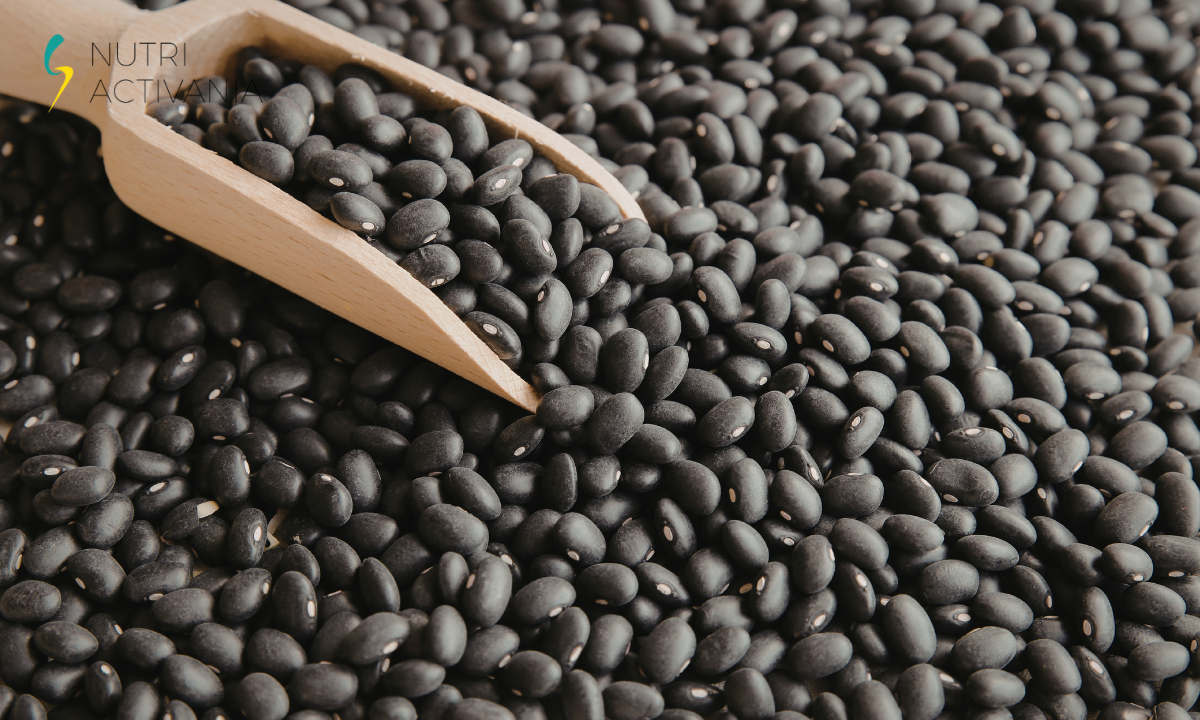
Black beans or (Kaale Sem) are easily available, budget-friendly legumes packed with protein. They can be enjoyed in various ways as a tasty part of your nutritious eating plan. Avni says while black beans are rich in carbohydrates, they are in the form of resistant starch and fiber, which are digested slowly and give health benefits.

Black bean nutrition facts
Black beans are a rich source of several nutrients. A half-cup, approximately 120 grams of black beans, consists of 0.4 grams of fat, 461 mg of sodium, 20 grams carbohydrate, 8.3 grams fiber, 7 grams of protein, 0.3-gram sugar, and 109 calories.
India’s top Dietician Avni Kaulsays that black beans have loads of nutrients and health benefits that you may not be aware of. Let us take a look at several nutrients and health benefits.
Carbohydrates
Black beans are high in carbohydrates. They are also a top source of fiber (soluble and insoluble both). Black beans do not contain any sugar. They, however, contain slowly-digested carbohydrates and resistant starch. It means that the carbohydrates present inside black beans are slowly converted to glucose, and some of them are not digested at all.
The glycemic index of a food indicates how much the food might impact your blood glucose level. The glycemic index of black beans depends on the ways they are cooked. If one soaks and boils black beans, the average glycemic index would be 20, which is moderately low. If you cook them using a pressure cooker or use canned beans, the glycemic index is nearly 30, which is also moderately low.
The glycemic load takes into consideration both the glycemic index and the serving size. A serving of half-cup cooked black beans has a glycemic load of 7, which is low.
Fats
Black beans contain very little fat, and the majority of the fat is polyunsaturated. A half-cup serving of black beans has 90 mg of omega-3 fatty acids and 108 mg of omega-6 fatty acids.
Protein
Black beans are high-protein powerhouses, having 7 grams of protein in a half-cup serving. One can add black beans to several dishes to help fulfill their daily protein needs.
Vitamins and Minerals
Black beans are a top source of folate. Folate is responsible for forming red blood cells and plays a role in thwarting neural tube defects during pregnancy. Also, black beans are a good source of manganese, magnesium, and thiamin. If one is a vegetarian who depends on beans as a source of iron, it is essential to know that eating foods which have vitamin C, like citrus fruits and tomatoes, helps increase iron absorption.
Health Benefits
Like several other legumes, black beans are an excellent source of lean protein besides having several other nutritional advantages.
Regulates blood sugar
Research has indicated that replacing rapidly digested carbohydrates like white rice with legumes could improve glycemic control in persons with diabetes. Resistant starch might even enhance insulin sensitivity.
Enhances digestive health
Food rich in resistant starch might also act as prebiotics promoting healthy gut flora. Dried beans contain more resistant starch compared to canned beans.
Gives helpful antioxidants
Black beans contain certain phytonutrients, majorly polyphenols in the coating. These could be beneficial as antioxidants.
Gives plant-based protein
Specifically, vegans and vegetarians who totally refrain from eating animal proteins, black beans are an excellent source of protein, iron, and fatty acids.
Lowers risk of chronic disease
Studies suggest that a fiber-rich diet could help maintain weight goals and support weight loss. It might also lower the risk of heart disease.
Ways to use
Canned black beans usually contain high sodium. But research shows that rinsing and cleansing help to reduce sodium significantly. While draining could reduce it to around 36% , rinsing and draining would reduce almost 41% of sodium. It means if a half cup of black beans has 460 mg of sodium, post rinsing and draining it reduces to 271mg.
Dried beans are required to be soaked in water before cooking. Soaking softens and rehydrates them. Reducing your cooking time means lesser loss of nutrients.