
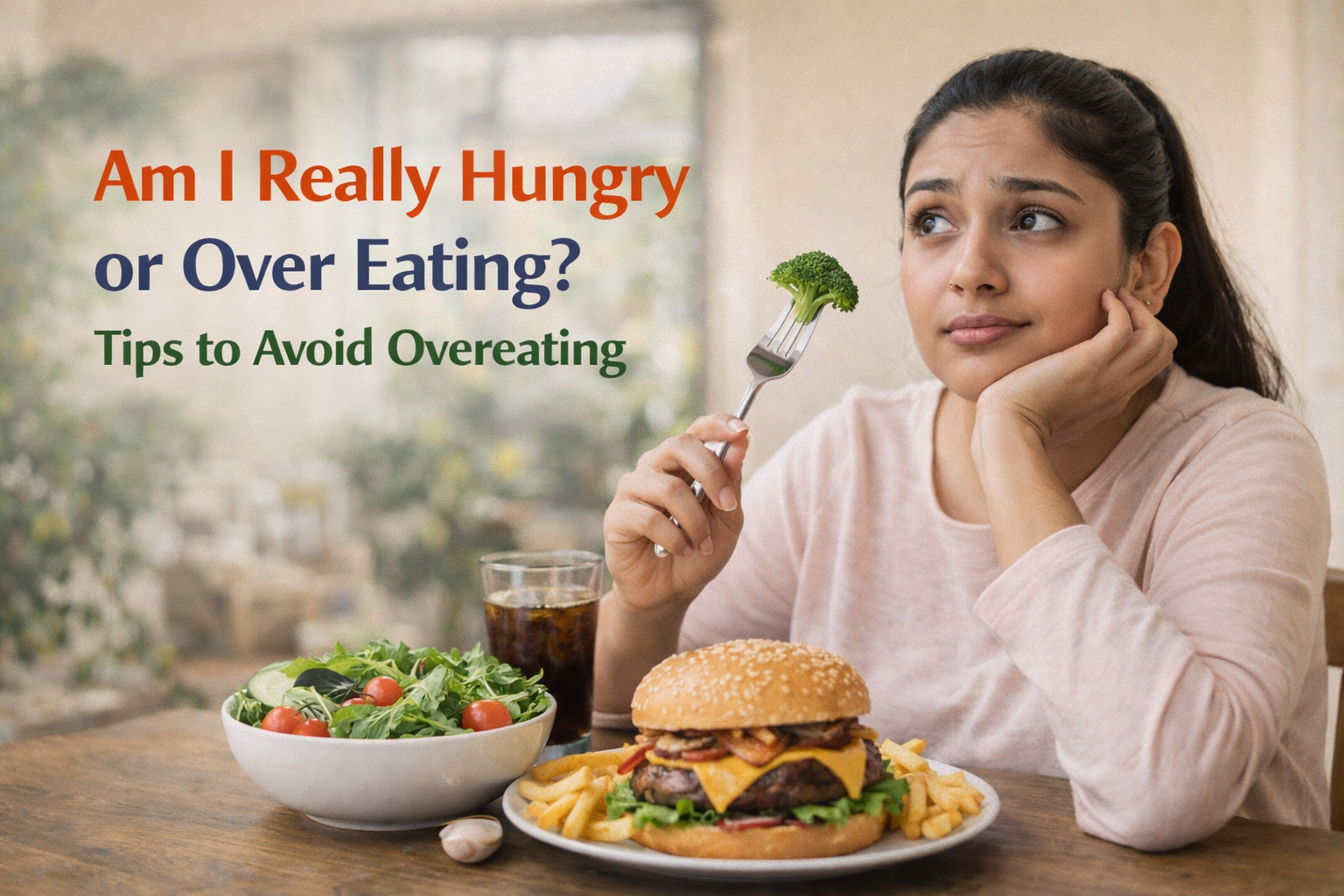
How often do you find yourself enticed by the aroma of fresh cookies, impulsively buying and indulging in them despite not feeling hungry? This common scenario underscores the complexity of hunger cues, influenced by emotions, exhaustion, and boredom. Understanding hunger cues is crucial in maintaining a healthy relationship with food and nourishing our bodies appropriately. Your body sends signals indicating when you need to eat and have had enough. However, many of us often overlook these signals, leading to overeating or undereating. In this article, the leading dietitian in Delhi, Avni Kaul, shares a few tips to identify hunger cues.

What are some of the tips for understanding hunger cues?
Physical Hunger vs Emotional Hunger – Physical hunger is when your body tells you it needs food for energy. You might feel empty or your stomach might growl. Sometimes it can make you feel tired or cranky. The only way to fix it is by eating. Even if you try to suppress it, you simply cannot ignore it. Eventually, it comes back stronger.
Emotional hunger is when you feel like eating because of your emotions like sadness or happiness, being stressed, not because your body needs fuel. Your body needs comfort food for distraction, not for hunger. For instance, you crave something sweet when you are stressed.
Taste Hunger Vs Practical Hunger –
There are two other types of hunger Taste hunger and Practical Hunger.
Taste hunger isn’t solely about physical necessity but craving a specific appealing food. It can occur separately from physical hunger or alongside it. Indulging in taste hunger is acceptable; if something sounds good, it is okay to enjoy it. However, you don’t always have to satisfy every moment of taste hunger, especially if better options await. Practical hunger anticipates future needs, like eating before a flight or during work breaks. It is merely for your sustenance.
The Hunger-Satiety Scale
The hunger-satiety scale serves as a valuable tool for understanding and responding to our body’s signals, helping us distinguish between genuine hunger and other motivations for eating, such as pleasure or boredom. By recognizing where we fall on the scale, from levels indicating hunger to those indicating fullness, we can make more informed choices about when and how much to eat. Initiating eating when we reach levels 3 or 4, and avoiding allowing our hunger to drop below level 3, can prevent us from becoming excessively hungry, which may lead to overeating later. Similarly, learning to stop eating at around level 6 and waiting 15 to 20 minutes before deciding whether to continue can help us tune into our body’s signals of fullness, preventing us from consuming beyond what we genuinely need.
Be Aware of Your Hunger Pattern
When you start paying close attention to your eating patterns and diligently journaling them down, you essentially tune into your body’s signals and cues regarding hunger. This proactive approach not only helps you avoid the pitfalls of letting hunger dictate your choices but also empowers you to make more mindful decisions about your eating habits. As you review your food journal over a few days, you will likely uncover fascinating patterns unique to you. These patterns might reveal that:
- You consistently find yourself reaching for a sugary snack in the mid-afternoon slump, even though you are not necessarily hungry at that time.
- You tend to eat larger portions during meals when you are dining with friends or family, regardless of your actual hunger level.
- You often turn to snacks when you are feeling stressed or anxious, rather than when you are genuinely hungry.
By diligently tracking your meals and snacks while noting the time, quantity, emotional state, and any external triggers, you gain valuable insight into your eating habits. Once you have identified these vulnerable points, you can begin to address them. Perhaps you replace the chips with a healthier snack like sliced veggies or choose a calming activity instead of eating during stressful moments.
Mindfulness
Being aware of what you eat and focusing on the present moment can help control hunger. Mindfulness means paying attention to your thoughts and feelings without judging them. It is not just meditation but being present without distractions. Mindfulness can improve health, eating habits, and overall well-being. Instead of multitasking while eating, create a pleasant environment. Use nice plates, sit down, and enjoy your meal slowly. Pay attention to the taste, smell, and texture of your food. You don’t have to give up treats like ice cream or cake but enjoy them in moderation. Use smaller utensils and savor each bite. When you fully engage in the eating experience, you will feel satisfied with less food and without guilt.
Finally, by understanding the nuances between physical and emotional hunger, recognizing taste and practical hunger, utilizing the hunger-satiety scale, analyzing personal eating patterns, and embracing mindfulness, one can cultivate a healthier relationship with food, leading to better overall well-being.