
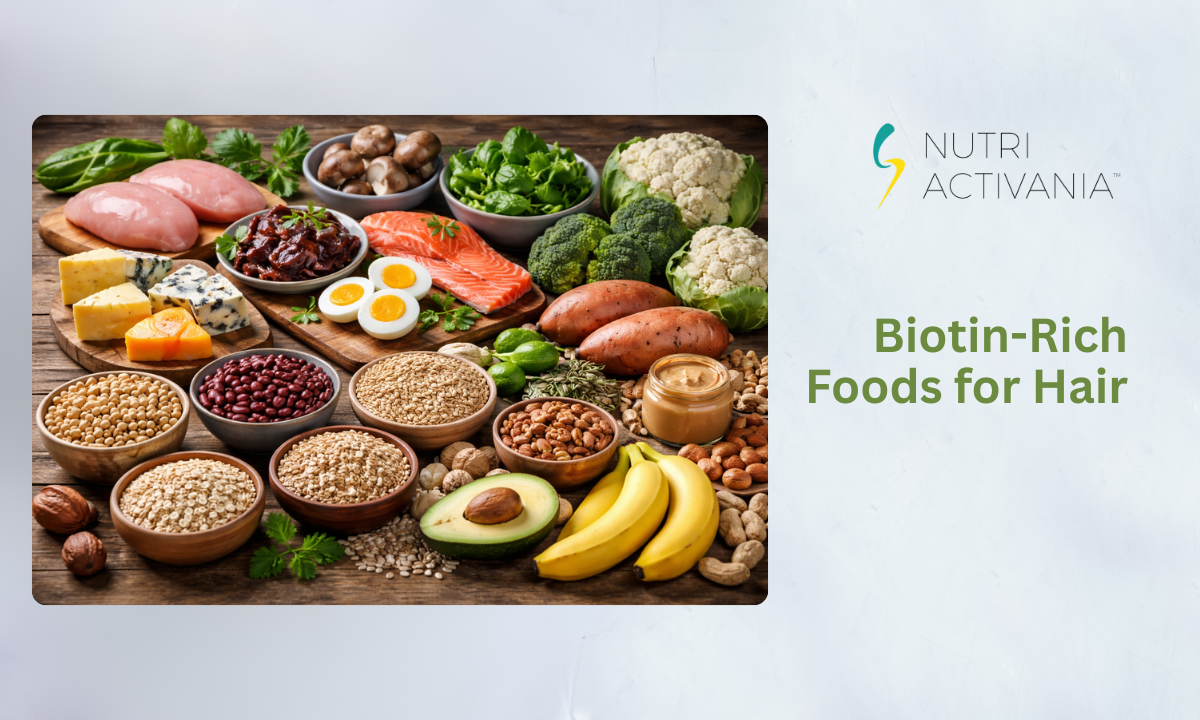
We spend thousands on serums, shampoos, and supplements. But if your hair is falling or thinning, the answer is rarely in a bottle — it is in your kitchen.
Hair is made of Keratin, a structural protein. To build Keratin, your body needs Vitamin B7, better known as Biotin. Without enough of it, hair becomes thin, brittle, and breaks easily at the root.
The good news? You do not need pills to fix this. The best biotin-rich foods are affordable, widely available, and far more effective than isolated supplements — because they come packaged with the supporting nutrients your body needs to actually use them.
This guide covers the top 20 biotin rich foods for hair growth, how much you need daily, and one common mistake that could be cancelling out the Biotin you already eat.
Why Biotin Rich Foods for Hair Growth is Always Better Than Pills
The Natural Advantage.
You might wonder, “Why can’t I just pop a gummy?” While supplements have their place (especially for severe deficiencies), a healthy hair and diet plan relies on synergy.
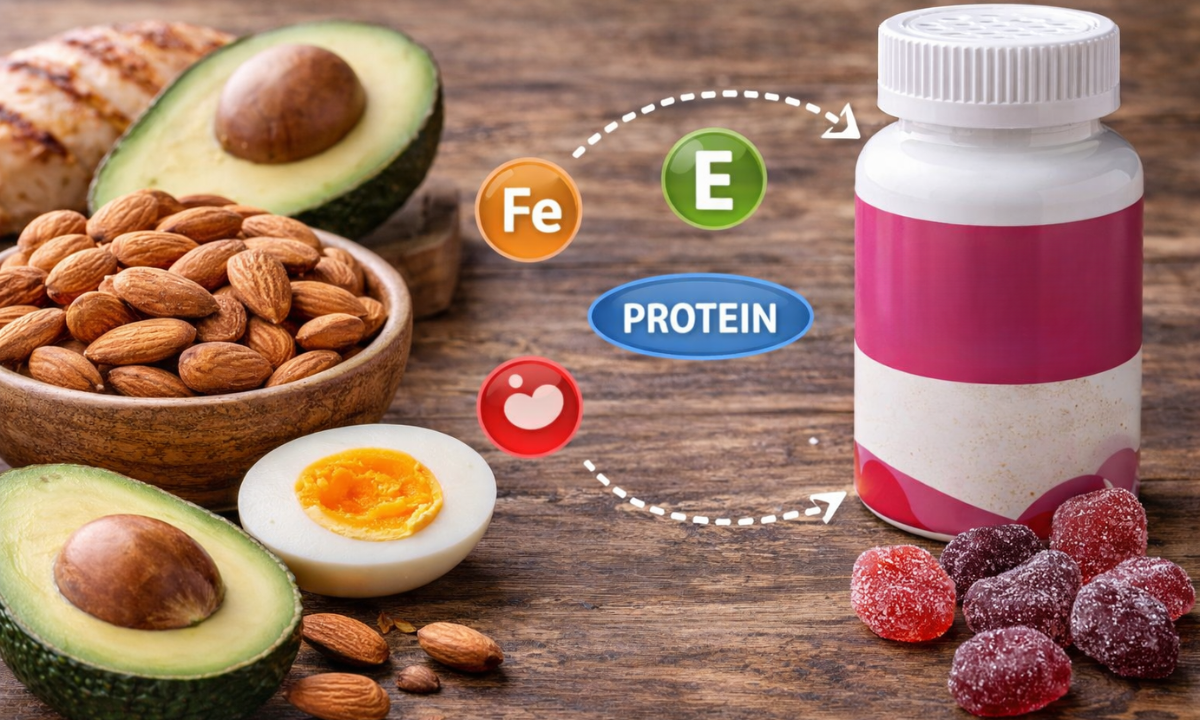
Whole foods don’t just give you Biotin in isolation. For example, when you eat an egg, you get Biotin plus high-quality protein and iron.
When you eat almonds, you get Biotin plus Vitamin E. These nutrients work together to improve scalp health and follicle strength.
Nature packages vitamins perfectly for your body to absorb. Synthetic isolates are often flushed out before they can do any good.
The Top 20 Biotin Rich Food Sources (Your Grocery Checklist)
Nature’s best secret for luscious locks.
To make this easy to navigate, we have grouped the top foods for hair growth and thickness into simple categories.
Whether you are a strict vegetarian or a meat-lover, there is a biotin booster here for you.
A. The Non-Veg Source (Highest Concentration)
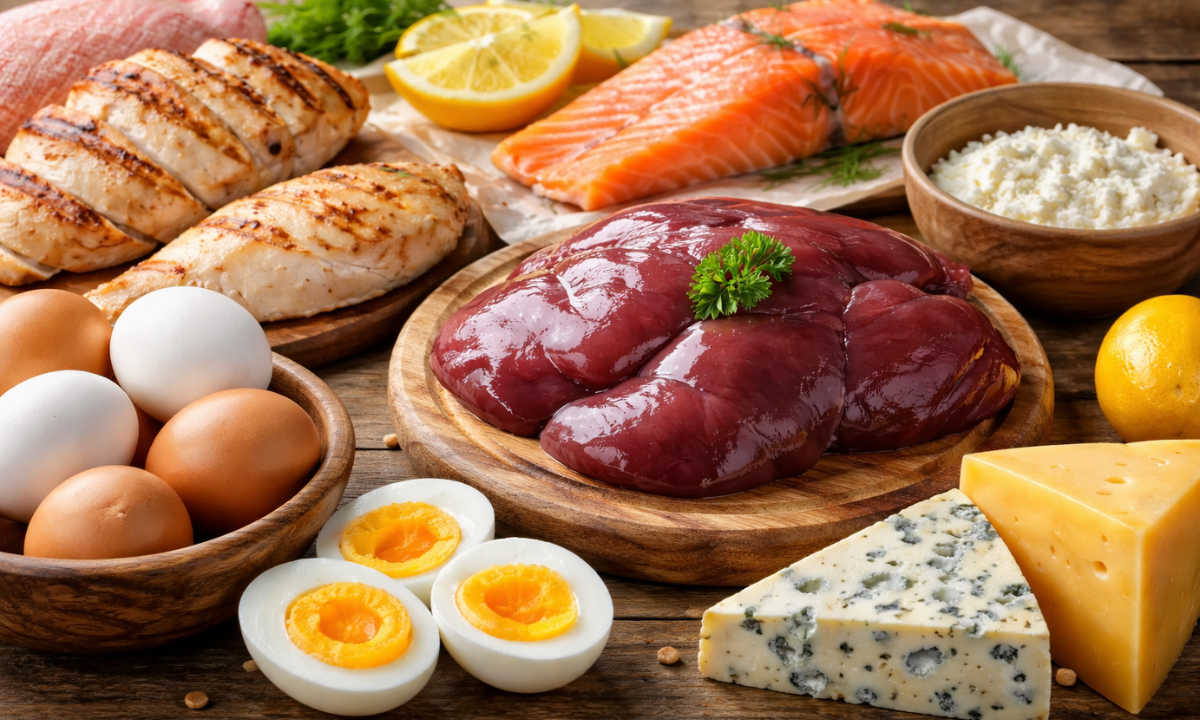
If you eat non-veg, you have an advantage here. Animal organs are the densest sources of Biotin in nature.
- Liver (Chicken or Beef) The single richest source of Biotin in nature. Three ounces of cooked beef liver can cover more than 100% of your daily requirement. If you eat non-veg, this belongs in your weekly rotation.
- Egg Yolk The yolk — not the white — is where the Biotin lives. One cooked egg yolk provides a meaningful dose alongside protein, iron, and healthy fats. Always cook your eggs (more on why below).
- Salmon Biotin plus Omega-3 fatty acids in one meal. Omega-3s keep the scalp hydrated and reduce the inflammation that accelerates hair shedding.
- Chicken A lean, everyday protein source that supports both follicle structure and Keratin synthesis.
- Cheese (Cheddar or Blue) Fermented dairy products are surprisingly good sources of B-vitamins including Biotin. Blue cheese ranks higher than most.
B. The Vegetarian Heroes (Vegetables)
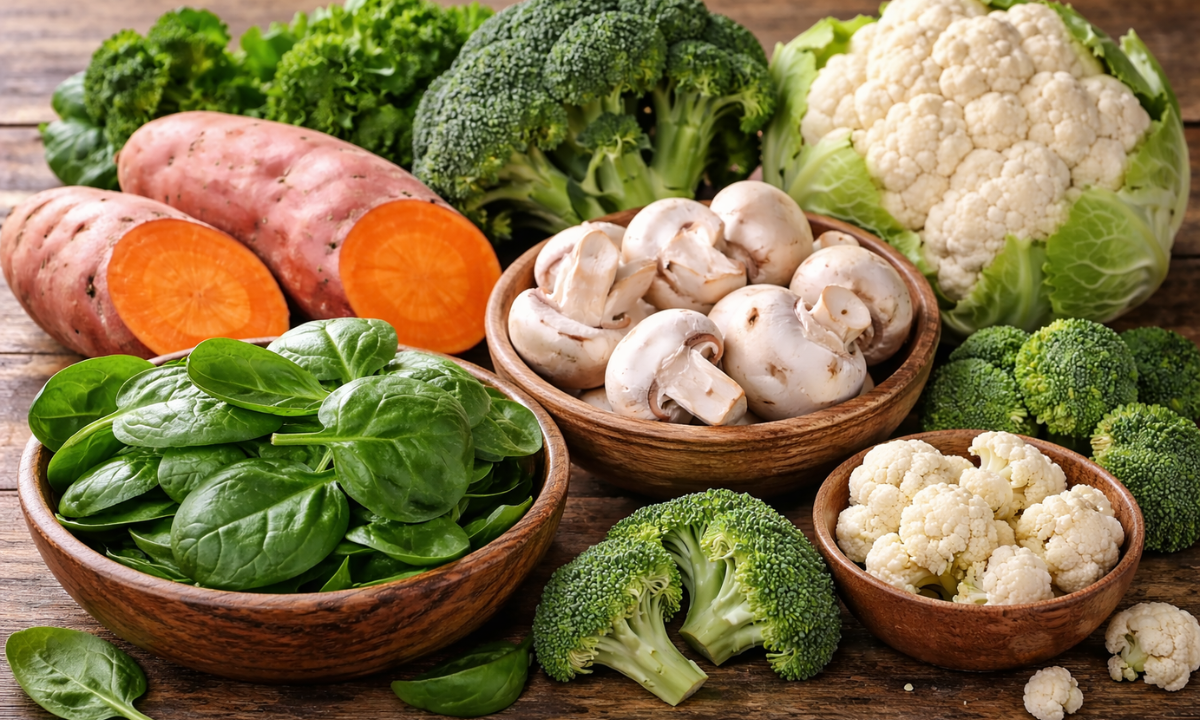
You don’t need meat to get your dose. These vegetables are packed with biotin foods for hair growth.
- Sweet Potato One of the best vegetarian sources of Biotin. Also rich in Beta-Carotene, which the body converts to Vitamin A — essential for a healthy, non-flaky scalp.
- Mushrooms Button mushrooms are particularly high in Biotin. They absorb and concentrate nutrients from the soil, making them a reliable plant-based source.
- Spinach Biotin, Iron, and Vitamin E together make spinach one of the most complete foods for hair health. Iron deficiency is one of the leading causes of hair fall in Indian women.
- Broccoli A daily serving of broccoli supports cell regeneration and provides calcium, fibre, and Biotin — all useful for scalp tissue health.
- Cauliflower Raw cauliflower delivers a notably higher Biotin content than cooked. Add it raw to salads where possible.
C. Legumes & Grains
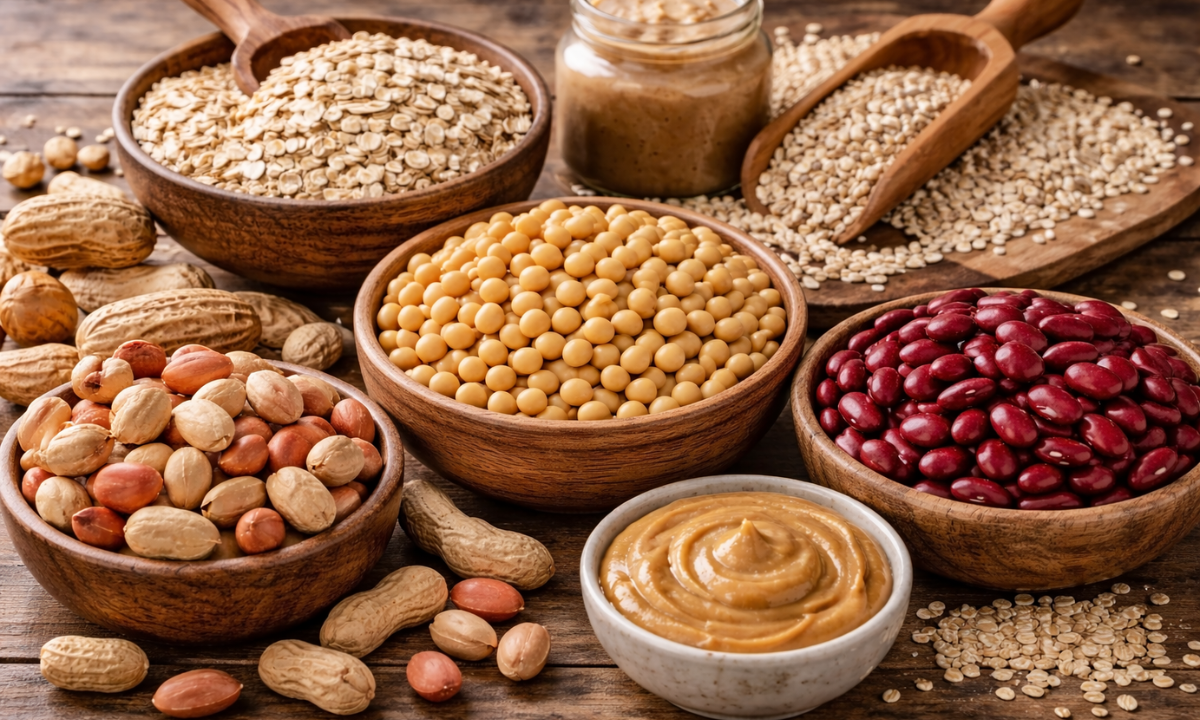
- Soybeans The richest plant-based protein source on this list, and a strong source of Biotin. Ideal for vegetarians looking to cover both protein and B-vitamin intake together.
- Kidney Beans (Rajma) A North Indian staple that earns its place here. Rajma is rich in Biotin, protein, and zinc — all nutrients tied directly to hair thickness.
- Oats A practical breakfast choice. Oats provide a steady release of B-vitamins including Biotin and are gentle on digestion.
- Barley Underused and underrated. Barley supports gut health, and a healthy gut means better absorption of every nutrient you eat — including Biotin.
- Peanuts Technically a legume, peanuts and natural peanut butter are calorie-dense Biotin sources. A small handful daily is enough to make a difference.
D. Nuts, Seeds & Fruits
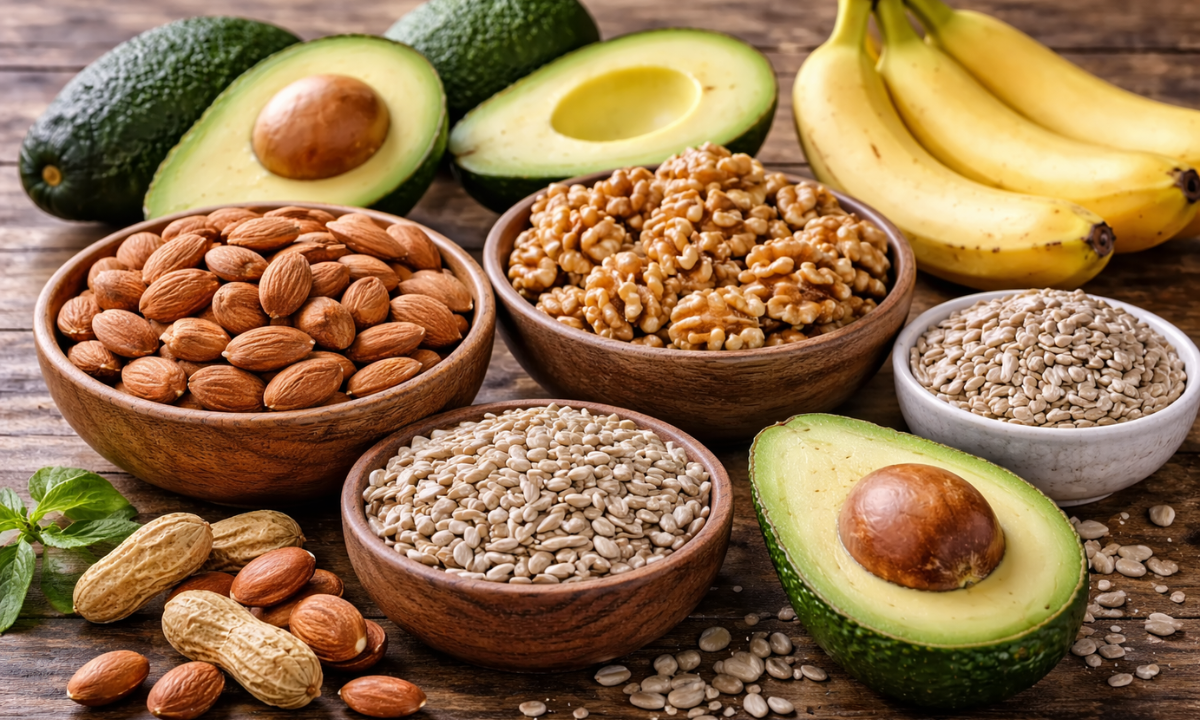
- Almonds Classic brain food that doubles as hair food. Almonds deliver Biotin, Vitamin E, and magnesium — all of which reduce hair breakage.
- Walnuts Rich in Omega-3 fatty acids and Biotin. Walnuts add shine to dull hair and help seal the outer hair cuticle.
- Sunflower Seeds Easy to add to salads, yoghurt, or trail mix. A small serving gives you Biotin alongside Vitamin E and selenium.
- Avocado A creamy, satisfying source of healthy fats and Biotin. Avocado also contains folate, which supports red blood cell production and scalp circulation.
- Banana One of the few fruits with a meaningful Biotin content. A daily banana is a small but consistent contribution to your overall intake.
One Warning: Raw Egg Whites Can Block Biotin Absorption
This is one of the most overlooked dietary mistakes.
Many people add raw egg whites to post-workout shakes for protein. But raw egg whites contain a protein called Avidin, which binds to Biotin in your digestive tract and prevents it from being absorbed.
In plain terms — consuming raw egg whites can actively cause a Biotin deficiency, even if the rest of your diet is good.
The fix is simple: always cook your eggs. Heat deactivates Avidin. A boiled, scrambled, or poached egg delivers the full Biotin benefit from the yolk without the absorption block from the white.
How Much Biotin Do You Need?
Consistency is key.
Unlike Vitamin D, which your body can store for weeks, Biotin is water-soluble.
This means your body cannot store it; it uses what it needs and flushes the rest out through urine. Therefore, you need to consume biotin-rich foods every single day.
For most adults, the adequate intake is 30 micrograms (mcg) per day.
Can you overdose? Since it is water-soluble, it is very hard to “overdose” on Biotin from food.
Your body will simply remove the excess. However, extremely high doses from supplements can interfere with lab test results (like Thyroid tests), so always consult a nutritionist in Delhi before starting high-dose pills.
How Long Before You See Results?
Hair grows at approximately 0.5 inches per month. Improving your diet does not reverse existing damage overnight — but it does change the quality of the hair that grows out next.
Most people notice a reduction in shedding within 6 to 8 weeks of consistent dietary change. Stronger, thicker strands typically become visible at the 3-month mark.
Building healthy hair is a long-term investment. The foods above are not a quick fix — they are the foundation.
Conclusion
Building healthy hair is a marathon, not a sprint. Hair grows at an average rate of 0.5 inches per month.
Changing your diet today won’t give you Rapunzel-like locks tomorrow, but it will ensure that the new hair growing out is thicker, stronger, and shinier.
By adding these Top 20 biotin-rich foods to your grocery list, you are giving your follicles the best possible environment to thrive.
Still Seeing Clumps in the Shower? If you are eating well but still experiencing severe hair fall, diet might not be the only culprit.
Issues like PCOS, Thyroid imbalances, or high stress can override even the best nutrition. Don’t guess with your health. Consult Dt. Avni Kaul, a leading dietician in Delhi, can analyze the root cause of your hair loss and create a personalized roadmap for recovery.