

The struggle of the “Hard Gainer” is often ignored.
If you have ever been told, “You’re so lucky; you can eat whatever you want,” while you are secretly frustrated by your inability to put on size, you know the pain.
For many people, especially those with a fast metabolism (ectomorphs), seeing the scale go up feels impossible.
But here is the truth: Gaining weight is easy.
Gaining quality weight (muscle) is a science. There is a massive difference between “bulking up” on junk food (which leads to belly fat and sluggishness) and following a strategic weight and muscle gain diet that builds a strong, lean physique.
At Nutri Activania, we don’t believe in force-feeding. Dietician Avni Kaul, a leading Weight Gain Dietician in Delhi, advocates for a “Clean Gains” approach.
This means fueling your body with nutrient-dense foods that support hypertrophy (muscle growth) rather than just filling calorie gaps with empty sugar.
In this guide, we will break down the dietitian-approved blueprint to transform your body composition effectively and sustainably.
The Golden Rule: Caloric Surplus + Resistance
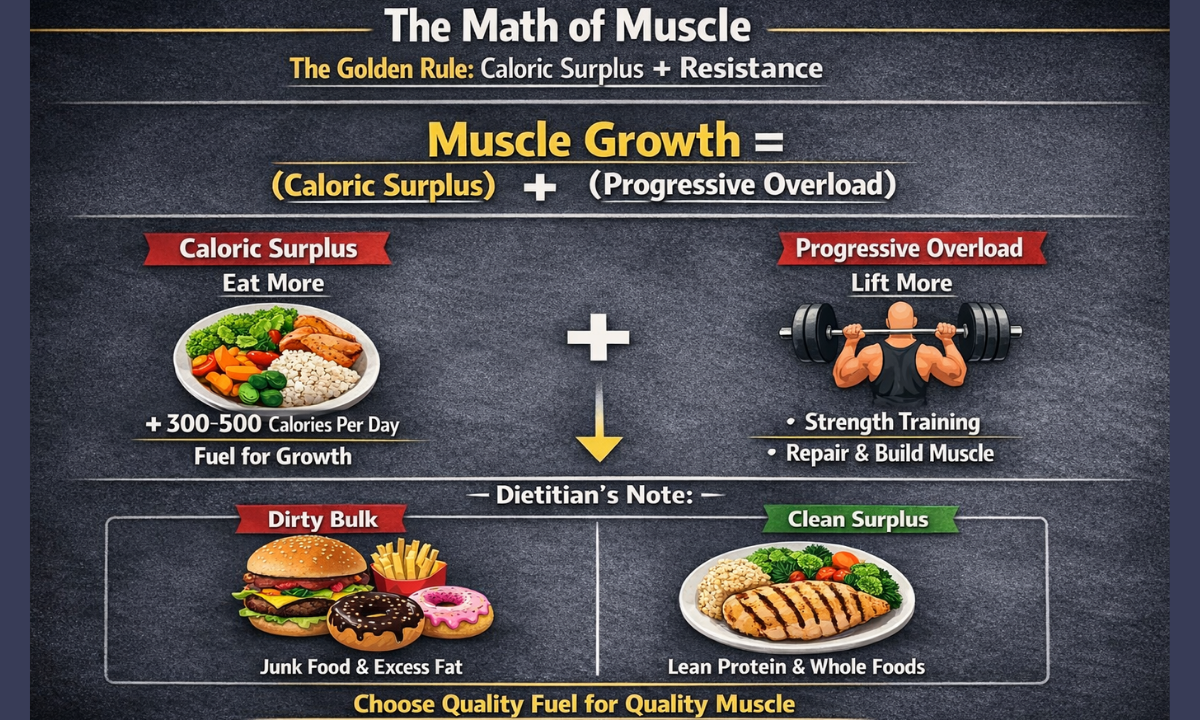
The Math of Muscle.
If you take nothing else from this guide, remember this equation: Muscle Growth = (Caloric Surplus) + (Progressive Overload)
Many people think gaining weight is just about “eating more.” If you eat a surplus of calories without giving those calories a job to do, your body will simply store them as fat.
To build muscle, you need to convince your body that it needs to grow bigger to survive your workouts.
- The Caloric Surplus: You need to eat slightly more energy than you burn. For most people, this means an extra 300–500 calories per day. This provides the “bricks” for the new building.
- The Stimulus (Resistance): You must lift weights or perform bodyweight strength training. This creates microscopic tears in your muscle fibers. When you rest and eat, your body repairs these tears to be thicker and stronger than before.
Dietician’s Note: Don’t fall for the ‘See Food’ diet (eating everything you see). A ‘Dirty Bulk’ with burgers and sweets will increase your weight, but it will be mostly visceral fat, which is dangerous for your heart. We want a ‘Clean Surplus’ quality fuel for quality muscle.
What to Eat? The “Building Blocks”
It’s not just about protein shakes.
To build a house, you need bricks, cement, and workers. Your body is no different. Here is how Dietician Avni Kaul breaks down the weight and muscle gain diet components:
A. Protein: The “Bricks”
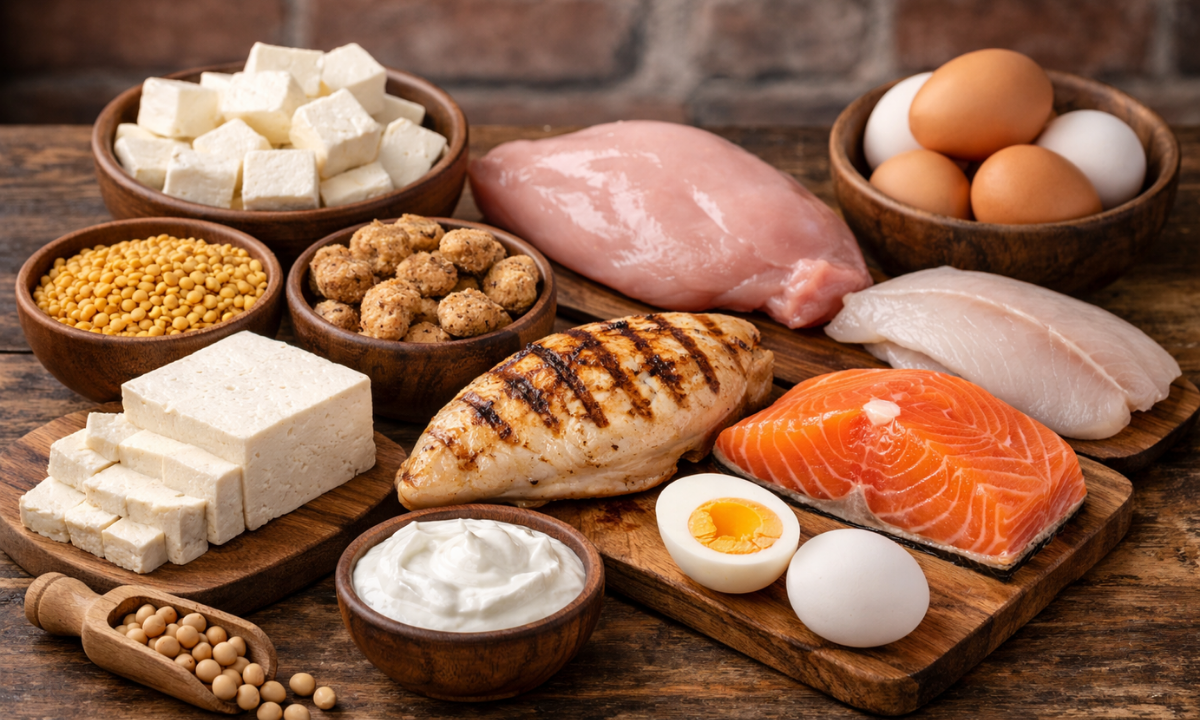
Protein is the structural material for muscle tissue. Without it, all your gym efforts are wasted.
- The Target: Aim for 1.6g to 2.2g of protein per kg of body weight. (e.g., A 60kg person needs ~100–120g of protein).
- Best Sources:
- Vegetarian: Paneer (Casein protein is great for night recovery), Tofu, Greek Yogurt, Lentils (Dal), and Soya Chunks.
- Non-Vegetarian: Eggs (the gold standard), Chicken Breast, and Fish.
B. Carbohydrates: The “Labor Crew”
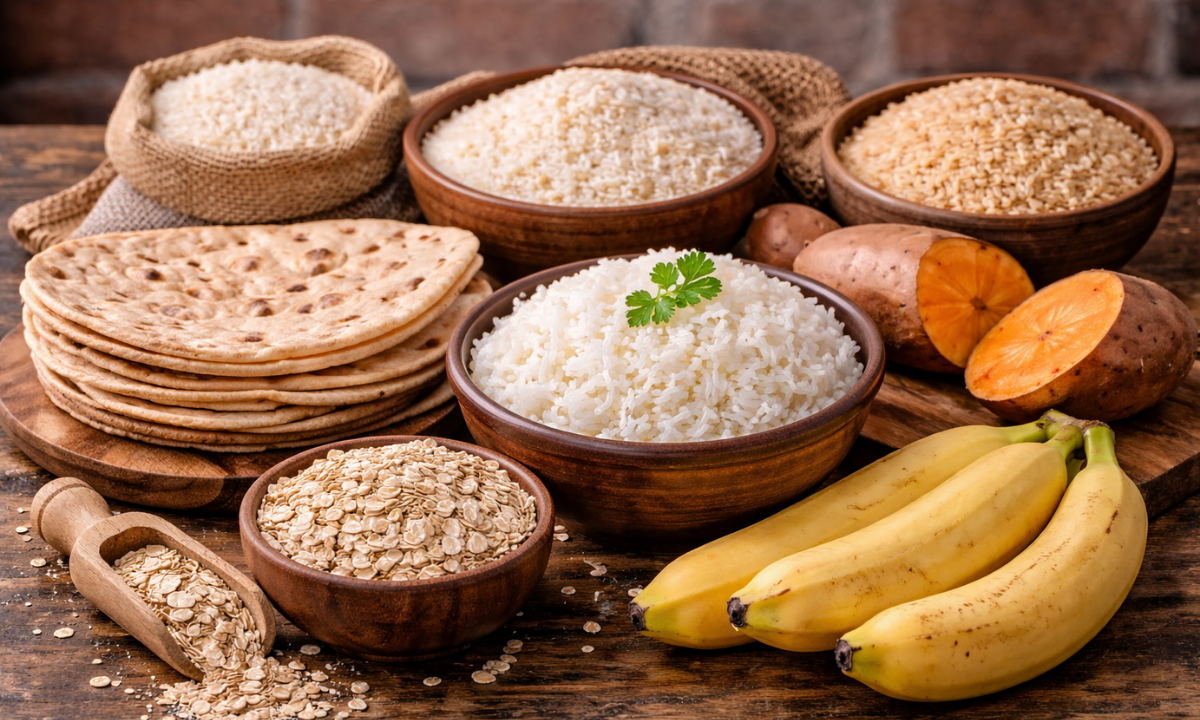
This is where most people fail. They cut carbs, thinking they are “bad.” Carbs are your best friend for gaining mass.
They are “Protein Sparing,” meaning they provide the energy for your workout so your body doesn’t burn your expensive protein for fuel.
- The Strategy: Eat complex carbs to fuel heavy lifting sessions.
- Best Sources: Roti, Rice, Sweet Potato (Shakarkandi), Oats, and Bananas.
C. Fats: The “Hormone Regulators”
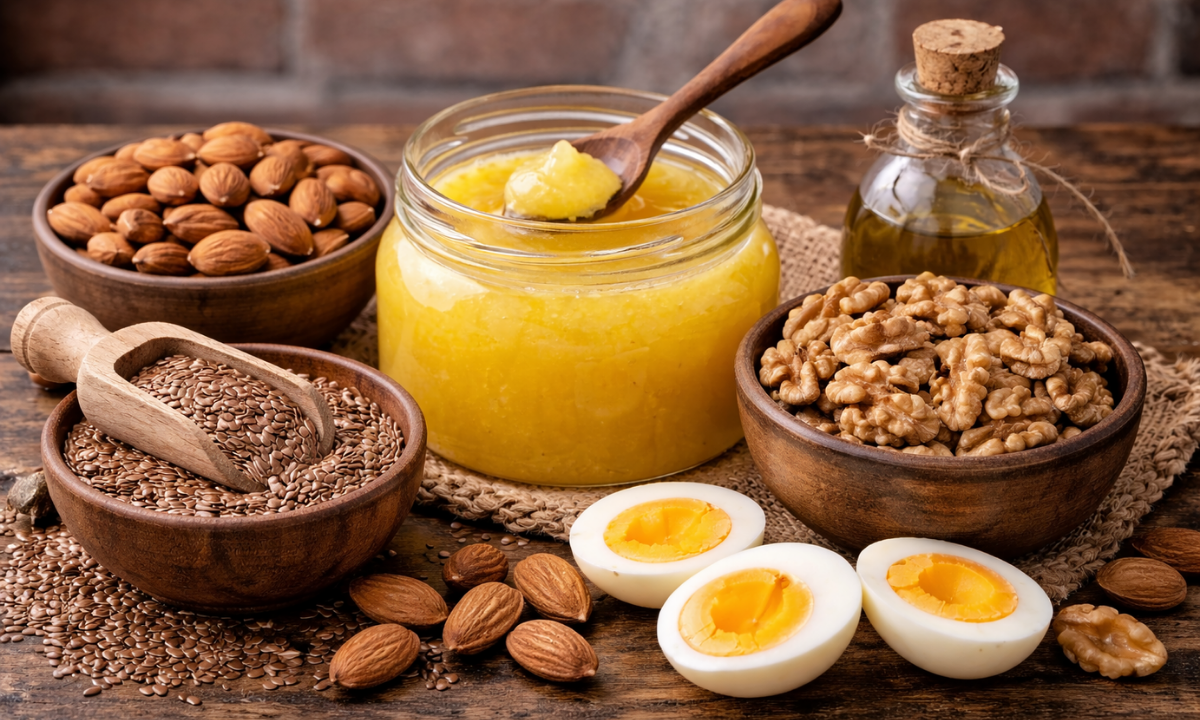
You need fat to produce Testosterone, the primary hormone that drives muscle growth. A low-fat diet is a disaster for muscle gain.
- The Strategy: Don’t fear the Ghee!
- Best Sources: Desi Ghee, Almonds, Walnuts, Flaxseeds, and Egg Yolks.
How to Train: Lift Heavy, Rest Well
Muscles are broken in the gym, but built in bed.
You can eat all the protein in the world, but without the right stimulus, it won’t turn into muscle.
To transform your physique, you need to combine your weight and muscle gain diet with a smart training protocol.
The Big Three Rules of Hypertrophy:
Prioritize Compound Movements: Forget the fancy machines for now. Focus on “Compound Lifts” that use multiple muscle groups at once.
These trigger the biggest hormonal response (Testosterone and Growth Hormone).
The Big Lifts: Squats, Deadlifts, Bench Press, Overhead Press, and Pull-ups.
You must challenge your body. If you lifted 10kg last week, try 12kg this week. If you can’t increase the weight, increase the reps. You must constantly demand more from your muscles.
Don’t Overdo Cardio. If you are a “Hard Gainer,” excessive running or cycling burns the precious calories you are trying to store. Limit cardio to light warm-ups or short walks for heart health.
Sleep is Non-Negotiable. This is often the missing link. Your body releases the maximum amount of Human Growth Hormone (HGH) during deep sleep.
If you are sleeping 5 hours a night, you are actively sabotaging your gains.
The Blueprint: A Sample Indian Muscle Menu
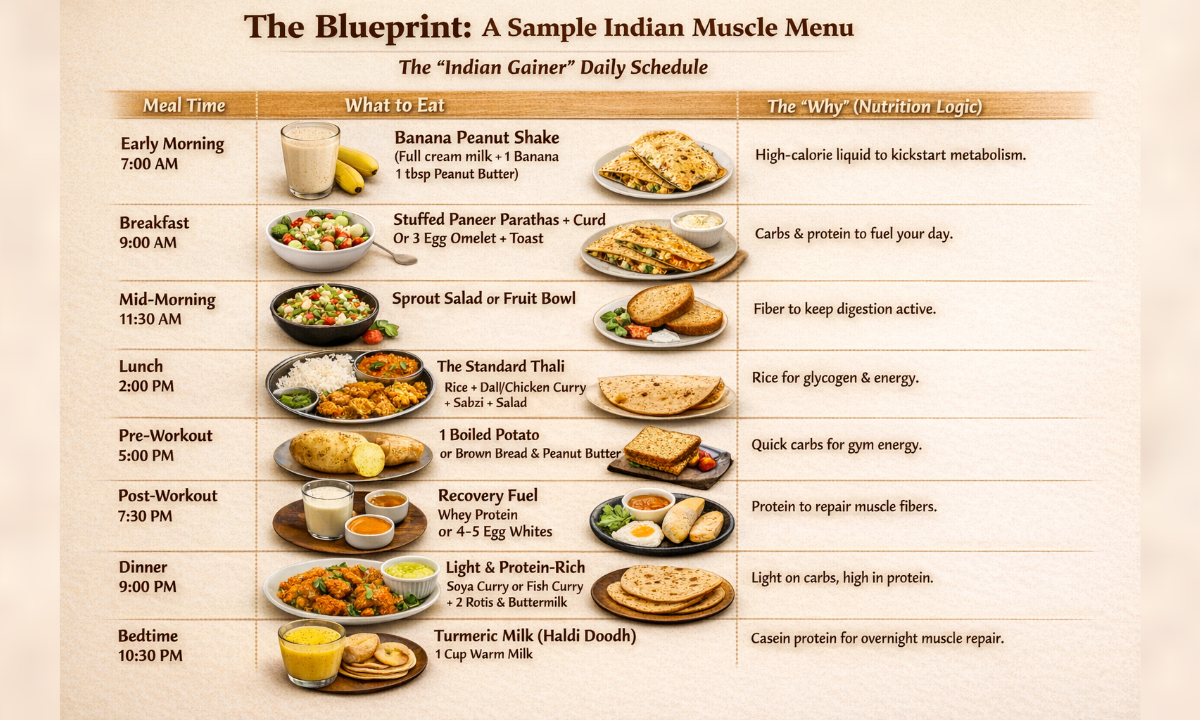
What a “High-Calorie, Clean-Eating” day looks like.
Many clients ask for a 7-day muscle gain meal plan.
While every individual needs a unique plan based on their BMR (Basal Metabolic Rate), here is a sample “Day 1” from Dietician Avni Kaul’s desk to show you how to structure your meals for maximum growth.
The “Indian Gainer” Daily Schedule
| What to Eat | The “Why” (Nutrition Logic) | |
|---|---|---|
| Early Morning(7:00 AM) | Banana Peanut Shake (Full cream milk + 1 Banana + 1 tbsp Peanut Butter) | A high-calorie liquid starts to wake up your metabolism without feeling too heavy. |
| Breakfast (9:00 AM) | Stuffed Paneer Parathas (2) Cooked with Ghee + 1 bowl Curd. (Non-Veg Option: 3 Egg Omelet + Toast) | A heavy mix of complex carbs (wheat) and protein (paneer/eggs) to fuel the day. |
| Mid-Morning (11:30 AM) | Sprout Salad or Fruit Bowl Moong sprouts with lemon juice. | Keeps your digestion active and provides essential fiber. |
| Lunch (2:00 PM) | The Standard Thali 1.5 cups Rice + 1 bowl Dal/Chicken Curry + Sabzi + Salad. | Rice is critical here! It provides the glycogen (energy) needed for your evening workout. |
| Pre-Workout (5:00 PM) | 1 Boiled Potato (Salted) OR 1 Slice Brown Bread with Peanut Butter. | Fast-digesting carbs that hit your bloodstream quickly for immediate gym energy. |
| Post-Workout (7:30 PM) | Recovery Fuel Whey Protein (if prescribed) OR 4–5 Egg Whites. | Must be eaten within 30 mins to repair the muscle fibers torn during lifting. |
| Dinner (9:00 PM) | Light & Protein-Rich 2 Rotis + Soya Chunk Curry or Fish Curry + Buttermilk. | Slightly lighter on carbs than lunch to prevent bloating, but high in protein. |
| Bedtime (10:30 PM) | Turmeric Milk (Haldi Doodh) 1 Cup Warm Milk. | Milk contains Casein protein, which slow-releases overnight to prevent muscle loss while you sleep. |
Why Generic Advice Fails (The Need for Personalization)
You are not a template. Your diet shouldn’t be either.
You might be wondering, “Can I just copy my gym trainer’s diet?” The answer is usually no.
Nutrition is highly individual.
A diet that helps your friend gain 5kg might make you gain 5kg of belly fat or cause severe bloating. This is where a specialized dietitian in Delhi becomes essential.
Dietician Avni Kaul analyzes your specific “Somatotype” (Body Type):
- Ectomorphs: Need massive carb loads to see the scale move.
- Endomorphs: Need careful carb timing to avoid gaining fat along with muscle.
- Mesomorphs: Respond well to balanced macros.
Following a generic internet plan often leads to the “Dirty Bulk” trap, where you gain weight rapidly, but it’s mostly fat that you’ll have to struggle to lose later.
Conclusion
Gaining muscle is a marathon, not a sprint. You cannot force your body to build tissue overnight. It takes weeks of consistent eating (hitting that surplus every single day) and consistent lifting. The scale might not move every day, and that is okay. Trust the process.
And if you are unsure whether to see a nutritionist or a dietitian in the first place, [this guide will clear it up for you] → Nutritionist vs Dietician
If you are tired of guessing and want a roadmap tailored to your metabolism, lifestyle, and taste buds, it is time to bring in an expert.
Ready to transform your physique? Consult Dietician Avni Kaul, the leading Weight Gain Dietician in Delhi, and build the body you deserve the healthy way.