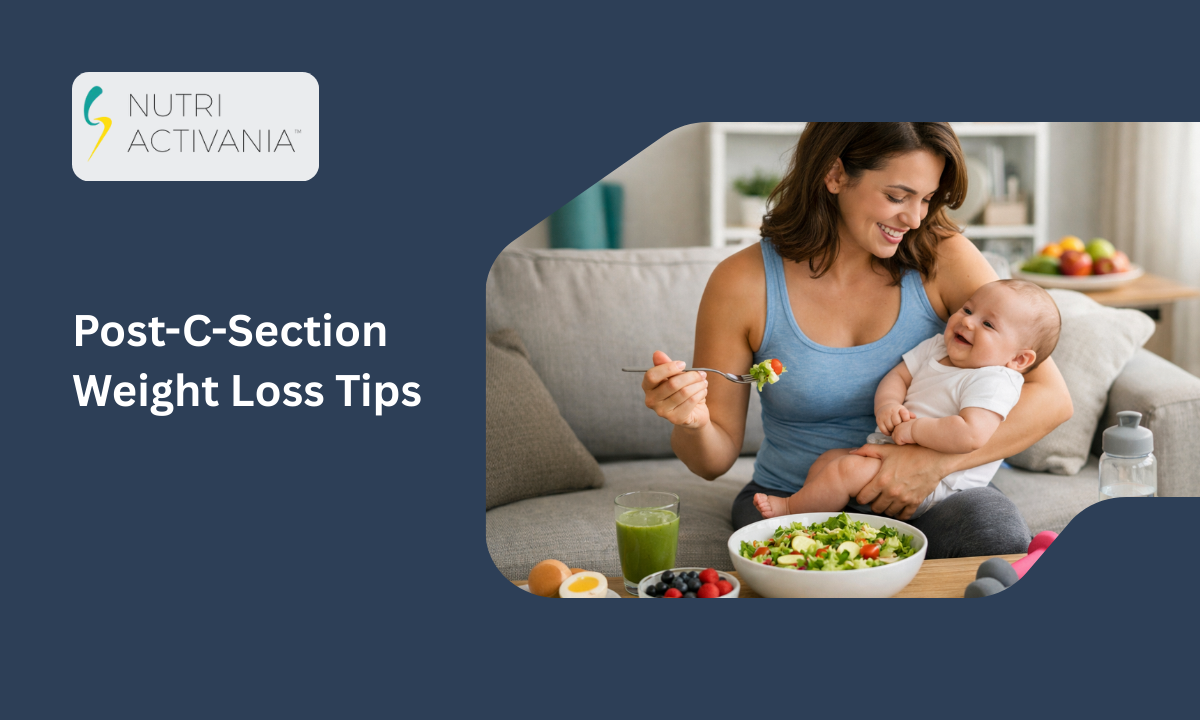
Bringing a life into the world is a miracle, but let’s be honest: the aftermath of a C-section is a major physical battle.
You are not just recovering from childbirth; you are recovering from major abdominal surgery. You are navigating sleepless nights, breastfeeding, and hormonal shifts, all while trying to protect painful stitches.
In this chaos, the pressure to “snap back” can feel overwhelming.
You might be scrolling through social media, wondering how to lose weight after c section safely without hurting yourself or affecting your milk supply.
The truth is, your journey will look different from someone who had a vaginal delivery. Your abdominal muscles need more time to knit back together, and your body needs more energy to repair deep tissue.
At NutriActivania, Dt. Avni Kaul emphasizes that postpartum weight loss is a marathon, not a sprint. The goal isn’t just to be “skinny”; it is to be strong enough to care for your baby.
In this guide, we will outline a safe, dietician-approved roadmap to reclaiming your body.
The 6-Week Rule: Recovery First
Respecting the healing process.
Before you even think about crunches or calorie deficits, you must respect the “Fourth Trimester.”
For the first 6 weeks (or until your doctor gives you clearance), your only job is to heal and bond with your baby.
Why the rush is dangerous:
- Internal Healing: You can see the scar on your skin, but remember, you have stitches on your uterus and abdominal wall too. Rushing into exercise can tear these internal stitches, causing long-term damage.
- The “Pouch”: Many women rush into sit-ups to flatten their tummy, but this often worsens Diastasis Recti (the separation of abdominal muscles), leading to a permanent “mummy tummy.”
Losing weight post-delivery during this phase shouldn’t come from starvation or gym sessions. It comes naturally from:
- Breastfeeding: Which burns ~500 calories a day.
- Water Loss: Your body sheds the extra fluid retained during pregnancy.
- Gentle Movement: Short, slow walks inside the house to keep blood circulation flowing and prevent clots.
The C-Section Diet Strategy (What to Eat)
Healing the cut from the inside.
Since you cannot rely on heavy exercise yet, your nutrition is your primary tool for recovery and weight management.
A postpartum diet after surgery isn’t about cutting calories; it is about “Nutrient Density.”
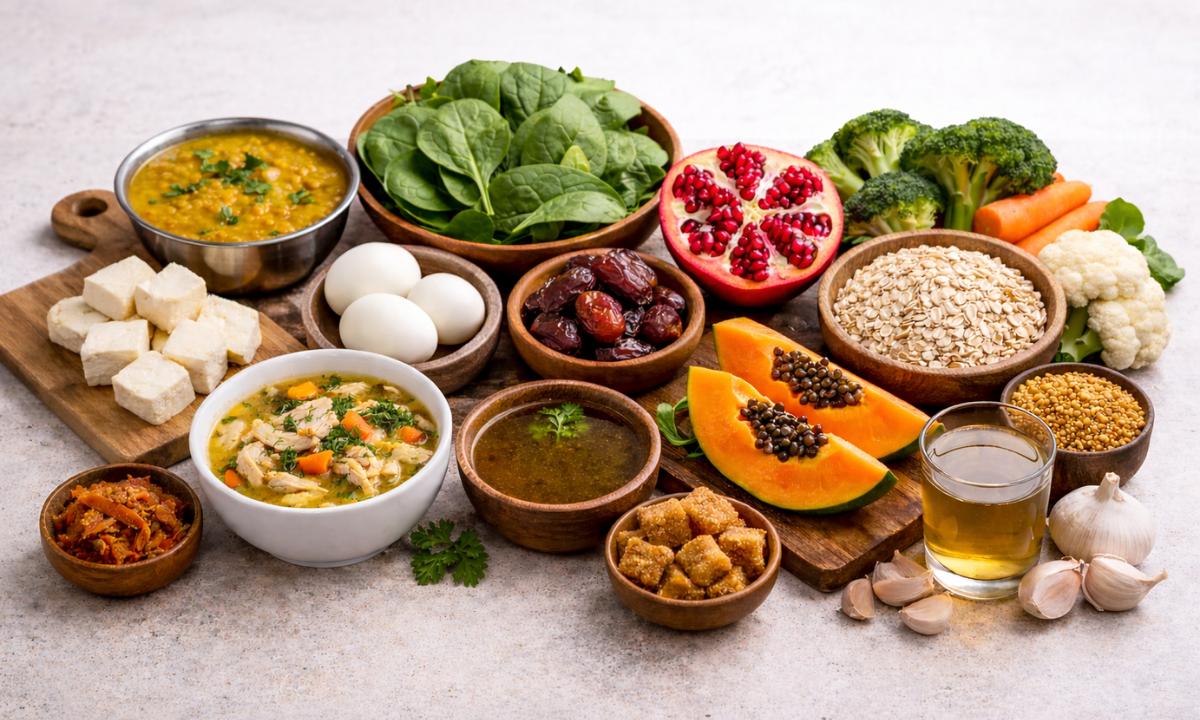
You need to eat foods that repair tissues while keeping you full. Here are the essential nutrient-rich foods, Dt. Avni Kaul recommends:
- Protein & Collagen (The Builders): Your abdominal wall has been cut through several layers. To knit these back together, you need protein.
- Eat: Lentils (Dal), Paneer, Eggs, and Chicken soup. If you are non-vegetarian, Bone Broth is excellent for collagen, which helps fade the scar.
- Iron (The Energy Booster): C-section deliveries involve more blood loss than vaginal births. If you feel dizzy or constantly exhausted, your iron might be low.
- Eat: Spinach, Dates, Pomegranate, and Jaggery (in moderation).
- Fiber (The Stitches Saver): This is non-negotiable. Constipation is the enemy of a C-section recovery because straining on the toilet puts dangerous pressure on your stitches.
- Eat: Oats, Papaya, and fibrous vegetables.
- Galactagogues (For Milk Supply): If you are breastfeeding, these foods boost supply while adding healthy calories.
- Eat: Fenugreek seeds (Methi), Cumin (Jeera) water, and Garlic.
What to Avoid (The Bloat Triggers)
Protecting your incision from pressure.
While you are focusing on good food, you must also be vigilant about foods to avoid after c section.
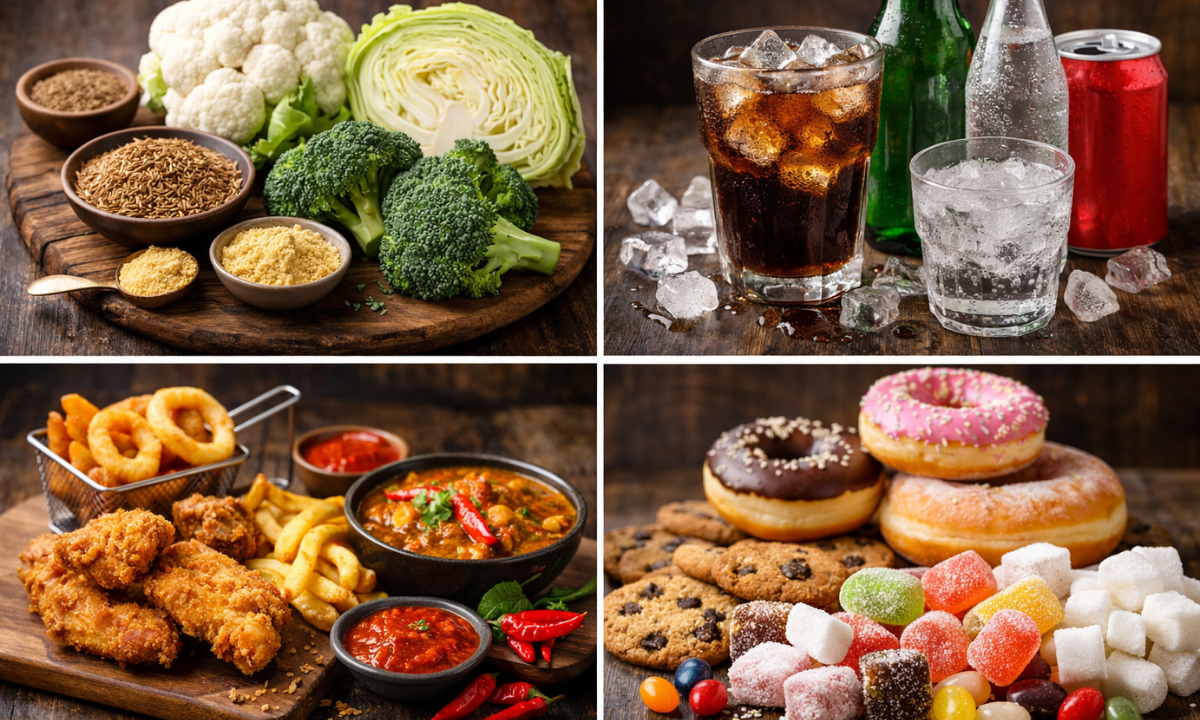
Why? Because Gas = Pain. Trapped gas pushes against your fresh internal stitches, causing sharp, severe pain. To lose weight and stay comfortable, steer clear of these:
- Gas-Forming Foods: Avoid raw cauliflower, cabbage, and broccoli for the first few weeks. Cook them thoroughly with Jeera (Cumin) and Hing (Asafoetida) to make them digestible.
- Carbonated Drinks: Sodas and sparkling water introduce air into your digestive track, leading to immediate bloating.
- Fried & Spicy Foods: Your digestion is sluggish after surgery/anesthesia. Heavy, oily foods can cause indigestion and heartburn, making recovery harder.
- Refined Sugar: Sugar increases inflammation in the body. High inflammation slows down the healing of your wound and makes the scar tissue redder and more painful.
Movement: From Bed to Gym (The Safe Timeline)
Walking before running.
Many moms ask, “When can I start exercising?” The answer depends on your healing, but here is a general timeline approved by experts to ensure you don’t hurt your incision or worsen Diastasis Recti (abdominal separation).
- Phase 1 (0–6 Weeks): The Active Rest Phase
- Goal: Circulation and prevention of blood clots.
- Activity: Slow, short walks around the house (5-10 minutes).
- Core: Practice “Deep Belly Breathing.” Inhale to expand the belly, exhale to gently pull the belly button towards the spine. This wakes up the core muscles without straining them.
- Phase 2 (6–12 Weeks): The Rehab Phase
- Only after the doctor’s clearance.
- Goal: Reconnecting with your pelvic floor.
- Activity: Postnatal Yoga, Pelvic Floor exercises (Kegels), and longer walks (20-30 mins).
- Avoid: Heavy lifting, crunches, planks, or high-impact jumping.
- Phase 3 (3 Months+): The Strengthening Phase
- Goal: Building muscle to burn fat.
- Activity: Strength training with light weights, swimming (once the incision is fully closed), and low-impact cardio.
Dietician’s Warning: If you see a “cone” or “dome” shape popping out of your stomach when you sit up, you might have Diastasis Recti. Stop all ab exercises immediately and consult a specialist.
Sample “Healing” Meal Ideas
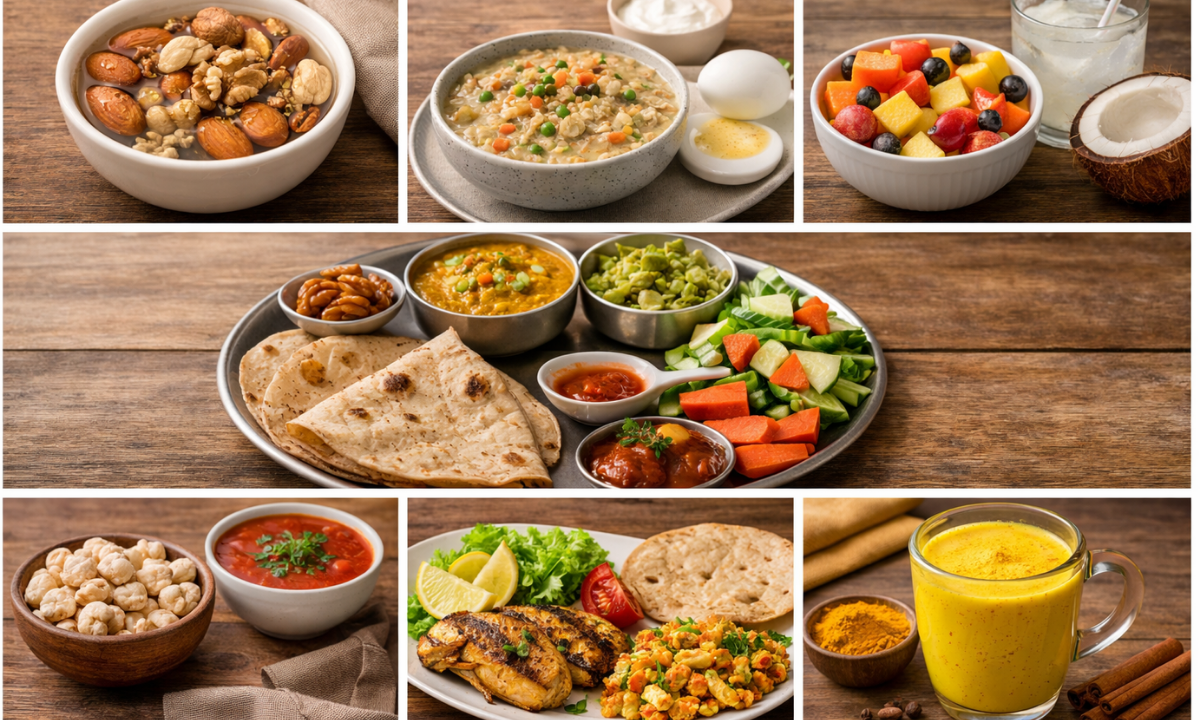
A day of nourishment for nursing moms.
To give you an idea of a diet plan to lose weight after c section, here is a sample menu. This plan focuses on high protein for healing, fiber for digestion, and hydration for milk supply.
| Meal Time | What to Eat | Why It Helps |
|---|---|---|
| Early Morning | Soaked Nuts & Seeds (Almonds, Walnuts, Methi seeds, water) | Methi (Fenugreek) boosts milk supply; nuts provide energy for the day. |
| Breakfast | Vegetable Dalia or Oats Porridge With milk/curd + 1 Boiled Egg. | High fiber prevents constipation; egg provides protein for tissue repair. |
| Mid-Morning | Fruit Bowl Papaya or Apple + Coconut Water. | Papaya aids digestion; coconut water restores electrolytes lost in breastfeeding. |
| Lunch | Complete Thali 2 Rotis + 1 bowl Dal (Moong/Masoor) + Gourd Vegetable (Lauki/Torai) + Salad. | Lauki and Torai are easy to digest and excellent for hydration. |
| Evening Snack | Makhana (Fox Nuts) & Soup Roasted Makhana + 1 bowl Chicken or Tomato Soup. | A low-calorie, crunchy snack that satisfies cravings without gas. |
| Dinner | Light Protein Grilled Fish / Paneer Bhurji + 1 Roti. | Eating light at night prevents bloating and heartburn. |
| Bedtime | Turmeric Milk (Haldi Doodh) | Anti-inflammatory properties of Haldi help heal internal wounds while you sleep. |
Conclusion
Remember, it took 9 months to grow your baby and a major surgery to deliver them.
Give your body the grace it deserves. The goal of a postpartum diet is not to erase the evidence of your pregnancy, but to fuel you for the demands of motherhood. Starving yourself will only lower your milk supply and delay your healing.
Need a Personalized Postpartum Plan? Every pregnancy and every C-section recovery is unique.
If you are struggling with low energy, supply issues, or stubborn weight, consult Dt. Avni Kaul is a trusted Pregnancy dietician in Delhi. As a specialized nutritionist, she can create a roadmap that helps you lose weight safely while keeping you and your baby healthy.