

Introduction
A well-structured diet chart for weight loss for men works better than crash dieting because it balances calories, protein and daily routines rather than cutting out food groups. Avni Kaul, a clinical dietitian in Delhi with over 12 years of experience, designs plans around how Indian men actually eat: dal, chapati, rice, curd, eggs, chicken and seasonal vegetables, portioned to create a modest calorie deficit. This guide gives you a 7-day sample chart, calorie ranges for different activity levels, vegetarian and non-vegetarian options, and the habits that decide whether the plan works.
The chart below is a general template for adult men who are otherwise healthy. If you have diabetes, high blood pressure, kidney issues or any medical condition, speak to a qualified dietitian or doctor before following it.
Key Takeaways
- Healthy weight loss for men is usually 0.5 to 1 kg per week.
- Aim for a daily calorie deficit of 500 to 750 kcal below your maintenance needs; individual needs vary, and a large deficit should not be attempted without professional guidance.
- Many men may begin with roughly 1,600 to 1,900 kcal per day, but individual needs vary. Use hunger, activity, weight trend, and professional guidance to adjust intake.
- Prioritise protein to support muscle during weight loss; the ICMR RDA for healthy adults is about 0.83 g per kg of body weight.
- Fill half the plate with vegetables, a quarter with protein, a quarter with whole grains.
- Combine the diet with 150 minutes of moderate activity and strength training twice a week.
How Many Calories Should a Man Eat to Lose Weight?
Daily calorie needs depend on age, weight, height and activity level. A rough guide for Indian men:
| Activity level | Maintenance calories | Possible starting range for weight loss |
|---|---|---|
| Sedentary (desk job, little exercise) | 2,200 to 2,400 kcal | 1,600 to 1,800 kcal |
| Lightly active (walking, light workouts) | 2,400 to 2,700 kcal | 1,800 to 2,000 kcal |
| Moderately active (regular gym, sports) | 2,700 to 3,000 kcal | 2,000 to 2,300 kcal |
| Very active (manual labour, athletes) | 3,000 to 3,500 kcal | 2,300 to 2,700 kcal |
Do not drop below 1,500 kcal per day without professional supervision. Very low calorie intake slows metabolism, reduces muscle mass and is hard to sustain. Some men, especially very active ones, may need more calories than this guide suggests.
What a Weight Loss Plate Should Look Like
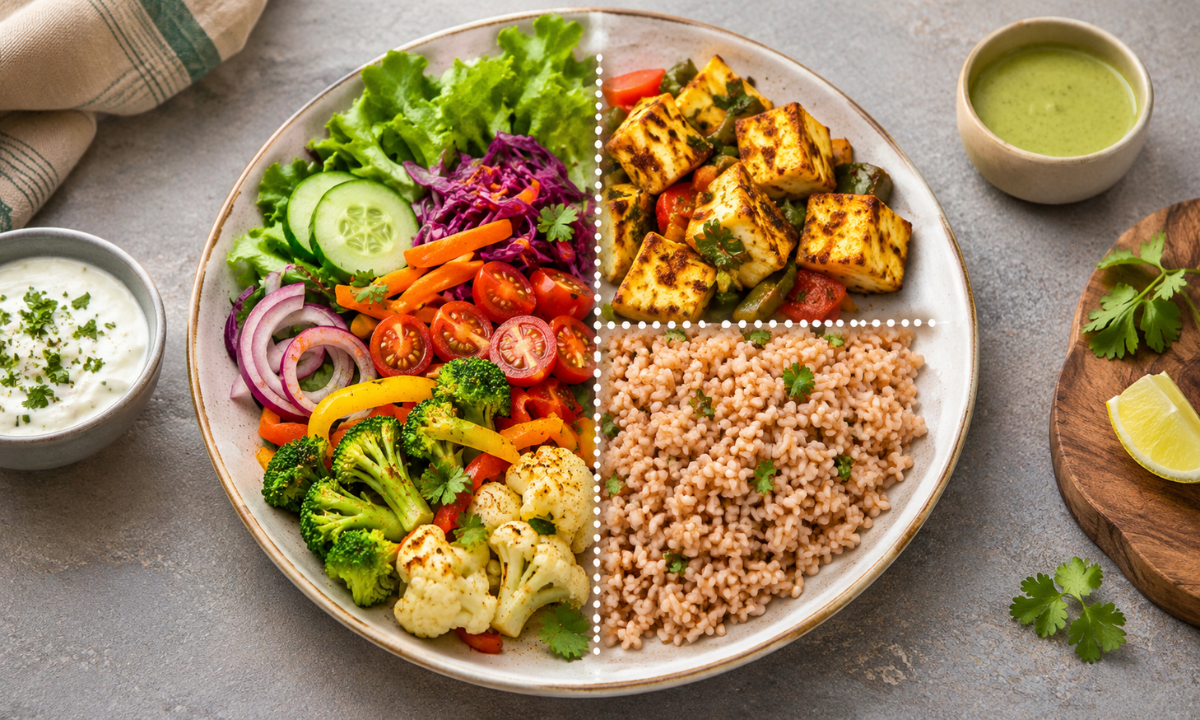
For every main meal:
- Half the plate: non-starchy vegetables (palak, bhindi, lauki, cabbage, carrots, capsicum, salad).
- One quarter: lean protein (dal, chickpeas, paneer, curd, eggs, chicken, fish).
- One quarter: whole grains (chapati, brown rice, millet, oats).
- A small portion of healthy fat: ghee, mustard oil, nuts or seeds.
- A fruit on the side or as a snack between meals.
How Much Protein Should Men Eat During Weight Loss?
The ICMR recommended dietary allowance for healthy adults is about 0.83 g of protein per kg of body weight per day. Men who are physically active or aiming to preserve muscle during weight loss may benefit from a higher intake, often around 1.2 to 1.6 g/kg/day, but this should be individualised, especially for people with kidney disease or other medical conditions.
A 75 kg active man may aim for approximately 90 to 120 g per day, depending on activity and overall health. Spread protein across the day rather than loading it into one meal.
High-Protein Indian Foods for Men
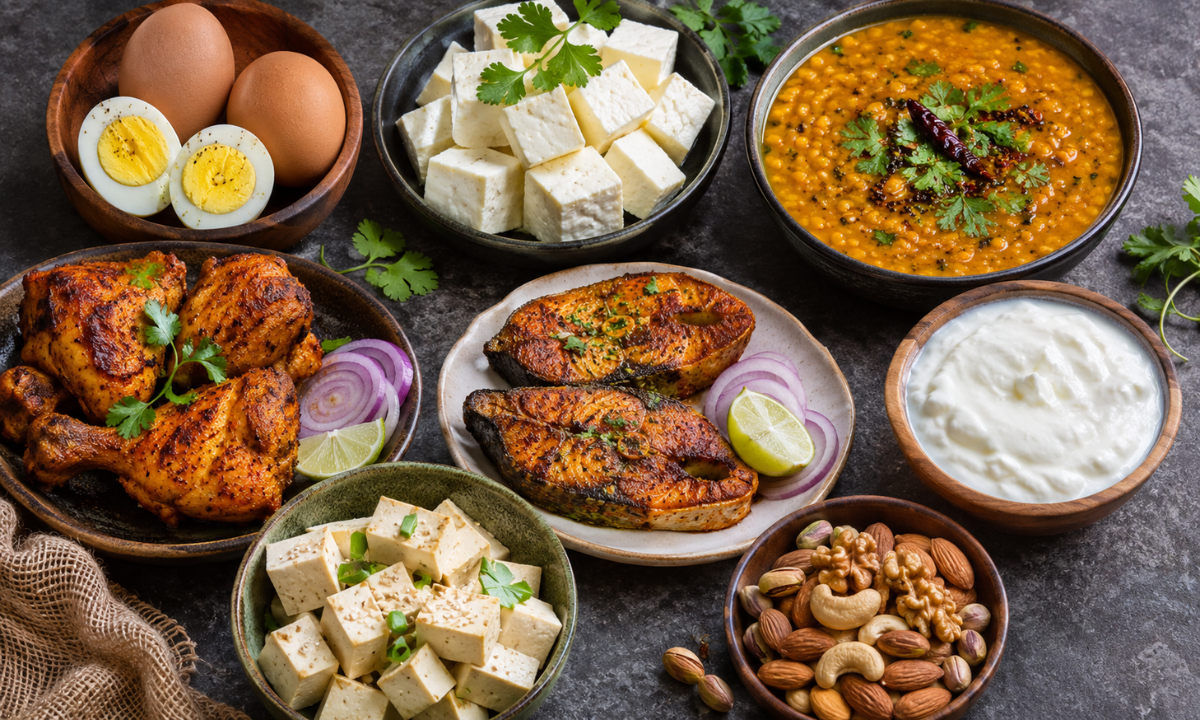
Common sources that fit Indian meals:
- Pulses and legumes: moong dal, masoor dal, toor dal, chana, rajma (7 to 9 g per cooked bowl)
- Dairy: curd, paneer, milk (paneer provides around 18 g per 100 g)
- Eggs: approximately 6 g per large egg
- Poultry and fish: chicken breast and fish provide roughly 25 to 30 g per 100 g cooked portion
- Plant alternatives: tofu, soya chunks, sprouts
- Nuts and seeds: almonds, peanuts, pumpkin seeds, chia seeds
Combine two or three sources at each main meal to meet your target comfortably.
7-Day Diet Chart for Weight Loss for Men
The chart below targets roughly 1,800 kcal per day as a starting point. Adjust portions up or down based on your activity, hunger and weight trend.
Note on portions:
- 1 bowl = approximately 150 to 200 ml (katori size)
- 1 cup = approximately 200 ml
- 1 chapati = roughly 30 g atta
- 1 small chapati = roughly 20 g atta
Medical note: This chart is not suitable as a fixed plan for people with diabetes, kidney disease, thyroid disorders, or other medical conditions without individual advice.
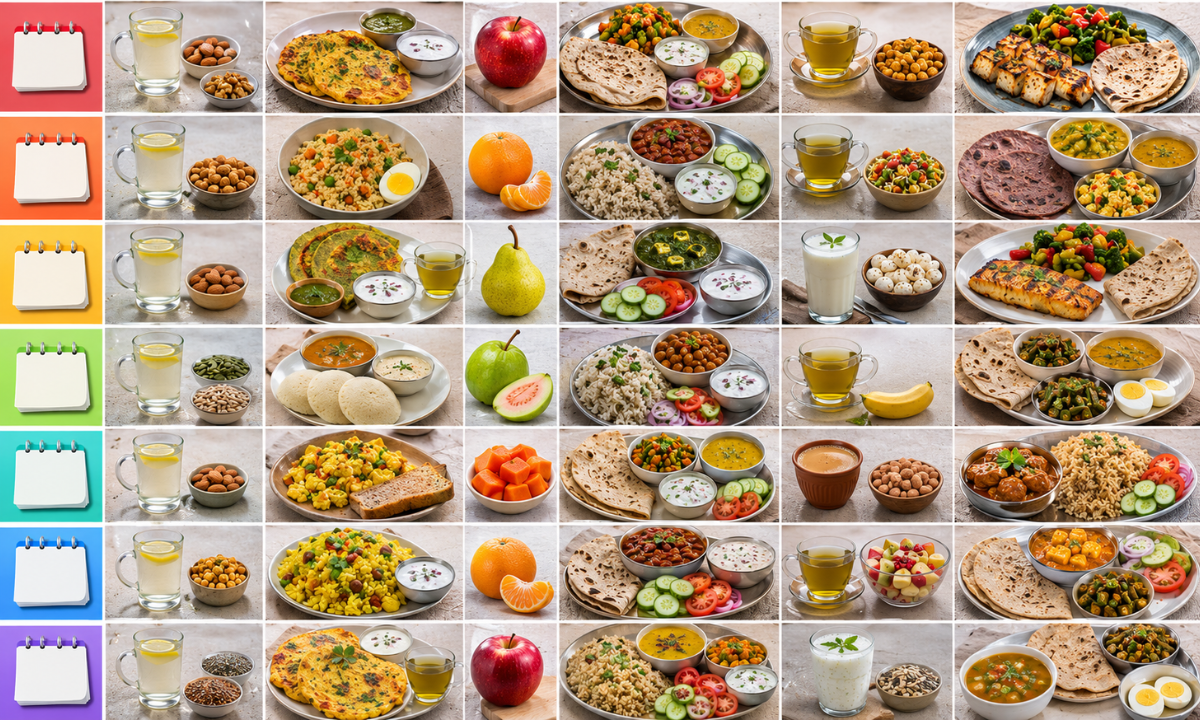
Day 1 (Monday)
| Meal | Food |
|---|---|
| Early morning (7:00 am) | 1 glass warm water with lemon; soaked almonds (6) and 2 walnuts |
| Breakfast (8:30 am) | 2 besan chillas with mint chutney; 1 cup curd |
| Mid-morning (11:00 am) | 1 apple |
| Lunch (1:30 pm) | 2 chapatis, 1 bowl mixed vegetable sabzi, 1 bowl moong dal, 1 bowl curd, salad |
| Evening (5:00 pm) | Green tea; roasted chana (30 g) |
| Dinner (8:00 pm) | 1 bowl grilled chicken or paneer tikka (120 g), 1 bowl sautéed vegetables, 1 small chapati |
Day 2 (Tuesday)
| Meal | Food |
|---|---|
| Early morning | Warm water with lemon; roasted peanuts (20 g) |
| Breakfast | 1 bowl vegetable oats with 1 boiled egg |
| Mid-morning | 1 orange |
| Lunch | 1 cup brown rice, 1 bowl rajma, cucumber salad, 1 small bowl curd |
| Evening | Green tea; 1 small bowl sprouts chaat |
| Dinner | 2 ragi rotis, 1 bowl lauki sabzi, 1 bowl dal, 1 small bowl paneer bhurji (50 g paneer) |
Day 3 (Wednesday)
| Meal | Food |
|---|---|
| Early morning | Warm water with lemon; soaked almonds (6) |
| Breakfast | 2 moong dal chillas with pudina chutney; 1 cup curd; 1 cup green tea |
| Mid-morning | 1 pear |
| Lunch | 2 chapatis, 1 bowl palak paneer (80 g paneer), salad, 1 small bowl curd |
| Evening | 1 cup buttermilk; 1 small handful roasted makhana |
| Dinner | 1 bowl grilled fish or tofu bhurji (120 g), 1 bowl mixed vegetables, 1 chapati |
Day 4 (Thursday)
| Meal | Food |
|---|---|
| Early morning | Warm water with lemon; pumpkin and sunflower seeds (15 g) |
| Breakfast | 3 vegetable idlis with sambar; small portion coconut chutney |
| Mid-morning | 1 guava |
| Lunch | 1 cup jeera rice, 1 bowl chole, salad, 1 small bowl curd |
| Evening | Green tea; 1 small banana |
| Dinner | 2 chapatis, 1 bowl bhindi sabzi, 1 bowl dal, 1 boiled egg or 50 g paneer |
Day 5 (Friday)
| Meal | Food |
|---|---|
| Early morning | Warm water with lemon; soaked almonds (6) |
| Breakfast | 2 scrambled eggs or paneer bhurji with 1 slice whole-grain toast |
| Mid-morning | 1 bowl papaya |
| Lunch | 2 chapatis, 1 bowl mix-veg curry, 1 bowl toor dal, salad, 1 small bowl curd |
| Evening | Masala chai (no sugar); roasted peanuts (25 g) |
| Dinner | 1 bowl chicken curry or soya chunks curry (120 g), 1 bowl brown rice, salad |
Day 6 (Saturday)
| Meal | Food |
|---|---|
| Early morning | Warm water with lemon; roasted chana (20 g) |
| Breakfast | 1 bowl poha with peanuts and vegetables; 1 cup curd |
| Mid-morning | 1 orange |
| Lunch | 2 chapatis, 1 bowl rajma, 1 bowl curd, salad |
| Evening | Green tea; 1 small bowl fruit chaat |
| Dinner | 2 jowar rotis, 1 bowl kadhai paneer (80 g paneer) or egg curry (2 eggs), salad |
Day 7 (Sunday)
| Meal | Food |
|---|---|
| Early morning | Warm water with lemon; chia and flax seeds (15 g) |
| Breakfast | 2 besan chillas with vegetables; 1 cup curd; 1 cup green tea |
| Mid-morning | 1 apple |
| Lunch | 1 cup brown rice, 1 bowl yellow dal tadka, 1 bowl mix veg, salad, 1 small bowl curd |
| Evening | 1 cup buttermilk; 1 small handful mixed seeds |
| Dinner | 1 bowl vegetable soup; 2 chapatis; 1 bowl bhindi or baingan sabzi; 1 boiled egg or 50 g paneer |
Note on calorie and protein estimates: The 1,800 kcal starting target and protein content are illustrative estimates. Actual values depend on portion sizes, oil, curd fat content, and the exact quantities of dal, rice, chapati, paneer, chicken or fish used. For a precise plan built around your calorie and protein needs, book a consultation.
Vegetarian Diet Chart for Weight Loss for Men
Vegetarian men can meet protein needs by combining several sources every day:
- 2 bowls of dal or legumes
- 1 bowl curd and 1 cup milk or buttermilk
- 100 to 150 g paneer or tofu
- 30 g nuts and seeds
- Optional: 25 to 30 g soya chunks or sprouts
Pair cereal (chapati or rice) with pulses in the same meal to improve the amino acid profile. Men who follow a strict vegan diet should discuss vitamin B12 and vitamin D with a dietitian.
Non-Vegetarian Options
- 2 eggs per day
- 100 to 150 g chicken, fish or lean meat
- Plus 1 bowl dal and 1 bowl curd
Grilled, baked, steamed or lightly curried preparations work better than deep-fried options. Fatty cuts and heavy gravies raise the calorie load quickly.
Weight Loss Diet for Men With Desk Jobs
Men with sedentary jobs benefit from:
- A protein-forward breakfast to curb mid-morning snacking
- A lighter lunch to avoid afternoon sluggishness
- Movement breaks every hour, with a short walk after lunch
- Fewer refined-carb snacks (biscuits, namkeens) at the desk
- An earlier dinner where possible, with lighter cooking
Daily steps matter more than people assume: aim for a steady 7,000 to 10,000 per day across the week.
Foods to Include
- Whole grains: chapati, brown rice, oats, millets (ragi, jowar, bajra)
- Pulses: moong, masoor, toor, chana, rajma
- Lean proteins: egg whites, chicken breast, fish, paneer, tofu, soya chunks
- Vegetables: all green leafy vegetables, gourds, capsicum, broccoli, carrots
- Fruits: apple, guava, papaya, orange, pear, berries
- Dairy: low-fat curd, buttermilk, milk
- Healthy fats: almonds, walnuts, flaxseed, chia seeds, mustard oil, ghee (in moderation)
Foods to Limit
- Sugary drinks, sodas, packaged juices, energy drinks
- Deep-fried foods, samosas, pakoras, chips
- White bread, white pasta, maida-based snacks
- Sweets, mithai, pastries, biscuits
- Processed meats and ready-to-eat meals
- Alcohol, which adds calories and may make it harder to maintain a calorie deficit
Lifestyle Habits That Make the Diet Work

A diet chart alone will not deliver results if daily habits work against it. Pair the plan with:
- Hydration: drink regularly through the day; needs vary with climate, activity, body size, and medical conditions.
- Sleep: 7 to 8 hours a night. Poor sleep can affect appetite regulation and may make healthy eating harder.
- Movement: 7,000 to 10,000 steps daily, plus 150 minutes of moderate cardio per week.
- Strength training: two to three sessions a week to help preserve muscle during weight loss.
- Stress management: meditation, yoga or breathing practices. Chronic stress can affect eating patterns, activity, sleep, and weight-management efforts.
- Alcohol: limit intake while actively losing weight; alcohol adds calories and may make it harder to maintain a calorie deficit.
How Fast Should Men Lose Weight?
A gradual loss of 0.5 to 1 kg per week is both safer and more sustainable than rapid loss. Weight does not come off in a straight line: expect faster drops in the first two weeks (mostly water), slower progress in weeks three to eight, and occasional plateaus. Track the weekly average rather than the daily figure.
Common Mistakes to Avoid
- Skipping meals, then overeating at night
- Cutting carbohydrates too aggressively
- Relying on protein powders instead of whole food
- Over-restricting fat and leaving meals unsatisfying
- Weighing yourself daily and reacting to normal fluctuations
- Expecting more than 1 kg of loss per week
When to Consult a Dietitian
See a qualified dietitian if you have diabetes, thyroid problems, high blood pressure, PCOD-related concerns in your family, fatty liver, kidney disease or a history of disordered eating, or if you have not seen results after 6 to 8 weeks of consistent effort. A tailored plan built around your lab results, medications and schedule works better than a generic chart. Book a consultation with Avni Kaul at Nutri Activania for a personalised plan.
For more meal-planning ideas, see Nutri Activania’s 7-day Indian diet plan for weight loss and Indian diet plan for weight loss: what a balanced day can look like.
Conclusion
A good diet chart for weight loss for men is one that creates a modest calorie deficit, keeps protein adequate for the individual, uses familiar Indian foods, and fits into a working week. Aim for 0.5 to 1 kg of loss per week, pair the plan with activity and sleep, and avoid crash diets that strip out food groups. Consistency over 12 to 16 weeks delivers results that fad diets cannot.
Frequently Asked Questions
How much weight can a man lose in a month on this diet chart?
A healthy rate is often about 2 to 4 kg per month, though progress varies with starting weight, calorie intake, activity, and health. Faster loss usually involves muscle loss and water weight, both of which return once normal eating resumes.
Is rice allowed in a weight loss diet for men?
Yes. A moderate portion of cooked rice can fit into a weight-loss diet; the right amount depends on your calorie needs, activity, and the rest of the meal. Switching to brown rice or pairing white rice with dal, vegetables and curd slows the glycaemic impact.
How much protein should a man eat to lose weight?
The ICMR RDA for healthy adults is about 0.83 g per kg of body weight. Men who are active or aiming to preserve muscle during weight loss may benefit from a higher intake, often around 1.2 to 1.6 g/kg/day, individualised to health status.
Can men lose weight without going to the gym?
Yes, diet drives most of the fat loss. However, strength training preserves muscle and improves body composition, so even bodyweight exercises at home help.
Are eggs good for weight loss?
Yes. Two eggs provide around 12 g of high-quality protein for about 150 kcal, and they help with satiety at breakfast. Values vary slightly by egg size and cooking method.
Should men take protein powder for weight loss?
Protein powder is optional. Whole-food sources such as dal, eggs, chicken, paneer and curd are sufficient for most men. Powder helps only if you consistently fall short on protein from food.
Is intermittent fasting better than a regular diet chart for men?
Both can work. The deciding factor is total calories and protein, not meal timing. Choose the approach you can follow consistently for several months.
Sources
- Indian Council of Medical Research, National Institute of Nutrition. Dietary Guidelines for Indians, 2024.
- World Health Organization. Healthy Diet Fact Sheet.
- UK National Health Service. Overweight and Obesity.
- Harvard T.H. Chan School of Public Health. The Nutrition Source: Healthy Weight.
- US National Institutes of Health, NIDDK. Choosing a Safe and Successful Weight-Loss Program.