
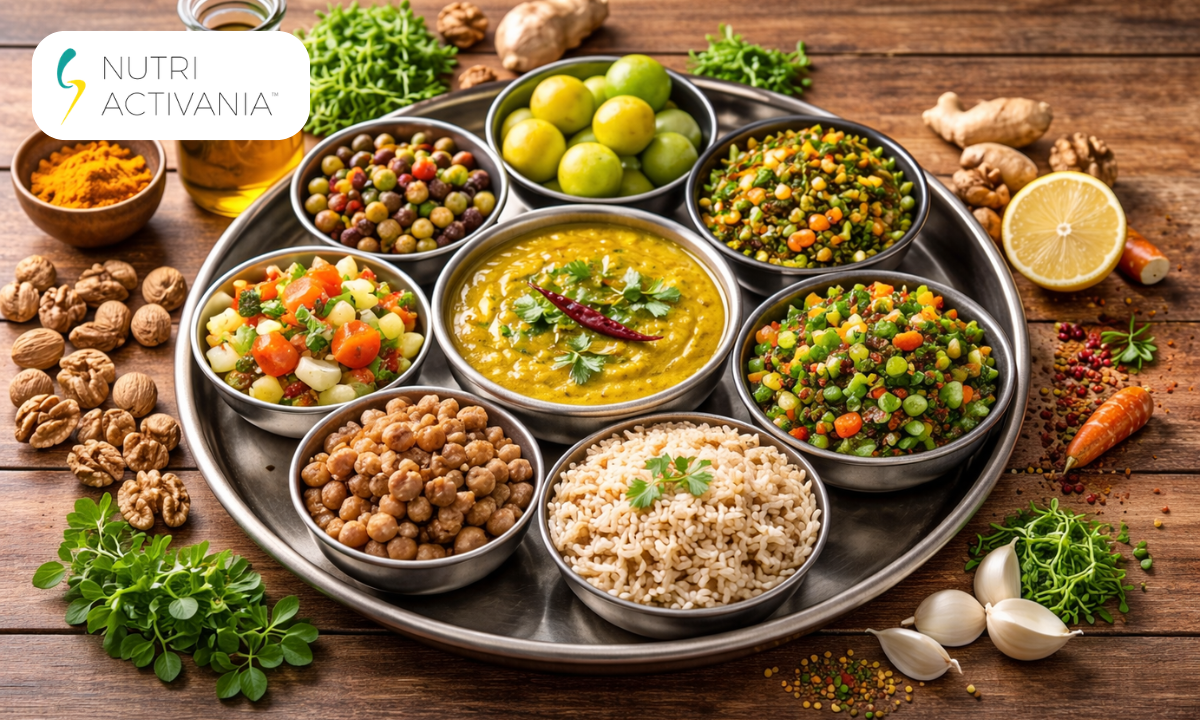
Heart disease is now the leading cause of death in India. Most people do not realise that the solution is sitting right in their kitchen. Traditional Indian foods eaten daily can lower bad cholesterol, reduce inflammation and protect your arteries naturally. The problem is modern Indian diets have moved away from these powerful ingredients.
This guide covers the 10 best heart healthy Indian foods, why they work, how to eat them and what a proper heart diet looks like backed by nutrition science, not trends.
What Makes an Indian Food Heart Healthy?
A heart healthy food is one that lowers LDL (bad cholesterol), raises HDL (good cholesterol), reduces inflammation, controls blood pressure or prevents arterial blockages. Traditional Indian cooking is full of such ingredients. Here is what to look for:
- Soluble fibre that traps and removes LDL from the bloodstream
- Antioxidants that protect artery walls from oxidative damage
- Omega-3 fatty acids that reduce triglycerides and inflammation
- Potassium and magnesium that regulate blood pressure naturally
10 Heart Healthy Indian Foods You Should Eat Every Day
1. Methi (Fenugreek Seeds)
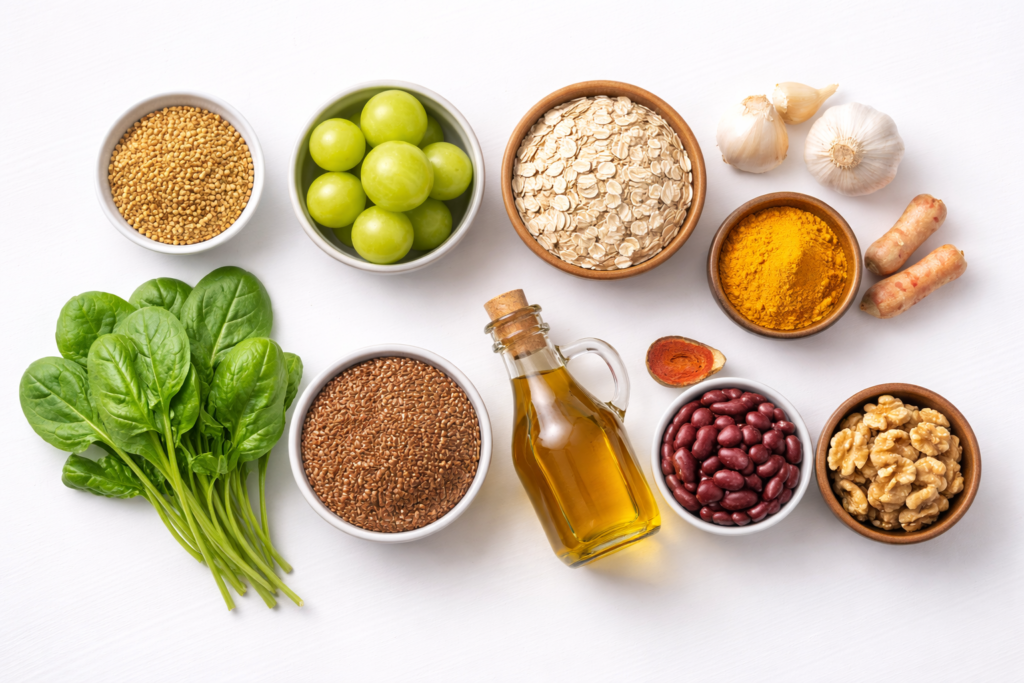
Methi contains soluble fibre that directly lowers LDL and triglycerides. Even one teaspoon of soaked methi seeds daily can show a measurable difference in your lipid profile within weeks. It also helps manage blood sugar, a key factor in heart health.
How to eat it:
- Soak overnight, have on an empty stomach with warm water
- Add fresh methi leaves to dal, sabzi or paratha dough
2. Amla (Indian Gooseberry)
Amla is loaded with Vitamin C and antioxidants that prevent oxidative stress on arteries. Research shows it significantly reduces total cholesterol and triglycerides while boosting HDL. It is one of the most underrated heart protective foods in India.
How to eat it:
- One raw amla daily or amla juice on an empty stomach
- Amla powder with warm water every morning
3. Oats (Dalia or Rolled Oats)
Oats contain beta-glucan, a soluble fibre proven to reduce LDL cholesterol. A daily bowl of oats can lower bad cholesterol by up to 10% over 3 months. They keep you full longer and prevent overeating that strains the heart.
How to eat it:
- Oats porridge or oats upma for breakfast
- Mix oats flour into roti dough for a heart healthy twist
4. Garlic (Lehsun)
Raw garlic contains allicin, a compound that lowers blood pressure, reduces LDL and prevents blood clots. Cooking destroys much of the allicin so raw garlic delivers the most heart benefit.
How to eat it:
- Crush one raw clove, wait 5 minutes, have with warm water every morning
5. Turmeric (Haldi)
Curcumin in turmeric is one of the most studied anti-inflammatory compounds in the world. Chronic inflammation is a major driver of heart disease. Turmeric also improves endothelial function, meaning it keeps your artery walls flexible and healthy.
How to eat it:
- Add to dal, sabzi and warm milk daily
- A pinch of black pepper increases curcumin absorption by up to 20 times
6. Flaxseeds (Alsi)
Flaxseeds are the richest plant source of Omega-3 in India. They reduce triglycerides, lower blood pressure and contain lignans that fight arterial inflammation. Ground flaxseeds are better absorbed than whole ones.
How to eat it:
- One tablespoon of ground flaxseeds in roti dough, curd or smoothie daily
7. Walnuts (Akhrot)
Walnuts are the only nut with a significant amount of plant-based Omega-3. Four to five walnuts daily reduce LDL and improve arterial flexibility. They are calorie dense so portion control is essential.
How to eat it:
- 4 to 5 walnuts as a mid-morning snack or added to oats and salads
8. Rajma and Chana (Legumes)
Rajma, chana, moong and masoor are rich in soluble fibre, plant protein and potassium. They reduce LDL, manage blood pressure and keep blood sugar stable all of which directly protect the heart. Traditional dal meals are genuinely heart protective when made with minimal oil.
How to eat it:
- One serving of dal or legume dish in at least one meal every day
9. Mustard Oil (Sarson ka Tel)
Among Indian cooking oils, mustard oil has one of the best fat profiles for heart health. It is rich in monounsaturated fats and has a good Omega-3 to Omega-6 ratio. People who cook in mustard oil consistently show lower rates of heart disease versus those using refined oils.
How to eat it:
- Use cold pressed mustard oil for cooking in limited quantities
- Never reuse or overheat it as this destroys the healthy fat profile
10. Green Leafy Vegetables (Palak, Methi, Sarson)
Leafy greens are packed with nitrates that lower blood pressure, magnesium that regulates heart rhythm and folate that reduces homocysteine a key risk factor for heart disease. Indians who eat leafy greens daily show consistently better heart health markers.
How to eat it:
- One serving of palak, methi or sarson in lunch or dinner every day
Key Takeaways
- Methi, amla and garlic are your most powerful daily heart protectors
- Oats and flaxseeds directly lower LDL cholesterol
- Walnuts and mustard oil give your heart the right fats
- Legumes and leafy greens build long term heart resilience
- Turmeric fights the inflammation that silently damages your arteries
Can Diet Alone Manage Heart Disease?
For people with mild to moderate cholesterol or early stage heart disease risk, diet changes alone can produce significant improvements in lipid reports within 8 to 12 weeks. However the right foods need to be eaten in the right quantities at the right time for your specific health condition.
This is where consulting a dietitian for heart disease in Delhi makes all the difference. A generic heart healthy diet found online does not account for your specific cholesterol levels, blood pressure, weight and medical history.
Why You Need a Professional Heart Diet Plan
Knowing what is healthy and knowing what is healthy for YOU are two very different things. Your lipid profile, cooking habits, portion sizes and lifestyle all determine what your heart diet should look like.
A dietitian for cholesterol in Delhi will analyse your lipid profile and build a meal plan targeting your specific numbers, not just general guidelines. The best dietician in Delhi at Nutri Activa creates personalized heart healthy Indian diet plans built around your body, your reports and your real daily lifestyle.
Frequently Asked Questions
Q1. Which Indian food lowers cholesterol the fastest?
Methi seeds, oats and garlic are the fastest acting foods for lowering LDL in an Indian diet. Consuming them consistently over 6 to 8 weeks shows measurable improvement in most lipid reports.
Q2. Is rice bad for heart patients in India?
White rice in large portions raises triglycerides due to its high glycaemic index. Smaller portions combined with dal and vegetables, or switching to brown rice and millets, makes it much safer for heart patients.
Q3. Can I eat ghee if I have high cholesterol?
One teaspoon of pure desi ghee daily is generally acceptable for most people. The problem is most Indians consume far more than that. A dietician in Delhi can guide you on the exact amount safe for your lipid levels.
Q4. How quickly can Indian diet changes lower cholesterol?
Most people see improvement in lipid reports within 6 to 12 weeks of following a structured heart healthy Indian diet. Consistency is the single most important factor.
Q5. Is South Indian or North Indian food better for the heart?
Both can be heart healthy or harmful depending on preparation. South Indian food with minimal oil and legumes is excellent. North Indian food heavy in cream and butter needs modification. A personalised plan from a top dietician in Delhi can adapt either cuisine to your heart health needs.