
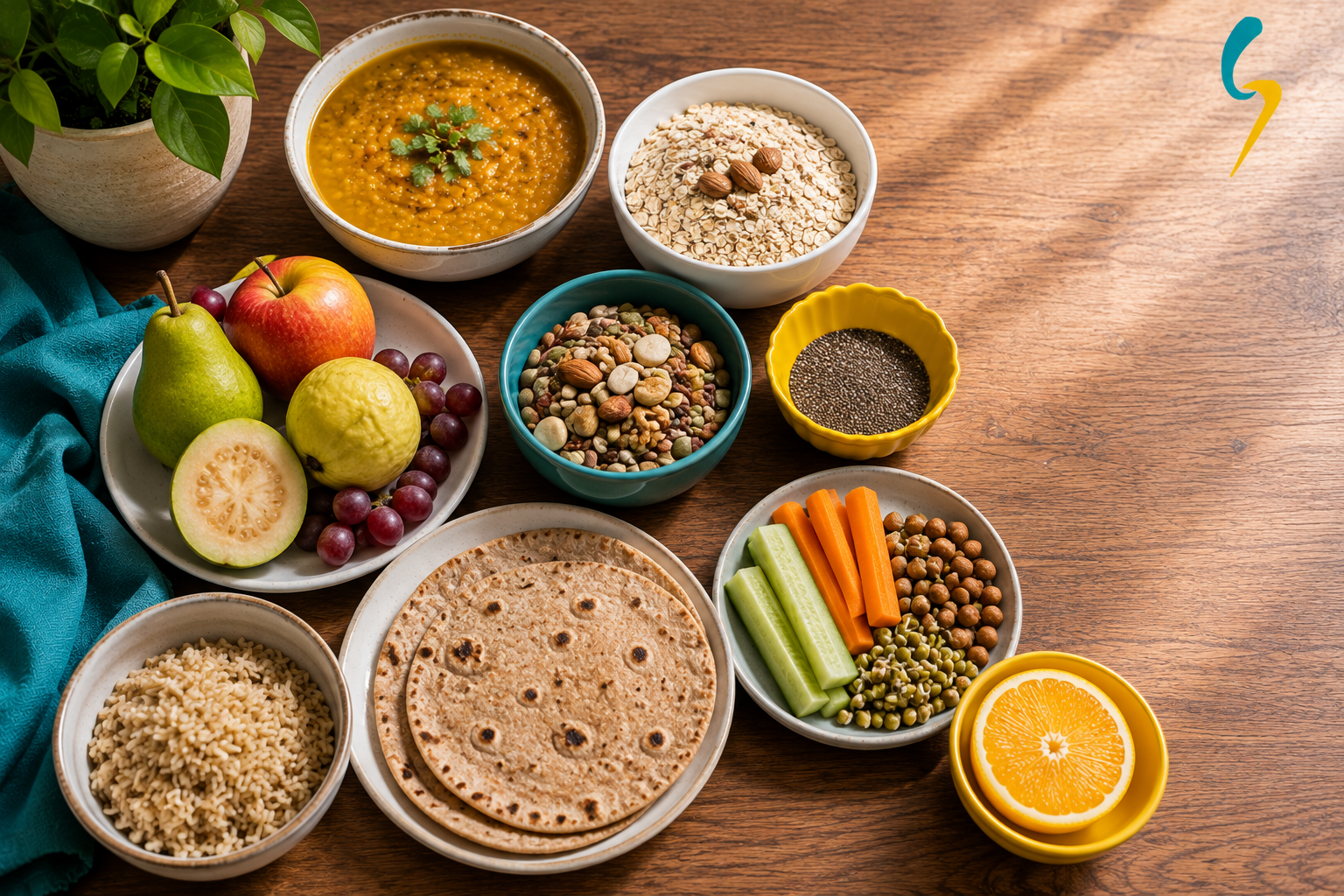
What is a High Fiber Diet?
A high fiber diet gives your body all the nutrients it needs, along with plenty of fiber (also called roughage). You get fiber from fruits, vegetables, and whole grain foods like bread, cereal, and pasta. Fiber adds bulk to your stool and, when you drink enough water, helps you pass stools more easily.
Doctors often suggest this diet for people with irritable bowel syndrome, diverticulitis, or constipation. You may notice more gas at first as your body gets used to the extra fiber. This usually settles down once your body adjusts. Adding fiber slowly can help avoid discomfort.
General Tips
- Drink at least 40 oz of fluid every day. Try to reach 64 oz (five to eight 8 oz glasses). Cut back on caffeine and alcohol, as both make you lose water.
- Add fiber to your meals slowly. Aim for 25 to 35 grams per day. Do not go above 40 to 50 grams.
- Eat slowly and chew your food well.
- Try to exercise every day if your doctor allows it.
- When eating out, ask for whole wheat pasta, buns, or pizza base. Add vegetables to your meal and pick fresh fruit for dessert.
- If you have diverticular disease, be careful with foods that contain seeds. These include nuts, popcorn, whole kernel and cream style corn, coarse black or red pepper, cloves, and hard seeds like sesame seeds, along with seeds from figs, strawberries, and tomatoes. Follow your doctor’s advice.
- Fruits and vegetables also contain phytochemicals. These help build your immune system, fight disease, and lower the risk of colon cancer. Try to eat them every day.
What to Eat
Fruit: 2 or more servings a day
One serving is one medium fruit, 1 cup of melon, ¼ cup of dried fruit, or ½ cup of canned fruit. Each serving gives you about 2 to 4 grams of fiber. Eat raw fruit with the skin when you can. Dried fruit can give up to 8 grams of fiber per serving.
Fruits high in phytochemicals include apples, lemons, cherries, grapefruit, grapes, oranges, papaya, mango, watermelon, cantaloupe, and berries.
Vegetables: 3 or more servings a day
One serving is 1 cup of raw vegetables or ½ cup of cooked vegetables. Each serving gives you about 2 to 4 grams of fiber. Do not overcook your vegetables, and keep the skin on when you can.
Vegetables high in phytochemicals include broccoli, cabbage, Brussels sprouts, watercress, cauliflower, onion, garlic, kale, spinach, tomatoes, carrots, celery, winter squash, soybean, chives, peppers, lettuce, and bok choy.
Bread, Cereal, and Starches: 6 to 11 servings a day
One serving is one slice of bread, ½ cup of cereal, ½ cup of rice, ½ cup of dried beans, or half a hamburger bun, bagel, or English muffin. Read food labels to check the fiber and fat content. Whole grains, barley, brown rice, oats, and legumes are also rich in phytochemicals.
Good high fiber choices:
- Rolled oats and oat bran cereal, either cooked as porridge or added to smoothies (4 to 10g fiber)
- Whole grain pasta cooked al dente for better digestion (6 to 8g fiber)
- Multigrain, rye, buckwheat, or 100 percent whole wheat bread (3g fiber)
- Cracked wheat or dalia, cooked as a savoury or sweet dish (5 to 6g fiber)
- Whole wheat rotis or chapatis made with atta (3 to 4g fiber per roti)
- Barley and pearl barley, used in soups, stews, or salads (6g fiber per cooked cup)
- Quinoa, cooked and used as a rice replacement (5g fiber per cooked cup)
- Brown rice or red rice, served with dals or vegetable curries (2 to 4g fiber)
- Millets such as ragi, jowar, and bajra, used for rotis, dosas, or porridge (6 to 9g fiber per cup)
- Whole wheat buns, bagels, and muffins for breakfast or snacks (3 to 5g fiber)
- Whole wheat crackers, paired with hummus or nut butter (2 to 3g fiber)
- White wheat bread, a milder option for those transitioning to whole grains (3g fiber)
- Unprocessed wheat bran, sprinkled over yogurt, casseroles, or cooked vegetables
- Popped jowar or popped amaranth as a light, high fiber snack (3 to 4g fiber per cup)
- Sprouted grains and whole grain granola for added crunch and nutrition (4 to 6g fiber)
You can still include white rice, pasta, and white bread in your meals, but keep in mind they offer very little fiber compared to whole grain options.
Sugar and Sweets
Enjoy sweets only in small portions. When you feel like snacking, choose fiber rich options instead, such as fresh fruit, bran muffins, raw vegetable sticks, graham crackers, oatmeal cookies, or wheat crackers.
Milk, Yogurt, and Cheese: 2 to 3 servings a day
Limit full fat dairy products like whole milk, ice cream, and regular cheese. Choose low fat or skimmed versions where possible.
Fats: Use in small amounts, 1 to 2 tsp per meal
This group includes margarine, salad dressings, cooking oils, mayonnaise, gravies, nuts, and seeds. Use them sparingly to keep your meals balanced.
Sample Vegetarian Menu (About 32 Grams of Fiber)
Breakfast
- 1 cup cooked oatmeal with 1 tbsp chia seeds (8g fiber) or ¾ cup bran cereal with 1 tbsp flax seeds (8g fiber)
- 1 medium orange (3g fiber) or ½ grapefruit (3g fiber)
- 1 boiled egg or ½ cup low fat paneer cubes
- 1 cup skim milk or 1 cup unsweetened almond milk
- 1 tsp olive oil spread or 1 tsp margarine
- 1 cup green tea or 1 cup decaf coffee
Lunch
- 2 slices whole wheat bread (6g fiber) or 1 whole wheat wrap (6g fiber)
- 1 cup vegetable soup with mixed beans (5g fiber) or 1 cup tossed salad with kidney beans (5g fiber)
- ½ cup cooked rajma or chickpeas (7g fiber) or ½ cup tofu and vegetable stir fry (5g fiber)
- 1 medium pear with skin (5g fiber) or 1 medium apple with skin (4g fiber)
- 16 oz lemonade or 16 oz infused water with lemon and mint
Dinner
- 1 baked sweet potato with skin (4g fiber) or ½ cup cooked brown rice with ¼ cup quinoa (4g fiber)
- ½ cup cooked dal or lentil curry (8g fiber) or ½ cup paneer bhurji with peas (6g fiber)
- ½ cup steamed broccoli (3g fiber) or ½ cup sautéed spinach with garlic (3g fiber)
- 16 oz water or 16 oz herbal tea
Approximate Total Fiber: 32 grams
Personalised nutrition counselling is available with Dietician Avni Kaul, a certified dietitian and nutritionist at Nutri Activania in Delhi. For expert guidance on a high fiber diet, weight management, gut health, or any other nutrition concern, book your consultation today. Visit www.nutriactivania.com to schedule your appointment and take the first step towards a healthier lifestyle.
References
- Mayo Clinic – Dietary Fiber: Essential for a Healthy Diet
🔗 https://www.mayoclinic.org/healthy-lifestyle/nutrition-and-healthy-eating/in-depth/fiber/art-20043983 - NCBI – The Role of Dietary Fiber in Health Promotion and Disease Prevention
🔗 https://www.ncbi.nlm.nih.gov/books/NBK559033/ - NHS UK – How to Get More Fibre Into Your Diet
🔗 https://www.nhs.uk/live-well/eat-well/digestive-health/how-to-get-more-fibre-into-your-diet/