
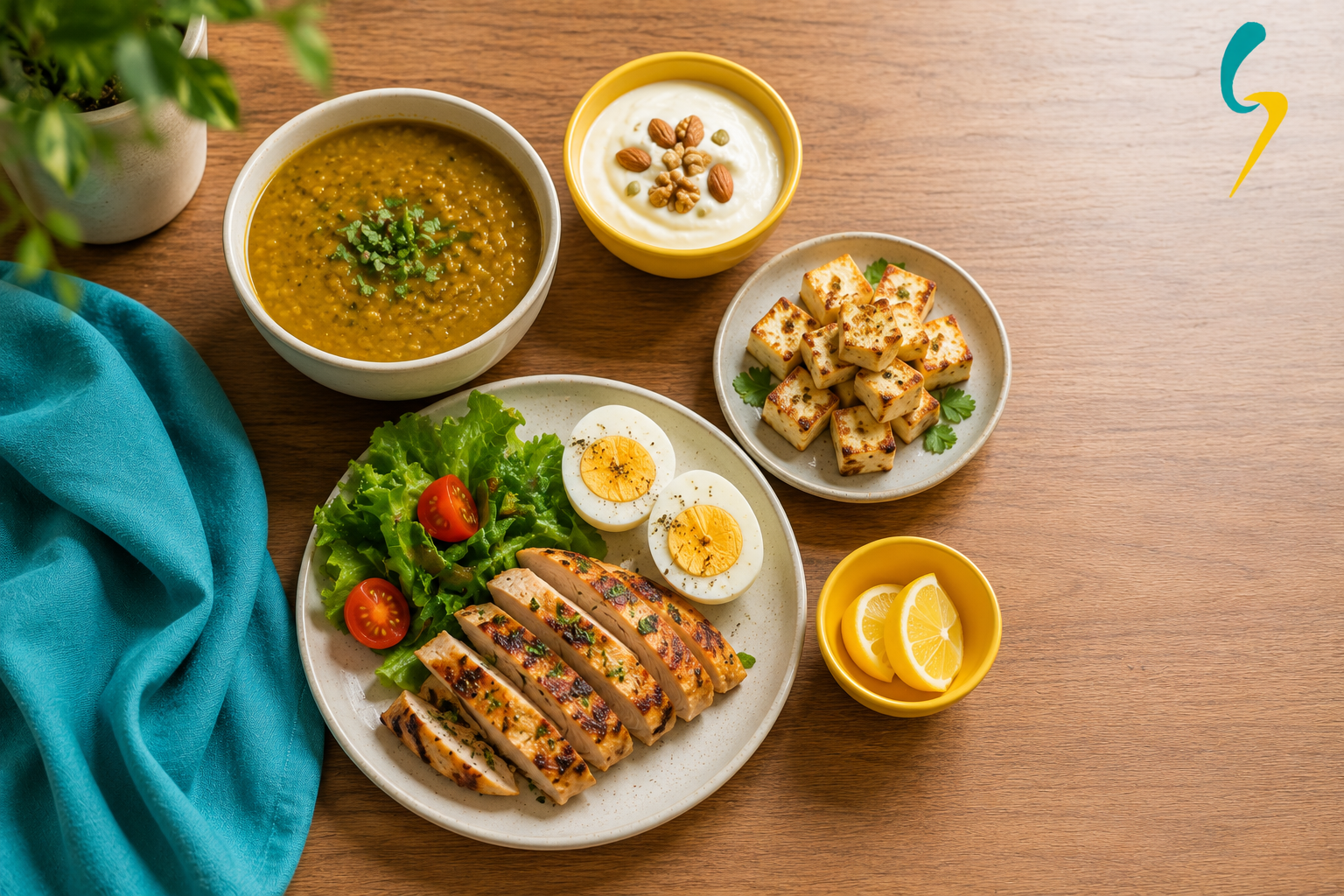
High-protein foods for weight loss work by supporting fullness for longer after meals, preserving muscle mass during a calorie deficit, and requiring slightly more energy to digest than fat or carbohydrates. Avni Kaul, a dietician in Delhi, builds protein intake into nearly every weight loss plan she creates, since getting protein right tends to make the rest of the diet noticeably easier to stick to.
Protein often gets discussed mainly in the context of building muscle, which leaves many people assuming it matters less if the goal is weight loss rather than muscle gain. That assumption undersells what protein actually does. For weight loss specifically, protein plays a role in appetite control, muscle preservation, and metabolic rate that carbohydrates and fats simply do not offer to the same degree.
Why Protein Matters So Much for Weight Loss

Of the three macronutrients, protein is generally the most filling per calorie, meaning it takes fewer calories from protein to reach a comparable level of fullness compared to carbohydrates or fat. This has a direct, practical effect on weight loss: diets with adequate protein tend to reduce hunger and cravings more effectively than lower-protein diets at the same overall calorie level.
Protein supports weight loss in several specific ways:
- It increases fullness after meals, reducing the likelihood of overeating later
- It helps preserve muscle mass during a calorie deficit, which matters since muscle loss can slow metabolic rate over time
- It requires more energy to digest than carbohydrates or fat, a modest but real metabolic advantage
- It helps stabilise blood sugar when eaten alongside carbohydrates, reducing the spikes that can trigger cravings
- It supports steady energy levels throughout the day, particularly useful when overall calorie intake is reduced
This is why a weight loss diet built without adequate protein often feels harder to sustain, not because of willpower, but because hunger and cravings are working against the plan rather than being managed by it.
High-Protein Foods Worth Building Meals Around
Eggs. A genuinely efficient protein source, offering high-quality protein along with several other nutrients, and versatile enough to fit into almost any meal of the day.
Paneer. A staple in many Indian diets, paneer offers a solid protein contribution and works well across a wide range of dishes, though portion size matters given its calorie density.
Dal and legumes. Lentils, chickpeas, and other legumes combine protein with fibre, offering the added benefit of supporting fullness through two mechanisms at once rather than protein alone.
Fish. Particularly useful for those who eat it regularly, fish offers high-quality protein along with beneficial fats, and tends to be relatively lower in calories compared to its protein content.
Chicken breast. A lean, straightforward protein source commonly used across weight loss diets, offering a high protein-to-calorie ratio when prepared without excessive oil.
Greek yoghurt. Higher in protein than regular yoghurt for a similar serving size, and useful as a versatile addition to breakfast or as a snack.
Sprouts. A light, protein-and-fibre-rich option that works well as a snack or meal addition, particularly popular in Indian weight loss diets for its low calorie cost relative to volume.
Tofu. A useful plant-based protein option, particularly for those following a vegetarian or vegan diet, offering reasonable protein content with relatively few calories.
How Much Protein Is Actually Needed for Weight Loss

Protein requirements vary based on body weight, activity level, and individual goals, so a specific number is best calculated individually rather than applied generically. That said, most weight loss diets benefit from protein intake somewhat higher than the minimum required simply to avoid deficiency, since the goal during weight loss is not just adequacy but the appetite and muscle-preservation benefits that come with a more generous protein intake.
A few practical principles tend to apply broadly:
- Including a protein source at each meal, rather than concentrating protein into just one meal of the day, tends to support fullness more evenly
- Protein needs often increase slightly during a calorie deficit, since the body is working harder to preserve muscle mass
- Combining protein with fibre-rich foods, such as legumes or vegetables, tends to produce better fullness than protein alone
- Protein from whole foods generally offers additional benefits, such as fibre or healthy fats, compared to protein supplements alone
How to Build More Protein Into Your Meals Practically
Start with breakfast. A protein-light breakfast, common in many diets, often leads to mid-morning hunger and snacking. Adding eggs, paneer, or Greek yoghurt to breakfast tends to reduce this.
Pair carbohydrates with protein. Eating carbohydrates alongside a protein source, rather than on their own, slows digestion and supports more stable blood sugar and fullness.
Choose protein-rich snacks over carbohydrate-only ones. Sprouts, a small portion of paneer, or roasted chana tend to be more satisfying between meals than biscuits or other carbohydrate-only snacks.
Be mindful of preparation method. Deep-frying protein sources such as paneer or chicken adds significant calories, reducing the overall benefit. Grilling, steaming, or light sautéing preserves the advantage better.
Who Should Pay Particular Attention to Protein Intake

- People following a structured weight loss or fat loss program, where protein supports both fullness and muscle preservation
- People experiencing frequent hunger or cravings despite reducing overall calorie intake
- People who are more physically active and need additional protein to support recovery alongside weight loss
- Vegetarians and vegans who may need extra attention to combining plant-based protein sources for adequate intake
- Anyone whose current diet is carbohydrate-heavy with relatively little protein at each meal
Why Work With Avni Kaul on Protein and Overall Diet Planning
Avni Kaul is a Gold Medallist from the University of Delhi and received the Best Dietician Award in 2019. Her approach to weight loss treats protein as a foundational element of every meal plan, calculating individual protein needs based on activity level, current diet, and overall goals, rather than applying a generic target regardless of the client’s specific circumstances.
Conclusion
Protein does considerably more for weight loss than its reputation as a muscle-building nutrient suggests. Adequate protein intake supports fullness, helps preserve muscle mass during a calorie deficit, and contributes to more stable energy and blood sugar throughout the day, all of which make a weight loss diet genuinely easier to sustain. Building meals around foods like eggs, dal, paneer, and fish, with a protein source included at each meal, is one of the simplest, most effective adjustments available within a broader weight loss plan.
Frequently Asked Questions
Does eating more protein actually help with weight loss, or just muscle gain?
Both. Protein supports fullness and helps preserve muscle mass during a calorie deficit, both of which directly support weight loss, not just muscle-building goals.
How much protein do I need per day for weight loss?
This varies by body weight, activity level, and individual goals, so it is best calculated individually rather than applying a single general number.
Is it better to get protein from food or supplements?
Whole food sources of protein generally offer additional benefits, such as fibre or healthy fats, compared to supplements alone, though supplements can be a useful addition where whole food intake is genuinely insufficient.
Can vegetarians get enough protein for weight loss?
Yes. Combining sources such as dal, paneer, legumes, and tofu across the day can provide adequate protein for most vegetarian weight loss diets.
Does the timing of protein intake matter for weight loss?
Spreading protein across meals, rather than concentrating it into one meal, tends to support fullness more evenly throughout the day than a single large protein-heavy meal.
Can too much protein be a problem during weight loss?
For most people following a reasonable, individually calculated protein target, this is not a concern, though very high intakes beyond what is needed should generally be discussed with a dietician, particularly for those with existing kidney conditions.