
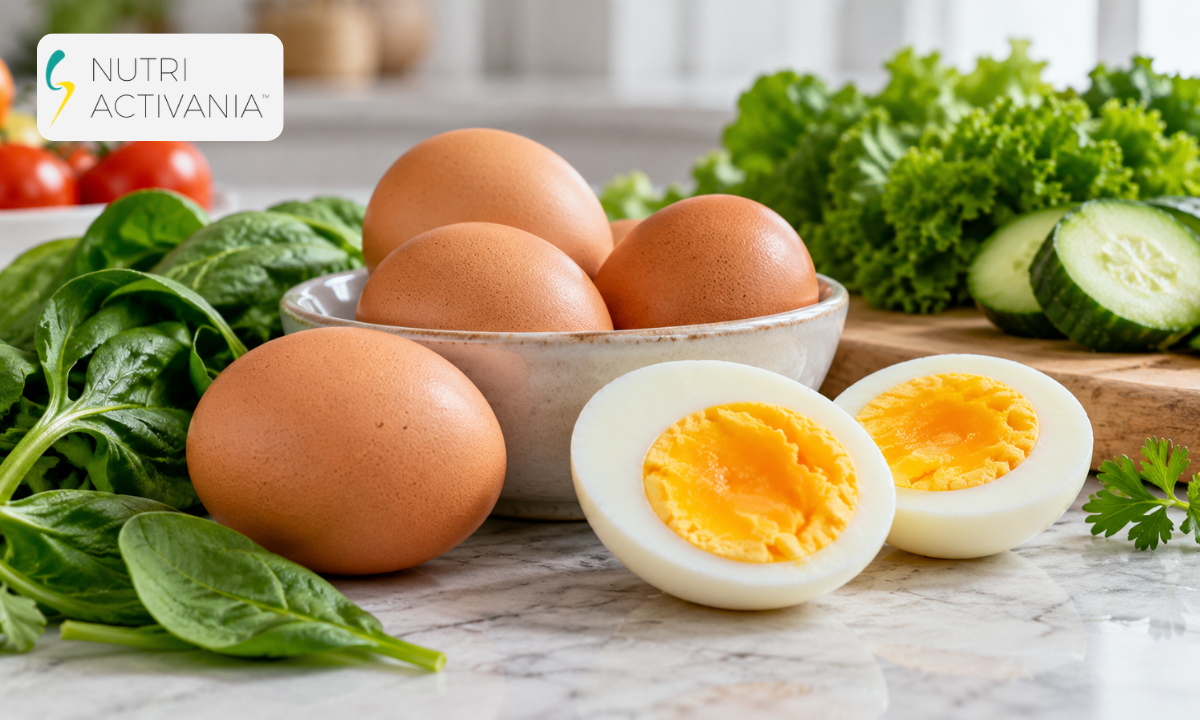
If you have ever wondered how much nutrition is in one egg, the short answer is: a great deal for its size. A single egg provides high-quality protein, healthy fats and a wide range of vitamins and minerals in a small, affordable package. In this guide, Avni Kaul, an experienced dietitian in Delhi and founder of Nutri Activania, breaks down exactly what one egg provides, how the white and yolk compare, and how eggs can fit into a balanced Indian diet.
One Egg Nutrition at a Glance
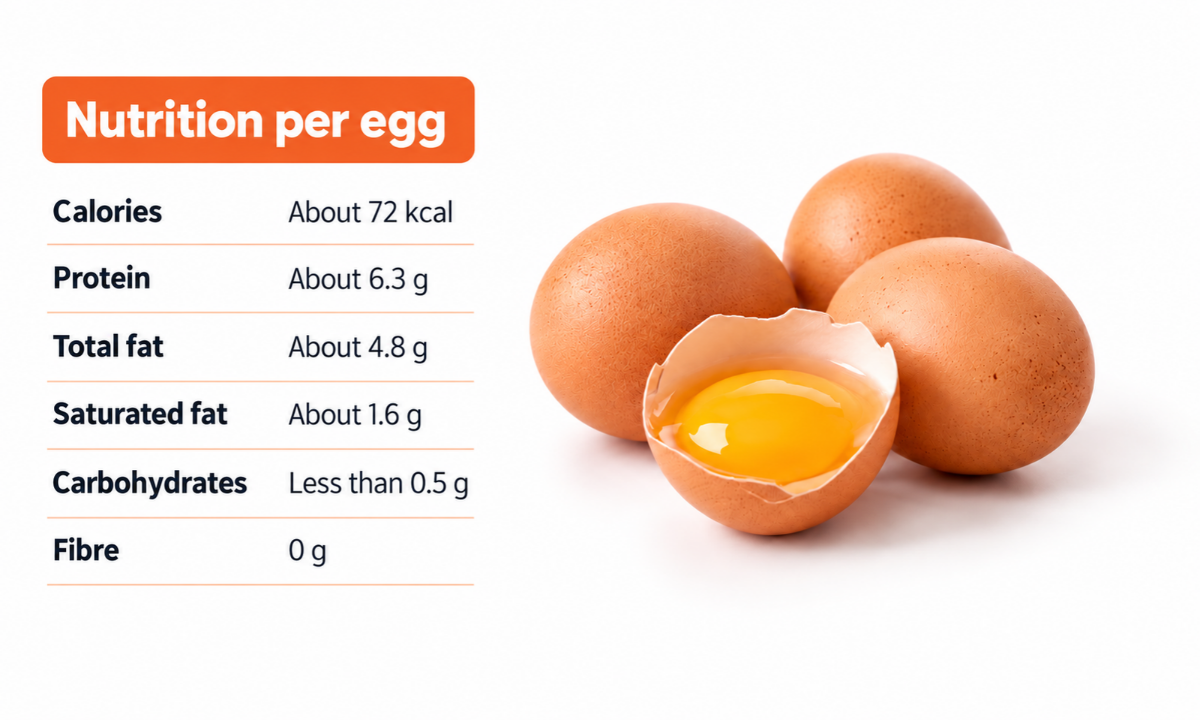
The nutrition in one egg depends on its size. The figures below are for one large whole egg, weighing about 50 g, based on data from USDA FoodData Central.
| Nutrient | Amount in One Large Egg (about 50 g) |
|---|---|
| Calories | About 72 kcal |
| Protein | About 6.3 g |
| Total fat | About 4.8 g |
| Saturated fat | About 1.6 g |
| Carbohydrates | Less than 0.5 g |
| Fibre | 0 g |
| Cholesterol | About 186 mg |
| Sodium | About 71 mg |
| Choline | About 147 mg |
| Selenium | About 15 mcg |
| Vitamin B12 | About 0.45 mcg |
| Riboflavin (Vitamin B2) | About 0.23 mg |
| Vitamin D | About 1 mcg (41 IU) |
| Vitamin A | About 80 mcg |
| Iron | About 0.9 mg |
| Calcium | About 28 mg |
Values are approximate and may vary by egg size, breed and nutrition database.
A note on Indian eggs: Many eggs sold in India, especially desi or country eggs, are smaller than a standard large egg. A smaller egg will provide proportionally less of each nutrient, so treat these figures as a guide rather than an exact count.
Protein in One Egg
One large egg provides around 6 g of protein, and it is high-quality protein. Eggs contain all nine essential amino acids, the building blocks your body cannot make on its own, which is why eggs are often used as a reference for protein quality.
Protein helps you feel full after meals, supports muscle repair and maintenance, and plays a role in almost every function in the body. For many people, adding one or two eggs to breakfast is one of the simplest ways to make a meal more satisfying.
If you are unsure how much protein you need each day, our protein intake calculator can give you a general starting point.
Calories in One Egg
One large egg contains about 72 calories. That makes eggs a nutrient-dense food: they provide a lot of nutrition for relatively few calories.
The way you cook an egg changes its calorie count:
| Preparation | What Changes |
|---|---|
| Boiled or poached | Roughly 70 to 80 calories; no fat or calories are added |
| Fried | Higher, depending on how much oil, butter or ghee is used |
| Scrambled or bhurji | Higher if cooked with oil, butter, milk or cream |
| Omelette | Varies with oil and fillings such as cheese or vegetables |
Boiling does not add calories. Any small variation in published figures for boiled eggs comes mainly from egg size and the nutrition database used.
For weight management, boiled, poached or lightly cooked eggs with vegetables are usually the easiest to fit into a balanced plan.
Egg White vs Egg Yolk Nutrition
Many people eat only the egg white, believing the yolk is unhealthy. In reality, the yolk is where most of the egg’s vitamins and minerals are found.
| Egg White (from one large egg) | Egg Yolk (from one large egg) | |
|---|---|---|
| Calories | About 17 kcal | About 55 kcal |
| Protein | About 3.6 g | About 2.7 g |
| Fat | Almost none | About 4.5 g |
| Cholesterol | None | All of the egg’s cholesterol |
| Vitamins and minerals | Small amounts of riboflavin, selenium and potassium | Most of the choline, vitamin D, vitamin A, vitamin B12, iron and lutein |
Which should you eat? For most healthy people, the whole egg offers the best overall nutrition. Egg whites can be useful if you want extra protein with fewer calories, for example by adding an extra white to one whole egg. If you have a specific health condition, your dietician can advise on the right balance.
Key Vitamins and Minerals in One Egg
Choline
Eggs are one of the richest common food sources of choline, a nutrient involved in brain function, memory and liver health. Choline is especially important during pregnancy and breastfeeding, when needs increase.
Vitamin B12
Vitamin B12 supports nerve function and the formation of red blood cells. Because B12 is found mainly in animal foods, eggs can be a useful source for people who eat eggs but little meat.
Vitamin D
Eggs are one of the relatively few natural food sources of vitamin D, which supports bone health and calcium absorption. Vitamin D deficiency is common in India despite plentiful sunshine, so every dietary source helps.
Selenium
Selenium acts as an antioxidant and supports thyroid function and immunity.
Lutein and Zeaxanthin
These antioxidants, found in the yolk, are linked with eye health.
Riboflavin (Vitamin B2)
Riboflavin helps your body convert food into energy.
Are Eggs Good for Weight Loss?
Eggs can be a helpful part of a weight loss plan, provided they are prepared sensibly. Their protein can help you feel full for longer, which may make it easier to manage portions at later meals.
Practical ways to include eggs:

- Breakfast: Egg bhurji with onions, tomatoes and spinach, served with one roti
- Mid-morning or evening snack: One or two boiled eggs with a fruit
- Lunch or dinner: Egg curry made with measured oil, served with vegetables and a suitable portion of rice or roti
- On the go: A vegetable omelette wrapped in a whole wheat roti
For more meal ideas, see our Indian diet plan for weight loss, which includes both vegetarian and non-vegetarian options.
Want a plan that fits eggs into your routine? Book a free 30-minute consultation with Avni Kaul on +91 99532 28642 or request an appointment online.
How Many Eggs Can You Eat in a Day?
There is no single number that suits everyone. For most healthy adults, current evidence suggests that eggs can be included in moderation as part of a balanced diet. Heart health depends more on your overall dietary pattern, including your intake of saturated fat, processed meats, vegetables and whole grains, and the overall quality of your diet, than on eggs alone. For many people, one or two eggs a day can fit comfortably within their overall calorie and nutrient needs.
However, your ideal intake depends on your overall diet, activity level and health. If you have diabetes, high LDL cholesterol, heart disease or kidney disease, speak with your doctor or dietician about how many eggs are right for you.
What you eat alongside eggs matters too. Eggs fried in plenty of butter and served with processed meats are a very different meal from boiled eggs with vegetables and whole grains.
Eggs During Pregnancy

Eggs can be a valuable food during pregnancy, providing protein, choline, vitamin D and vitamin B12. During pregnancy, always eat eggs that are fully cooked, with a firm yolk and white, to reduce the risk of foodborne infection. Our guide on whether runny eggs are safe during pregnancy explains this in more detail.
Desi Eggs vs Regular Eggs
Desi or country eggs are popular in India and are often believed to be more nutritious. In practice, the nutritional difference between desi and regular eggs is usually modest. Desi eggs are often smaller, so they may provide slightly less of each nutrient per egg. Nutritional differences are more likely to come from the hen’s diet, egg size and freshness than from shell colour alone. Both types are nutritious choices, so choose fresh, well-stored eggs from a reliable source, whichever you prefer.
Conclusion
So, how much nutrition is in one egg? Quite a lot for such a small food. One large egg provides around 6 g of high-quality protein, about 72 calories and valuable amounts of choline, vitamin B12, vitamin D, selenium and riboflavin, with most of its vitamins found in the yolk. For most healthy people, eggs are an affordable, versatile and nutritious addition to a balanced Indian diet. The way you cook them and what you eat alongside them make the biggest difference.
If you would like personalised guidance on including eggs, or any other foods, in your diet, Avni Kaul and her team can help. Explore our weight loss program or call +91 99532 28642 to book your free consultation.
Frequently Asked Questions
How much protein is in one egg?
One large egg contains about 6 g of high-quality protein, with roughly 3.6 g in the white and 2.7 g in the yolk. Smaller eggs provide proportionally less.
How many calories are in one boiled egg?
One large boiled egg contains roughly 70 to 80 calories. Boiling does not add fat or calories; the small variation comes mainly from egg size and the nutrition database used.
Is the egg yolk bad for you?
No, not for most healthy people. The yolk contains most of the egg’s vitamins, minerals and antioxidants. People with specific health conditions, such as high LDL cholesterol, should ask their doctor or dietician about yolk intake.
Is it healthy to eat an egg every day?
For most healthy adults, eating an egg a day as part of a balanced diet is generally considered safe. Your ideal intake depends on your overall diet and health.
Are brown eggs more nutritious than white eggs?
No. Shell colour depends on the breed of hen and does not affect nutrition. Brown and white eggs of the same size have similar nutritional value.
Can eggs help with weight loss?
Yes, eggs can support weight loss as part of a balanced plan. Their protein helps you feel full, and boiled or lightly cooked eggs are low in calories.
Do eggs contain carbohydrates?
Eggs contain very little carbohydrate, less than half a gram in one large egg, and no fibre.
Can people with diabetes eat eggs?
Many people with diabetes can include eggs as part of a balanced diet. Eggs contain very little carbohydrate, so they have minimal direct effect on blood glucose. However, what you eat with them, such as refined carbohydrates, butter or processed meats, matters. Discuss your overall meal pattern and egg intake with your doctor or dietician, particularly if you also have high cholesterol or heart disease.
Is it better to eat eggs raw or cooked?
Cooked eggs are safer and their protein is more easily digested. Raw eggs carry a risk of foodborne infection and are best avoided, particularly during pregnancy, for young children and for older adults.
Important Disclaimer and Medical Policy
This content is for informational and educational purposes only. It does not constitute medical or dietary advice. Please consult Dietician Avni Kaul or a qualified healthcare professional before making any changes to your diet or nutrition plan.