
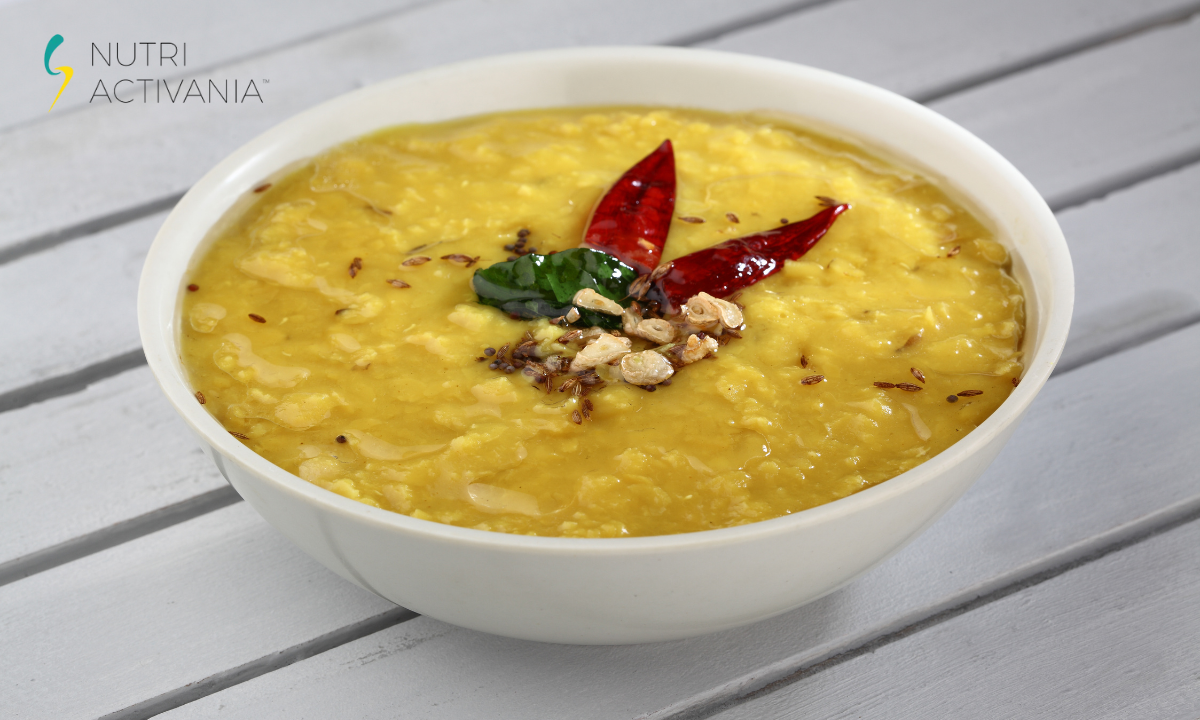
Dietician Avni Kaul Debunks Common Myths of Dal in Indian Diet

Table of Contents

Mostly, whenever you ask a vegetarian about their protein source, they will talk about lentils, better known as dal. There is no denying that lentils have protein and are an economical source of this macronutrient.

However, what most people fail to look at is the amount of protein that these lentils offer us, particularly when they are cooked with four parts of water with one part of dal. Here is what all vegetarians must know about their beloved ‘protein source’, dal as disclosed by India’s top Dietician Avni Kaul.
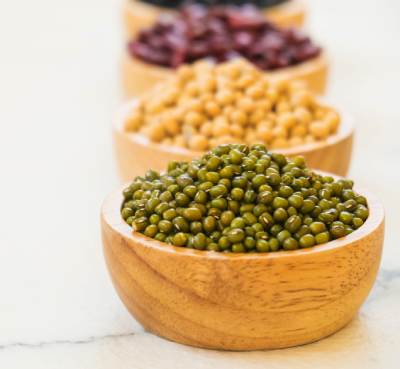
top Dietician Avni Kaul shares myths of Indian dal

Dal’s protein content

There are multiple kinds of lentils and each one has its own nutritional content. However, considering an average would tell us that every 100 grams of lentils have just about 10 grams of protein. For fact revision, our daily protein need is 40-60 grams per day, depending on our weight.

Also, generally, 100 grams of dal is cooked for the entire family of letting us say four members. So, the protein that a person will consume would be around 2 to 3  grams.

Dal’s carbohydrates content

Also, what you may not know is that lentils have twice the amount of carbohydrates than it has protein. In every 100 grams of lentils, there are more than 20 grams of carbohydrates. However, the good thing is that approximately half (9 grams) of this carbohydrate is fibre. So, it is as many carbohydrates as it is protein, just slightly more.

The method by which most people cook dal

Now, a big issue with the Indian style of eating lentils is that most people make dal as a water-based curry. This further decreases the number of lentils that you are consuming. As pointed out earlier, a bowl of cooked dal would not contain more than 2-3 grams of protein and does not equal a tenth of your regular protein requirement.

The right procedure and quantity

If you actually want to consume lentils to avail protein, have them simply boiled and without curry. Even then, know that each bowl will just provide you with just 10-15 grams of protein, besides double the carbohydrates.

So, if you are not eating any other source of protein, you need to have at least four bowls of boiled, non-curry-based dal. However, this is not the proper way to get your protein because:

  1. Dal is also high in carbohydrates and
  2. Lentils do not provide complete proteins.

Why lentils are not complete proteins?

The proteins provided by lentils are not complete because they do not have all the essential amino acids that one needs, which might be provided by, let’s say, egg or meat.

How to make dal a complete protein?

If you are a vegetarian and depend only on lentils for your protein needs, then you need to combine your lentils with whole grains and with various seeds that provide you the required essential amino acids. You can also combine your dal with paneer, or soya, Curd or nuts as a side meal.

Important Disclaimer & Medical Policy

Disclaimer: The information provided in this blog post is intended for general informational purposes only. It is not a substitute for professional medical advice, diagnosis, or treatment. Always seek the advice of your physician or other qualified healthcare provider with any questions you may have regarding a medical condition. Never disregard professional medical advice or delay in seeking it because of something you have read in this blog.

Medical Policy: This content does not constitute medical advice, diagnosis, or treatment recommendations. Individual results may vary based on health status, medications, and lifestyle factors. Consult your healthcare provider before making dietary changes, especially if you have diabetes, are pregnant, or have gastrointestinal conditions. Nutritional information is based on general research and may not apply to specific health situations.

Picture of Avni Kaul: Dietician & Nutritionist in Delhi NCR

Avni Kaul: Dietician & Nutritionist in Delhi NCR

About the Author

Avni Kaul, MSc (Food & Nutrition, University of Delhi), is a clinical nutritionist
with 12+ years of experience and founder of Nutri Activania, Delhi. Previously a
Dietician at Max Hospital's Endocrinology Department, she specializes in weight
management, PCOS, diabetes, and holistic health transformation. Avni has helped
thousands of clients achieve sustainable results through personalized, science-backed
nutrition programs.

Consult Avni for personalized nutrition guidance: Book Consultation Now

Share with your network
Nutrition Category
Popular Blogs
How To Lose Weight After C Section? Tips By Dietician
Bringing a life into the world is a miracle, but let’s be honest: the aftermath of a C-section is a major...
Stress & Cortisol: The Hidden Reason You Can’t Lose Weight
Imagine this scenario: You are following your diet perfectly. You are skipping dessert, eating your greens,...
10 Best Foods For Healthy And Glowing Skin
We live in the era of the “10-Step Skincare Routine.” We cleanse, tone, scrub, and slather...
Top 20 Biotin-Rich Foods For Hair Growth
We spend thousands on expensive shampoos, conditioners, and hair masks, hoping to fix hair fall. But...
Top 30 Heart-Healthy Foods List by a Dietician
As a clinical nutritionist at Nutriactivania, I’ve spent years working closely with clients across age...
5 Best Exercises To Strengthen Your Heart By A Dietician
As a nutritionist at Nutriactivania, I meet people every day who believe heart health begins and ends...
How To Gain Muscle And Weight Recommended By A Dietician
The struggle of the “Hard Gainer” is often ignored. If you have ever been told, “You’re...
Pregnancy Diet for Gestational Diabetes (Indian, Safe & Trimester-Wise)
Being diagnosed with gestational diabetes (GDM) during pregnancy can feel scary.Suddenly, every meal...
Vegetarian Pregnancy Diet Plan for Indian Women (Trimester-Wise, Safe & Balanced)
If you’re a vegetarian and pregnant, you might hear this a lot: “Vegetarian food is not enough during...
Trimester-Wise Pregnancy Diet for Indian Women
Pregnancy nutrition doesn’t need to be complicated.You don’t have to eat fancy foods or follow confusing...

Book Consultation Now

See What Your Body Has Been Asking For

Get a Free 30-Minute Consultation