

PCOS is not just a gynecological condition — it is a hormonal and metabolic disorder that affects weight, periods, skin, hair, mood, and fertility. For Indian women, PCOS management becomes even more challenging due to carbohydrate-heavy diets, erratic meal timings, stress, and sedentary routines.
At Nutri Activania, PCOS diet plans are carefully designed for Indian women, focusing on home-style meals, portion control, hormone balance, and long-term sustainability.
All PCOS nutrition programs are led by Dt. Avni Kaul, a senior clinical nutritionist specializing in PCOS, insulin resistance, and women’s hormonal health.
Nutri Activania’s PCOS Nutrition Philosophy
Most women with PCOS struggle because they are advised:
- Extremely low-calorie diets
- “No rice, no roti” rules
- Foreign or impractical food plans
- Short-term weight-loss programs
According to Dt. Avni Kaul, PCOS nutrition must be root-cause driven, not trend-based.
1. Hormones First, Weight Second
PCOS is primarily driven by:
- Insulin resistance
- Hormonal imbalance
- Chronic inflammation
Weight gain is often a result, not the cause.
At Nutri Activania, PCOS diet plans focus on:
- Improving insulin sensitivity
- Stabilizing blood sugar levels
- Supporting ovulation and menstrual regularity
When hormones begin to stabilize, fat loss and symptom improvement follow naturally.
PCOS Dietician in Delhi services
2. Indian Food Is Not the Enemy
Rice, roti, dal, sabzi, curd — these are not harmful foods for PCOS.
Problems arise due to:
- Excess portions
- Poor meal timing
- Low protein intake
Dt. Avni Kaul does not recommend carb elimination, keto-style PCOS diets, or meal skipping, as these can:
- Increase cortisol
- Worsen the hormonal imbalance
- Lead to rebound weight gain
Read more:
Foods to Avoid in PCOS (Indian Diet Guide)
3. Sustainability Over Perfection
PCOS is a long-term condition. A diet that cannot be followed for months or years will fail.
Nutri Activania PCOS diet plans are:
- Suitable for working women
- Adaptable for families
- Flexible for festivals, travel, and eating out
Also read:
PCOD Diet Plan for Weight Loss (Indian Women)
Indian Foods Suitable for PCOS
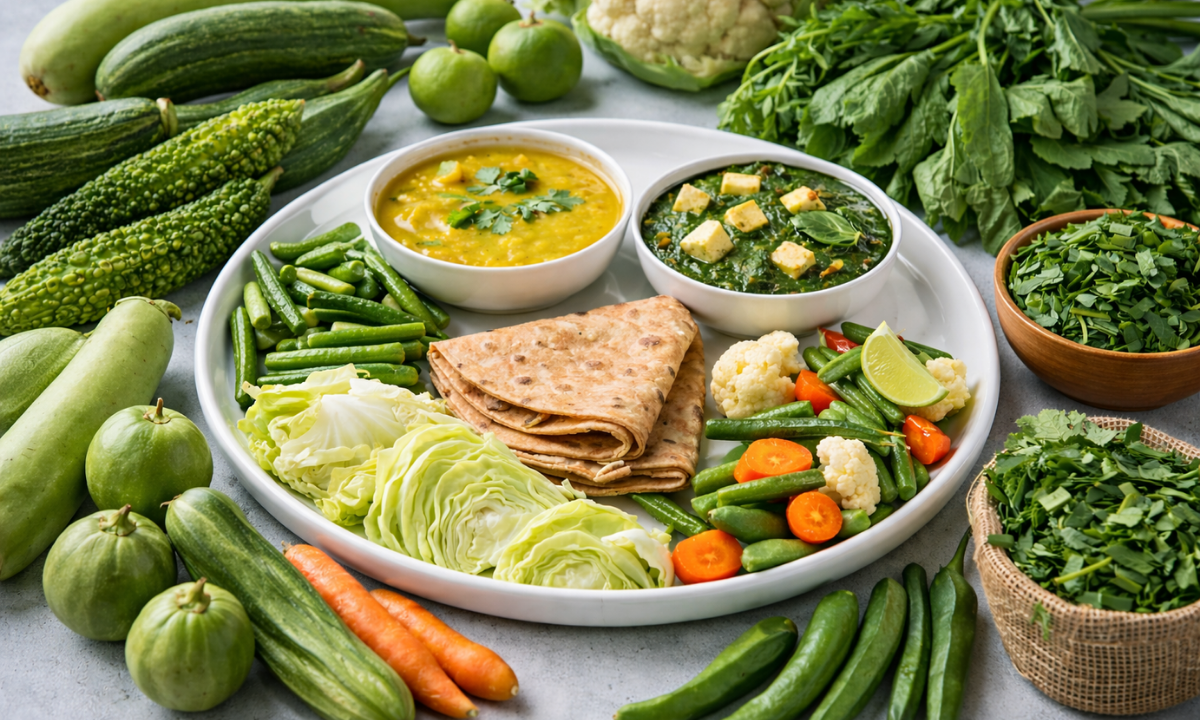
A PCOS-friendly Indian diet focuses on low glycemic load, high fibre, adequate protein, and healthy fats.
Vegetables – The Base of Every PCOS Meal
Vegetables help control insulin, reduce inflammation, and support gut health.
Best choices include:
- Lauki, tori, tinda
- Bhindi, karela
- Palak, methi, sarson
- Beans, carrots
- Cabbage, cauliflower
Aim to fill at least half your plate with vegetables at lunch and dinner.
Especially helpful during menstruation:
PCOD Diet Plan During Periods
Carbohydrates – Managed, Not Eliminated
Indian women with PCOS often either overeat carbs or remove them completely — both are harmful.
Better carb options:
- Multigrain or atta roti
- Hand-pounded or parboiled rice
- Millets (jowar, bajra, ragi)
- Oats
Carbs are best eaten earlier in the day and always paired with protein.
Smart carb timing explained here:
Best Breakfast for PCOS (Indian Options)
Protein – Non-Negotiable for PCOS
Protein plays a key role in:
- Reducing sugar cravings
- Improving insulin response
- Supporting ovulation
- Preventing muscle loss during weight reduction
Indian protein sources:
- Dal, chana, rajma
- Paneer, tofu
- Curd / Greek yogurt
- Eggs
- Chicken and fish (non-veg)
Particularly important for young girls:
PCOD Diet Plan for Teens
Healthy Fats – Essential for Hormonal Balance
Healthy fats support hormone production and reduce inflammation.
Include:
- Nuts and seeds
- Limited ghee
- Mustard or groundnut oil
- Coconut (moderate amounts)
Sample PCOS Meal Plan (Veg & Non-Veg)
Early Morning
- Warm water
- Soaked almonds or seeds
Breakfast (High Protein Focus)
Vegetarian
- Besan chilla + curd
- Paneer bhurji + 1 roti
- Vegetable oats
Non-Vegetarian
- Omelette + multigrain toast
- Boiled eggs + vegetable upma
Mid-Morning
- One seasonal fruit
- OR coconut water
Lunch (Balanced Indian Thali)
- 1–2 rotis OR small rice portion
- Dal / Paneer / Chicken / Fish
- Large sabzi portion
- Salad + curd
Evening Snack
- Roasted chana or makhana
- Sprouts chaat
Dinner (Light & Early)
- Protein + vegetables
- Minimal or no carbs (case-specific)
Late dinners worsen insulin resistance in PCOS.
Portion Control & Meal Timing
According to Dt. Avni Kaul, PCOS improvement depends heavily on how much and when you eat, not just food choices.
Meal Timing Rules
- Eat every 3–4 hours
- Avoid long fasting gaps
- Finish dinner 2–3 hours before sleep
Portion Control Method
- ½ plate of vegetables
- ¼ plate protein
- ¼ plate carbohydrates
No calorie counting. Easy household measures
This method is followed in all personalized programs by our PCOS Dietician in Delhi.
FAQs – PCOS Diet Plan for Indian Women
Q: Can PCOS be managed only with diet?
Yes, in many cases. Diet and lifestyle changes significantly reduce PCOS symptoms.
Q: Do I need to stop rice or roti completely?
No. Portion control and timing are more important than elimination.
Q: How soon will I see results?
Most women notice improvements in 4–8 weeks, with cycle regularity improving over 3–6 months.
Q: Is this diet suitable for working women?
Yes. Plans are designed for busy Indian lifestyles.
Q: Does this diet help with fertility?
Yes. It supports ovulation and metabolic health.
Consult Dt. Avni Kaul – PCOS Dietician in Delhi, for a customized PCOS diet plan based on your symptoms, lifestyle, and goals: Book a consultation with Dt. Avni Kaul at Nutri Activania.