
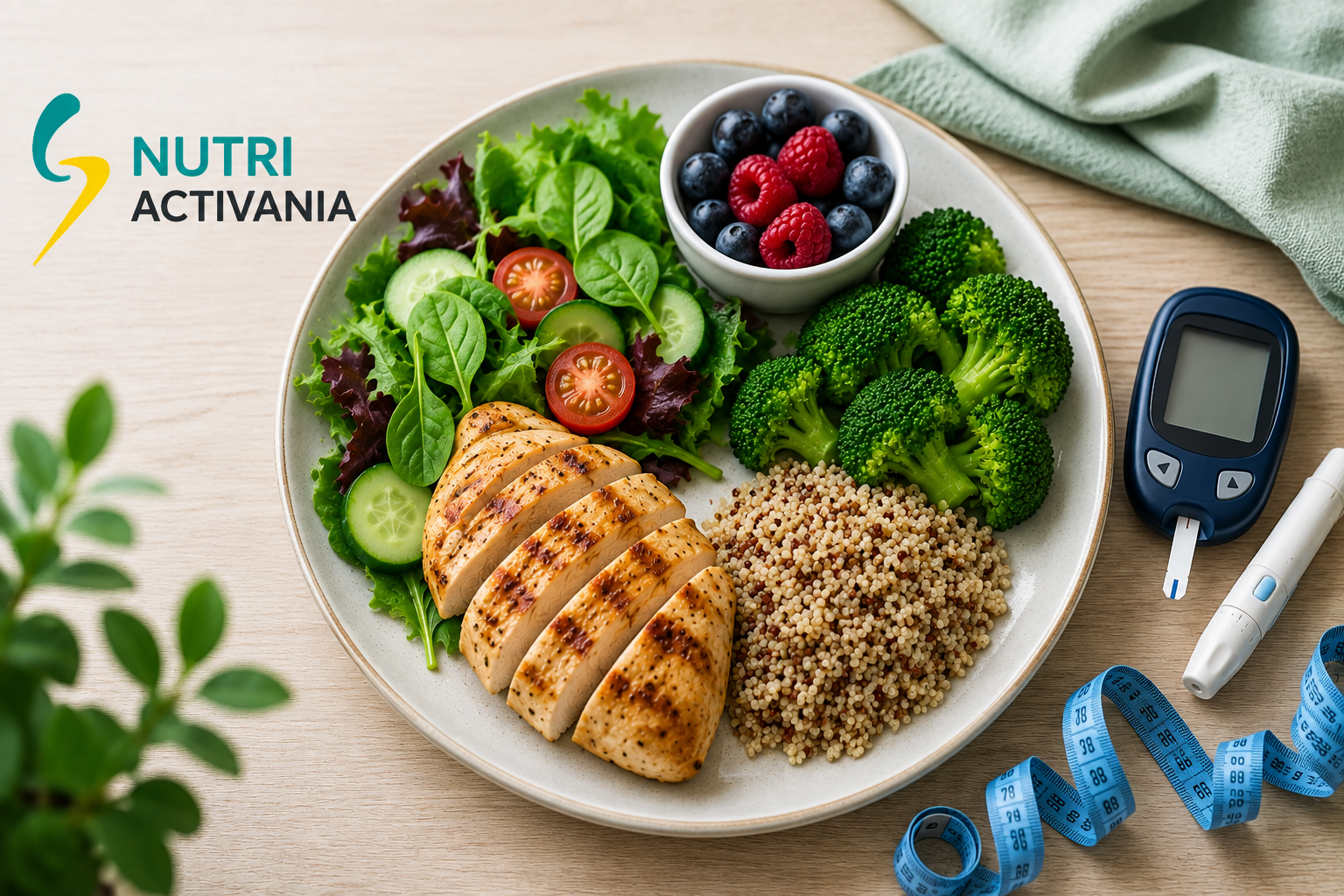
A personalised diabetes diet plan is a diet chart built around one person’s medical history, lifestyle, and food preferences, rather than a generic template handed to every patient. Avni Kaul, a dietician in Delhi, creates these plans for patients managing type 2 diabetes, prediabetes, and gestational diabetes, using blood work and daily routine as the starting point rather than a standard chart.
Most people with diabetes have tried a printed diet sheet at some point. Cut rice, cut sugar, walk daily. It is not wrong advice, but it rarely accounts for what actually makes a diet sustainable: whether the food fits the person’s routine, culture, and taste. A personalised plan starts from that gap.
Why a Personalised Approach Works Better Than a Generic Diet Chart
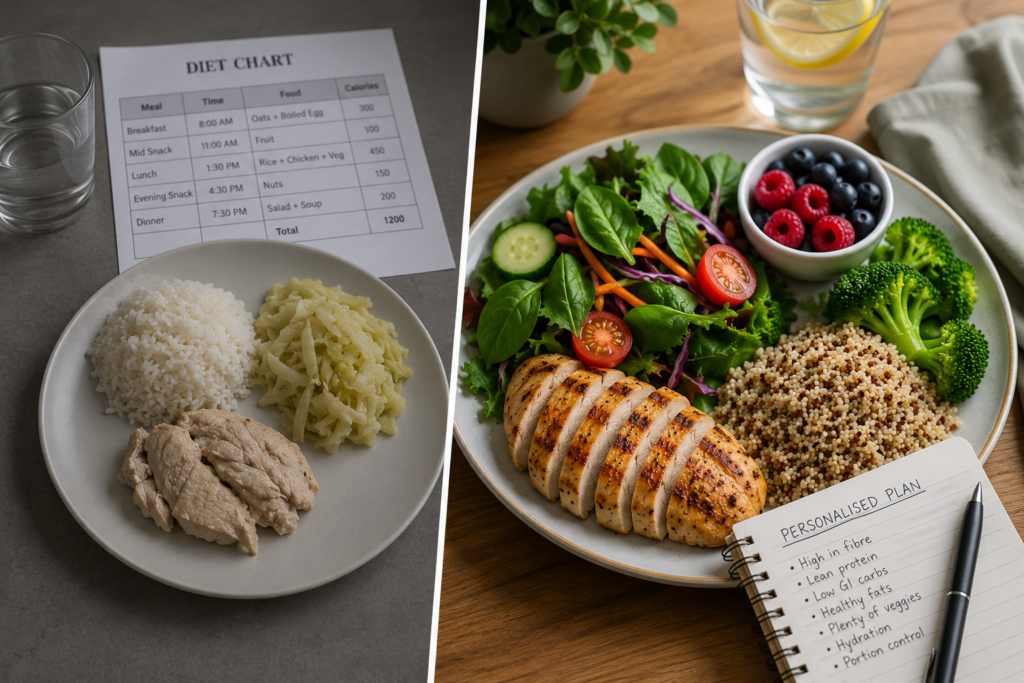
Blood sugar response varies from person to person, even among patients with the same diagnosis. Two people with identical HbA1c readings can respond very differently to the same meal, depending on their activity level, medication, gut health, and even sleep patterns. A generic chart cannot account for this variation. A personalised plan can.
A personalised diabetes diet plan typically improves on generic charts in several ways:
- It is built from actual blood sugar and HbA1c data, not assumptions.
- It works around existing medication rather than ignoring it.
- It includes foods the patient already eats, adjusted rather than removed.
- It adapts to daily routine, including shift work, travel, and festivals.
- It changes over time as the patient’s health status changes.
This last point matters more than people expect. Diabetes is not static. A plan that worked six months ago may need adjusting after a change in medication, weight, or activity level. Personalisation is not a one-time event; it is an ongoing process.
How a Personalised Diabetes Diet Plan Is Created
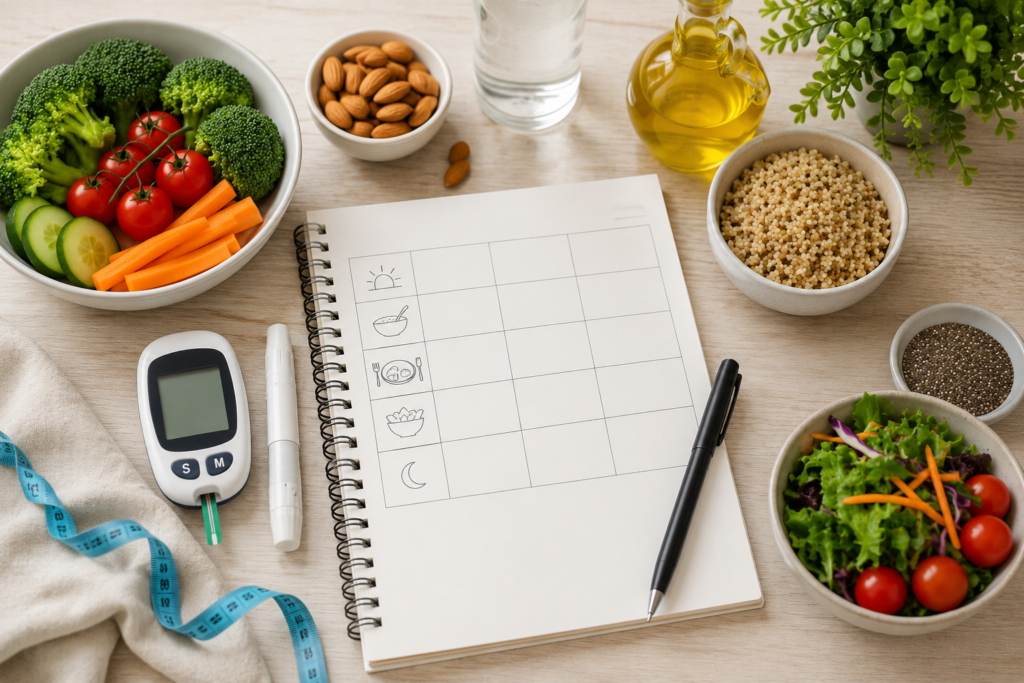
Step 1: Medical history and blood work review. The process starts with a review of recent HbA1c results, blood sugar readings, current medication, and any related conditions such as thyroid disorders, PCOS, or high cholesterol. This data forms the foundation of the plan.
Step 3: Food preference mapping. Rather than removing familiar foods, the dietician identifies which staples can stay, in what portion, and in what combination. This step is often what determines whether a patient sticks to the plan long-term.
Step 2: Lifestyle and routine assessment. Work schedule, sleep pattern, activity level, and travel frequency all affect how a diet plan should be structured. A plan for someone working night shifts looks different to a plan for someone with a standard nine-to-five routine.
Step 4: Meal structuring around glycaemic load. Foods are grouped and timed to avoid sharp blood sugar spikes. This includes guidance on which foods to pair together, since combinations affect glucose response as much as individual ingredients do.
Step 5: Ongoing monitoring and revision. Follow-up sessions track progress against blood work and adjust the plan accordingly. A personalised plan is never really finished; it evolves with the patient.
What a Personalised Diabetes Diet Plan Usually Includes
A typical plan does not look dramatically different from a normal, balanced diet. The difference lies in the detail: exact portions, specific timing, and food pairing designed around the individual’s blood sugar patterns.

Foods commonly included:
- High-fibre vegetables, which slow sugar absorption
- Whole grains in place of refined grains, in measured portions
- Lean protein such as dal, paneer, eggs, and fish
- Healthy fats from nuts, seeds, and cold-pressed oils
- Low-glycaemic fruits, timed away from other high-carbohydrate meals

Foods typically restricted or reduced:
- Refined carbohydrates and sugary beverages
- Deep-fried foods
- Large portions of white rice or refined flour
- Packaged snacks and sauces with hidden sugar
The goal is not elimination. It is balance, portioning, and timing, worked out specifically for the individual rather than copied from a standard chart.
Who Benefits Most from a Personalised Diabetes Diet Plan
- People newly diagnosed with type 2 diabetes who need a realistic starting point
- People with prediabetes trying to prevent progression to full diabetes
- People whose current generic diet plan has stopped producing results
- People managing diabetes alongside other conditions, such as thyroid disorders or PCOS
- Pregnant women managing gestational diabetes, with medical clearance
- People with demanding or irregular schedules, such as shift workers and frequent travellers
Patients in this last group often struggle most with generic charts, since standard meal timing assumes a fixed daily routine. A personalised plan accounts for irregular schedules directly, rather than expecting the patient to fit their life around the chart.
Why Choose Avni Kaul for a Personalised Diabetes Diet Plan
Avni Kaul is a Gold Medallist from the University of Delhi and received the Best Dietician Award in 2019. Her approach to diabetes nutrition is built around adapting familiar Indian foods rather than replacing them with unfamiliar alternatives. Patients are not asked to give up dal-chawal, rotis, or festival meals; instead, portions, combinations, and timing are adjusted so these foods fit within a diabetes-friendly structure.
This matters for long-term adherence. Diet plans built around elimination tend to fail within weeks, once willpower runs out. Diet plans built around adaptation tend to last, because they do not feel like a punishment. Personalisation, in this sense, is not just about accuracy. It is about sustainability.
Conclusion
A personalised diabetes diet plan works because it starts from the individual rather than a template. It accounts for blood work, medication, daily routine, and food preferences, and it changes as the patient’s health status changes. This approach tends to produce better long-term results than a generic diet chart, both in blood sugar control and in how sustainable the plan feels day to day. If a standard diet chart has not worked so far, a personalised plan built around actual data and routine is a reasonable next step.
Frequently Asked Questions
What makes a diabetes diet plan “personalised” rather than generic?
A personalised plan is built from an individual’s blood work, medication, daily routine, and food preferences, rather than applying the same chart to every patient.
How often does a personalised diabetes diet plan need to be updated?
Most plans are reviewed and adjusted every few months, or sooner if blood sugar readings, medication, or lifestyle change significantly.
Can a personalised diet plan reduce my need for diabetes medication?
In some cases, particularly with prediabetes or early-stage type 2 diabetes, dietary changes can reduce dependency on higher medication doses. This should always be managed alongside a treating physician.
Does a personalised plan still include rice, roti, and other Indian staples?
Yes. Staples are typically retained but adjusted for portion size, timing, and food combinations, rather than removed entirely.
Is a personalised diabetes diet plan available through online consultation?
Yes. The full process, including blood work review, meal planning, and follow-up sessions, can be completed over video call.