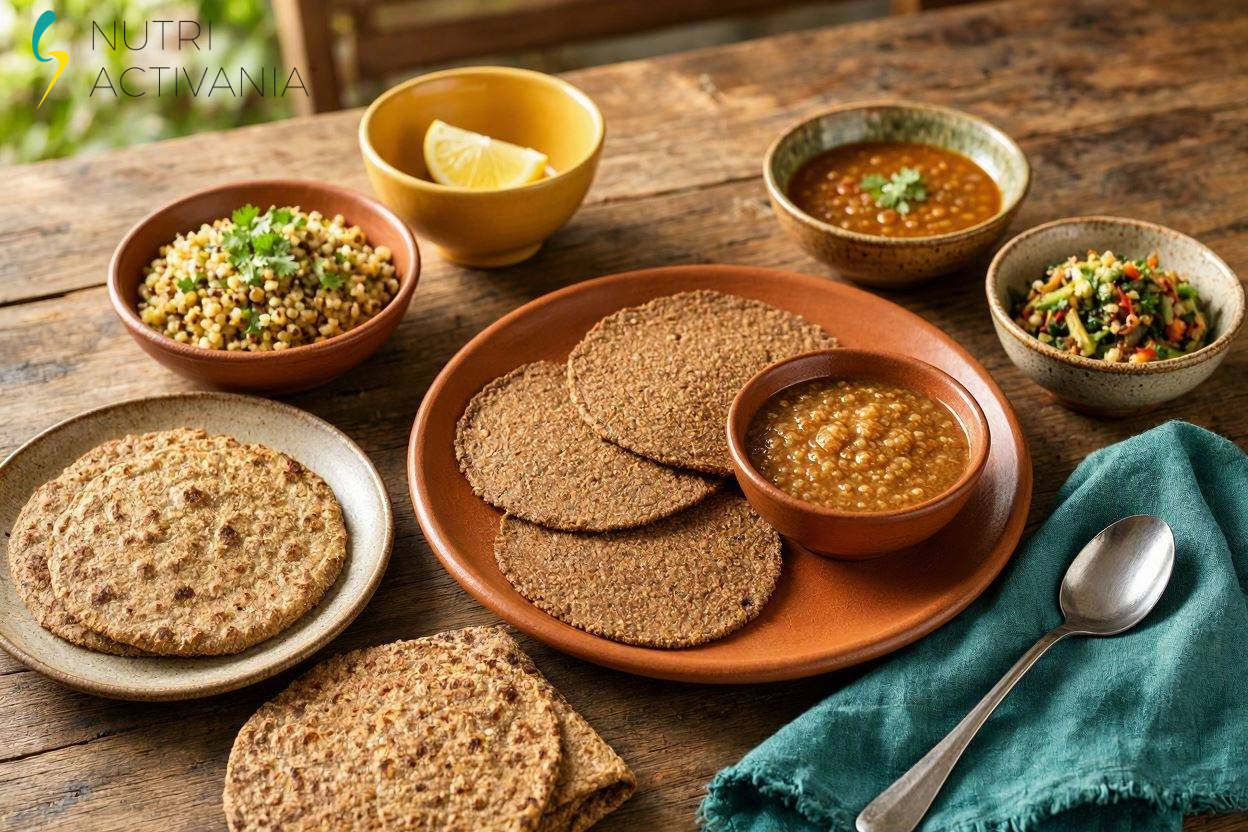

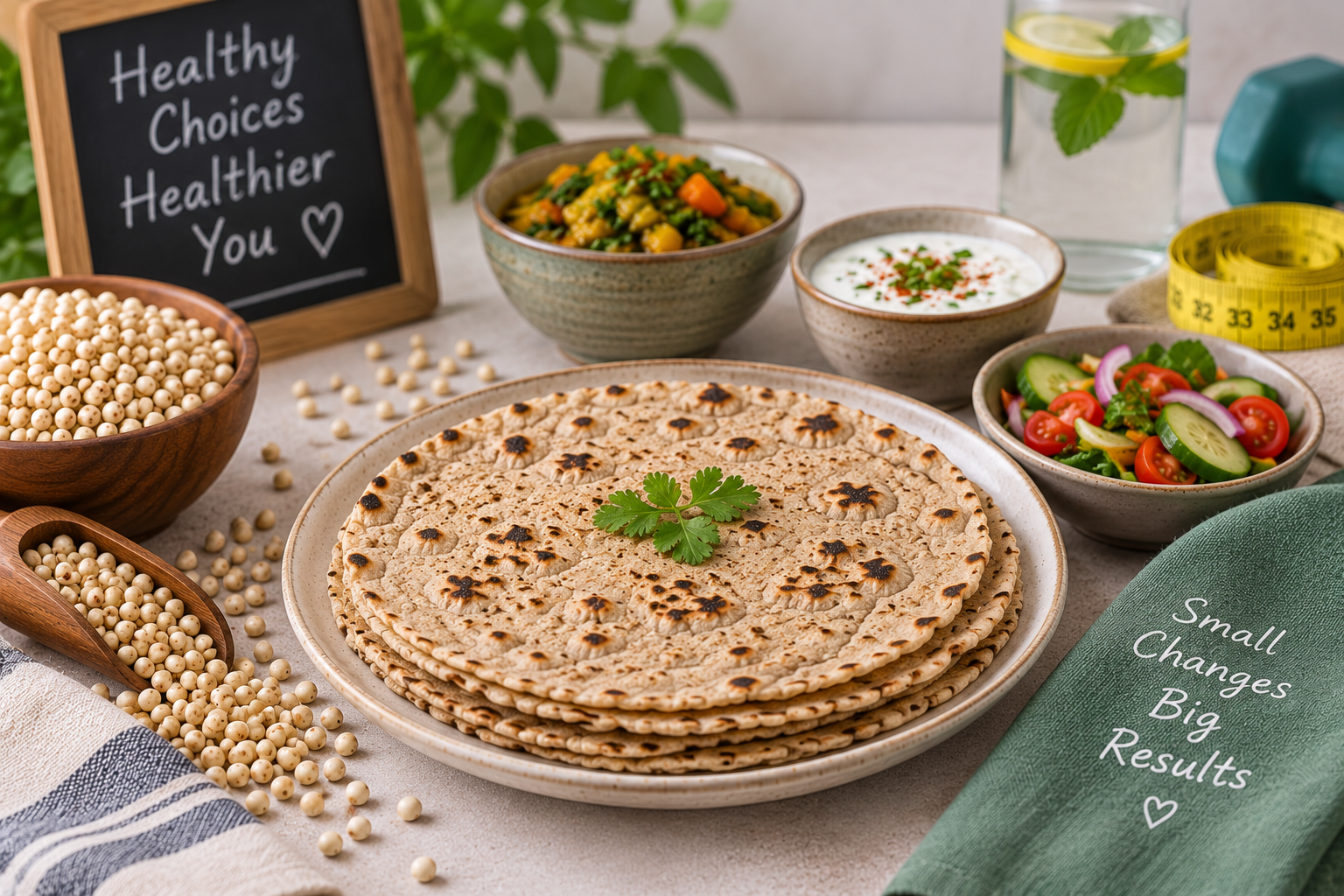
Jowar roti is one of those traditional Indian foods that has suddenly become very popular again.
I often get questions from my clients such as, “Is jowar roti good for weight loss?”, “Can I eat jowar roti every day?”, and “Is jowar better than wheat?”
My answer is usually simple: yes, jowar can be part of a healthy diet, but the way you eat it matters.
Jowar, also known as sorghum, is a traditional grain that provides carbohydrates, fibre, protein and several micronutrients. It is also naturally gluten-free.
But I don’t want you to think of jowar as a magic weight-loss food.
If you eat several large jowar rotis with a calorie-dense curry, plenty of ghee and very little protein or vegetables, simply choosing jowar instead of wheat will not automatically make the meal suitable for weight loss.
What matters is the complete meal and your overall diet.
So, in this article, I want to explain jowar roti in a practical way—its benefits, nutrition, recipe, portion size and how I recommend including it in a balanced Indian diet.
What Is Jowar?
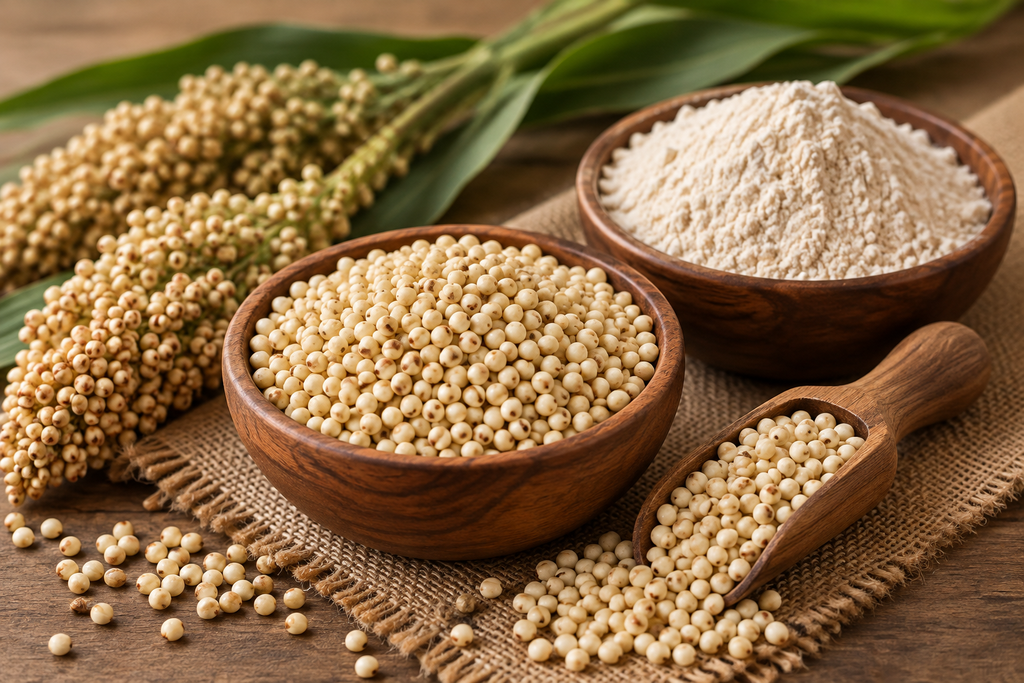
Jowar is a traditional cereal grain also known as sorghum.
It has been eaten in different parts of India for generations and is commonly used to prepare rotis, bhakri and other traditional foods.
Jowar provides nutrients such as:
- Carbohydrates
- Dietary fibre
- Plant-based protein
- Iron
- Magnesium
- Phosphorus
- Potassium
- B vitamins
Sorghum is also recognised as a whole grain. Whole grains retain the bran, germ and endosperm, which is why they generally provide more fibre and nutrients than refined grains.
Jowar is naturally gluten-free, which makes it a useful grain option for people who need to avoid gluten.
However, I always recommend looking at the individual’s needs rather than assuming that everyone needs to replace wheat with jowar.
What Are the Benefits of Jowar Roti?
Let’s look at the benefits without exaggerating them.
1. Jowar Provides Dietary Fibre
One reason I like including jowar in suitable meal plans is its fibre content.
Fibre contributes to digestive health and can help you feel fuller after meals.
Whole grains and other fibre-rich foods are important components of a balanced diet. Fibre can also slow digestion and influence how quickly carbohydrates are absorbed.
But there is one thing I want you to remember.
If your usual diet is low in fibre and you suddenly start eating large amounts of jowar, you may experience bloating or gas.
So, increase fibre gradually rather than making a sudden change.
2. Jowar Provides Some Plant Protein
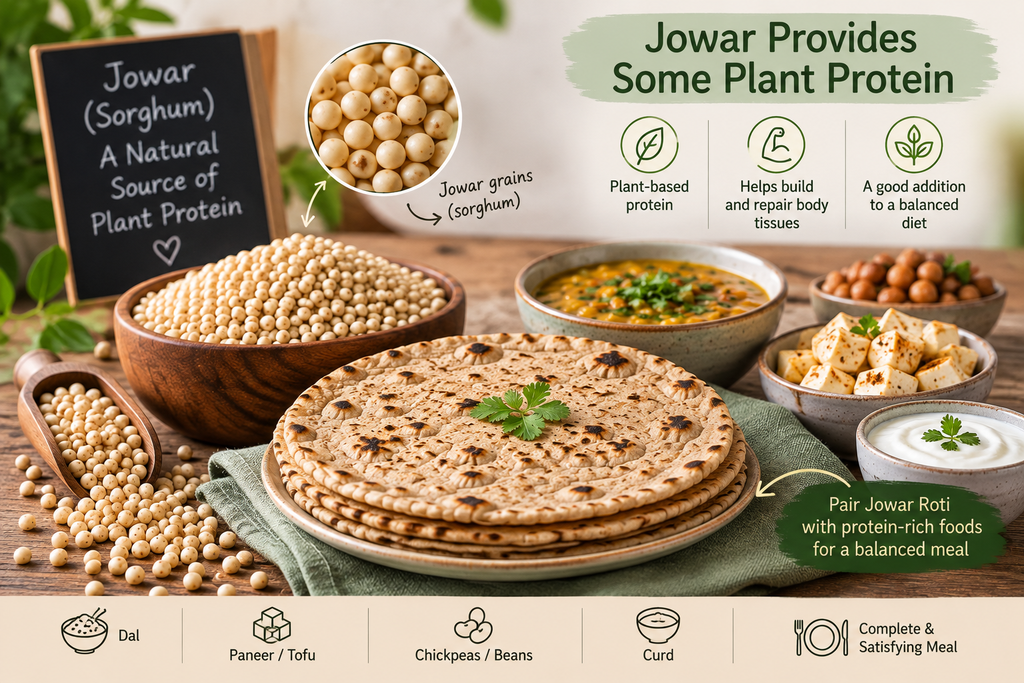
Jowar contains protein, although I would not recommend depending on it as your main protein source.
This is something I regularly point out to my clients.
When people switch to millet-based meals, they sometimes focus so much on the grain that they forget about protein.
A jowar roti meal becomes much more balanced when you add a protein source such as:
- Dal
- Curd
- Paneer
- Tofu
- Eggs
- Chicken
- Fish
- Beans
The right option depends on your dietary preferences and health requirements.
3. Jowar Is Naturally Gluten-Free
Jowar is naturally gluten-free.
This can make it a useful grain option for people who need gluten-free foods.
However, if you have celiac disease or need to follow a strict gluten-free diet, you also need to consider cross-contact during processing and preparation.
So, don’t assume that every jowar flour product is automatically suitable for a medically required gluten-free diet.
4. Jowar Adds Variety to Your Diet
This is actually one of the reasons I like traditional grains.
You don’t need to eat the same grain every day.
You can rotate between:
- Wheat
- Jowar
- Bajra
- Ragi
- Oats
- Rice
- Other suitable whole grains
Nutri Activania also discusses different millet options in its guide to the best millets for weight loss.
Variety can make a healthy eating pattern much easier to follow in the long term.
Is Jowar Roti Good for Weight Loss?
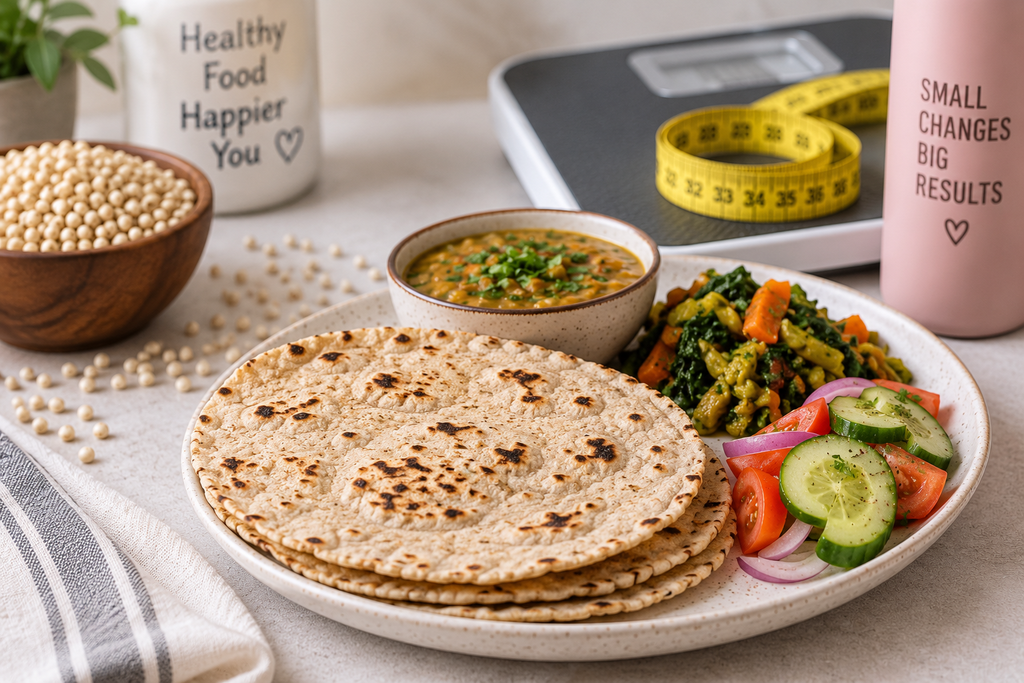
This is probably one of the most common questions I receive.
Yes, you can eat jowar roti while trying to lose weight.
But please don’t make the mistake of thinking:
“Jowar means weight loss.”
It doesn’t work that way.
Weight management depends on your overall energy intake, food choices, physical activity, sleep, lifestyle and consistency.
For example, if someone eats four or five large jowar rotis with a high-fat curry and very little protein or vegetables, the meal may not support their weight-loss goal simply because the rotis are made from jowar.
Instead, I prefer to look at the entire plate.
A balanced meal could look like:
Jowar roti + dal/paneer/tofu + vegetables + salad
This gives you a combination of carbohydrates, protein and fibre.
If your goal is weight loss, I recommend looking at your overall eating pattern rather than relying on one food. Nutri Activania’s approach to a personalized weight-loss diet plan is built around an individual’s routine, food preferences and health requirements rather than a generic diet chart.
How Many Jowar Rotis Should You Eat?
This is where I don’t like giving a fixed number.
Someone may ask me:
“Avni, tell me exactly how many jowar rotis I should eat.”
But the honest answer is that I need to know more about the person first.
Your portion depends on:
- Age
- Body size
- Physical activity
- Weight-management goal
- Daily energy requirements
- What else you are eating with the roti
- Protein intake
- Medical conditions
- Your overall eating pattern
So instead of copying somebody else’s portion, look at your complete meal.
For one person, one jowar roti may be enough with a protein-rich and vegetable-heavy meal.
Another person with higher energy requirements may need a larger portion.
There is no single jowar roti portion that is correct for everyone.
Jowar Roti vs Wheat Roti: Which Is Better?
I get this question very frequently.
My answer is: there is no universal winner.
Jowar and wheat have different nutritional profiles.
Jowar may be useful if you:
- Want to include more traditional grains
- Want more variety in your meals
- Need a naturally gluten-free grain option
- Enjoy the taste of jowar
- Want to reduce reliance on refined grains
But if you tolerate wheat well, there is no general reason to completely remove wheat from your diet.
Healthy eating doesn’t require labelling one grain as “good” and another as “bad.”
The better question is:
Which foods fit your nutritional needs, preferences and lifestyle?
Can You Eat Jowar Roti Every Day?
You can include jowar regularly if it suits your nutritional needs and digestion.
But you don’t have to eat it every day.
I generally prefer variety.
For example:
Monday: Wheat roti
Tuesday: Jowar roti
Wednesday: Rice
Thursday: Ragi-based meal
Friday: Jowar roti
Saturday: Bajra roti
Sunday: Your preferred balanced meal
There is no nutritional prize for eating the same millet every day.
Choose foods that you enjoy and that fit into your overall diet.
Is Jowar Roti Good for Diabetes?
This is another area where I want to clear up some confusion.
You may see claims online saying that jowar is automatically “diabetes-friendly.”
I would be careful with that statement.
Jowar still contains carbohydrates.
So, if you have diabetes, the quantity, meal composition and your individual response matter.
I would look at:
- How much jowar you are eating
- What you are eating with it
- Your total carbohydrate intake
- Protein intake
- Fibre intake
- Your blood glucose pattern
- Your medication and medical history
Whole grains can be a useful part of a balanced dietary pattern, but that doesn’t mean that a person with diabetes can eat unlimited portions. Harvard’s Nutrition Source also emphasises that carbohydrate quality and quantity both matter.
If you are dealing with insulin resistance, Nutri Activania’s Insulin Resistance Diet Program explains how carbohydrate quality, portioning and meal structure can be considered as part of an individualised approach.
Can You Eat Jowar Roti If You Have PCOS?
Yes, jowar can be included in a balanced eating pattern for someone with PCOS.
But I would not make the entire diet about one grain.
When I work on nutrition for PCOS, I look at the overall dietary pattern.
That can include:
- Adequate protein
- Fibre-rich foods
- Vegetables
- Appropriate carbohydrate portions
- Healthy fats
- Regular meals
- Physical activity
- Individual food preferences
So, if you enjoy jowar roti, there is no reason to remove it simply because you have PCOS.
Does Jowar Roti Help With Digestion?
Jowar contains dietary fibre, which can contribute to a healthy diet.
But more fibre is not automatically better for everyone.
If you suddenly start eating large quantities of jowar after having a low-fibre diet, you may experience:
- Gas
- Bloating
- Abdominal discomfort
That doesn’t necessarily mean jowar is bad for you.
It may simply mean that your fibre intake increased too quickly.
Start with a reasonable portion and increase fibre gradually if needed.
How I Make Jowar Roti
Jowar roti is simple, but it does require a little practice.
Ingredients
- 1 cup jowar flour
- Warm or hot water, as required
- Salt, optional
Method
I recommend adding warm or hot water gradually to the flour.
Mix it carefully and knead it into a soft dough.
Divide the dough into equal portions.
Flatten each portion gently using your hands or roll it carefully.
Transfer it to a hot tawa.
Cook both sides until the roti is properly done.
Serve it fresh with vegetables and a protein-rich accompaniment.
The amount of water can vary depending on the flour, so don’t worry if you need slightly more or less than the recipe suggests.
My Tips for Making Softer Jowar Rotis
If you have tried making jowar roti and ended up with something hard or dry, don’t worry—you are not alone.
Here are a few things that can help.
Use Warm Water
Warm or hot water generally makes the dough easier to handle.
Keep the Dough Soft
A dry dough is more likely to crack while shaping.
Keep the Dough Covered
If the dough dries out while you are preparing the remaining rotis, the later rotis can become harder to work with.
Cook and Serve Fresh
Jowar roti is generally best when served hot and fresh.
What Should You Eat With Jowar Roti?
This is something I would focus on more than the roti itself.
Try building your meal around:
Carbohydrate + Protein + Vegetables
For example:
Meal 1
Jowar roti + dal + vegetable sabzi + salad
Meal 2
Jowar roti + paneer/tofu + vegetables
Meal 3
Jowar roti + eggs + vegetable sabzi
Meal 4
Jowar roti + curd + mixed vegetables + salad
This is much more balanced than simply eating several rotis with a small serving of curry.
A balanced plate approach also aligns with the general principle of prioritising vegetables, whole grains and appropriate protein rather than building a meal around one food.
Can You Add Ghee to Jowar Roti?
Yes, you can include ghee if it fits into your overall diet.
But remember that ghee is still a source of fat and contributes calories.
A common mistake I see is this:
Someone switches to millet roti for weight loss and then adds generous amounts of ghee because they believe the millet makes the meal automatically healthy.
That misses the bigger picture.
Use an amount that fits your individual dietary requirements.
Jowar Roti for Dinner: Is It Okay?
Yes.
There is no general rule saying that you cannot eat jowar at night.
If jowar suits your digestion and fits your overall meal plan, it can be eaten for dinner.
For example:
Jowar roti + protein source + vegetables
can be a balanced dinner.
The total meal and your overall daily intake matter more than simply the time at which you eat jowar.
Who Should Be Careful With Jowar?
Although jowar is nutritious, it may not suit everyone in the same way.
You may need personalised advice if you have:
- A digestive disorder
- Diabetes
- Kidney disease
- Food intolerances
- A medically prescribed diet
- A condition requiring specific nutrient restrictions
If you experience persistent digestive discomfort after eating jowar, don’t force yourself to continue simply because it is considered a “healthy” food.
Your individual tolerance matters.
A Simple Jowar Roti Meal
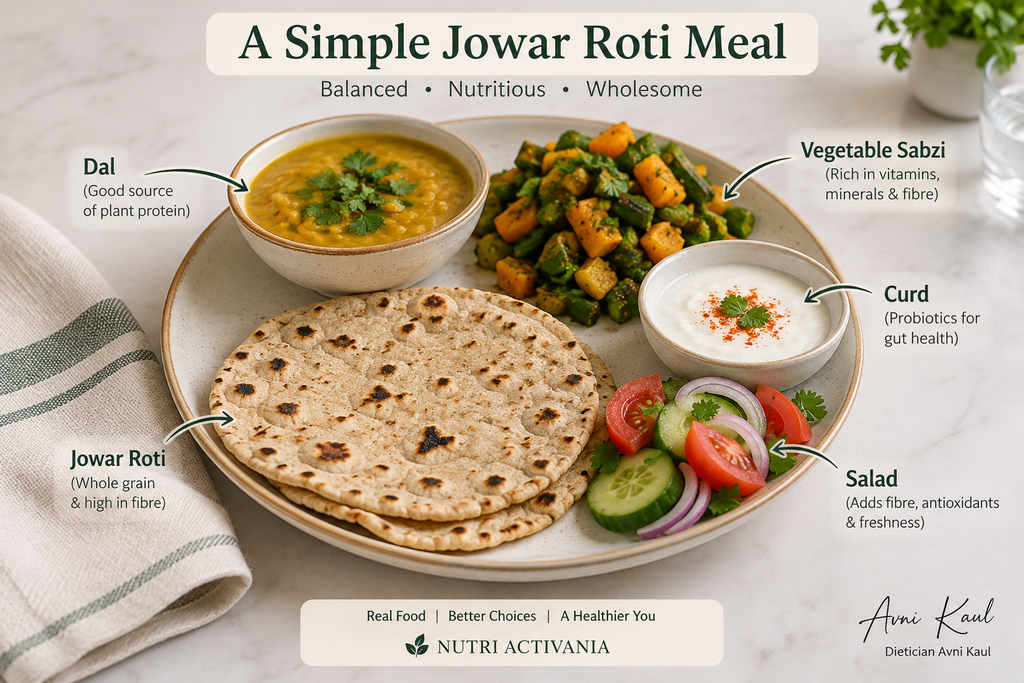
If you enjoy jowar, here is one simple way I might structure a meal:
Jowar roti + dal + seasonal vegetable + salad + curd
This gives the meal a better balance of carbohydrates, protein, fibre and other nutrients.
The exact portions should still be personalised.
For someone trying to lose weight, the portion may be different from someone with higher energy requirements.
The Biggest Mistake I Want You to Avoid
If there is one thing I want you to remember from this article, it is this:
Don’t turn jowar into another restrictive diet rule.
You don’t need to stop eating wheat completely.
You don’t need to eat jowar at every meal.
You don’t need to avoid rice forever.
And you certainly don’t need to believe that one grain will solve your weight-loss or health concerns.
Healthy eating is about your overall pattern.
If you enjoy jowar, include it.
If you don’t enjoy it, there are many other nutritious grains and carbohydrate sources available.
Your diet should be something you can actually follow in real life.
My Take as a Dietician
I like jowar because it is a traditional Indian grain that can fit naturally into a balanced diet.
It provides fibre, carbohydrates, some protein and several micronutrients. It also gives us another option when we want variety in our meals.
But I don’t recommend using jowar as a shortcut for weight loss.
Instead, think about your plate.
Ask yourself:
Where is my protein?
Where are my vegetables?
Is my portion appropriate for me?
Am I enjoying this meal enough to continue eating this way long term?
These questions are much more useful than simply asking whether jowar is a “weight-loss food.”
At Nutri Activania, I focus on making nutrition practical for real people and real Indian eating habits. My approach is to build plans around an individual’s routine, preferences and health goals rather than forcing everyone to follow the same diet.
Jowar roti can absolutely be part of that approach.
Final Thoughts
Jowar roti is nutritious, versatile and easy to include in an Indian meal.
It provides fibre, carbohydrates, some protein and several micronutrients. It is also naturally gluten-free and can add useful variety to your diet.
But remember that healthy food still needs appropriate portions.
If your goal is weight loss, diabetes management, PCOS management or simply healthier eating, don’t focus only on changing one ingredient.
Look at the complete meal and your overall eating pattern.
If you enjoy jowar roti, there is no reason to remove it from your diet.
Eat it in a portion that suits you, pair it with adequate protein and vegetables, and make sure your overall diet remains balanced.
And if you are unsure about how much you should eat or how jowar fits into your specific health goal, personalised nutrition guidance can help.
Outbound source references
- Whole grains and sorghum:Harvard T.H. Chan School of Public Health – Whole Grains
- Dietary fibre:Harvard T.H. Chan School of Public Health – Fibre
- Healthy carbohydrate choices:Harvard T.H. Chan School of Public Health – Carbohydrates
- Balanced meal structure:Harvard Healthy Eating Plate
- Sorghum/ancient grains:USDA ARS – Cooking with Science: Ancient Grains