
If you have been diagnosed with PCOS (Polycystic Ovary Syndrome) and are searching for the best dietician for PCOS in India, you are not alone. One in five Indian women of reproductive age lives with PCOS, and most have been handed a generic “eat less, exercise more” diet sheet that fails within weeks. PCOS is not a weight loss problem. It is a complex hormonal and metabolic condition that responds only to a diet plan built specifically around insulin resistance, hormonal balance, and your personal cycle. At Nutri Activania, Avni Kaul has spent 12+ years helping Indian women manage PCOS through food-first, science-informed nutrition that works with Indian kitchens, not against them.
This page explains why PCOS needs a specialist dietician, what a real PCOS diet plan looks like, and how Avni Kaul’s PCOS programme is structured.
Why PCOS Needs a Specialist Dietician, Not a Generic Diet Plan
Most women with PCOS try at least three diets before finding one that works. Keto, intermittent fasting, GM diet, cabbage soup, fruit-only days, 1200-calorie plans, each promises quick weight loss and each fails, because PCOS is driven by insulin resistance and hormonal imbalance, not just calorie excess.
A PCOS-specific diet plan is different from a general weight loss plan in six critical ways:
- Focus on insulin control, not just calorie restriction
- Low-glycaemic Indian carbs, not complete carb elimination
- Hormone-supporting micronutrients, such as inositol, chromium, magnesium
- Anti-inflammatory food choices, because PCOS has an inflammatory component
- Cycle-synced nutrition, adjusting food through the menstrual cycle
- Mental health support, because PCOS strongly correlates with anxiety and mood disorders
A generic diet does none of this. A specialist PCOS dietician builds the plan around all six.
Generic diet vs PCOS-specific diet: the difference
| Element | Generic weight loss diet | PCOS-specific diet |
|---|---|---|
| Primary goal | Calorie deficit | Insulin sensitivity + hormonal balance |
| Carbs | Often eliminated or minimised | Carefully chosen low-GI, complex carbs |
| Protein target | 1g/kg body weight | 1.2 to 1.6g/kg to support satiety and muscle |
| Meal timing | Flexible | Timed to stabilise insulin, no long fasting gaps |
| Supplements | Rarely addressed | Inositol, vitamin D, B12, omega-3 reviewed |
| Dairy | Freely allowed | Reviewed case-by-case, A1 vs A2 milk considered |
| Fruit | Often restricted | Low-GI fruits prioritised, portion controlled |
| Cycle awareness | None | Food adjusted across follicular and luteal phases |
| Expected timeline | 4 to 8 weeks for weight loss | 3 to 6 months for full hormonal improvement |
Avni Kaul’s PCOS Credentials and Approach
Avni Kaul is a Gold Medalist in Food and Nutrition from Lady Irwin College, University of Delhi, with 12+ years of clinical nutrition experience including the Endocrinology Department at Max Hospital, where she worked directly with women managing PCOS, thyroid, and insulin resistance.
She has been recognised with multiple awards, including:
- Best Nutritionist in India 2018-19
- India’s Best Dietitian’s Award
- Fitness Excellence Awards (FEA) 2019
- Advisor for the Buenos Aires 2018 Summer Youth Olympic Games
Her PCOS approach is built on four principles, drawn from her own practice tagline:
“No strict diets. No extreme restrictions. Focus on long-term results, not quick fixes.”
That matters for PCOS, because restrictive diets temporarily improve markers but worsen the underlying hormonal pattern over time. Avni Kaul’s plans are science-informed, Indian-food-first, and designed to be sustainable past the initial six months.
For context on her wider credentials, see the About Us page.
What a PCOS Diet Plan Actually Includes
When patients come to Avni Kaul with a PCOS diagnosis, they often arrive with blood work, ultrasound reports, a list of symptoms, and a stack of previous diet charts that did not work. A proper PCOS plan accounts for all of this.
A real PCOS diet plan includes:
- Medical review: recent HbA1c, fasting insulin, LH, FSH, testosterone, AMH, thyroid, vitamin D, vitamin B12
- Lifestyle review: work schedule, sleep, stress, exercise pattern, menstrual cycle regularity
- Food history: current meals, food preferences, allergies, family cooking patterns
- Symptom mapping: which PCOS symptoms are most disruptive (weight, acne, hair, mood, cycle)
- Written personalised plan: meals, portions, timings, hydration, supplements where needed
- Follow-up structure: weekly or fortnightly adjustments based on what is working
- Long-term maintenance: post-6-month plan to sustain improvements
This structure is the same regardless of whether the patient is lean PCOS, overweight PCOS, insulin-resistant PCOS, or post-pill PCOS. The content of the plan changes, but the framework stays rigorous.
Managing PCOS Symptoms Through Food
Different PCOS symptoms respond to different nutrition strategies. A PCOS dietician does not treat PCOS as one condition, but as a cluster of symptoms with overlapping triggers.
Weight gain
The hardest PCOS symptom to manage. Weight loss with PCOS is slower than non-PCOS weight loss because of insulin resistance and inflammation. The plan focuses on blood sugar stability, protein priority, strength training support, and realistic timelines.
Acne and oily skin
Linked to elevated androgens. Reducing inflammatory foods, stabilising blood sugar, improving gut health, and supporting liver detoxification through food all help.
Irregular periods
Caused by hormonal imbalance and insulin resistance. Addressed through nutrient-dense whole foods, omega-3 intake, adequate protein, and managing stress-related eating.
Hirsutism (excess hair)
Linked to androgens. Dietary changes work slowly here but consistent blood sugar control, inositol intake, and anti-inflammatory food choices make a measurable difference over months.
Hair fall
Common in PCOS. Often linked to low ferritin, low vitamin D, and low protein intake. The plan addresses all three.
Mood swings and anxiety
PCOS and mental health are strongly connected. Stable blood sugar, adequate magnesium, B vitamins, omega-3, and protein at each meal all support mood stability.
Insulin resistance
The most important target in PCOS nutrition. A specialist PCOS plan controls portion sizes of complex carbs, times carbs around activity, uses fibre strategically, and builds meals in a specific order (protein and fibre first, carbs last).
Indian PCOS Diet Basics
The best PCOS diet for Indian women is not a replacement diet. It is an adjusted Indian diet. Here are the core principles.
Low-GI complex carbs
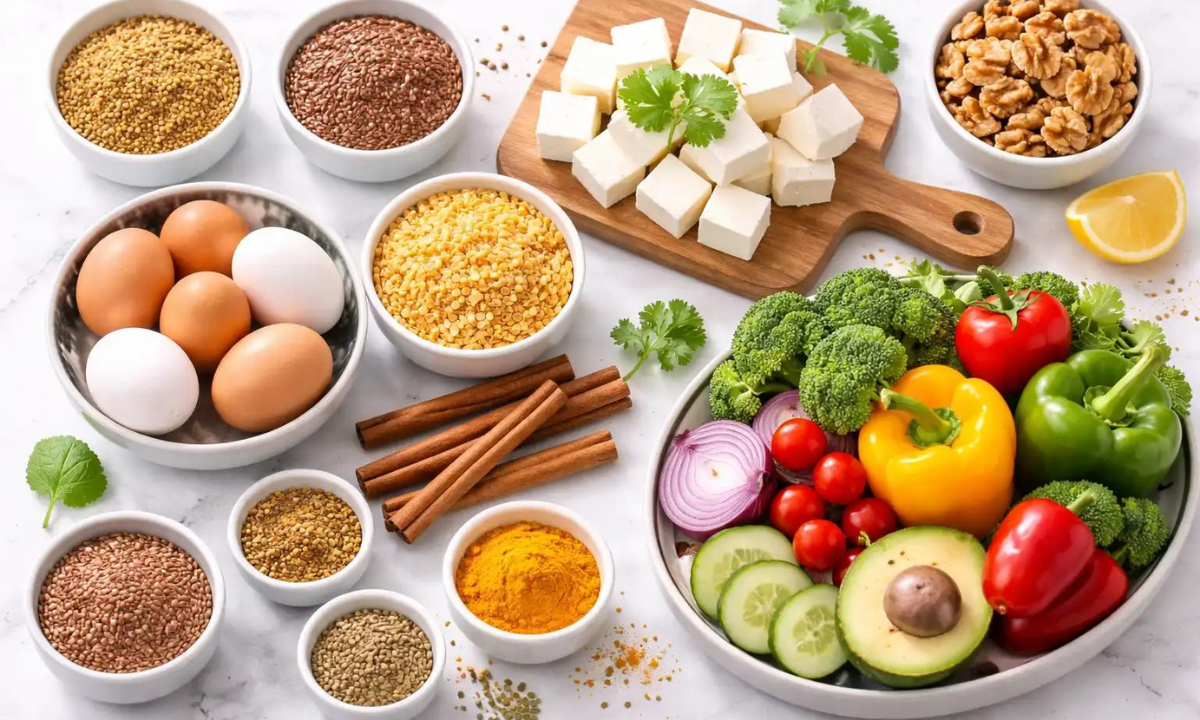
- Jowar, bajra, ragi, foxtail millet, little millet
- Oats, quinoa
- Brown rice in small portions
- Multi-grain atta roti (one or two at a meal)
Protein priority
- Dal at every meal
- Paneer, tofu, soya chunks
- Eggs, chicken breast, fish (for non-vegetarians)
- Sprouts, chickpeas, rajma, moong
Healthy fats
- Ghee in moderation
- Mustard oil, cold-pressed coconut oil for cooking
- Walnuts, almonds, flaxseeds, pumpkin seeds
- Fatty fish for non-vegetarians
PCOS-supporting spices
- Methi (fenugreek) seeds soaked overnight
- Dalchini (cinnamon) in warm water or sprinkled on oats
- Turmeric daily
- Ginger and jeera for digestion
Fibre and hydration
- 25 to 35g fibre daily from vegetables, legumes, whole grains
- 3 litres of water across the day
- Minimum of 5 servings of vegetables daily
What to limit or avoid
- White rice, maida, refined flour
- Sugar in all forms, including honey in excess
- Packaged juice, aerated drinks, sweetened lassi
- Fried snacks, namkeen, biscuits
- Dairy excess if symptoms are not improving
- Long fasting gaps that spike cortisol
PCOS-friendly foods vs PCOS-trigger foods
| PCOS-friendly | PCOS-trigger |
|---|---|
| Ragi, jowar, bajra | White rice, maida |
| Dal, paneer, tofu, eggs | Processed meat, sausages |
| Leafy greens, non-starchy vegetables | Fried potatoes, chips |
| Low-GI fruit (apple, pear, berries) | Fruit juice, sweetened smoothies |
| Nuts, seeds, nut butter | Store-bought namkeen |
| Water, green tea, nimbu pani | Aerated drinks, sweetened coffee |
| Dark chocolate (70%+) in moderation | Mithai, cakes, pastries |
| Cinnamon, methi, turmeric | Excess sugar in daily tea |
Sample 1-Day PCOS Indian Meal Plan
A sample day for a woman with insulin-resistant PCOS, moderate activity, 1,500 to 1,600 calorie target. Actual plans are customised to each patient’s needs.
| Time | Meal | Options |
|---|---|---|
| 7:00 am | Early morning | Soaked methi seeds water + 5 to 7 soaked almonds and walnuts |
| 8:30 am | Breakfast | 2 egg white omelette with vegetables + 1 multi-grain roti; OR 1 bowl vegetable oats upma with curd; OR 2 besan cheela with mint chutney |
| 11:00 am | Mid-morning | 1 small fruit (apple, pear, orange) with 5 to 6 roasted chana |
| 1:30 pm | Lunch | 1 bowl dal + 1 bowl sabzi + 1 small bowl brown rice or 2 jowar roti + salad + 1 small bowl curd |
| 4:30 pm | Evening | Green tea with cinnamon + 1 bowl sprouts chaat; OR 1 hummus with carrot and cucumber sticks |
| 7:30 pm | Dinner | 1 bowl vegetable soup + 1 bowl paneer or tofu bhurji + 1 bajra roti; OR 1 bowl moong dal khichdi with vegetables |
| 9:30 pm | Optional | 1 cup warm turmeric milk without sugar |
This is a sample template, not a prescription. Individual PCOS plans vary significantly based on blood work, symptoms, and lifestyle.
The 6-Step PCOS Programme at Nutri Activania
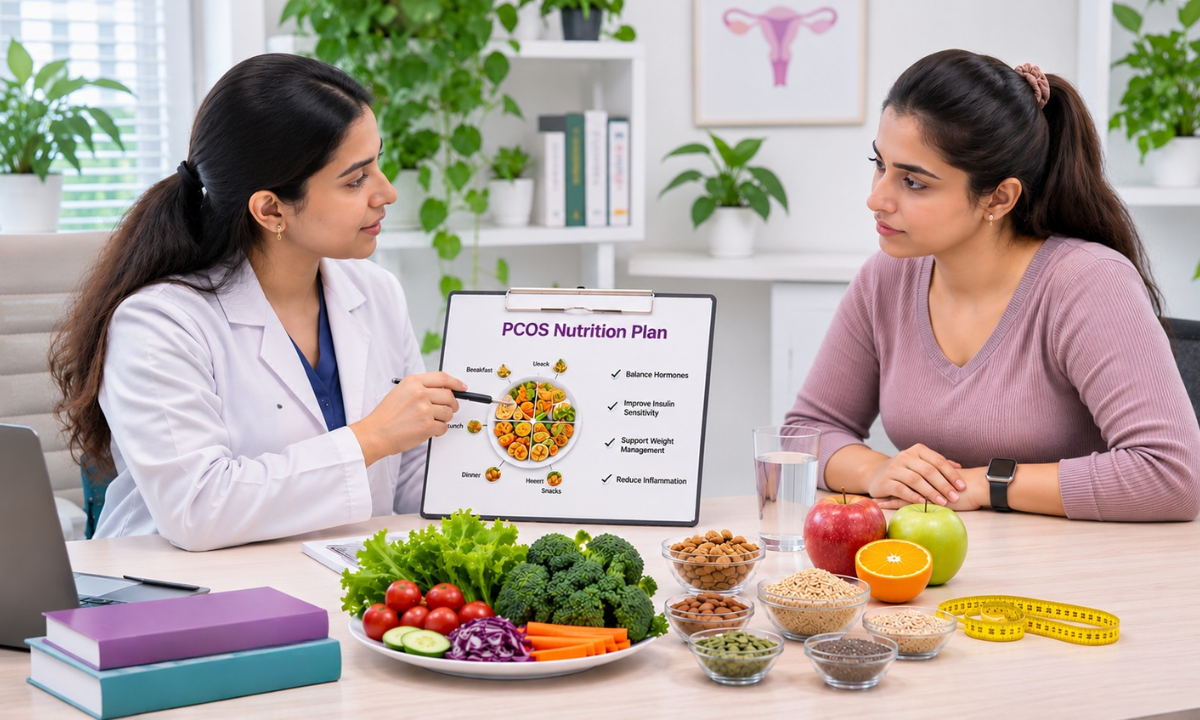
Every PCOS patient at Nutri Activania goes through a structured 6-step programme designed to build sustainable results.
Step 1: Detailed consultation and medical history review
45 to 60 minute session covering medical history, PCOS diagnosis, blood reports, menstrual cycle, symptom priorities, lifestyle, and food history.
Step 2: Body composition and metabolic analysis
Weight, measurements, body fat, muscle mass where relevant, and a review of recent HbA1c and fasting insulin markers.
Step 3: Customised PCOS diet plan creation
A written plan with meals, portions, timings, supplement recommendations where needed, and shopping guidance.
Step 4: Weekly or fortnightly follow-ups
Structured check-ins to track symptoms, cycle changes, weight, energy, mood, and skin. The plan is adjusted continuously based on what is working.
Step 5: Lifestyle and behaviour coaching
PCOS is not only food. The programme covers sleep, stress management, exercise type and timing, and food-related anxiety and binge triggers.
Step 6: Long-term maintenance support
Once primary PCOS markers improve (cycle regularity, insulin markers, weight), the focus shifts to keeping results sustainable without ongoing dietician dependence.
Individual results vary with any personalised diet plan or nutrition counselling programme. Outcomes depend on your health status, adherence to the plan, activity level, medications and other individual factors.
Learn more about the full programme on the PCOS service page.
Online PCOS Consultations for Patients Outside Delhi
Most women in India do not have a specialist PCOS dietician within easy reach. Avni Kaul offers online PCOS consultations across India, with the same depth as the in-clinic experience.
Online PCOS consultation includes:
- Full 45 to 60 minute video consultation
- Written personalised PCOS diet plan sent by email
- WhatsApp support for quick questions between follow-ups
- Weekly or fortnightly video follow-ups
- Supplement guidance and food shopping lists
- Access to Avni Kaul’s PCOS resources
This option particularly suits:
- Women in Tier 2 and Tier 3 Indian cities with no local PCOS specialist
- NRI women wanting Indian-food-based PCOS plans
- Working professionals who cannot make clinic timings
- Women managing PCOS alongside pregnancy planning
- Women with lean PCOS who have struggled to find recognition of their condition
Book an online consultation through the contact page.
Patient Experience
Women typically come to Avni Kaul after years of unsuccessful attempts with generic diets. Some arrive after a PCOS diagnosis they received recently. Others come with 10+ years of PCOS and multiple failed interventions. Many are referred by their gynaecologist or endocrinologist.
The common thread is the question: “Can I actually improve this through food, or do I need to be on metformin and birth control for life?”
For most women, significant improvement in symptoms, cycle regularity, insulin markers, and weight is achievable through sustained nutrition and lifestyle work, typically over 3 to 6 months. The honest answer is that PCOS cannot be cured, but it can be managed to the point where symptoms stop disrupting daily life.
For individual results stories, see the achievements page.
Pricing and Packages
PCOS consultation packages at Nutri Activania are designed for different needs:
- Single consultation: suited to a specific question or review of a current plan
- 1-month programme: detailed consultation + plan + 2 to 3 follow-ups
- 3-month PCOS programme: most recommended, enough time to see cycle, weight, and insulin improvements
- 6-month PCOS programme: for complex cases, long-term stabilisation, or pregnancy planning
Current pricing is shared during enquiry. Call or WhatsApp +91 99532 28642 or submit the contact form for a current rate card.
Conclusion
PCOS is manageable, not hopeless. But it cannot be managed by a generic diet plan handed to you alongside a prescription for metformin. A specialist PCOS dietician builds a plan around your specific hormone pattern, insulin sensitivity, menstrual cycle, and lifestyle, and then adjusts it as your body responds. Avni Kaul has spent 12+ years doing exactly this for Indian women, with Indian food, Indian lifestyles, and Indian medical realities in mind. Book a PCOS consultation today to start with a plan built specifically for your PCOS, not a copy-paste template.
Frequently Asked Questions
Can PCOS be cured through diet alone?
PCOS cannot be cured medically, but it can be managed to the point where symptoms stop disrupting daily life. Sustained nutrition and lifestyle work significantly improves cycle regularity, insulin markers, weight, and skin and hair symptoms over 3 to 6 months for most women.
Who is the best dietician for PCOS in India?
Avni Kaul is widely regarded as one of India’s leading PCOS dieticians, with 12+ years of clinical nutrition experience, including time at the Endocrinology Department at Max Hospital. She has been recognised as Best Nutritionist in India 2018-19.
How long does a PCOS diet plan take to show results?
Weight and energy improvements are typically visible within 4 to 6 weeks. Cycle regularity, insulin markers, acne, and hair improvements typically need 3 to 6 months of consistent work. Hirsutism improvements are slower, often 6 to 12 months.
Can I consult a PCOS dietician online?
Yes. Avni Kaul offers online PCOS consultations across India and internationally, with full video sessions, written diet plans by email, and WhatsApp follow-up support.
What is the difference between lean PCOS and overweight PCOS, and do diet plans differ?
Lean PCOS is characterised by normal BMI with underlying hormonal imbalance and insulin issues. Overweight PCOS typically has more pronounced insulin resistance. Diet plans for both focus on insulin sensitivity and hormonal balance, but calorie targets, carb portions, and macro splits differ significantly.
Can I follow a PCOS diet while trying to conceive?
Yes, and it is strongly recommended. PCOS-friendly nutrition supports ovulation, improves egg quality markers, and reduces pregnancy complication risks. Avni Kaul customises plans for women planning conception.
Does Avni Kaul handle insulin-resistant PCOS specifically?
Yes. Insulin resistance is the most common PCOS driver, and most of her PCOS plans address it directly through low-GI carbs, protein priority, meal timing, and strategic use of cinnamon, methi, and chromium-rich foods.
Can I continue metformin alongside the diet plan?
Yes. The diet plan does not replace medication. Many women see their doctor gradually reduce or discontinue metformin once insulin markers normalise, but this is a medical decision made with their endocrinologist, not the dietician.
Does the plan include supplements?
Where needed, yes. Common PCOS supplement recommendations include inositol, vitamin D, vitamin B12, omega-3, and magnesium. Supplements are recommended only based on your blood work and reviewed at each follow-up.
How much does a PCOS consultation with Avni Kaul cost?
Pricing varies by package (single consultation, 1-month, 3-month, 6-month programmes). Call or WhatsApp +91 99532 28642 or use the contact form for current rates.
I have had PCOS for 10+ years and nothing has worked. Can diet still help?
Yes. Long-standing PCOS does take longer to show improvements, typically 6 to 9 months for meaningful cycle and insulin improvements, but food-driven management works at any PCOS duration. The earlier the intervention, the faster the response, but it is never too late.
Can teenagers consult for PCOS diet planning?
Yes. Teen PCOS plans are age-adjusted and growth-friendly. For teens under 18, consultations typically involve a parent.