
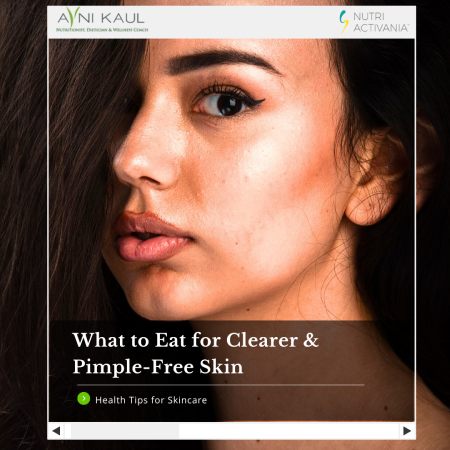
In today’s hectic lifestyle, one must take good care of their health. Diet plays a significant role in leading a healthy life, and our skin health is closely linked to our gut health. Research indicates that what you eat has a profound effect on your skin. An unhealthy, unbalanced gut can release toxins into the bloodstream, causing inflammation throughout the body. Conversely, a healthy diet can promote digestion and provide essential vitamins and minerals vital for skin health.
Let us find out more from one of the leading Dieticians for skin health in Delhi and Gurgaon, Avni Kaul, on what to eat for clearer and pimple-free skin.

What is the Impact of Diet on Our Skin?
Certain foods raise blood sugar quickly, causing the body to release insulin-like growth factor 1 (IGF-1), a hormone that influences growth. Excess IGF-1 in the blood can stimulate oil glands to produce more sebum, increasing the risk of acne and inflammation. Thus, diet directly impacts skin health by affecting hormone levels and oil production. Foods and nutrients for a Pimple-Free Skin to be included are:
The Goodness of a Mediterranean Diet
The Mediterranean diet, rich in fruits, vegetables, whole grains, nuts, and olive oil, along with moderate amounts of fish and dairy, is highly beneficial for reducing acne. This plant-based diet is loaded with antioxidants and anti-inflammatory compounds that help prevent inflammation and premature ageing. The high water content in fruits and vegetables promotes extra skin hydration, while a healthy gut biome, supported by this diet, is also beneficial for acne. Additionally, the Mediterranean diet minimizes the intake of refined sugar and processed, and fried foods, all of which are linked to acne, breakouts, and skin irritations.
A Low Glycemic Diet
Recent studies suggest that following a low-glycemic diet, which is low in simple sugars, can prevent and improve acne. The glycemic index measures how a food impacts blood sugar levels, with foods scoring 70 or higher causing significant spikes. These spikes lead to increased insulin levels, which in turn trigger inflammation and higher production of sebum, an oily substance in the skin. A low-glycemic diet, rich in fresh vegetables, fruits, beans, oats, lean meats, and fish, can help manage acne by stabilizing blood sugar and insulin levels.
Start your day with a whole-grain, high-fibre breakfast like oats or muesli. Opt for whole-grain over-refined foods and include pulses and legumes in your daily diet. Consume 3 servings of fresh vegetables and 1-2 servings of whole fruits. Limit oil intake to 3 teaspoons daily and include eggs or low-fat dairy if vegetarian.
Get Your Antioxidants and Omega-3 Fatty Acids
A diet rich in antioxidants and omega-3 fatty acids can significantly benefit your skin by reducing acne and promoting overall skin health. Omega-3 fatty acids, found in fish like sardines, trout, and salmon, as well as plant sources like walnuts, chia seeds, and flax seeds, have anti-inflammatory properties that help reduce skin inflammation. Antioxidants, which neutralize free radicals that damage skin cells, also play a crucial role in acne prevention. Foods high in antioxidants, such as bell peppers, strawberries, kiwi, citrus fruits, berries, leafy greens, and green tea, protect the skin from oxidative stress and support collagen production. This combination of omega-3s and antioxidants not only aids in healing existing acne but also helps prevent future breakouts by combating inflammation and promoting skin repair.
Vitamins A and E are Vital
Did you know that low levels of vitamins A and E are linked to severe acne cases? Increasing your intake of these vitamins may help lessen acne severity. Vitamin A, essential for cell growth, benefits the skin by promoting healing and treating acne through retinoids. Foods rich in vitamin A, such as oily fish (like herring and salmon), beef liver, dairy products, eggs, and yellow-orange and green vegetables (like sweet potatoes, carrots, spinach, and broccoli), support skin health. Vitamin E, known for its moisturizing properties, helps retain natural skin oils and speeds up healing. Being fat-soluble, vitamin E is easily absorbed into the skin, aiding in the recovery of acne and its scars. Rich sources of vitamin E include fish, eggs, broccoli, meat, and nuts like almonds.
The Power of Zinc
Zinc is a crucial dietary mineral for skin development and the regulation of metabolism and hormone levels. Research indicates that insufficient zinc levels are associated with more severe acne cases, suggesting that increasing dietary zinc can aid in managing severe acne. Foods rich in zinc, such as red meat, poultry, dairy products, nuts, beans, whole grains, fortified breakfast cereals, and certain seafood like crab and lobster, can help boost zinc intake and potentially improve acne severity. (Source: https://www.ncbi.nlm.nih.gov/pmc/articles/ PMC9785331/)
So, if you want glowing, pimple-free skin, focus on a balanced diet rich in antioxidants, omega-3 fatty acids, vitamins A and E, and zinc. Embrace the Mediterranean diet, opt for low-glycemic foods, and ensure your diet supports healthy digestion and hormone balance for optimal skin health.