
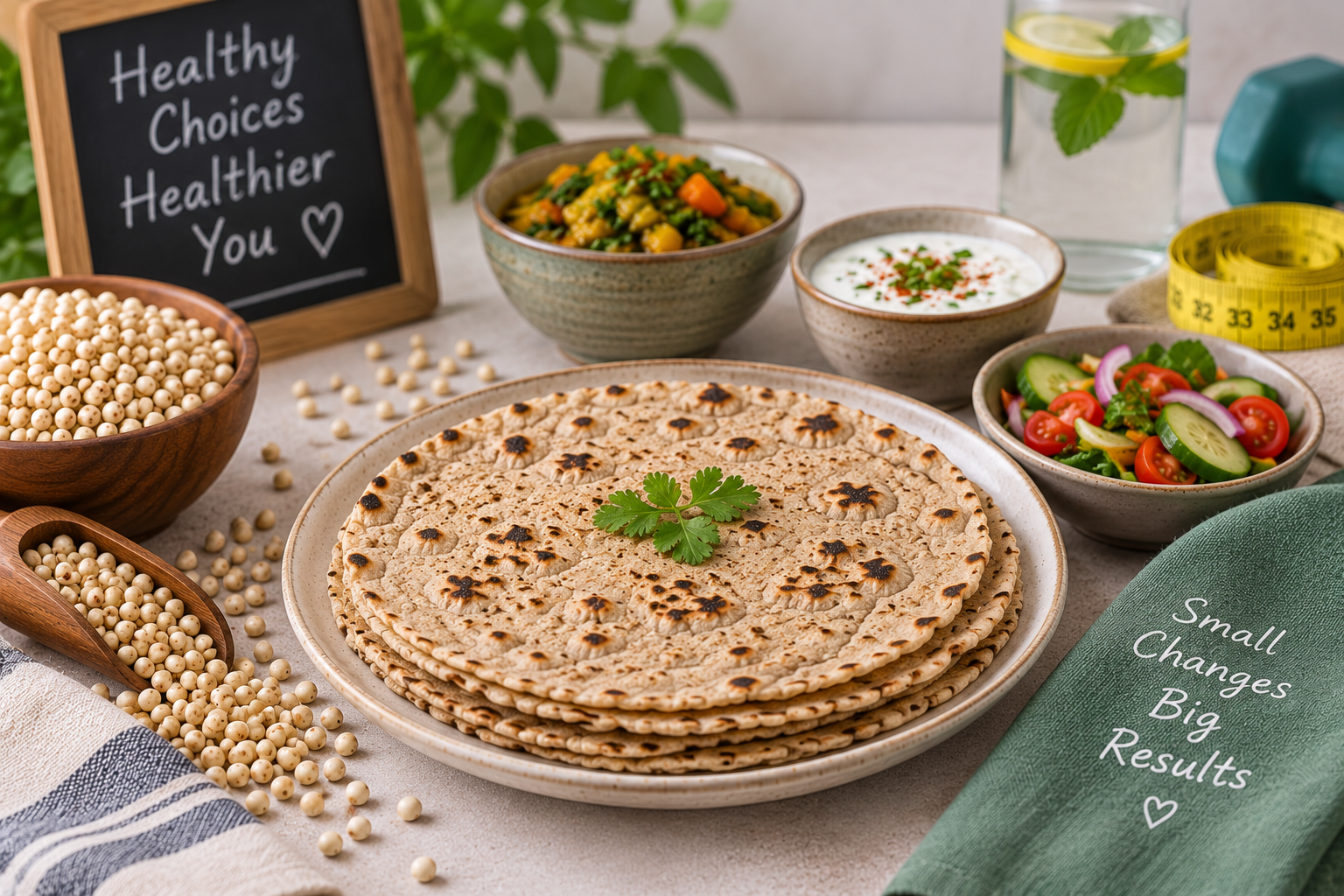
In this guide, Our founder and lead dietician Avni Kaul explains about the Nutritional Value of Jowar roti Per 100g, everyday Consumption benefits, During Pregnancy Benefits and 3 Easy Indian recipes that make jowar roti a smart, sustainable addition to your plate.
One of the most frequent questions we receive from clients across Delhi NCR is a simple one: what should I be eating instead of my regular wheat roti? For many, especially those managing diabetes, PCOS, pregnancy nutrition or gut health, the answer often begins with jowar.
Jowar roti, the traditional flatbread made from sorghum flour, is quietly making a comeback in urban Indian kitchens, and with good reason. It is gluten free, rich in fibre, low on the glycaemic index and remarkably kind to your digestive system.
What Is Jowar?
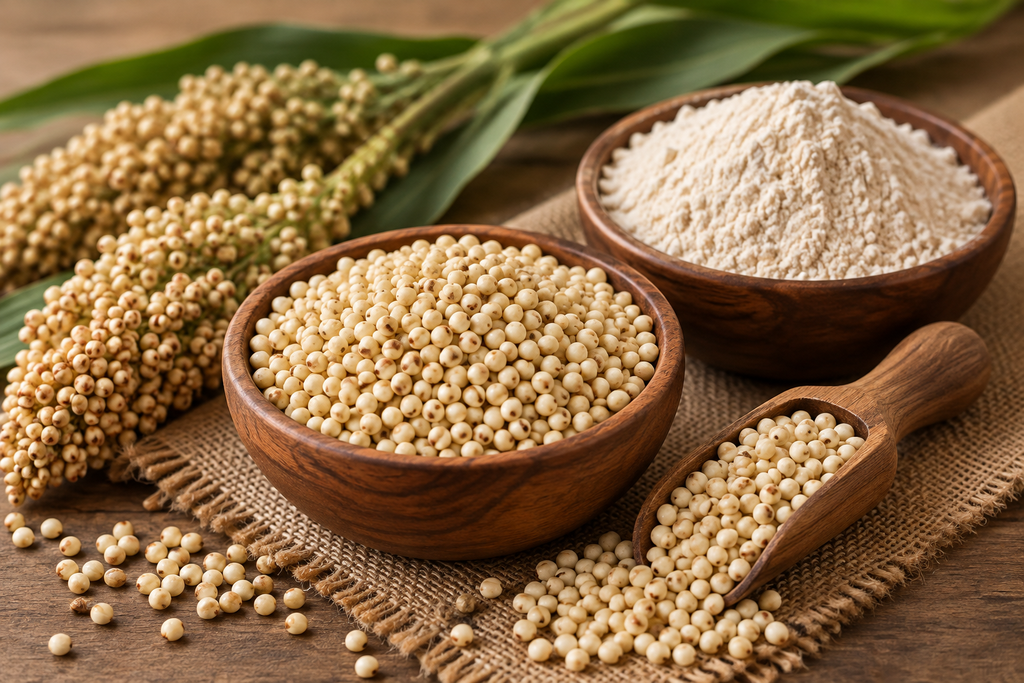
Jowar is the Indian name for sorghum, one of the oldest cultivated cereals in the world. Ground into a fine flour and kneaded with hot water, it becomes a soft, round flatbread known as jolada rotti in Karnataka, bhakri in Maharashtra and simply jowar ki roti across northern India.
Unlike wheat, jowar contains no gluten, making it a safe grain for individuals with coeliac disease, gluten intolerance or wheat sensitivity. Its earthy, nutty flavour pairs well with everything from a spicy sabzi to a light bowl of curd.
Nutritional Value of Jowar Roti Per 100g
Jowar is often called a nutritional powerhouse, and the numbers below explain why. The values are drawn from the ICMR Indian Food Composition Tables (2017) and the USDA FoodData Central database, giving you a reliable snapshot of what a 100g serving of raw jowar grain delivers.
Macronutrients
| Nutrient | Value per 100g |
|---|---|
| Energy | 329 to 339 kcal |
| Carbohydrates | 72.1 g |
| Protein | 10.4 to 10.6 g |
| Total fat | 3.3 to 3.5 g |
| Dietary fibre | 6.3 to 6.7 g |
| Sugars | 2.53 g |
Jowar’s carbohydrate content is dominated by complex, slow-releasing starches, which is why it does not spike blood sugar the way refined grains do. Its protein content is impressively high for a cereal, second only to bajra among Indian millets, making it a valuable option for vegetarians and vegans looking to boost plant based protein intake.
Essential Minerals
| Mineral | Value per 100g |
|---|---|
| Potassium | 363 mg |
| Phosphorus | 289 mg |
| Magnesium | 165 mg |
| Calcium | 13 to 25 mg |
| Iron | 3.36 to 4.1 mg |
| Zinc | 1.67 mg |
| Sodium | 2 mg |
The mineral profile of jowar is where it truly stands apart from wheat and rice. Its magnesium and potassium content support heart health, blood pressure regulation and muscle function. Phosphorus contributes to strong bones and teeth, while its meaningful iron content makes it particularly relevant for women, growing children and anyone at risk of anaemia. Its remarkably low sodium level makes it an ideal grain for people managing hypertension.
Nutrient values are compiled from the ICMR-NIN Indian Food Composition Tables (2017) and USDA FoodData Central. Actual values may vary slightly depending on the variety of jowar, growing conditions and milling method.
Calories in Jowar Roti: How Many Calories Are in 1 and 2 Jowar Rotis?
If you are trying to lose weight and wondering about the calories in jowar roti, you are asking a very practical question.
Jowar roti, also known as sorghum roti or jowar bhakri, is commonly eaten as part of Indian meals. But the number of calories in one roti is not always the same because the size of the roti and the amount of jowar flour used can vary.
For a typical homemade medium jowar roti made with around 35–40 g of jowar flour, you can generally expect roughly 130–150 calories. Jowar flour itself is energy-dense, and the final calorie count depends mainly on how much flour goes into the roti.
Calories in 1 Jowar Roti
So, how many calories are in one jowar roti?
A medium homemade jowar roti made from approximately 35–40 g of flour contains around:
130–150 calories
A smaller roti made with around 30 g flour may contain approximately 105–115 calories, while a larger roti can easily provide 160 calories or more.
This is why saying that every jowar roti contains exactly the same number of calories can be misleading.
Calories in Jowar Roti by Size
| Jowar roti size | Approximate calories |
|---|---|
| Small | 105–115 kcal |
| Medium | 130–150 kcal |
| Large | 160–180+ kcal |
These are estimates for plain rotis without added ghee or oil.
USDA FoodData Central includes sorghum flour as a food item, and published sorghum research shows that the energy value of sorghum flour varies by sample and composition.
Calories in 2 Jowar Roti
If you eat two medium plain jowar rotis, each containing approximately 130–150 calories, the total is around:
2 jowar rotis = 260–300 calories
The actual number can be higher when the rotis are larger or when oil or ghee is added.
For example:
| Quantity | Approx. calories |
|---|---|
| 1 small jowar roti | 105–115 kcal |
| 1 medium jowar roti | 130–150 kcal |
| 2 medium jowar rotis | 260–300 kcal |
| 3 medium jowar rotis | 390–450 kcal |
| 4 medium jowar rotis | 520–600 kcal |
Calories in Jowar Roti With Ghee
This is where calorie intake can increase quickly.
The jowar roti itself contains calories from the flour. Adding ghee adds additional calories.
So, if you are tracking the calories in one jowar roti, remember to include the ghee or oil used during or after cooking.
For weight management, a plain roti and a roti generously coated with ghee should not be treated as the same food from a calorie-counting perspective.
Jowar Roti Calories Per 100g
However, 100 g of cooked jowar roti and 100 g of dry jowar flour are not the same thing. Water added during preparation changes the final weight of the cooked roti, while the calories primarily come from the amount of flour used.
For this reason, measuring the jowar flour used per roti is often more useful than weighing the finished roti when you are trying to estimate calories.
Is Jowar Roti Good for Weight Loss?
Jowar can fit into a weight-loss diet, but simply replacing wheat roti with jowar roti does not automatically cause weight loss.
Your total calorie intake, meal portions, protein intake, vegetables, activity and overall eating pattern still matter.
Jowar is a whole grain and provides carbohydrates along with fibre and other nutrients. Indian agricultural information also identifies sorghum as a source of several B vitamins.
The important point is:
A food can be nutritious and still contribute calories.
So, if you eat four very large jowar rotis with generous amounts of ghee, the meal can contain substantially more calories than two medium plain rotis.
Is Jowar Roti Better Than Wheat Roti for Weight Loss?
People often search for “calories in jowar roti vs wheat roti.”
Instead of deciding that one is automatically better, compare the complete nutritional value and the amount you actually eat.
The calorie difference between two plain rotis may be less important than:
- How large the rotis are
- How much flour is used
- Whether ghee or oil is added
- What you eat with them
- Your total daily calorie intake
Jowar and wheat also have different nutrient profiles. Published USDA research has found differences in protein and mineral composition between sorghum and wheat flours.
How Many Jowar Rotis Can You Eat for Weight Loss?
There is no universal number that works for everyone.
For one person, two medium jowar rotis may work well as part of a balanced meal. Another person may have different calorie and carbohydrate requirements.
Rather than asking only how many rotis you can eat, look at the complete plate.
For example, you can combine jowar roti with:
- Dal or another protein source
- Plenty of vegetables
- Curd or another suitable accompaniment
- A moderate amount of healthy fat
This can make the meal more filling and nutritionally balanced.
Can You Eat Jowar Roti Every Day?
Yes, jowar can be included regularly as part of a varied diet.
But variety still matters.
You can rotate different grains and cereals depending on your preferences and nutritional requirements instead of feeling that you need to eat the same grain at every meal.
The right amount will depend on your overall diet and energy needs.
Is Jowar Roti High in Calories?
The answer depends on the size.
A medium jowar roti is not unusually high in calories, but a large roti made with a lot of flour can provide considerably more calories.
This is why portion size matters.
For someone counting calories, measuring the flour used to prepare each roti gives a more reliable estimate than simply counting the number of rotis.
Calories in Jowar Bhakri
Jowar roti and jowar bhakri can be very similar in composition, but traditional bhakri is often thicker and larger.
So the calories in jowar bhakri can vary significantly depending on its weight and preparation.
A large bhakri can contain much more flour than a small jowar roti.
Always consider the actual portion.
How to Make Jowar Roti More Weight-Loss Friendly
If you enjoy jowar roti and are trying to manage your weight, you don’t necessarily need to remove it from your meals.
Instead, pay attention to:
Portion size
Two medium rotis may be very different from two extra-large rotis.
Added fats
Keep track of ghee and oil because they increase the total calories.
Protein
Pair your roti with an appropriate protein source rather than having a meal dominated by carbohydrates.
Vegetables
Add vegetables to make the meal more filling and nutritionally balanced.
Overall daily intake
Your full day’s food intake matters more than one individual food.
Calories in 2 Jowar Roti for Weight Loss
If you are specifically asking about 2 jowar roti calories, a practical estimate for two medium plain homemade rotis is around 260–300 calories.
That can be a reasonable part of a weight-loss meal when the rest of the plate is balanced.
But remember: adding ghee, oil, high-calorie sides or large portions can increase the total meal considerably.
Final Takeaway
The calories in jowar roti depend primarily on the amount of jowar flour used and the size of the roti.
As a practical estimate:
1 medium jowar roti: 130–150 calories
2 medium jowar rotis: 260–300 calories
1 large jowar roti: around 160–180+ calories
For weight loss, you do not have to avoid jowar roti simply because it contains carbohydrates. What matters is how much you eat, what you eat with it and how it fits into your overall calorie and nutrition needs.
Benefits of Jowar Roti
1. Supports Better Blood Sugar Control
Because jowar has a low glycaemic index, it releases glucose slowly into the bloodstream. This prevents the spikes and crashes that refined wheat and rice commonly cause, making it a reliable everyday grain for anyone managing type 2 diabetes, pre diabetes or PCOS.
2. Aids Digestion and Gut Health
The insoluble fibre in jowar adds bulk to stools and supports regular bowel movements. Clients who switch to jowar rotis two or three times a week often report noticeable relief from bloating, sluggish digestion and mild constipation within a few weeks.
3. Naturally Gluten Free
For those diagnosed with coeliac disease or non coeliac gluten sensitivity, jowar is a safe, affordable and familiar alternative to wheat. It allows you to keep enjoying rotis without triggering fatigue, bloating or gut inflammation.
4. Helps in Weight Management
The combination of complex carbohydrates, plant protein and fibre keeps you feeling full for longer, which naturally reduces mindless snacking. At Nutri Activania, jowar rotis feature regularly in our weight management meal plans for exactly this reason.
5. Strengthens Heart Health
Jowar contains policosanols, plant compounds linked to healthier cholesterol levels. Its magnesium and potassium content also supports blood pressure regulation, giving it a well earned place on any heart friendly plate.
6. Boosts Bone and Muscle Strength
The calcium, phosphorus and magnesium in sorghum work together to maintain bone density and muscle function. This is particularly relevant for women approaching menopause, older adults and growing children.
7. Improves Energy and Immunity
The B vitamins in jowar help your body convert food into usable energy, while its antioxidants combat oxidative stress and support immunity. Consumed consistently, jowar contributes meaningfully to your daily iron and micronutrient intake as well.
Jowar Roti Benefits During Pregnancy
Pregnancy is one of the most nutritionally demanding phases in a woman’s life. The right grain choices can genuinely influence outcomes for both mother and baby, and jowar earns its place on the pregnancy plate for several reasons.
a. Steady energy without blood sugar spikes. Gestational diabetes is becoming increasingly common among Indian women. Replacing refined wheat rotis with jowar rotis, even partially, helps stabilise post meal glucose levels.
b. Relief from pregnancy constipation. Constipation is one of the most common complaints during pregnancy, often triggered by iron supplements and hormonal changes. Jowar’s fibre content supports smoother digestion without harsh interventions.
c. Iron and folate support. Jowar contributes to daily iron intake and pairs beautifully with iron rich sides like palak, methi and beetroot. Folate supports the healthy development of the baby’s nervous system.
d. Calcium and magnesium for bone development. These minerals support foetal skeletal growth and help ease leg cramps in the mother, particularly during the second and third trimesters.
e. Gentle on the stomach. For mothers coping with acidity, nausea or heaviness, jowar roti is easier to digest than heavier wheat or maida based breads.
Every pregnancy is unique. We recommend consulting a qualified prenatal nutritionist before making significant dietary changes, particularly if you have gestational diabetes, thyroid concerns or diagnosed deficiencies. Our team at Nutri Activania offers personalised prenatal and postnatal plans tailored to your trimester, medical history and lifestyle.
How to Make Jowar Roti
Ingredients:
- 1 cup jowar flour
- Warm water, approximately three quarters of a cup
- A pinch of salt (optional)
- Ghee for brushing (optional)
Method:
- Combine the jowar flour and salt in a wide bowl.
- Slowly add warm water while mixing with a spoon. Once cool enough to handle, knead into a smooth, pliable dough that is soft but not sticky.
- Divide into equal portions and roll each into a ball.
- Flatten on a clean surface or a sheet of butter paper using your palm, patting gently into a round roti. If rolling with a pin, dust generously with jowar flour.
- Heat a tawa on medium flame. Transfer the roti carefully and cook for about 30 seconds on one side.
- Flip and cook for another minute, pressing gently with a cloth until the roti puffs up.
- Brush with a little ghee if desired and serve hot.
Three Easy Recipe for Jowar Roti to Try This Week
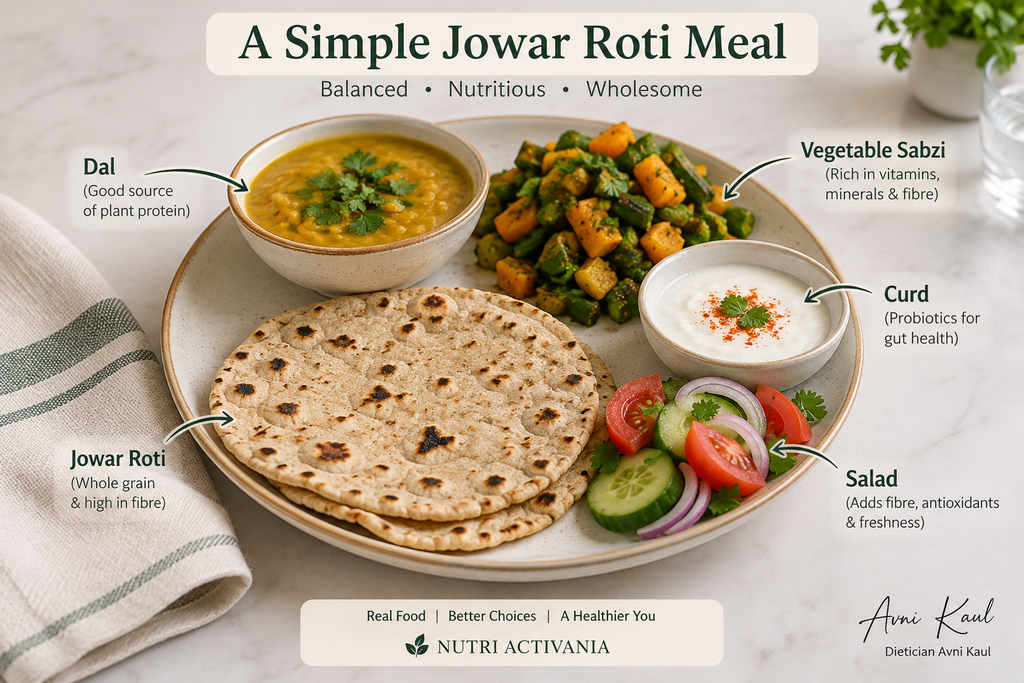
A Simple Jowar Roti Meal
1. Jowar Methi Thepla
Combine finely chopped fenugreek leaves, grated ginger, green chilli, turmeric, cumin and a spoon of curd with jowar flour. Knead into a soft dough and cook like regular rotis. A wholesome choice for breakfast or a school and office lunch box.
2. Jowar Vegetable Roti
Mix jowar flour with grated carrots, chopped spinach, onion, coriander and a pinch of ajwain. Bind with a little curd or hot water, pat into thick rotis and cook on a tawa with a drizzle of oil. Serve with green chutney or curd.
3. Jowar Palak Roti for Iron Support
Blanch a handful of palak leaves and blend into a smooth paste. Knead into jowar flour along with garlic, cumin and salt. A particularly good option during pregnancy or for anyone with low haemoglobin.
Tips for the Perfect Jowar Roti
- Always use warm water. It activates the starches and makes the dough easier to shape.
- Knead the dough thoroughly. A rushed dough leads to cracked rotis.
- Cook on medium heat. High flame burns the outside before the inside cooks through.
- Store flour in an airtight container away from moisture. Freshly ground jowar gives the best texture.
- If plain jowar rotis feel too dense at first, start with a fifty fifty mix of jowar and whole wheat flour, then gradually increase the jowar ratio.
Who Should Be Cautious?
Jowar suits most people, but a few groups should exercise care:
- Individuals with thyroid disorders should keep intake moderate, as sorghum contains small amounts of goitrogens.
- Those with kidney conditions should consult a doctor before making it a daily staple, given its mineral content.
- Anyone introducing jowar for the first time should start with small portions to allow the digestive system to adapt to the higher fibre load.
Frequently Asked Questions
1. Is jowar roti good for weight loss?
Yes. Jowar roti is high in fibre and complex carbohydrates, which promote satiety and reduce overeating. Two jowar rotis with a portion of vegetables and dal make for a balanced, calorie controlled meal that supports sustainable weight loss.
2. Can diabetics eat jowar roti daily?
Most people with diabetes can safely include jowar roti in their daily diet. Its low glycaemic index helps prevent sharp blood sugar spikes. Portion size and overall meal balance still matter, so a personalised consultation is recommended.
3. Is jowar roti safe during pregnancy?
Yes. Jowar roti is safe and beneficial during pregnancy for most women. It supports blood sugar control, digestion and mineral intake. Pregnant women with gestational diabetes or other medical conditions should consult their obstetrician or dietician before making it a staple.
4. How many jowar rotis can I eat in a day?
For most healthy adults, two to three medium jowar rotis a day fit comfortably into a balanced diet. Athletes or those with higher energy needs may require more, while individuals on calorie restricted plans may need slightly fewer.
5. Which is better, jowar roti or wheat roti?
Both have their place. Jowar roti is gluten free, lower on the glycaemic index and higher in certain minerals, making it particularly useful for people with diabetes, PCOS or gluten sensitivity. Wheat roti offers more protein per serving. Ideally, rotate between grains rather than rely on any single one.
6. Can jowar roti cause gas or bloating?
When introduced suddenly in large amounts, its high fibre content can cause temporary bloating. Start with one roti a day and gradually increase intake to allow your gut to adapt.
7. Is jowar roti good for children?
Yes. Jowar roti offers valuable minerals like calcium, iron and magnesium that support growing children. Soft, fresh jowar rotis with ghee and dal work well from the age of one, provided there is no allergy or intolerance.
8. How many calories are in 1 jowar roti?
A medium homemade jowar roti generally contains around 130–150 calories, depending on the amount of flour used.
9. How many calories are in 2 jowar roti?
Two medium plain jowar rotis contain approximately 260–300 calories.
10. Is jowar roti good for weight loss?
Jowar roti can be included in a weight-loss diet. Portion size and the overall meal are important.
11. Is jowar roti better than wheat roti for weight loss?
Neither is automatically better for everyone. Compare the portion, preparation and overall nutritional pattern rather than calories alone.
12. Does jowar roti contain carbohydrates?
Yes. Jowar is a grain, so its roti naturally provides carbohydrates.
13. Does adding ghee increase jowar roti calories?
Yes. Ghee adds additional calories to the roti.
14. Can I eat jowar roti every day?
Jowar can be included regularly as part of a varied, balanced diet.
Final Thoughts
Jowar roti is more than a nostalgic throwback. It is a genuinely nutritious, blood sugar friendly and pregnancy safe staple that fits comfortably into modern Indian meals. Introducing it two or three times a week is a simple, low effort way to enrich your diet with fibre, minerals and antioxidants without giving up the comfort of a warm roti with dal.
If you would like a personalised meal plan built around jowar and other traditional Indian grains, our team at Nutri Activania offers one on one consultations designed around your health goals, lifestyle and preferences.
Outbound source references
- Whole grains and sorghum:Harvard T.H. Chan School of Public Health – Whole Grains
- Dietary fibre:Harvard T.H. Chan School of Public Health – Fibre
- Healthy carbohydrate choices:Harvard T.H. Chan School of Public Health – Carbohydrates
- Balanced meal structure:Harvard Healthy Eating Plate
- Sorghum/ancient grains:USDA ARS – Cooking with Science: Ancient Grains