
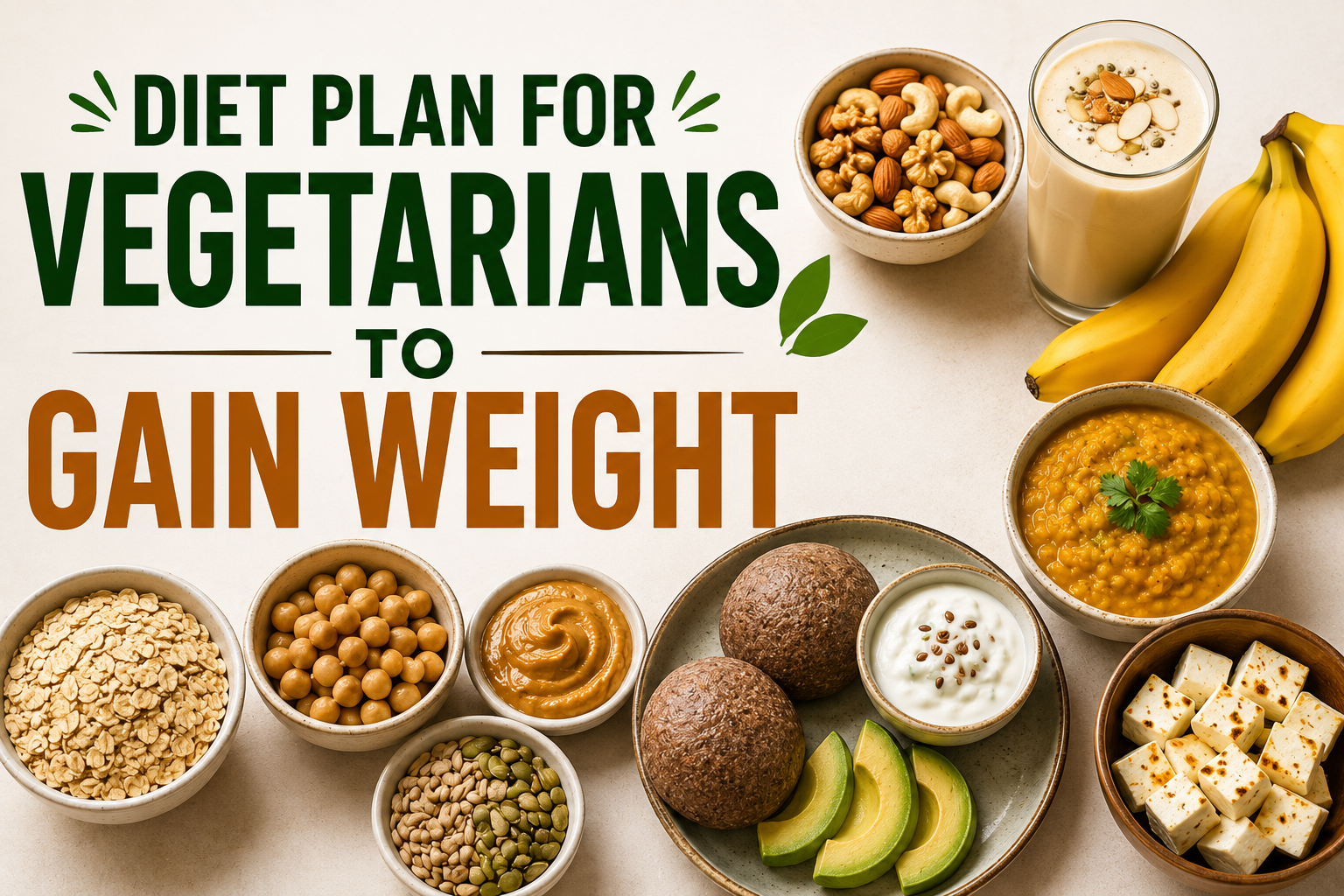
Most people think gaining weight is easy. Just eat more, right? But if you are underweight, you already know it is not that simple. Many people follow a random diet full of junk food, oily snacks and sweets to gain weight fast, but they end up feeling tired, bloated and unhealthy. Vegetarians should focus on paneer, dal, tofu, soya chunks, full fat milk and nuts to meet daily protein goals, while non-vegetarians can add eggs and chicken to their diet for faster muscle growth and healthy weight gain
The good news is that you can gain weight in a healthy way. All you need is the right diet, the right routine and a little patience. This guide will show you exactly what to include in your daily diet, when to eat and how to build a strong, healthy body using simple Indian vegetarian foods.
What This Guide Covers
In this guide, you will learn:
- Why healthy weight gain is important
- The benefits of a vegetarian diet for weight gain
- The simple rules of a healthy weight gain diet
- The top 10 high calorie vegetarian foods to add to your diet
- A full 7-day Indian vegetarian diet plan
- Easy snack ideas to include in your daily diet
- When to add supplements to your diet
- Common diet mistakes to avoid
- When to talk to a dietician
- Answers to the most asked questions
Whether you are a student, a working person, a new mother or someone recovering from illness, this guide gives you a simple diet plan you can follow every day.
Why Is Healthy Weight Gain Matters?
Being too thin is not always a good thing. A poor diet or eating too little can lead to many health problems, such as:
- Weak immunity and frequent illness
- Hair fall and dull skin
- Weak bones
- Low energy and tiredness
- Hormone problems
- Slow healing after cuts or injuries
- Trouble with periods and fertility
A healthy weight gain diet is not about eating junk food. It is about building strong muscles, better energy and a healthier body using good, natural foods.
Benefits of a Vegetarian Diet for Weight Gain
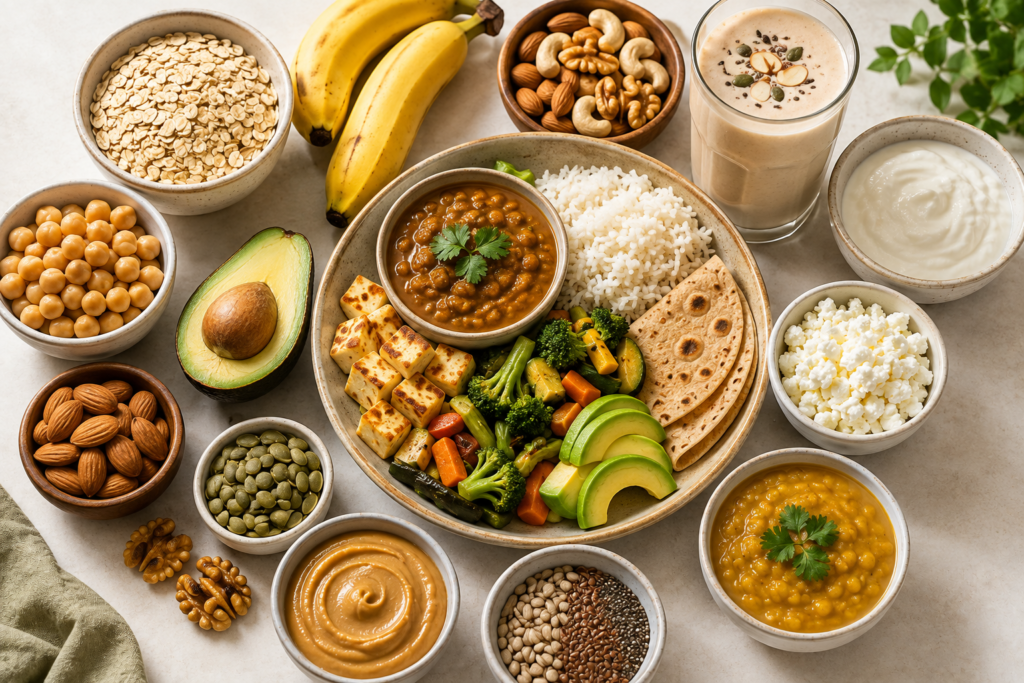
A vegetarian diet is one of the best ways to gain weight in a healthy way. Here is why:
- Rich in natural nutrients. A vegetarian diet full of fruits, vegetables, dals and dairy gives you vitamins and minerals along with calories.
- High in fibre. Good for digestion and gut health.
- Full of plant protein. Dals, paneer, tofu and soya help build muscle.
- Good for the heart. A vegetarian diet is naturally low in unhealthy fats.
- Easy to digest. Most Indian vegetarian foods are gentle on the stomach.
- Budget friendly. Rice, dal, roti, milk and vegetables are affordable and easy to find.
- Sustainable. You can follow this diet for life without side effects.
Simple Rules of a Healthy Weight Gain Diet
Before you start your diet plan, remember these five simple rules:
- Eat more calories than your body burns. Add 300 to 500 extra calories to your daily diet.
- Eat 5 to 6 small meals. A well spaced diet is easier than eating 2 or 3 big meals.
- Add more protein to your diet. Aim for 1.5 to 2 grams per kilo of body weight.
- Include healthy fats in every meal. Ghee, nuts, seeds and coconut are your best friends.
- Be regular. A diet that changes daily will not help. Consistency is the key.
Top 10 High Calorie Vegetarian Foods to Include in Your Diet
For healthy weight gain, vegetarians should build their diet around paneer, dal, tofu, soya chunks, full fat milk, ghee and nuts, while non-vegetarians can also include eggs and chicken to easily hit their daily protein and calorie targets.
These are the best foods to make part of your daily weight gain diet.
- Paneer. Full of protein and healthy fat. Add it to sabzi, sandwiches or eat it raw.
- Full fat milk. One glass gives you calories, protein, calcium and vitamin D.
- Bananas. Easy, filling and rich in natural sugar and potassium.
- Dry fruits. Almonds, cashews, walnuts, dates and raisins are high in calories and nutrients.
- Peanut butter. Two spoons a day add protein, healthy fats and calories.
- Ghee. One or two spoons in every meal boost calories and taste.
- Rice. A great source of energy. Choose brown rice or hand pounded rice for more nutrients.
- Potatoes and sweet potatoes. Healthy carbs that support weight gain.
- Dals and legumes. Rajma, chana, moong, urad and masoor give protein and fibre.
- Cheese. Add it to rotis, sandwiches or salads for extra calories and calcium.
Sample 7-Day Indian Vegetarian Diet Plan for Weight Gain
Here is a full 7-day diet plan. Each day gives you around 2,800 to 3,000 calories. Adjust the portions to match your body and goals.
Day 1
- Early morning: 1 glass full fat milk with 5 soaked almonds
- Breakfast: 2 paneer parathas with curd and 1 banana
- Mid morning: 1 glass banana peanut butter smoothie
- Lunch: 3 rotis, 1 bowl rajma, 1 cup rice, sabzi, curd, salad
- Evening: 1 glass badam milk, 2 besan laddoos
- Dinner: 2 rotis, 1 bowl dal, paneer sabzi, salad
- Bedtime: 1 glass warm milk with dates
Day 2
- Early morning: 1 glass milk with 4 walnuts
- Breakfast: Vegetable poha with peanuts and 1 boiled sweet potato
- Mid morning: 1 bowl fruit chaat with chia seeds
- Lunch: 3 jowar rotis, 1 bowl chole, jeera rice, aloo gobi, curd
- Evening: Cheese sandwich with 1 glass milk
- Dinner: 2 rotis, moong dal, paneer bhurji, salad
- Bedtime: 1 glass milk with turmeric
Day 3
- Early morning: Soaked almonds, 2 dates, 1 glass milk
- Breakfast: 2 aloo parathas with butter and curd
- Mid morning: 1 mango milkshake with full fat milk
- Lunch: Rajma chawal with ghee, cucumber salad, curd
- Evening: Sabudana khichdi with peanuts
- Dinner: 2 rotis, mixed dal, palak paneer
- Bedtime: 1 glass milk with 1 spoon ghee
Day 4
- Early morning: 1 glass milk with 6 cashews
- Breakfast: Masala oats with milk, 1 banana, 2 dates
- Mid morning: 1 glass mango or chikoo shake
- Lunch: 3 rotis, kadhi, rice, mixed veg sabzi, curd
- Evening: 2 dhoklas with green chutney and buttermilk
- Dinner: Vegetable pulao, raita, paneer tikka
- Bedtime: 1 glass warm milk with dry fruits
Day 5
- Early morning: 1 banana with peanut butter
- Breakfast: 3 idlis with sambar, coconut chutney and 1 glass milk
- Mid morning: 1 bowl fruit with curd and honey
- Lunch: 3 rotis, chole, brown rice, aloo methi, salad
- Evening: 1 glass masala milk with 2 laddoos
- Dinner: 2 rotis, tur dal, mixed vegetable curry
- Bedtime: 1 glass milk with turmeric
Day 6
- Early morning: 1 glass milk with figs and almonds
- Breakfast: Vegetable upma with ghee and 1 glass milk
- Mid morning: 1 glass fruit smoothie with oats
- Lunch: Paneer paratha, curd, dal makhani, jeera rice
- Evening: 1 bowl poha with peanuts and 1 glass milk
- Dinner: 2 rotis, moong dal, bhindi sabzi, salad
- Bedtime: 1 glass milk with honey
Day 7
- Early morning: 1 glass milk, 2 dates, 5 almonds
- Breakfast: 2 stuffed parathas (methi or paneer) with curd
- Mid morning: 1 glass thick lassi with sugar or fruit
- Lunch: Rajma chawal, cucumber salad, curd
- Evening: Peanut butter toast and 1 glass milk
- Dinner: 2 rotis, mixed dal, malai kofta
- Bedtime: 1 glass warm milk with turmeric
Easy Snack Ideas to Add to Your Diet
Snacks play an important role in a weight gain diet. Try these:
- Peanut butter and banana on toast
- Trail mix of nuts, raisins and dark chocolate
- Cheese cubes with fruits
- Homemade laddoos with ghee and nuts
- Sweet potato chaat with curd
- Paneer tikka wrap
- Thick fruit and milk smoothies
- Sabudana khichdi
Lifestyle Habits That Support a Weight Gain Diet
A good diet alone is not enough. These simple habits will help your body build muscle, not just fat.
1. Do Strength Training
Lift weights, do push ups, squats or use resistance bands. This turns the extra calories in your diet into strong muscles.
2. Sleep 7 to 9 Hours
Your muscles grow when you sleep. Poor sleep will slow down weight gain even if your diet is perfect.
3. Drink Water at the Right Time
Do not drink too much water just before or during meals. Sip it between meals instead.
4. Manage Stress
Too much stress can burn calories and reduce your appetite. Try meditation, walking or deep breathing.
5. Track Your Progress
Weigh yourself once a week at the same time. Also notice how your clothes fit and how strong you feel.
6. Be Patient
Healthy weight gain takes time. Aim for 2 to 4 kilos per month. Anything faster is not healthy.
When and How to Add Supplements to Your Diet
Supplements are not always needed. Most people can gain weight with a good diet alone. But sometimes, they can support your progress.
When Supplements May Help
- You cannot eat enough food due to low appetite
- You are recovering from an illness or surgery
- You are doing heavy workouts and need more protein
- You have a very fast metabolism
Common Supplements to Consider
- Whey protein or plant protein powder. Helps you meet daily protein goals.
- Mass gainer. Adds extra calories and carbs. Use only if your regular diet is not enough.
- Multivitamins. Fill in any nutrient gaps in your diet.
- Creatine. Helps in muscle growth if you do strength training.
- Omega 3. Good for hormones and joints.
Always talk to a qualified dietician before adding any supplement to your diet. Never depend on supplements alone. Real food should always come first.
Common Diet Mistakes to Avoid
- Filling your diet with junk food. This adds fat, not muscle.
- Skipping meals. This lowers your daily calorie count.
- Eating too much sugar. It causes health problems in the long run.
- Cutting fats from your diet. Healthy fats like ghee, nuts and seeds are needed for weight gain.
- Not getting enough protein. Without protein, your diet will only add fat, not muscle.
- Being inconsistent. Following a healthy diet only on some days will not give results.
- Ignoring health problems. Thyroid, gut issues or hormone problems can stop weight gain even with the best diet. Get checked if progress is slow.
When Should You Talk to a Dietician?
If you have followed a healthy diet for 3 months and still cannot gain weight, or if you have any of these problems, it is time to speak to a qualified nutritionist:
- Digestion problems like bloating or acidity
- Thyroid issues or PCOS
- Recovery after illness or surgery
- Sports or fitness goals
- Constant tiredness or weakness
A dietician will create a personal diet plan just for your body, your lifestyle and your health.
Frequently Asked Questions
1. Can I gain weight fast on a vegetarian diet?
You can gain weight in a healthy way, but not too fast. A safe rate is 2 to 4 kilos per month. Gaining faster than this often means fat, not muscle.
2. How many calories should my daily diet include to gain weight?
Most people need 300 to 500 extra calories per day. For example, if your body needs 2,200 calories, your diet should give you 2,500 to 2,700 to gain weight slowly and safely.
3. Is late night eating okay in a weight gain diet?
Yes, a small healthy snack at night is fine. A glass of warm milk with nuts or dates is a great option. Avoid heavy or oily food late at night as it can cause acidity.
4. Can girls follow this weight gain diet safely?
Yes, this diet is safe for both boys and girls. Girls may need slightly fewer calories. If you have periods issues, PCOS or thyroid problems, please speak to a dietician for a personal diet plan.
5. How much weight can I gain in a month with this diet?
2 to 4 kilos per month is safe and healthy. More than this can lead to fat storage and health problems.
6. Can I gain weight without eggs or non-vegetarian food in my diet?
Yes. Paneer, dal, milk, tofu, soya, nuts and seeds give you all the protein and calories you need.
7. Is ghee good in a weight gain diet?
Yes. Ghee gives you healthy fat and extra calories. Add 1 to 2 spoons in every meal.
8. How many meals should my diet include in a day?
Try to eat 5 to 6 smaller meals instead of 2 or 3 big meals. It is easier and helps in better digestion.
9. Can protein powder support my weight gain diet?
Yes, if you cannot get enough protein from food. But always try to get protein from your regular diet first. Talk to a dietician before starting any powder.
10. Will drinking milk at night help my weight gain diet?
Yes. A glass of full fat milk before bed adds calories, protein and calcium. It also helps your muscles repair while you sleep.
Final Thoughts
Gaining weight the vegetarian way is easy if you follow the right diet. Focus on real Indian foods, eat 5 to 6 meals a day, add healthy fats, do some strength training and give your body time to grow.
Skip the junk food. Do not fall for shortcuts. And if progress feels slow, get help from a qualified dietician Avni kaul who can build a diet plan around your unique body and goals. With patience and consistency, you can build a strong, healthy body using the food you already love.