
Country chicken, also known as desi chicken, nattu kozhi, or village chicken, is a popular protein-rich food in India. It is often considered healthier than regular broiler chicken because of its traditional rearing methods, firmer texture and distinctive taste. For people working with a weight gain dietician in Delhi or a weight loss dietician in Delhi, understanding the actual nutritional value of country chicken can help with better meal planning.
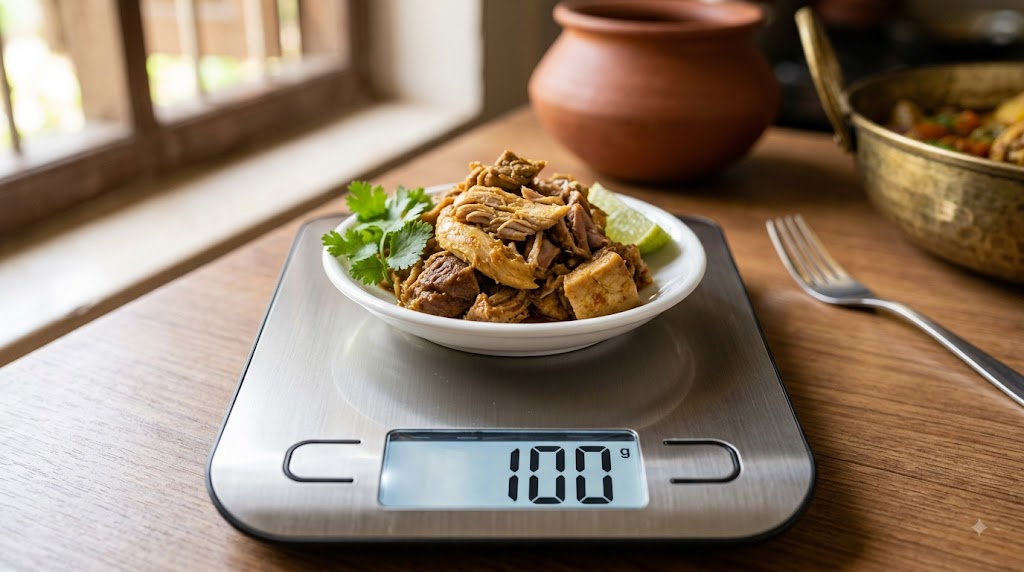
But there is an important problem with many articles about country chicken nutrition: the number “100 g” does not always mean the same thing.
Is it 100 g of raw chicken? Cooked chicken? Bone-in chicken? Meat without bones? With skin? Without skin?
These differences can significantly change the nutrition you actually consume.
This guide looks at country chicken nutrition per 100 g and explains how to interpret the numbers correctly, whether your goal is healthy weight gain, weight loss, or simply maintaining a balanced diet.
Country Chicken Nutrition Facts per 100g
The nutrition of country chicken varies according to the cut, skin and preparation. Indian Food Composition Tables (IFCT) data for country hen with skin show approximately the following values:
| Nutrient | Leg | Thigh | Breast | Wing |
|---|---|---|---|---|
| Calories | 173 kcal | 188 kcal | 180 kcal | 183 kcal |
| Protein | 17.0 g | 18.3 g | 22.1 g | 18.7 g |
| Fat | 11.7 g | 12.8 g | 10.2 g | 12.1 g |
| Carbohydrates | 0 g | 0 g | 0 g | 0 g |
These figures are approximate and should not be treated as a universal value for every country chicken. Breed, age, cut, skin and cooking method can change the nutritional composition.
Which Part of Country Chicken Has the Most Protein?
Among the cuts listed above, breast meat provides the highest protein content at about 22.1 g per 100 g.
The leg provides around 17 g, while thigh and wing provide approximately 18–19 g per 100 g.
This makes breast a particularly useful choice when your priority is getting more protein without choosing a higher-fat cut.
However, this does not mean that breast is automatically the “healthiest” part for everyone. Your total calorie intake, portion size and cooking method still matter.
The First Hidden Fact: 100g Chicken Does Not Always Mean 100g Meat
This is one of the most important points to understand when calculating chicken nutrition.
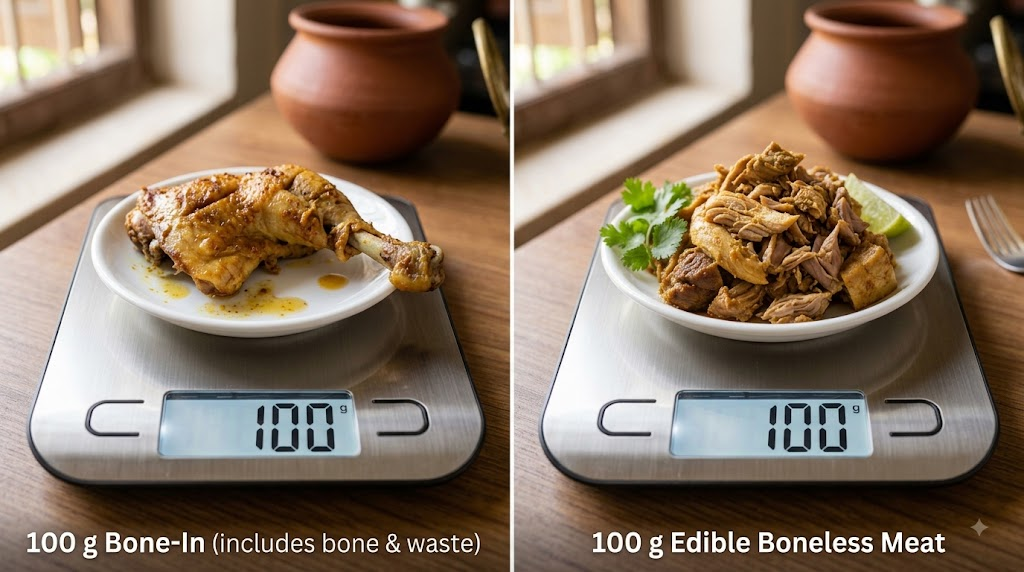
Suppose you purchase 500 g of bone-in country chicken.
You cannot assume that you have 500 g of edible meat.
Some of the weight comes from:
- Bones
- Skin
- Connective tissue
- Other parts that are not normally eaten
Therefore, nutrition values reported for 100 g edible meat should not automatically be applied to 100 g bone-in chicken.
Why Does This Matter?
Imagine a nutrition database says:
100 g chicken = 20 g protein.
That usually refers to the edible portion.
If you weigh 100 g of chicken containing bones, you are not necessarily consuming 100 g of meat.
This can cause people to overestimate their actual protein intake.
For people tracking protein for muscle building or weight management, weighing the edible portion gives a more useful estimate.
The Second Hidden Fact: Raw and Cooked Chicken Are Not the Same
Another common mistake is comparing raw and cooked chicken using the same 100 g measurement.
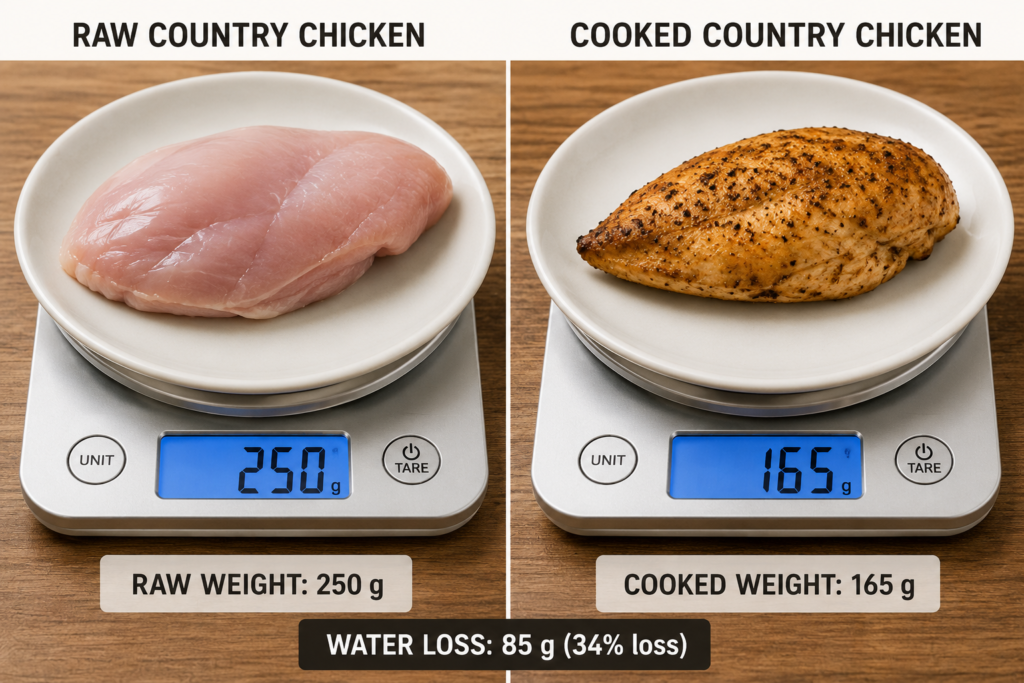
During cooking, chicken loses water.
As a result, the cooked meat can weigh less than the raw meat even though much of its protein remains.
Therefore:
100 g raw chicken ≠ 100 g cooked chicken
For example, you might start with more than 100 g of raw meat and end up with a smaller cooked portion because water has been lost.
The Better Way to Track Chicken
Choose one method and use it consistently.
Method 1: Weigh the raw edible meat and use nutrition data for raw chicken.
Method 2: Weigh the cooked edible meat and use nutrition data specifically for cooked chicken.
The important thing is not to mix the two systems.
Country Chicken Breast Is Not Automatically a “Super Protein”
Country chicken is certainly a good source of high-quality protein.
But the popular claim that country chicken always contains dramatically more protein than broiler chicken needs to be treated carefully.
Country chicken breast with skin provides around 22 g protein per 100 g in the IFCT figures. Other chicken products can have protein values in a similar range.
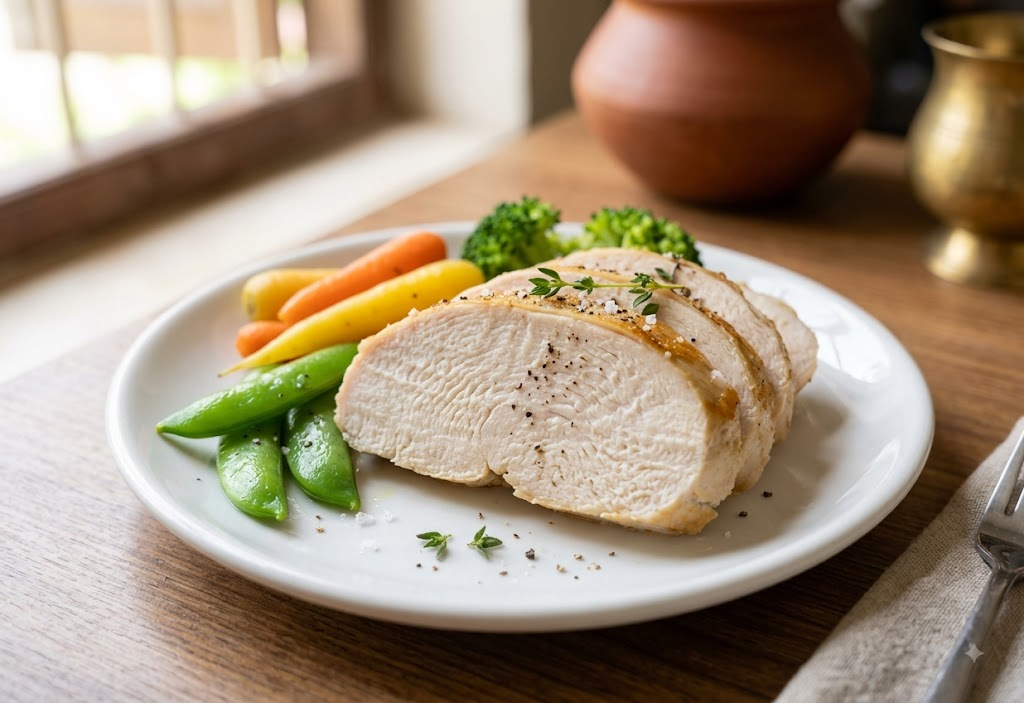
[The nutritional difference between country and broiler chicken can depend on:
- Breed
- Age
- Feeding
- Activity
- Cut
- Skin
- Cooking method
So the more accurate conclusion is:
Country chicken is a good protein source, but it should not automatically be considered dramatically higher in protein than every type of broiler chicken.
A More Useful Question: Protein per Calorie
Instead of asking only:
“How much protein does country chicken contain?”
ask:
“How much protein am I getting for the calories I eat?”
This is especially useful when your goal is weight management.
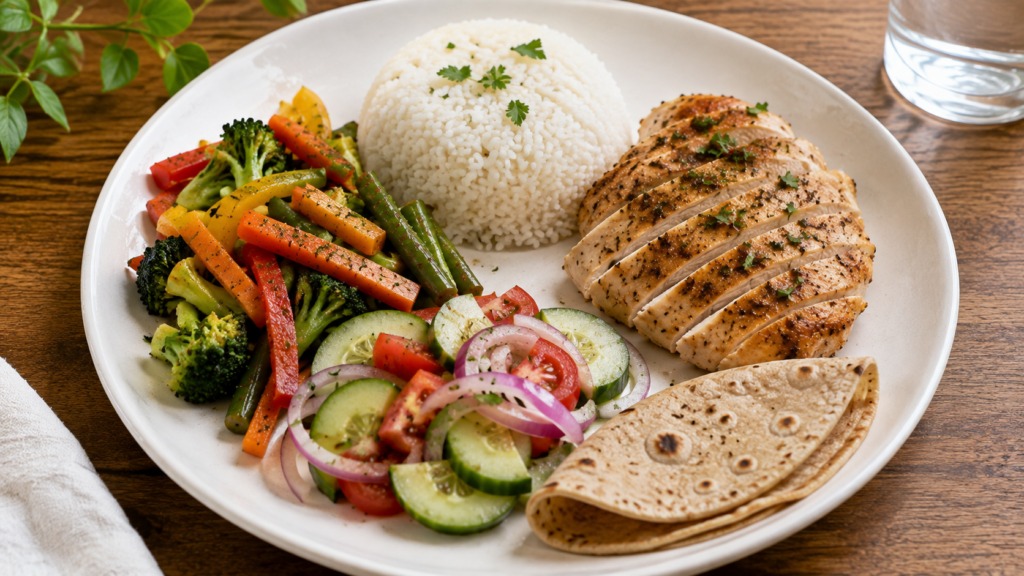
Country chicken breast with skin provides approximately 22 g protein and 180 kcal per 100 g in the IFCT figures.
A leaner, skinless preparation can make the meal more calorie-conscious.
This is why looking at protein density can be more useful than simply labeling a food “high protein.”
The Third Hidden Fact: Country Chicken Curry Is Not the Same as Country Chicken Meat
This is where nutrition calculations often go wrong.
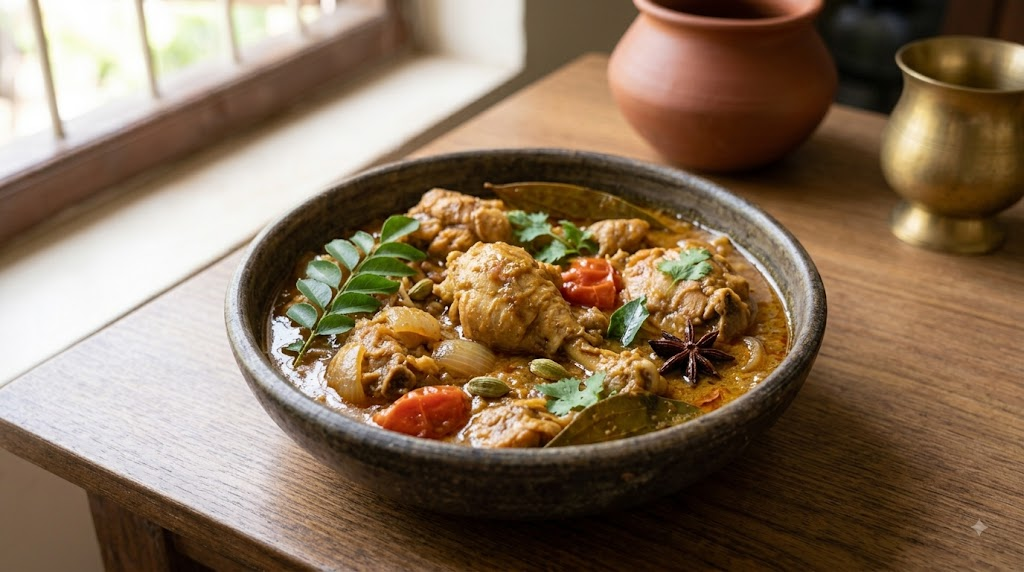
If you eat country chicken curry, you are not eating only chicken.
The dish may also contain:
- Cooking oil
- Onion
- Tomato
- Coconut
- Spices
- Gravy
Therefore:
100 g country chicken meat ≠ 100 g country chicken curry
The chicken itself may contain almost no carbohydrates, but the curry can contain carbohydrates and additional calories from vegetables and other ingredients.
Why This Matters for Calorie Tracking
If you use plain chicken nutrition data to calculate the calories of an oil-rich curry, you may underestimate your actual calorie intake.
For more accurate tracking, consider the chicken and cooking ingredients separately.
For example:
Chicken calories + cooking oil + coconut + other ingredients = approximate meal calories
The amount of oil used can make a surprisingly large difference.
The Fourth Hidden Fact: Cooking Oil Can Matter More Than Your Choice of Chicken
People often spend considerable time deciding between country chicken and broiler chicken while paying less attention to how the chicken is prepared.
Consider two meals:
Meal A: Country chicken cooked with a large amount of oil.
Meal B: Broiler chicken cooked with minimal added oil.
Meal B could easily contain fewer calories.
This does not mean broiler chicken is inherently healthier.
It demonstrates an important nutrition principle:
The cooking method can sometimes have a greater effect on total calories than the choice between two similar protein sources.
Is Country Chicken Good for Weight Loss?
Yes, country chicken can be part of a weight-loss diet.
But it is important to avoid the idea that country chicken itself causes fat loss.
Its main advantage is that it provides a substantial amount of protein, which can help create satisfying meals and support muscle maintenance when calorie intake is reduced.
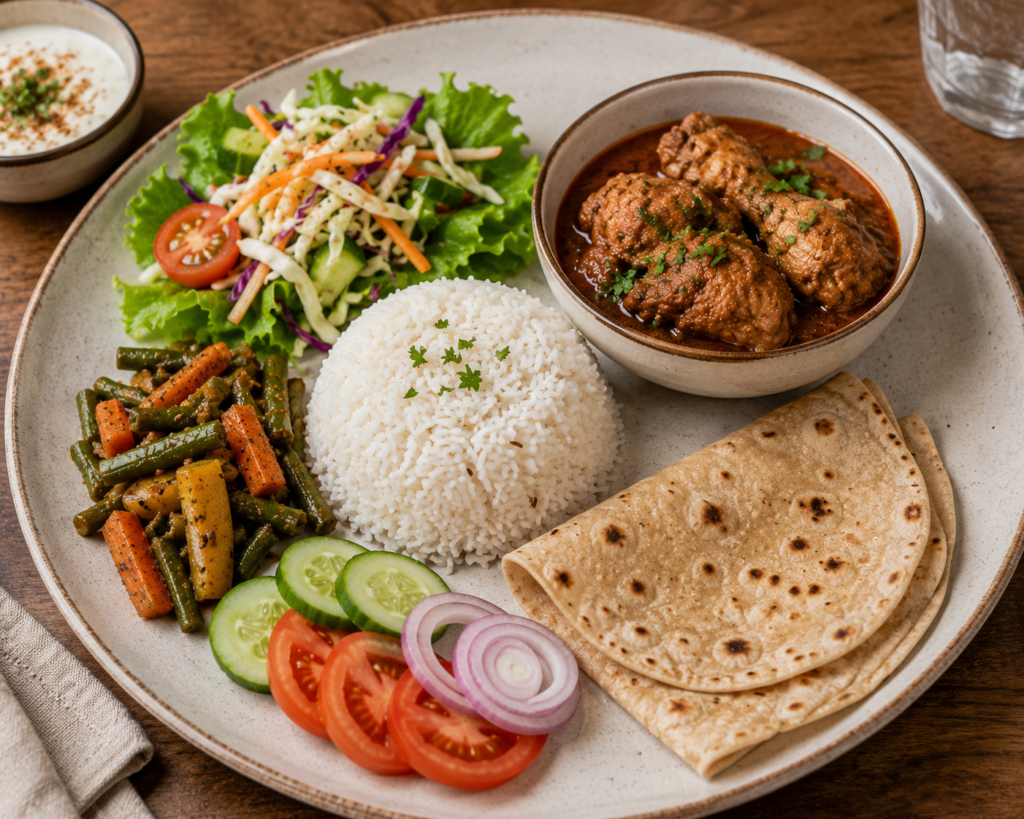
A simple meal could be:
Country chicken + vegetables + controlled rice or roti portion
The overall meal matters.
A plate containing country chicken, a large serving of rice, an oil-heavy curry and fried side dishes can become calorie-dense even though the chicken itself is protein-rich.
The “Healthy Country Chicken” Trap
There is another assumption worth questioning:
Country chicken = free-range = naturally fed = automatically healthier.
These terms should not be treated as interchangeable.
“Country chicken” can refer to different indigenous or locally raised birds and different production systems.
The bird’s diet, age, breed, activity level and farming conditions can all vary.
Therefore, it is difficult to claim that every country chicken has exactly the same nutritional profile.
Published nutrition values are better understood as useful reference values rather than guaranteed numbers for every bird.
Why Does Country Chicken Often Have Darker, Firmer Meat?
Country chicken often has darker and firmer meat than commercial broiler chicken.
One reason is muscle characteristics. More active muscles can contain more myoglobin, a protein associated with the darker color of meat.
But darker meat does not automatically mean more protein.
Color is not a reliable way to measure protein content.
This is another reason why visual comparisons between country chicken and broiler chicken can sometimes be misleading.
Country Chicken vs Broiler Chicken: What Should You Actually Compare?
Rather than simply asking which bird is healthier, compare the factors that actually affect your meal:
| Factor | Why It Matters |
| Protein | Helps meet daily protein requirements |
| Fat | Influences calorie density |
| Skin | Can increase fat and calories |
| Cut | Breast, thigh, leg and wing have different nutrition |
| Cooking oil | Can significantly increase calories |
| Bone content | Changes the amount of edible meat |
| Cooking method | Affects final calorie content |
| Portion size | Determines how much you actually consume |
This is a more useful comparison than simply labeling one chicken “healthy” and the other “unhealthy.”
How Much Country Chicken Should You Eat?
There is no single portion size that works for everyone.
Your protein needs depend on factors such as:
- Body weight
- Age
- Physical activity
- Fitness goals
- Total diet
- Other protein sources
A serving of 100–150 g edible chicken meat can provide a substantial amount of protein.
But remember that 150 g of edible meat is very different from 150 g of bone-in chicken.
If you are tracking protein, focus on the amount of actual edible meat.
Which Is Better: Country Chicken or Broiler Chicken?
There is no universal winner.
Both can provide high-quality protein and useful nutrients.
Country chicken may be preferred because of its traditional production, taste and texture, but it should not automatically be considered nutritionally superior in every situation.
A skinless broiler chicken breast prepared with little oil can be a very nutritious meal.
Likewise, country chicken can be an excellent protein source when prepared appropriately.
The bigger nutritional factors are often:
Cut + edible portion + skin + cooking method + added oil + total meal size
A Simple Way to Choose Country Chicken
If your goal is higher protein with better calorie control, don’t simply ask:
“Is this country chicken?”
Ask these four questions instead:
1. Which cut is it?
Breast generally provides more protein per 100 g than the other cuts listed above.
2. Is the skin included?
Skin increases the fat content.
3. How much edible meat am I eating?
Bone-in weight can overestimate the actual amount of meat.
4. How was it cooked?
Grilling, roasting or lightly cooking with controlled oil can produce a very different calorie profile from deep-frying or an oil-heavy curry.
Country Chicken Nutrition: The Bottom Line
Country chicken is a nutritious source of high-quality protein, B vitamins and minerals.
Depending on the cut, country chicken with skin can provide roughly 17–22 g protein and around 170–190 kcal per 100 g.
But the most important insight is not simply that country chicken is “high in protein.”
It is that 100 g is meaningful only when you know exactly what has been weighed.
For accurate nutrition tracking, consider:
- Raw vs cooked weight
- Bone-in vs edible meat
- Skin vs skinless meat
- Breast vs thigh vs leg
- Chicken meat vs curry
- Added cooking oil
- Total portion size
This explains why two people can eat “100 g of chicken” and still consume different amounts of calories and protein.
Final takeaway
If you want country chicken as part of a healthy diet, focus less on the label “country chicken” and more on the actual food in front of you.
Measure the edible portion, choose an appropriate cut, control the skin and cooking oil, and consider the entire meal.
That gives you a much more accurate picture of what country chicken contributes to your diet.