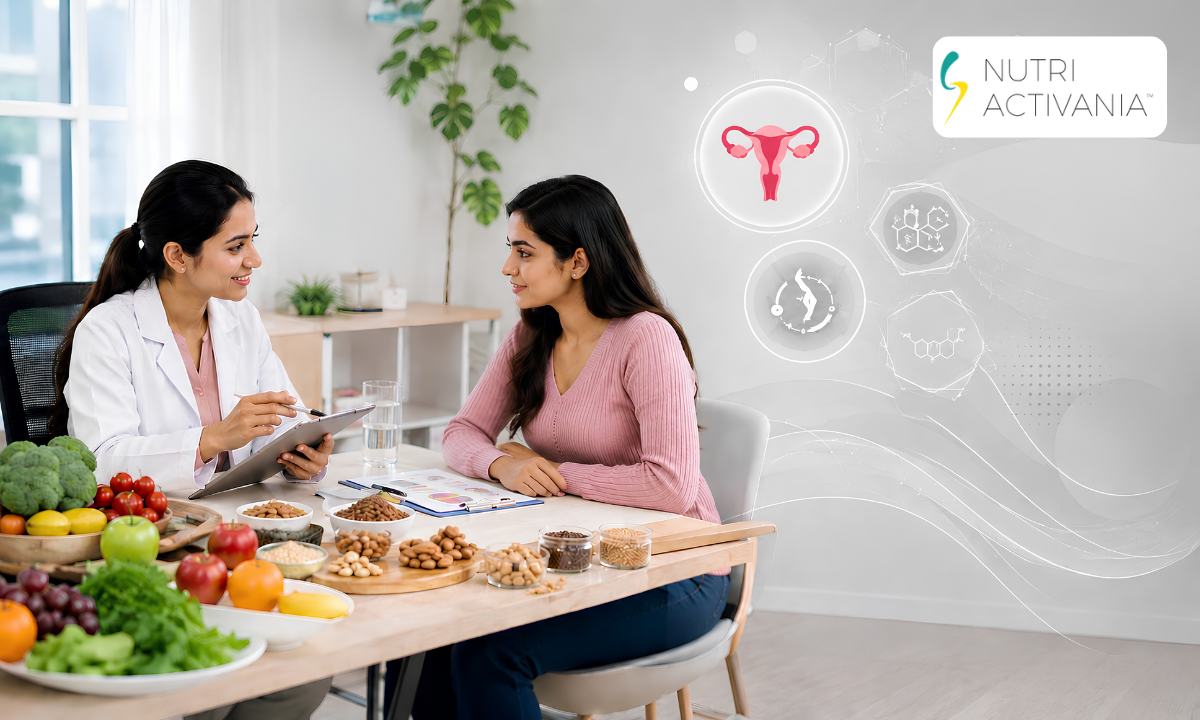
You have irregular periods, maybe some acne or unexpected hair growth, and a doctor has mentioned PCOS. But you are not overweight, so all the usual “just lose weight” advice misses you completely, and that leaves you feeling confused and unheard. If this sounds familiar, you may be dealing with lean PCOS, a quieter version of the condition that affects women at a normal or even low body weight.
The good news is that it can be managed well once it is understood, and working with a dietician for PCOS in Delhi, like Dietician Avni Kaul, who recognises this often-missed type, makes a real difference. This guide walks you through what lean PCOS actually is, why it slips past so many people, and how to take charge of it.
What is Lean PCOS?
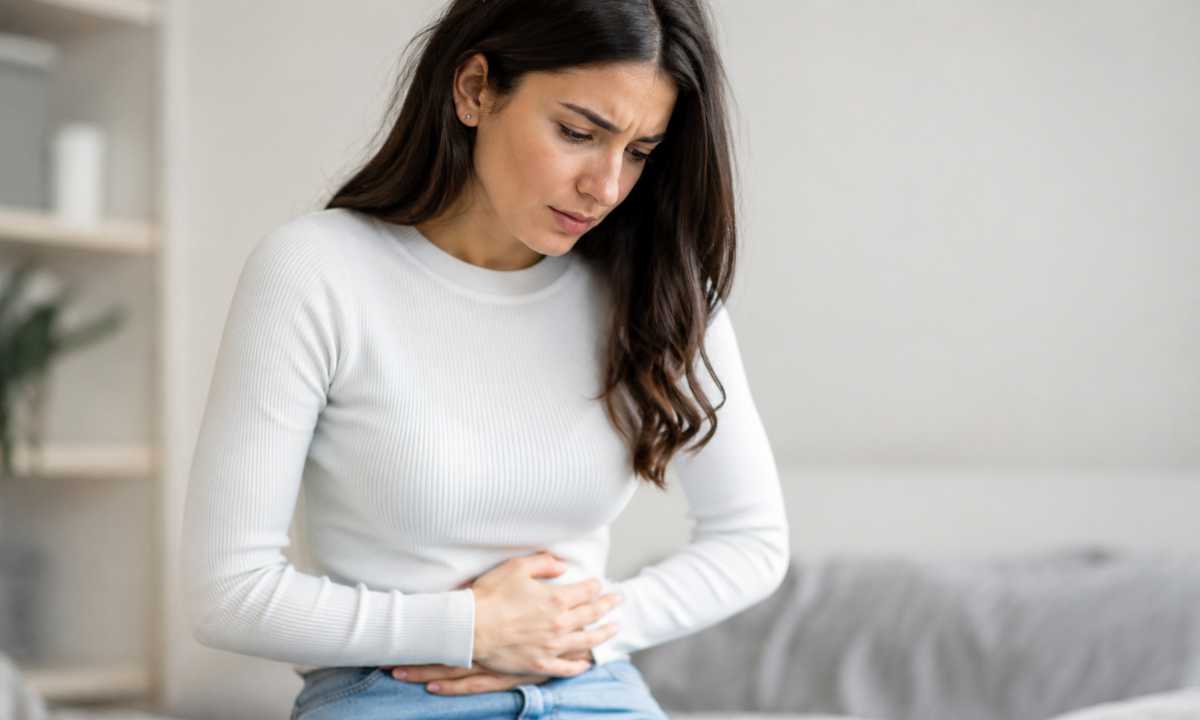
Lean PCOS is simply PCOS in a woman whose body weight sits in a normal or low range. It is the same hormonal and metabolic condition, just without the weight gain most people assume comes with it. The hormones are out of balance, ovulation can be irregular, and yet the bathroom scales look perfectly healthy. That mismatch is exactly what makes it so confusing, both for the women living with it and sometimes for the doctors assessing them.
Lean PCOS vs the PCOS Most People Know
Seeing the two side by side makes the difference much clearer. The underlying condition is the same, but the picture it presents is not.
| Feature | PCOS | Lean PCOS |
|---|---|---|
| Body weight | Usually overweight | Normal or low BMI |
| Most visible clue | Weight gain | Often no obvious physical sign |
| Insulin resistance | Common, often strong | Present but usually milder |
| Risk of late diagnosis | Lower | Much higher |
| Treatment focus | Often weight loss | Hormone and blood sugar balance |
The takeaway is simple. Being slim does not protect you from PCOS, and it does not mean your symptoms are any less real.
Why Does Lean PCOS Get Missed So Often?
Weight gain is the symptom most people, and even some clinicians, look for first. When that obvious marker is absent, lean PCOS quietly slips under the radar. Its other signs tend to be subtler, the hormonal imbalances may not show up without proper testing, and many women spend years being told their cycles are “just a bit irregular” before anyone investigates seriously. That delay is frustrating, and it is the single biggest reason lean PCOS deserves more awareness.
Signs to Watch For
Even at a healthy weight, lean PCOS can show up through:
- Irregular, infrequent, or absent periods
- Acne or persistently oily skin
- Excess facial or body hair, known as hirsutism
- Thinning hair on the scalp
- Strong sugar cravings or feeling hungry often
- Mood changes, anxiety, or low energy
- Difficulty conceiving
If several of these feel familiar despite a normal weight, that is reason enough to get properly assessed rather than brushing them aside.
Insulin Resistance
Here is the part that surprises most women with lean PCOS. You can be slim and still have insulin resistance.
Think of insulin as a key that unlocks your cells so that sugar from your food can enter and be used for energy. With insulin resistance, the lock has gone stiff. Your body has to produce more and more insulin to force the door open, and those high insulin levels then nudge your hormones further out of balance. This is why blood sugar swings, tiredness after meals, and sugar cravings are such common complaints, even in women who are not overweight at all.
In lean PCOS, this resistance is usually milder than in the classic form, but it still sits at the heart of the problem, which is exactly why good management works on it directly rather than chasing weight loss.
Can Lean PCOS Be Cured?

This is the question almost every woman asks the moment she is diagnosed, and the honest answer is both reassuring and realistic. Lean PCOS cannot be cured permanently, because it is a hormonal and metabolic condition rather than a temporary illness. What it can be, however, is very well managed, to the point where many women feel symptom-free in their daily lives.
With the right diet, regular movement, good sleep, and stress control, irregular cycles often become regular again, cravings settle, energy returns, and skin and hair concerns improve. With the right diet, regular movement, good sleep, and stress control, irregular cycles often become regular again, cravings settle, energy returns, and skin and hair concerns improve. This is where guidance from Avni Kaul, a trusted nutritionist in Delhi, makes a real difference, since a plan built around your body responds far better than generic advice. She helps women understand their own patterns and build a routine they can actually sustain, so the results hold over time rather than fading after a few weeks.
For many women, this feels close to a cure, even though the underlying tendency remains. The key is consistency rather than quick fixes. Lean PCOS responds to steady, sustainable habits, not crash diets or short bursts of effort. Think of it as a condition you learn to work with, where the right routine keeps your hormones balanced and your symptoms quiet for the long term.
How Doctors Diagnose Lean PCOS
Lean PCOS is largely a diagnosis of exclusion, meaning conditions like thyroid disorders or Cushing syndrome are ruled out first. Your doctor will usually combine your symptoms and menstrual history with blood tests for hormone levels, blood sugar, insulin, and lipids, along with an ultrasound of the ovaries.
Diagnosis follows the widely used Rotterdam criteria, which require at least two of three features: irregular or absent ovulation, signs of high male hormones, and polycystic ovaries on an ultrasound, as outlined in the NHS guide to PCOS. This fuller picture is what reveals the hidden imbalances a quick weight-based check would miss.
Managing Lean PCOS Through Diet and Lifestyle
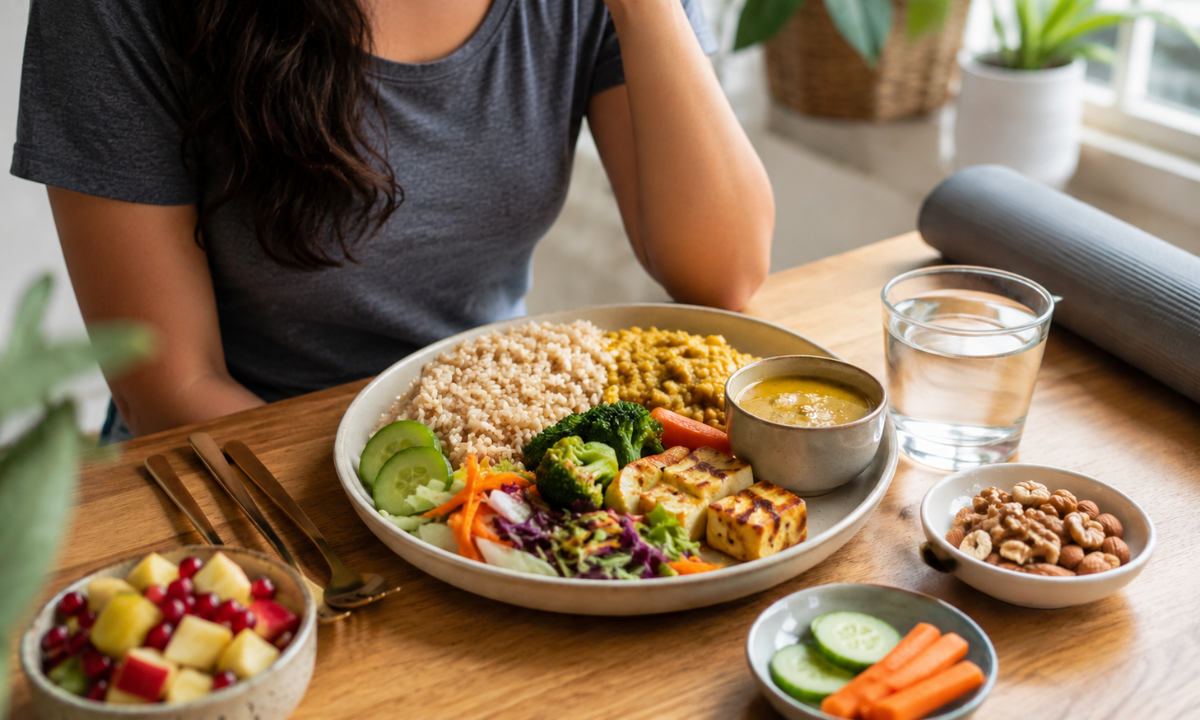
If there is one tool that does the heavy lifting in managing lean PCOS, it is your diet. But the best diet for lean PCOS looks nothing like the restrictive, low-calorie plans people often expect. Since weight loss is not the goal, the focus shifts entirely to what keeps your blood sugar steady and your hormones supported. This is where guidance from a dietician for PCOS in Delhi, Avni Kaul, makes the difference, building a plan around your body rather than a generic template.
A good lean PCOS diet is built on three simple ideas. First, every meal pairs protein, healthy fat, and high-fibre carbohydrates so your blood sugar rises gently rather than spiking and crashing. Second, refined flour, sugar, and heavily processed foods are swapped for whole grains, millets, legumes, and plenty of vegetables. Third, you eat enough, because under-eating only adds stress and worsens the hormonal picture.
The detailed priorities and a sample Indian plate below show exactly how this looks day to day.
- Balanced, regular meals. Pair quality protein, healthy fats, and high-fibre carbohydrates at every meal so blood sugar stays steady instead of spiking and crashing.
- Lower-glycaemic carbohydrates. Choose whole grains, millets, legumes, and vegetables over refined flour, sugar, and heavily processed foods.
- Enough protein and healthy fats. Since the goal is not to eat less, these keep you full, energised, and hormonally supported.
- Strength and regular movement. Activity improves insulin sensitivity and helps ease high androgen levels. Strength training is especially valuable here.
- Sleep and stress management. Poor sleep and constant stress both disturb hormones, so they matter just as much as what is on your plate.
The principle throughout is nourishment and balance, never restriction.
A Simple Indian Plate for Lean PCOS
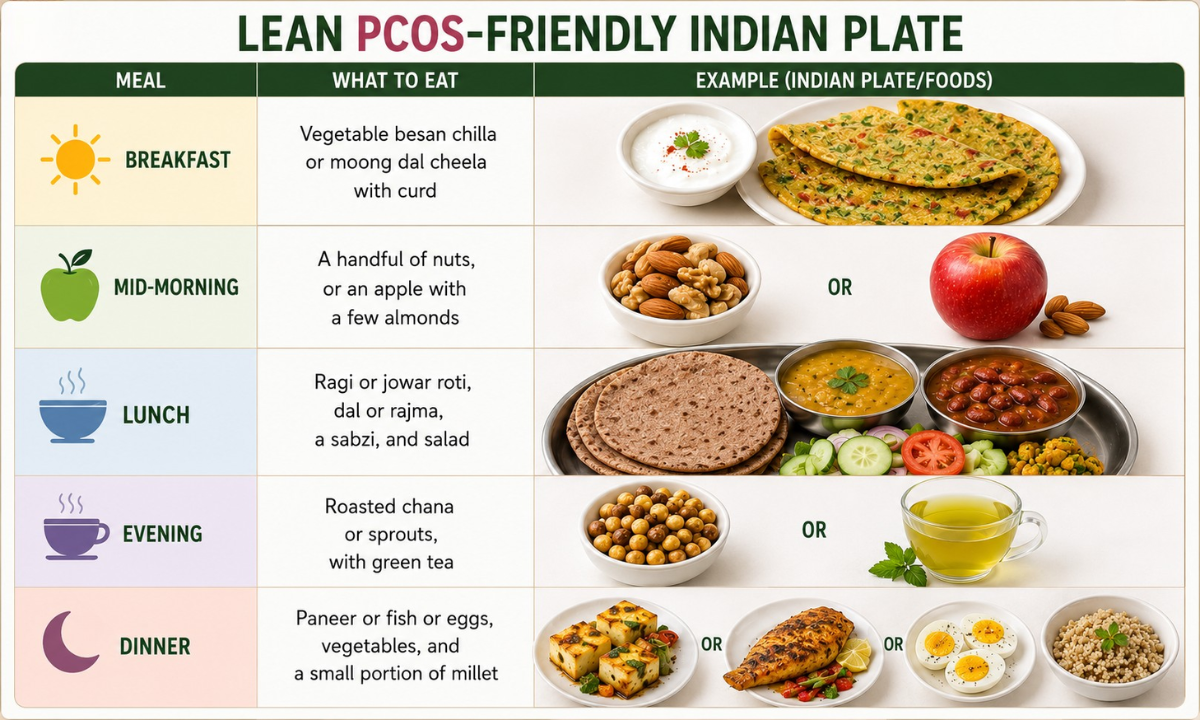
Lean PCOS management fits everyday Indian eating beautifully. You do not need imported superfoods, just smarter versions of what is already on your table. Here is what a steady day might look like.
| Meal | Lean PCOS-friendly choices |
|---|---|
| Breakfast | Vegetable besan chilla or moong dal cheela with curd |
| Mid-morning | A handful of nuts, or an apple with a few almonds |
| Lunch | Ragi or jowar roti, dal or rajma, a sabzi, and salad |
| Evening | Roasted chana or sprouts, with green tea |
| Dinner | Paneer or fish or eggs, vegetables, and a small portion of millet |
Small shifts make the biggest difference. Swapping a large serving of white rice for a smaller portion alongside more dal and vegetables, or choosing roasted snacks over fried, keeps blood sugar steadier without ever leaving you underfed.
When to Get Professional Help
If you suspect lean PCOS, start with your doctor for a proper diagnosis and to rule out other conditions. From there, nutrition becomes one of the most powerful tools you have, and this is where expert guidance truly pays off. A general weight-loss plan will not serve you here, because lean PCOS asks for a far more precise, hormone-focused approach. As a trusted dietician for PCOS in Delhi, Dietician Avni Kaul at Nutri Activania brings real expertise in PCOS and metabolic care, building plans specifically for lean PCOS. Her focus is on balancing blood sugar and hormones through the right foods rather than unnecessary weight loss, always working alongside your medical care.
What sets a specialised approach apart is the attention to your individual picture. Rather than handing you a fixed diet sheet, Avni Kaul looks at your symptoms, your routine, your food preferences, and your test results, then shapes a plan you can actually sustain. Small, realistic changes built around familiar Indian foods tend to work far better than rigid rules, and they are easier to keep up over the months it takes to see real hormonal improvement. With the right support, managing lean PCOS becomes far less overwhelming and a lot more achievable.
Conclusion
Lean PCOS proves that you do not have to be overweight to face a real hormonal imbalance, and that being slim should never mean your symptoms are dismissed. The condition is genuinely manageable once it is understood, and the right approach is rarely about losing weight. It is about steady blood sugar, balanced everyday meals, and hormones that are properly supported. With the correct guidance, irregular cycles, cravings, and constant fatigue can ease, and you can feel like yourself again. If you have been searching for answers that finally fit your body, Nutri Activania and the personalised care of Dietician Avni Kaul can help you take that first confident step toward balance and better health.
Frequently Asked Questions
Can you have PCOS without being overweight?
Yes. Lean PCOS affects women at a normal or low body weight. Being slim does not rule out PCOS, which is why symptoms like irregular periods, acne, or excess hair should still be investigated.
How can a dietician help with lean PCOS?
A good dietician looks past the scales and builds a plan around your hormones, not your weight. Dietician Avni Kaul at Nutri Activania, a trusted dietician in Delhi for hormone health, brings years of experience and a Gold Medal from the University of Delhi to her work with PCOS. She has guided countless women through hormonal and metabolic concerns, which is why her lean PCOS plans are so carefully tailored rather than generic.
Avni Kaul creates personalised programmes that focus on steady blood sugar, balanced meals, and the right mix of protein, fibre, and healthy fats. Rather than pushing unnecessary weight loss, she aims to ease symptoms like irregular cycles, cravings, and fatigue through everyday foods that fit your routine, always working alongside your medical care.
What is the best diet for lean PCOS?
There is no single diet, but the focus is balanced meals, lower-glycaemic carbohydrates, enough protein and healthy fats, and steady blood sugar, rather than calorie cutting. A plan personalised to you works best.
Can women with lean PCOS get pregnant naturally?
Many can. Lean PCOS can affect ovulation, but with the right nutrition, lifestyle support, and medical guidance, a good number of women conceive naturally. Individual cases vary, so professional support helps.