

Choosing the right omega-3 supplement can feel confusing, especially when algae oil and fish oil both promise the same benefits. If you have ever stood in a pharmacy aisle wondering which one is actually better for your body, you are not alone.
As an experienced dietician in Delhi, Avni Kaul helps people cut through the noise and pick what genuinely suits their diet, health goals and lifestyle. This guide breaks down how these two omega-3 sources compare, who each one suits best, and how to make a choice you can stick with for the long term.
By the end, you will know the real difference between the two, which one fits your body and values, and how to read a label without second-guessing yourself.
Medical note
This article is for general information only and is not a substitute for personalised medical advice. Omega-3 needs vary with age, health conditions, and medications. Always consult a qualified dietitian or doctor before starting any new supplement, especially if you are pregnant, on blood thinners or managing a chronic condition.
What Is Fish Oil & Algae Oil?
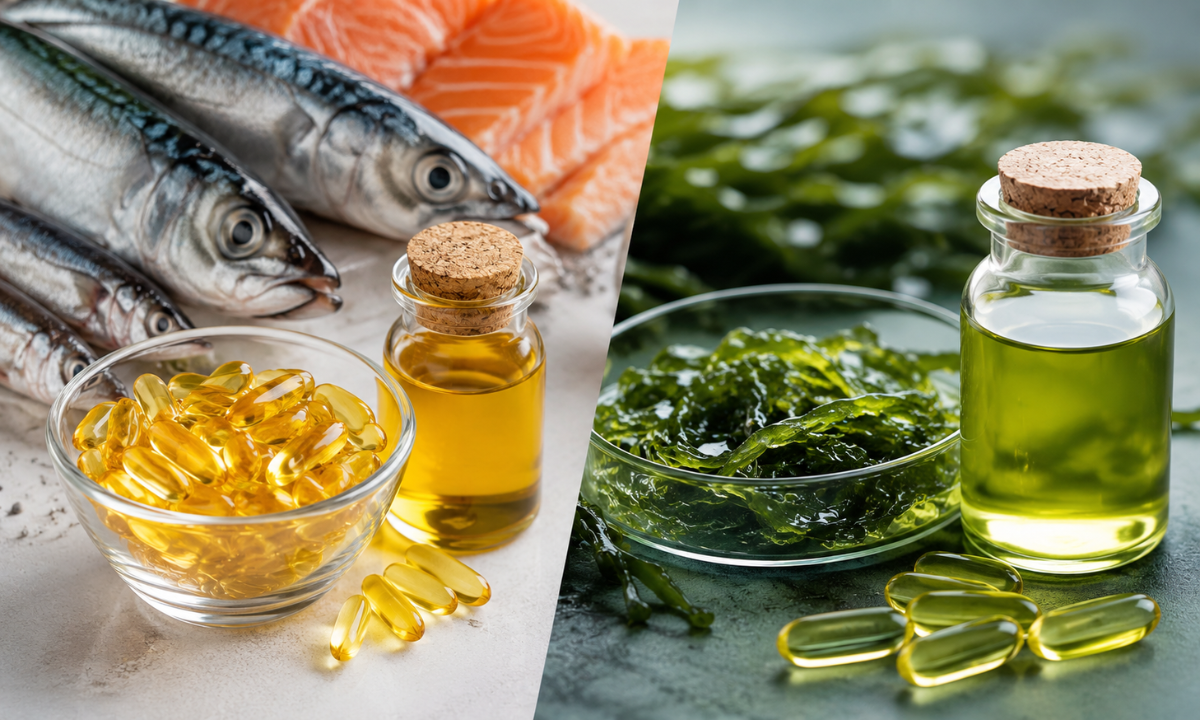
Both fish oil and algae oil give you the two omega-3 fats that matter most, EPA and DHA, in a form your body can use directly. The difference is where they come from and who they suit.
Fish oil is extracted from oily fish such as mackerel, sardines, anchovies and salmon. It is the most familiar omega–3 supplement on the market and sits behind most of the benefits people link to omega-3, from heart and brain support to calmer skin and joints.
Algae oil is omega-3 taken straight from the source. Marine algae are grown in controlled conditions and the oil is extracted directly, giving you the same EPA and DHA without involving any fish at all.
The key point most labels skip
Here is what ties it together: fish do not actually make omega-3 themselves. They get it by eating algae and smaller fish that have fed on algae. So the real source of omega-3 in the ocean is the algae, not the fish. Algae oil simply skips the middle step and takes it from the source.
Which One Suits You?
Because it is plant based, algae oil has become the natural choice for vegetarians and vegans who want proper long-chain omega-3 rather than the shorter form found in seeds and nuts. This makes it a strong addition to a plant based diet. For a country with as many vegetarians as India, that difference matters far more than most supplement labels let on.
Fish oil remains a strong, well-established option for those who eat fish and want a widely available supplement. Algae oil offers the same core benefit from a plant source, with no fish involved.
Are Algae Oil and Fish Oil the Same Thing
This is the question that surprises most people. In terms of what they deliver to your body, the two are remarkably similar. Both provide EPA (eicosapentaenoic acid) and DHA (docosahexaenoic acid), the fatty acids that do the real work behind heart health and brain function. The difference is the route they take to reach you.
- Fish oil comes from fish that ate algae
- Algae oil comes from the algae directly, skipping the fish
- Both end up giving you the same two key fats
So you are essentially choosing between getting your omega-3 first-hand or second-hand. For someone who eats fish, either works. For someone who does not, algae oil is the cleaner answer to the same need.
Algae Oil vs Fish Oil: The Key Differences
While the core benefit is the same, the details set them apart. Here is a side-by-side look at how they compare.
| Factor | Fish Oil | Algae Oil |
|---|---|---|
| Source | Oily fish | Marine algae |
| EPA and DHA | Yes, both | Yes, both |
| Suitable for vegetarians | No | Yes |
| Risk of ocean contaminants | Possible | Very low |
| Aftertaste | Often fishy | Usually neutral |
| Sustainability | Pressure on fish stocks | Grown in controlled tanks |
| Typical cost | Lower | Higher |
The table makes the trade-off clear. Fish oil tends to be cheaper and widely available, while algae oil is purer, plant-based and gentler on the planet, though it usually costs more.
Which One Is Better for Vegetarians and Vegans
For anyone who does not eat fish, this is where the decision becomes simple. Seeds, nuts and oils like flaxseed give you ALA (alpha-linolenic acid), a short-chain omega-3 that the body must convert into EPA and DHA. The problem is that this conversion is very inefficient, so vegetarians often fall short without realising it.
Algae oil solves this neatly because it provides EPA and DHA directly, with no fish and no conversion needed. This is exactly why so many of Avni Kaul’s clients are guided towards algae-based options once their diet is reviewed. If your goal is to build strength and muscle on a plant-based diet, working with a dietician for weight gain in Delhi helps you combine the right omega-3 source with the rest of your nutrition rather than treating supplements in isolation.
Fish Oil: Pros and Cons
| Pros | Cons |
|---|---|
| Widely available online and offline | Can carry traces of mercury or other ocean contaminants in lower-quality brands |
| Generally, more affordable per dose | Often causes a fishy aftertaste or burps |
| Typically higher EPA content | Sustainability concerns due to overfishing |
| Well-established and familiar supplement |
Algae Oil: Pros and Cons
| Pros | Cons |
|---|---|
| Free from ocean contaminants | Usually more expensive per dose |
| No fishy aftertaste or burps | Fewer brands available, especially offline |
| Suitable for vegetarians and vegans | EPA content can be lower in some products, so labels need to be checked |
| Plant-based and more sustainable |
For most people, these are manageable once you know what to look for, which is where personalised guidance helps far more than guesswork.
What Should You Choose?
A quick way to match the option to the person:
- Choose fish oil if you eat fish, want a budget-friendly option, and pick a reputable, tested brand
- Choose algae oil if you are a vegetarian or vegan, want the purest option, or are sensitive to fishy aftertaste
- Either works if you simply want more omega-3 and have no dietary restriction, in which case the EPA and DHA content decide it.
Omega-3 for Active People and Athletes
Omega-3 is not only about the heart. It plays a real role in recovery, joint comfort and managing the inflammation that comes with hard training. For anyone training seriously, getting enough EPA and DHA can mean smoother recovery between sessions and better long term joint health.
This is why Avni Kaul, a dietician for sports in Delhi, will often build omega-3 into an athlete’s plan alongside protein and overall calorie needs, so performance and recovery are supported together rather than left to chance.
Omega-3 During Pregnancy
Pregnancy is one of the times omega-3 matters most, because DHA is vital for the baby’s brain and eye development. Many expecting mothers worry about mercury in fish during this period, which makes algae oil an appealing, fish free way to get DHA safely.
That said, dosage and timing should always be personalised. Avni Kaul, a pregnancy dietician in Delhi, can guide the right form and amount of omega-3 through each trimester, so both mother and baby get what they need without any guesswork around safety.
How to Choose the Right Omega-3 Supplement for You
When you are standing in front of the shelf or scrolling online, focus on these points rather than the marketing on the front of the pack:
- Check the combined EPA and DHA per serving, not just the total fish or algae oil amount
- Look for third party testing or purity certification
- Match the choice to your diet, vegetarian or not
- Consider aftertaste and how easily your stomach handles it
- Factor in budget, but never at the cost of quality and testing
According to the National Institutes of Health, EPA and DHA are the omega-3 forms most strongly linked to health benefits, which is why the content of these two fats should guide your choice more than the source name on the label.
How Much Omega-3 Do You Actually Need Daily
There is no single number that fits everyone, but general guidance points to a regular intake of EPA and DHA combined for most healthy adults, with higher needs during pregnancy, intense training or certain health conditions. Rather than chasing a generic figure, it is far more useful to have your needs assessed against your diet, lifestyle and goals.
This is the real value of personalised advice. Two people can take the same supplement and still get very different results depending on the rest of their diet, which is why a tailored plan always beats a one size fits all dose.
In Conclusion
Algae oil and fish oil deliver the same core benefit through different routes. Fish oil is familiar, affordable and effective for those who eat fish, while algae oil offers a pure, plant based path to the very same EPA and DHA. Neither is simply better than the other. What matters is which one fits your life.
The right choice depends on your diet, your values, your budget and your health goals. A vegetarian looking for clean, sustainable omega-3 will lean one way, while a regular fish eater wanting a proven, cost effective supplement will lean another. The details on the label, especially the EPA and DHA content, then help fine tune that decision.
This is exactly why personalised advice makes such a difference. Rather than guessing between brands and doses, you get a recommendation built around your body and your routine. As a trusted nutritionist in Delhi, Avni Kaul helps you match your omega-3 source to your health goals and dietary needs, so you can choose with confidence and stop second guessing the label for good.
Frequently Asked Questions
Is algae oil as effective as fish oil for EPA and DHA ?
Yes. Algae oil provides the same EPA and DHA molecules as fish oil, and studies show it raises blood omega-3 levels just as well when the doses match. Since fish actually get their omega-3 from algae in the first place, you are simply going straight to the source.
Can vegetarians get enough omega-3 without fish oil ?
Yes. Algae oil gives vegetarians direct EPA and DHA without any fish, which is far more reliable than depending on flaxseed or other ALA sources alone. The body converts ALA into EPA and DHA very poorly, so a direct source like algae oil makes a real difference.
Does algae oil have a fishy aftertaste ?
Usually not. Most people find algae oil neutral in taste, which makes it a comfortable choice for those who dislike the fishy burps linked to fish oil. This often makes it easier to take consistently over the long term.
Is algae oil safe during pregnancy compared to fish oil ?
Algae oil is a popular fish free way to get DHA in pregnancy and avoids mercury concerns, which is why many expecting mothers prefer it. That said, the right dose should always be confirmed with a qualified dietitian or doctor before you start.
Which is more environmentally friendly ?
Algae oil generally has a smaller footprint, since it is grown in controlled conditions and does not add pressure to wild fish stocks. For anyone weighing sustainability alongside health, this is often a deciding factor.
Which is the best omega-3 for vegetarians, algae or fish oil ?
For vegetarians, algae oil is the better pick since it gives EPA and DHA directly without any fish. If you are unsure about the right dose, a dietician in Delhi like Avni Kaul can help you decide based on your diet and goals.