
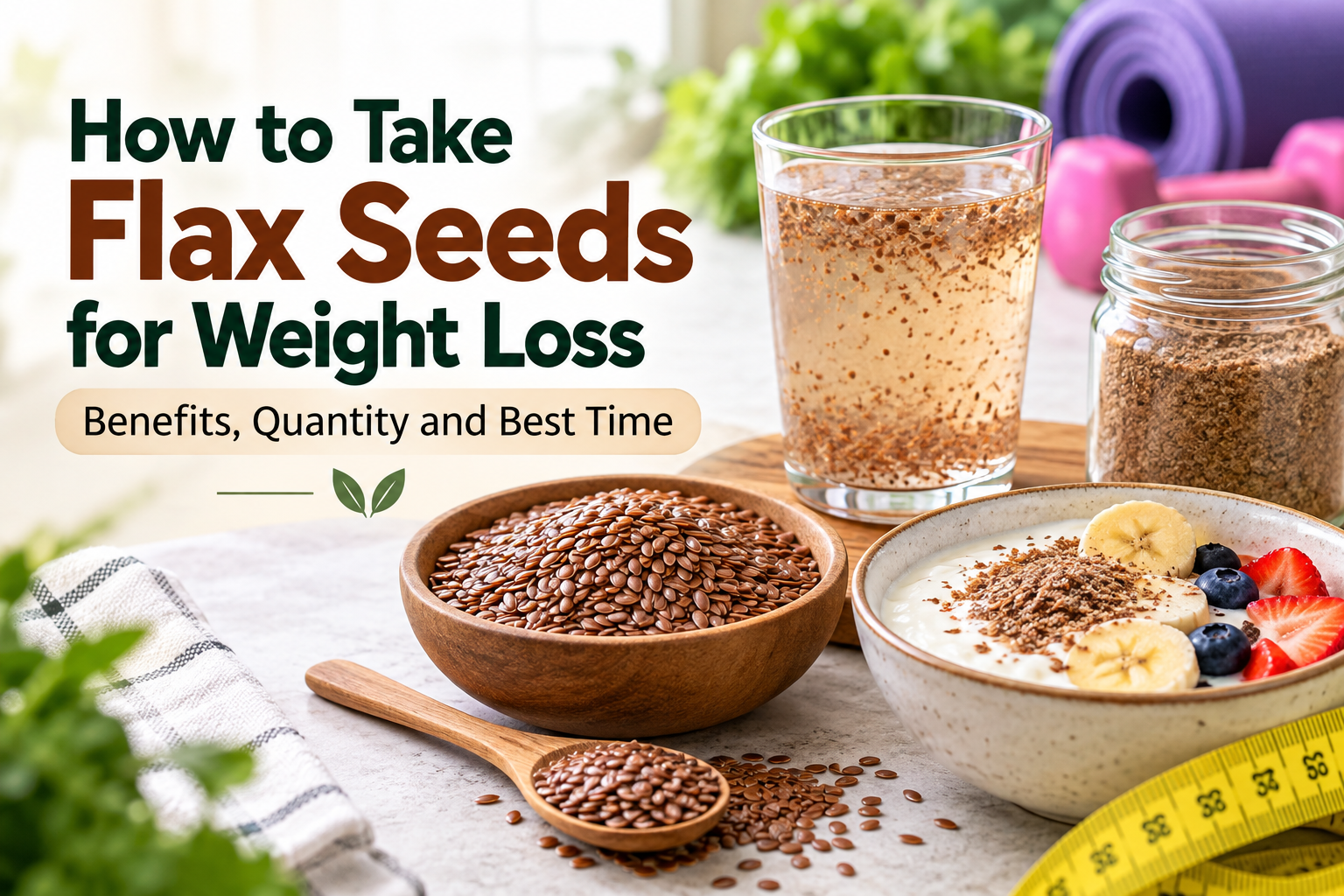
Flax seeds are small, nutrient-rich seeds that can be a useful addition to a balanced weight-loss diet. They contain dietary fibre, plant-based omega-3 fatty acids and protein, which can help support digestion, fullness and overall nutritional intake.
However, eating flax seeds alone will not lead to weight loss. Sustainable results depend on your overall calorie intake, food choices, physical activity, sleep and consistency.
If you are wondering how to take flax seeds for weight loss, this guide explains the best ways to include them in your daily diet, how much to eat, when to consume them and what precautions to follow.
How Do Flax Seeds Help With Weight Loss?
Flax seeds may support weight management as part of a balanced eating plan. Their nutritional composition can help you build meals that are more satisfying and provide important nutrients.
1. They Provide Dietary Fibre
Flax seeds contain soluble and insoluble fibre. Fibre can support regular bowel movements and help you feel fuller after meals.
Adding a small quantity of ground flax seeds to breakfast, curd or other foods may help make your meals more satisfying. However, fibre intake should be increased gradually to reduce the risk of bloating and gas.
2. They Contain Healthy Fats
Flax seeds are a plant-based source of alpha-linolenic acid (ALA), an omega-3 fatty acid. They also contain unsaturated fats that contribute to a balanced diet.
Although these fats are beneficial nutrients, flax seeds are calorie-dense. Eating large quantities can increase your total calorie intake, so portion control remains important when trying to lose weight.
3. They Add Plant-Based Protein
Flax seeds provide some plant-based protein, which contributes to your overall daily protein intake. However, they should not be considered a complete replacement for protein-rich foods such as lentils, beans, curd, eggs, tofu or other suitable protein sources.
Combining flax seeds with protein-rich foods can help create a more balanced meal.
4. They Can Support a Balanced Eating Pattern
Flax seeds are easy to incorporate into familiar Indian meals. You can add them to curd, oats, vegetable dishes, smoothies or other foods without making major changes to your regular diet.
The key is to use flax seeds as part of a balanced eating pattern rather than relying on them as a quick weight-loss remedy.
How to Take Flax Seeds for Weight Loss
Ground flax seeds are generally a practical choice because grinding makes their nutrients more accessible than eating the seeds whole. Whole seeds may pass through the digestive tract without being fully broken down.
Here are some simple ways to include them in your daily routine.
1. Ground Flax Seeds With Water
Flax seeds can be mixed with water as a simple way to consume them.
How to prepare:
- Take 1 teaspoon of ground flax seeds.
- Mix it into a glass of water.
- Stir well and drink it.
- Increase the quantity gradually if you tolerate it comfortably.
You do not need to drink flaxseed water on an empty stomach for it to support your diet. Choose a time that fits your routine and make sure you drink enough fluids throughout the day.
Important: Flaxseed water does not directly burn belly fat. Any contribution to weight management comes from including it in an overall balanced diet.
2. Add Ground Flax Seeds to Curd
Curd with ground flax seeds makes a convenient snack or accompaniment to a meal.
How to prepare:
- Take a small bowl of plain curd.
- Add 1 teaspoon of ground flax seeds.
- Mix well and eat immediately or allow the mixture to stand briefly.
You can combine it with cucumber or other suitable ingredients. Choose plain curd rather than adding large amounts of sugar or sweetened toppings.
For a more balanced snack, consider the protein content and portion size of the curd as well as your overall dietary needs.
3. Mix Flax Seeds Into Oats
If you eat oats for breakfast, ground flax seeds can be an easy addition.
Prepare oats using water or milk, then stir in 1 teaspoon of ground flax seeds. You can also add a portion of fruit for flavour and additional fibre.
Avoid adding excessive amounts of sugar, honey or calorie-dense toppings if your goal is to manage your overall calorie intake.
4. Add Flax Seeds to Indian Meals
You do not need to follow a separate diet to include flax seeds. They can fit into many familiar Indian foods.
Try adding ground flax seeds to:
- Vegetable salads
- Dal or other lentil dishes
- Curd-based accompaniments
- Chutneys and homemade podi
- Ragi-based dishes
- Homemade whole-grain preparations
Start with a small quantity and adjust according to your tolerance. Avoid adding so many seeds that they substantially increase the calorie content of your meals.
For more meal ideas, see our 7-day Indian diet plan for weight loss.
How Much Flaxseed Should You Eat Daily for Weight Loss?
There is no single daily quantity that guarantees weight loss. Your appropriate serving depends on your diet, digestive tolerance, medical conditions and overall nutritional requirements.
For many adults, starting with 1 teaspoon of ground flax seeds daily is a practical approach. If tolerated well, you may gradually increase the amount to around 1 tablespoon daily.
Some people consume larger quantities, but more is not necessarily better, particularly when managing calorie intake or digestive symptoms.
| Amount | Practical approach |
|---|---|
| 1 teaspoon daily | A reasonable starting quantity for many adults |
| Up to 1 tablespoon daily | An option if tolerated and suitable for your diet |
| Larger quantities | Consider your calorie intake, digestion and individual health needs before increasing |
These amounts are general dietary guidance, not a prescribed dose for weight loss. Increase fibre gradually and drink adequate fluids.
If you have a medical condition or take regular medication, ask your healthcare professional whether flax seeds are suitable for you.
What Is the Best Time to Eat Flax Seeds for Weight Loss?
There is no well-established best time to eat flax seeds specifically for weight loss. You can include them at breakfast, with lunch or as part of a snack, depending on your routine.
In the morning: Add ground flax seeds to oats, curd or another breakfast food.
With lunch: Sprinkle a small quantity over a salad or mix it into a suitable dish.
As an afternoon snack: Combine ground flax seeds with plain curd.
Choose the timing that helps you maintain a consistent, balanced diet. Eating flax seeds at night or on an empty stomach has not been established as a special method for burning fat.
Are Ground Flax Seeds Better Than Whole Flax Seeds?
Ground flax seeds are generally easier for the body to digest and use because the hard outer coating of whole seeds can limit access to their contents.
| Feature | Ground flax seeds | Whole flax seeds |
|---|---|---|
| Nutrient availability | Generally more accessible | Some may pass through undigested |
| Ease of use | Easy to mix into foods | Can be sprinkled over dishes |
| Storage | Can become rancid more quickly | Generally keep longer when stored properly |
| Practical tip | Grind small quantities and store carefully | Chew thoroughly if eating whole |
You can grind flax seeds at home using a clean grinder. Store ground seeds in an airtight container in a cool place, preferably in the refrigerator, and follow the storage guidance on the packaging.
Discard seeds that smell rancid, look mouldy or show other signs of spoilage.
Do Flax Seeds Reduce Belly Fat?
Flax seeds do not selectively burn belly fat. No single food can reliably target fat loss from a particular body area.
However, flax seeds may fit into a weight-management plan by contributing fibre, healthy fats and variety to your meals.
For sustainable results, focus on:
- Maintaining an appropriate overall calorie intake.
- Eating vegetables, fruit, whole grains and suitable protein sources.
- Including regular physical activity, such as walking and strength exercises.
- Getting sufficient sleep.
- Following a routine you can maintain over time.
You can read more about balanced meals in our guide to an Indian diet plan for weight loss.
Precautions Before Eating Flax Seeds
Flax seeds are suitable for many people when consumed in normal food quantities, but they are not appropriate for everyone in every circumstance.
1. Increase Fibre Gradually
Eating too much fibre too quickly may cause bloating, gas, abdominal discomfort or diarrhoea. Start with a small quantity and increase it gradually if you tolerate it well.
Drink sufficient fluids. If you have difficulty swallowing or a digestive condition that requires you to limit fibre, seek individual medical advice before using flax seeds.
2. Take Care if You Use Diabetes Medication
Flax seeds may influence blood glucose levels in some circumstances. If you take insulin or other medicines for diabetes, monitor your blood glucose as advised by your healthcare professional. Discuss regular or higher flaxseed intake with them, particularly if your medication or glucose levels need adjustment.
Do not change or stop prescribed medication on the basis of flaxseed consumption.
3. Pregnancy and Breastfeeding
During pregnancy or breastfeeding, do not start flaxseed supplements or use large amounts of flax seeds for weight loss without advice from your obstetrician, registered dietitian or another qualified healthcare professional. Safety data are limited, particularly for supplements and larger amounts.
Small culinary amounts may be acceptable for some people, but individual advice is important.
4. Be Careful With Medicines and Medical Conditions
Flax seeds may affect digestion and could interact with certain medicines or influence blood glucose. If you take regular medication, have a chronic medical condition or are considering concentrated flaxseed supplements, ask a qualified healthcare professional whether they are suitable for you.
5. Choose Safe, Properly Stored Seeds
Avoid unripe flax seeds and do not consume seeds that are mouldy, rancid or improperly stored. Buy food-grade flax seeds from a reliable source and follow the package’s storage instructions.
For additional information, consult the National Center for Complementary and Integrative Health’s guidance on flaxseed.
Frequently Asked Questions
1. How should I take flax seeds for weight loss?
Start with 1 teaspoon of ground flax seeds mixed into water, curd, oats or another suitable food. If tolerated, you may gradually increase the amount to around 1 tablespoon daily. Weight loss still depends on your overall eating pattern and activity level.
2. Can I drink flaxseed water every day?
Many adults can include flax seeds in their daily diet in moderate quantities. Start with a small amount, drink adequate fluids and monitor how your body responds. Seek individual advice if you have a medical condition or take regular medication.
3. Is it better to eat flax seeds in the morning or at night?
There is no established best time for weight loss. You can eat flax seeds in the morning, with a meal or as a snack. Consistency and your overall diet matter more than the time of day.
4. Can flax seeds help reduce belly fat?
Flax seeds cannot specifically target belly fat. They can contribute fibre and healthy fats to a balanced diet, but reducing body fat requires an overall approach that includes appropriate calorie intake, physical activity and sustainable habits.
5. Should I eat flax seeds raw or roasted?
Ground flax seeds can be mixed into foods without roasting. If you prefer roasted seeds, roast them carefully without burning them and store them properly. Ground seeds are generally easier to digest than whole seeds.
6. Can I take flax seeds with curd?
Yes, many people can mix ground flax seeds into plain curd. Start with a small quantity and adjust according to your digestive tolerance and overall dietary requirements.
7. How long does it take to lose weight after eating flax seeds?
There is no fixed timeline. Flax seeds alone do not guarantee weight loss, and results depend on your overall calorie intake, activity, sleep and consistency. Be cautious of claims promising rapid weight loss from a single food.
Conclusion
Flax seeds can be a useful addition to a weight-management diet because they provide dietary fibre, plant-based omega-3 fatty acids and other nutrients. Ground flax seeds can be mixed into water, curd, oats, salads and familiar Indian meals.
Start with 1 teaspoon daily and gradually increase the quantity if tolerated. There is no special time of day that guarantees better results, and flax seeds do not directly burn belly fat.
For sustainable progress, combine balanced meals, appropriate portions and regular physical activity. Individual nutritional guidance can also help you choose foods and portions that fit your needs.
If you need structured support, explore Nutri Activania’s weight management program.
References
- National Center for Complementary and Integrative Health — Flaxseed and Flaxseed Oil
- PubMed — Systematic review and meta-analysis on flaxseed and health outcomes
Medical disclaimer: This article is for general educational purposes and does not replace individual medical or nutrition advice. Consult a qualified healthcare professional if you have a medical condition, take medication, or are pregnant or breastfeeding.
Written by Avni Kaul