
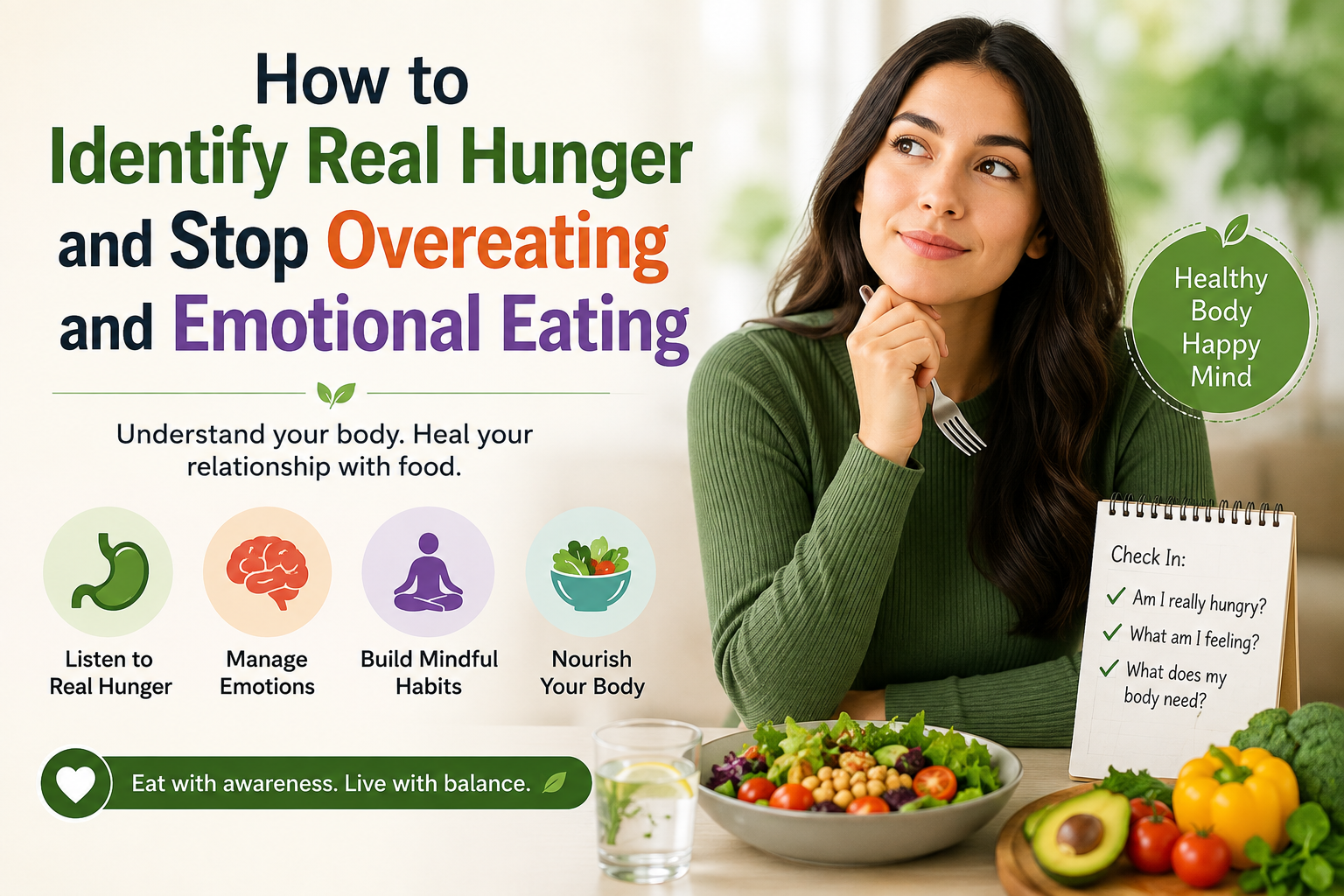
We have all been there. You finish dinner, you are genuinely full, and then someone opens a packet of biscuits. Suddenly your hand is reaching out, almost on its own. Learning how to identify real hunger is what helps you catch that moment and decide whether you truly want the biscuit or whether something else is going on. In this guide, Avni Kaul, a trusted dietician in Delhi, walks you through the different types of hunger and shares simple ways to tune back into what your body is really asking for.
Here is the reassuring part. Your body already knows how to do this. It has been quietly sending you signals your whole life, telling you when to eat and when to stop. The problem is not that the signals have disappeared. It is that daily life has become so noisy, so full of screens, stress, and snacks on every corner, that we have simply stopped listening. The good news is that listening is a skill, and like any skill, it comes back with a little practice.
Physical Hunger versus Emotional Hunger
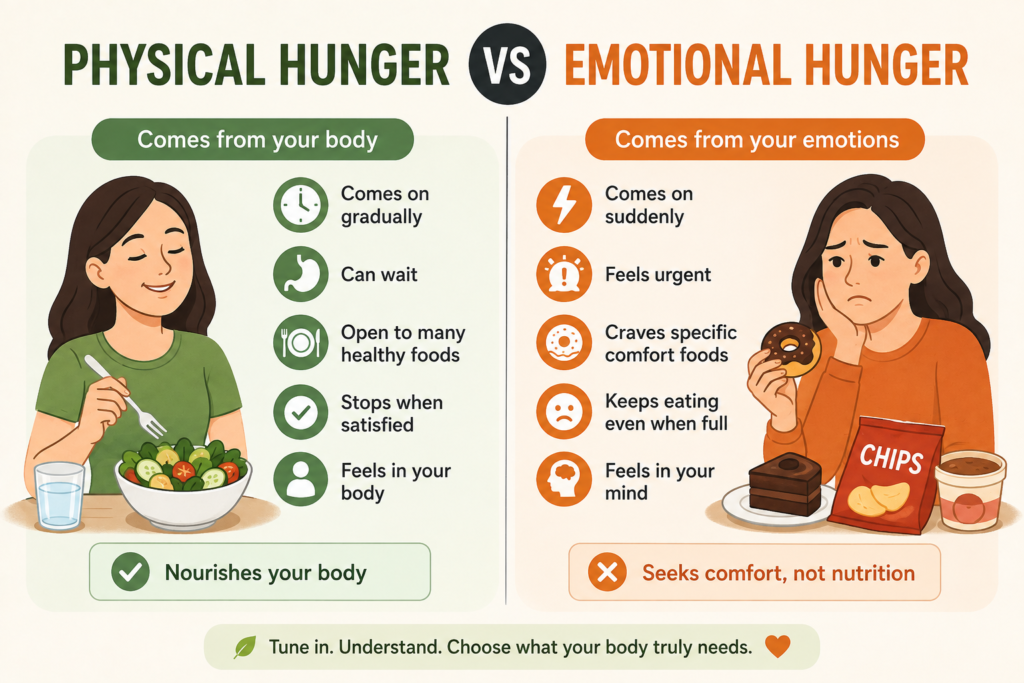
Getting this difference right changes everything.
Physical hunger creeps up on you slowly, and the signs are usually clear:
- A quiet emptiness or gentle rumbling in your stomach
- A gradual dip in your energy levels
- Trouble concentrating on what you are doing
- A slightly short temper or irritability
- Signals that keep returning, and grow louder, until you eat
Emotional hunger behaves in a completely different way:
- Arrives suddenly, often out of nowhere
- Is tied to a feeling such as stress, boredom, sadness, or celebration
- Craves one very specific comfort food rather than any meal
- Feels urgent, as though it needs satisfying right now
- Often leaves you unsatisfied, even after you have eaten
You do not need to judge yourself for emotional eating. Everyone does it, and the occasional comforting treat is part of being human. The goal is simply to notice it. Next time you feel a sudden urge to eat, try pausing for just a few seconds and asking one honest question. Am I actually hungry, or am I feeling something? That tiny pause is where all the power is.
Taste Hunger versus Practical Hunger
Beyond those two, there are a couple of gentler types of hunger worth knowing about. Both are perfectly normal and not something to feel guilty about.
Taste hunger is that lovely pull you feel when something looks or smells too good to pass up:
- You may not be hungry at all, but the aroma is calling your name
- It often shows up around bakeries, dessert menus, or your favourite childhood dishes
- There is nothing wrong with enjoying food for pleasure
- The skill is choosing when to say yes, not saying yes automatically
- When you do enjoy it, enjoy it fully and without guilt
Practical hunger is the sensible, planning-ahead kind:
- Eating before a long flight so you are not stuck without food
- Having a snack before a big meeting to keep your energy steady
- Using your lunch break because it is the only window all afternoon
- Eating a little earlier than usual because dinner will be late
This is smart, steady eating that keeps you from reaching that ravenous point where good decisions become nearly impossible.
Using the Hunger and Satiety Scale
Picture a simple scale from one to ten:
- 1 to 2: So hungry you feel weak, shaky, or dizzy
- 3 to 4: Comfortably hungry, ready and thinking clearly about food
- 5: Neutral, neither hungry nor full
- 6: Comfortably satisfied and content
- 7 to 8: A little too full, sluggish, or heavy
- 9 to 10: Uncomfortably stuffed
A few gentle rules make this scale genuinely useful:
- Start eating at around level 3 or 4. You are pleasantly hungry but still thinking clearly.
- Avoid dropping to 1 or 2. When you are that hungry, you eat fast, you eat a lot, and you barely notice fullness until it is too late.
- Stop at around level 6. Comfortably satisfied, not stuffed.
- Wait fifteen to twenty minutes before going back for seconds. Your body needs that time to catch up and register that food has arrived.
More often than not, you will realise you did not need seconds after all.
Become Aware of Your Own Patterns
Keeping a simple food journal for a few days is one of the most eye-opening things you can do. Nothing fancy, just jot down:
- What you ate
- Roughly what time you ate it
- How much you had
- How you were feeling at the time
- What was going on around you
After a few days, patterns start appearing that you probably never noticed before. You might spot things like:
- Reaching for something sugary around three in the afternoon, not because you are hungry, but because your energy naturally sags
- Eating far larger portions when out with friends and family, topping up your plate without thinking
- Turning to snacks every time work becomes stressful
- Skipping lunch on busy days and overeating at dinner as a result
Once you can see your own triggers clearly, you can gently work with them:
- Swap the afternoon biscuits for sliced fruit or a small handful of nuts
- Take a five minute walk when stress hits, instead of heading to the cupboard
- Set a proper lunch reminder on busy days
- Serve yourself first, then decide before topping up
Small swaps like these, repeated over time, quietly rewrite your habits.
Practising Mindful Eating
Mindful eating sounds fancy, but it really just means paying attention to your food while you eat it, without judgement. So much of our eating happens on autopilot. We eat in front of the television, scroll on our phones, or work through lunch at our desks, and before we know it the plate is empty and we barely tasted a thing.
Try these small shifts to slow the whole thing down:
- Sit at a proper table rather than eating on the go
- Put your food on a nice plate and look at it before you begin
- Notice the flavours, aromas, textures, and colours as you eat
- Use a smaller spoon or fork to slow your pace naturally
- Pause between mouthfuls and put your cutlery down
- Chew each bite properly before reaching for the next one
- Keep the phone and television out of the picture where you can
Mindful eating is not about giving up the foods you love. You can absolutely still enjoy ice cream, cake, or whatever brings you joy. The difference is that when you eat these treats slowly and with full attention, you tend to feel satisfied with less, and you walk away happy rather than guilty.
Conclusion
Understanding hunger has very little to do with strict rules or counting every calorie. It is really about learning to trust your body again. Here is what to carry away:
- Tell physical hunger apart from emotional hunger by watching how it arrives
- Recognise taste hunger and practical hunger for what they are, and enjoy them without guilt
- Use the hunger and satiety scale to time your meals better
- Keep a simple food journal for a few days to spot your own patterns
- Slow down and eat mindfully, and treats will feel more satisfying, not less
Be patient with yourself as you go, because these are habits built over a lifetime and they take a little time to reshape. If you would like some friendly, personalised support along the way, working with an experienced dietician can help you make all of this fit your own life and goals.
What is the difference between physical hunger and emotional hunger?
Physical hunger builds slowly and comes with real bodily signals such as an empty stomach, low energy, or irritability, and it only settles once you eat. Emotional hunger arrives suddenly, is tied to a feeling like stress or boredom, usually craves one specific comfort food, and often leaves you unsatisfied even after eating.
How can I tell if I am eating out of boredom rather than hunger?
Pause for a moment and rate your hunger from one to ten. If you are at five or above and the urge is linked to a feeling or a situation rather than a genuine dip in energy, it is probably boredom or emotion. A glass of water or a quick change of activity often makes the urge fade.
What is the hunger and satiety scale?
It is a simple way of rating how hungry or full you feel, from one to ten. The idea is to start eating at around level three or four and to stop at around level six, which helps you avoid both extreme hunger and overeating.
Can mindful eating really help me stop overeating?
Yes, and it is one of the gentlest ways to do it. Eating slowly and without distractions gives your body time to register fullness, so you notice satisfaction sooner and usually feel content with smaller portions.
Is it wrong to eat just because something tastes good?
Not at all. Enjoying food for pleasure is a completely normal and healthy part of life. The aim is balance, choosing consciously when to treat yourself rather than eating on autopilot, and savouring it fully when you do.