

A weight loss diet for hypothyroidism is a nutrition plan built around the slower metabolism and related symptoms that come with an underactive thyroid, rather than a standard calorie-deficit diet that assumes normal thyroid function. Avni Kaul, a dietician in Delhi, builds these plans for hypothyroid patients by starting with thyroid function, medication, and metabolic rate, factoring these in directly rather than applying the same weight loss approach used for someone without a thyroid condition.
Hypothyroidism slows the body’s metabolic rate, which means the same calorie intake and activity level that would produce weight loss in someone with normal thyroid function may only maintain weight, or in some cases still allow gradual weight gain, for someone whose thyroid is underactive. This is a common and genuine frustration among hypothyroid patients: doing everything a standard diet asks and still not seeing the expected result. A diet built specifically around hypothyroidism addresses this gap directly.
Why Hypothyroidism Changes the Weight Loss Equation

The thyroid gland regulates metabolic rate, meaning how quickly the body converts food into energy. When thyroid hormone levels are low, metabolism slows down, which affects weight in a few interconnected ways.
- Fewer calories are burned at rest, meaning calorie needs are often lower than standard calculators suggest
- Fatigue, common in hypothyroidism, can reduce activity levels, compounding the metabolic effect
- Water retention, also common with an underactive thyroid, can make weight appear more resistant to change than it actually is
- Untreated or poorly controlled hypothyroidism can undermine even a well-structured diet, since medication adequacy affects how much diet alone can achieve
- Some patients experience changes in appetite or cravings linked to the condition, adding another layer standard advice does not address
This is why the starting point for a hypothyroid weight loss plan needs to be thyroid function itself, not a generic calorie target borrowed from someone with normal metabolic function.
Why Medication Adequacy Comes Before Diet
Before diet can meaningfully affect weight in hypothyroidism, thyroid hormone levels generally need to be adequately controlled through medication, typically levothyroxine, under a physician’s supervision. If thyroid hormone levels remain significantly low despite treatment, or medication dosage has not been recently reviewed, diet alone is unlikely to produce the expected results, regardless of how well-structured the plan is.
This is why a hypothyroid weight loss diet is built to work alongside medical treatment, not instead of it. Coordination with the treating physician, including recent thyroid function tests such as TSH, T3, and T4, forms part of the initial assessment, since this context significantly shapes how the diet plan is calibrated.
How a Weight Loss Diet for Hypothyroidism Is Built
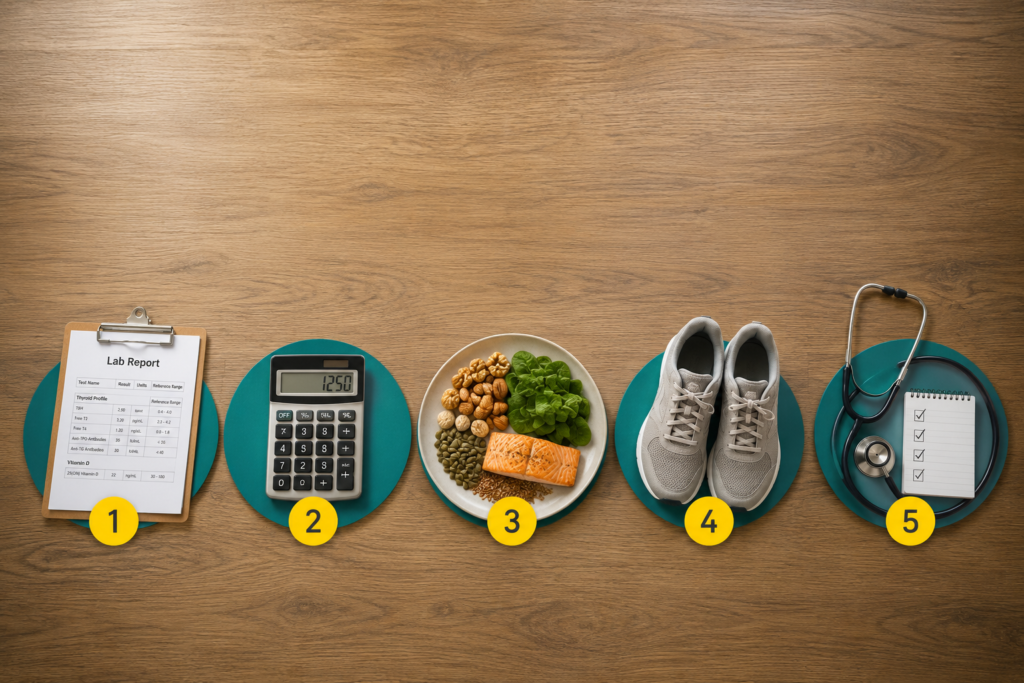
Step 1: Thyroid function and medication review. The process starts with recent thyroid function test results and current medication, alongside a discussion of symptoms such as fatigue, water retention, and any recent changes in weight or energy levels.
Step 2: Metabolic rate consideration. Rather than using a standard calorie calculator, calorie needs are estimated with the slower metabolic rate typical of hypothyroidism factored in, avoiding the common trap of setting expectations based on non-hypothyroid benchmarks.
Step 3: Nutrient-focused meal planning. Certain nutrients, including iodine, selenium, and zinc, play a role in thyroid function, and the plan considers dietary intake of these alongside general nutrition, without relying on diet alone to correct thyroid hormone levels, which remains a medical matter.
Step 4: Addressing fatigue and activity realistically. Physical activity recommendations account for the fatigue commonly associated with hypothyroidism, building activity levels gradually rather than assuming energy levels equivalent to someone without the condition.
Step 5: Patient monitoring alongside physician follow-up. Progress is tracked over a longer timeline than a standard weight loss plan, with regular check-ins that account for both weight change and thyroid function review with the treating physician.
What the Diet Typically Includes

Commonly emphasised:
- Iodine-appropriate foods, in line with the patient’s specific thyroid status and medication, since both excess and deficiency can be problematic
- Selenium-rich foods such as nuts and seeds, which play a supportive role in thyroid function
- Adequate protein at each meal, from dal, eggs, paneer, and fish, to support metabolism and reduce muscle loss during weight loss
- High-fibre vegetables, to support digestion, which can be sluggish with hypothyroidism
- Healthy fats from nuts, seeds, and cold-pressed oils, in measured portions

Commonly reduced:
- Refined carbohydrates and sugary beverages
- Deep-fried and highly processed foods
- Large, uncounted portions, particularly given the lower calorie needs typical of hypothyroidism
- Excessive intake of certain raw cruciferous vegetables in very large quantities, which are generally fine in normal amounts but are sometimes flagged in very high volumes for their effect on iodine uptake, a nuance best discussed individually rather than applied as a blanket restriction
Calorie targets in this plan tend to be set more conservatively than in a standard weight loss diet, reflecting the genuinely lower metabolic rate rather than assuming the same calorie deficit will produce the same result.
Who Should Consider a Weight Loss Diet for Hypothyroidism
- People diagnosed with hypothyroidism struggling to lose weight despite calorie restriction and exercise
- People recently started on thyroid medication who want a diet aligned with their treatment
- People experiencing fatigue that makes standard exercise-heavy weight loss advice difficult to follow
- People whose weight has crept up gradually alongside a hypothyroidism diagnosis
- Anyone whose weight loss efforts have stalled and who has not yet had thyroid function reviewed
This last group is worth highlighting. Persistent, unexplained difficulty losing weight despite consistent effort is sometimes the first sign that prompts a thyroid function test in the first place, so a diet plan built around this possibility often starts with confirming where thyroid levels currently stand.
Why Choose Avni Kaul for a Weight Loss Diet for Hypothyroidism
Avni Kaul is a Gold Medallist from the University of Delhi and received the Best Dietician Award in 2019. Her approach to hypothyroid weight loss starts with thyroid function and medication status, rather than applying a standard calorie-deficit diet regardless of metabolic rate. Plans are built around realistic calorie targets and nutrient considerations specific to thyroid health, coordinated with the patient’s treating physician where medication adjustment may also be relevant.
Conclusion
Weight loss with hypothyroidism requires working with a genuinely slower metabolism, not simply trying harder at a standard diet that was never calibrated for it. A plan that accounts for thyroid function, medication adequacy, and the fatigue that often accompanies an underactive thyroid tends to produce steadier, more realistic results than generic advice. For anyone whose weight loss efforts have not matched their effort, particularly alongside a hypothyroidism diagnosis, a diet built specifically around thyroid health addresses the part of the picture standard advice usually misses.
Frequently Asked Questions
Why is it harder to lose weight with hypothyroidism?
An underactive thyroid slows metabolic rate, meaning fewer calories are burned at rest, so the same diet and activity level that would produce weight loss for someone with normal thyroid function may not work the same way.
Do I need my thyroid medication reviewed before starting a weight loss diet?
It is generally recommended. If thyroid hormone levels remain poorly controlled, diet alone is unlikely to produce expected results, so reviewing recent thyroid function tests with your physician is a useful first step.
Can diet alone fix hypothyroidism-related weight gain?
Not entirely. Diet supports weight management alongside adequate thyroid medication, but it does not replace the need for appropriately dosed treatment prescribed by a physician.
How long does it typically take to see results with this kind of plan?
Results are often slower than standard weight loss timelines, given the metabolic factors involved, so most plans are structured around a longer, more gradual timeline with realistic expectations set from the start.
Are there specific foods I should avoid with hypothyroidism?
There is no need for blanket avoidance of any food group in normal amounts. Certain nutrients, such as iodine and selenium, are considered carefully in the plan, and any specific dietary adjustments are discussed individually based on medication and test results.
Will my calorie target be lower than a standard weight loss diet?
Often, yes. Calorie needs are typically estimated with the slower metabolic rate associated with hypothyroidism factored in, rather than using a standard calculator that assumes normal thyroid function.