
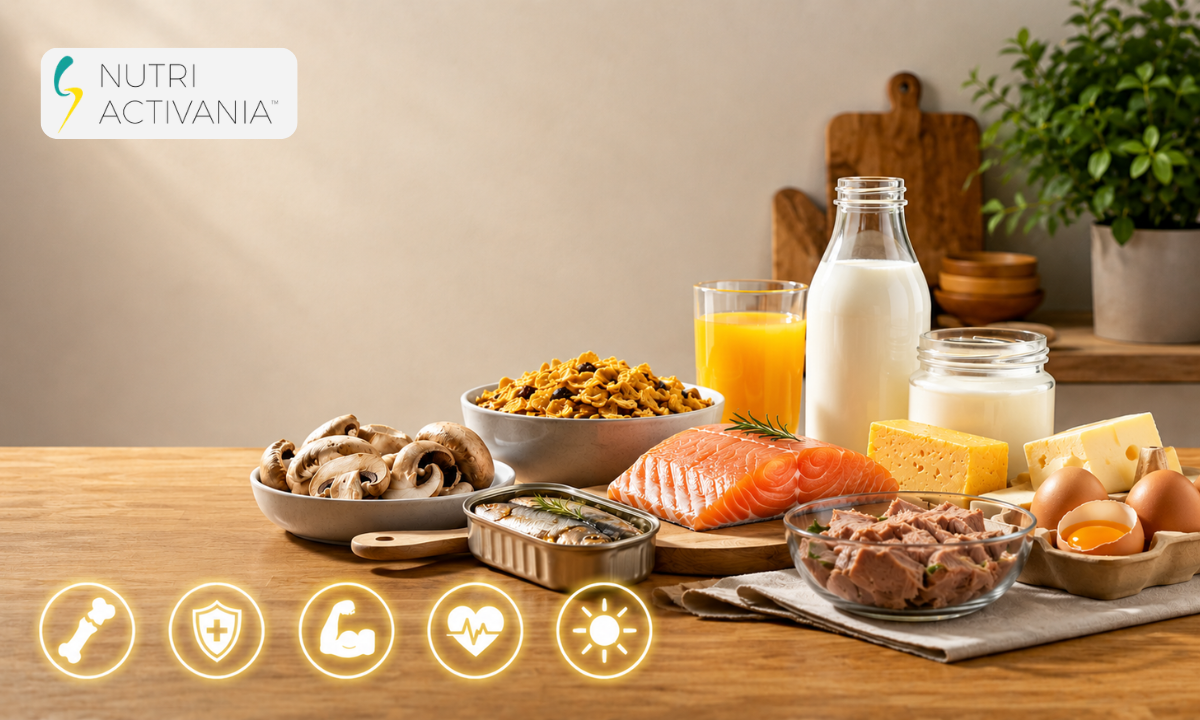
Vitamin D is one of the most important nutrients for your body, yet deficiency is remarkably common in India, even in our sunny climate. Knowing which vitamin D foods to include in your diet is one of the simplest ways to keep your levels healthy and support strong bones, better immunity, and steady energy. While sunlight is the body’s main source, the right foods make a real difference, particularly for those who spend most of the day indoors. This guide, put together with insight from dietician in Delhi, Avni Kaul, covers the best vitamin D-rich foods to add to your plate, including plenty of vegetarian options.
Why Vitamin D Matters
Vitamin D does far more than support bone health, though that is its best-known role. It helps your body absorb calcium and phosphorus, which keep bones and teeth strong. It also plays a part in immune function, muscle strength, and mood regulation. Low levels are linked to fatigue, frequent illness, bone pain, hair fall, and low mood, which is why so many people feel run down without realising the cause.
Despite India receiving plenty of sunshine, deficiency is widespread. Indoor lifestyles, long working hours, sunscreen use, air pollution, and largely vegetarian diets all contribute. This is exactly why getting vitamin D through food matters so much, and why a balanced diet planned with a nutritionist in Delhi can fill the gap effectively.
Best Vitamin D-Rich Foods
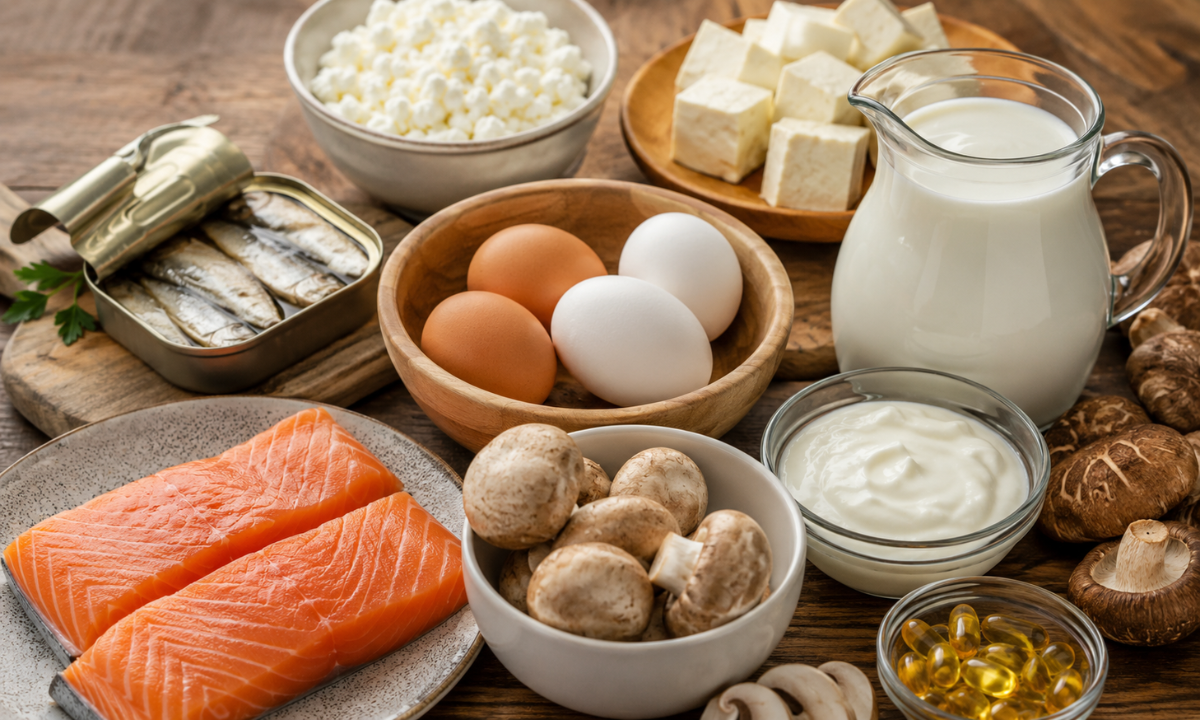
Vitamin D occurs naturally in only a handful of foods, with the richest sources being animal-based. However, there are good vegetarian and fortified options too, which are important for Indian diets. Here are the top sources to include.
Fatty Fish
Fatty fish are among the richest natural sources of vitamin D. Salmon, mackerel, sardines, and tuna deliver a substantial amount in a single serving, along with heart-healthy omega-3 fats. For non-vegetarians, including fish two or three times a week is one of the most effective ways to boost intake.
Egg Yolks
Eggs are an easy, affordable, and widely available source. Vitamin D is concentrated in the yolk, so whole eggs are the way to get it. While one egg alone will not meet your daily needs, eggs are a convenient everyday contributor, especially at breakfast.
Mushrooms
Mushrooms are the standout vegetarian source, and the only plant food that naturally provides vitamin D. Varieties exposed to sunlight or UV light, such as shiitake and button mushrooms, contain more. Leaving mushrooms in the sun for a short time before cooking can actually increase their vitamin D content.
Fortified Foods
Because natural sources are limited, fortified foods are one of the most practical ways for Indians to get vitamin D. Many brands of milk, curd, paneer, breakfast cereals, and plant-based milks like soya and almond are fortified. Checking the label for added vitamin D is a simple habit that helps, particularly for vegetarians.
Cod Liver Oil
Cod liver oil is one of the most concentrated sources available, delivering well above the daily requirement in a single teaspoon. It also provides vitamin A and omega-3s. It is a supplement rather than a food, so it is best used under guidance.
Fortified Dairy and Curd
Beyond plain milk, fortified curd and cheese add to your intake while also supplying calcium, which works hand in hand with vitamin D for bone strength. For vegetarian Indian households, fortified dairy is one of the easiest sources to build into daily meals.
Vitamin D Content in Common Foods
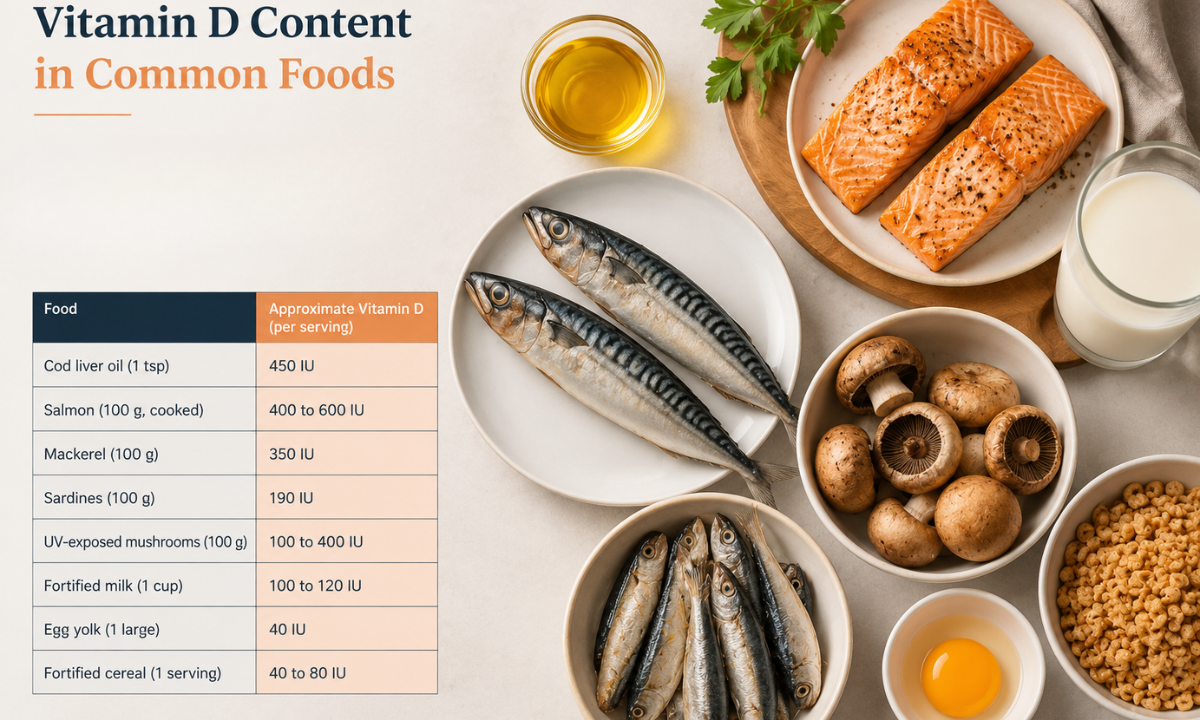
The table below gives an approximate guide to how much vitamin D some common foods provide, to help you plan your meals. Values are rough averages and can vary by source and preparation.
| Food | Approximate Vitamin D (per serving) |
|---|---|
| Cod liver oil (1 tsp) | 450 IU |
| Salmon (100 g, cooked) | 400 to 600 IU |
| Mackerel (100 g) | 350 IU |
| Sardines (100 g) | 190 IU |
| UV-exposed mushrooms (100 g) | 100 to 400 IU |
| Fortified milk (1 cup) | 100 to 120 IU |
| Egg yolk (1 large) | 40 IU |
| Fortified cereal (1 serving) | 40 to 80 IU |
As a general guide, most adults need around 600 to 800 IU of vitamin D per day, though individual needs vary with age, health, and existing levels. Combining a few of these foods across the day, alongside some sunlight, is the most sustainable approach.
How to Get the Most From Vitamin D Foods
Eating the right foods is only part of the picture. A few simple habits help your body make the most of them:
- Pair with healthy fats. Vitamin D is fat-soluble, so eating it with a little healthy fat, such as nuts, seeds, or oil, improves absorption.
- Combine with calcium. Vitamin D and calcium work together for bone health, so foods like fortified milk that offer both are especially useful.
- Get some sunlight. Around fifteen to twenty minutes of morning sun on the arms and face several times a week supports your body’s own production.
- Choose UV-exposed mushrooms. These contain far more vitamin D than those grown in the dark, so they are worth seeking out.
- Read fortification labels. Since natural sources are limited, fortified products are a reliable way to top up, particularly for vegetarians.
What Not to Rely On
Just as important as knowing the right foods is knowing which ones will not help, so you do not waste effort on them.
Plain, Unfortified Dairy
Regular milk, curd, and paneer that are not fortified contain very little vitamin D. Do not assume all dairy counts. Unless the label confirms added vitamin D, it will do little for your levels.
Fruits and Leafy Vegetables
Despite common belief, fruits and leafy greens contain almost no vitamin D. They are excellent for overall health, but will not raise your levels, so they should never be your main approach for this nutrient.
Mushrooms Grown in the Dark
Only mushrooms exposed to sunlight or UV light provide meaningful vitamin D. Ordinary mushrooms grown without any light offer very little, so the growing method genuinely matters.
Vitamin D2 Over D3
Many fortified vegetarian products use vitamin D2, which the body uses less effectively than D3. Where possible, choose vegetarian D3, often derived from lichen, as it raises and maintains levels more efficiently.
When Food Alone May Not Be Enough
For some people, diet and sunlight are not enough to correct a deficiency, especially if levels are already very low. In these cases, a doctor may recommend a supplement alongside dietary changes. According to the National Institutes of Health, vitamin D from food and sensible sun exposure is the foundation, with supplements used to bridge any remaining gap when needed.
If you often feel tired, suffer frequent infections, or have been told your vitamin D is low, it is worth getting your levels checked and building a diet that supports them. Vitamin D status ties closely into overall well-being, which is where the support of a dietician for holistic health in Delhi, Avni Kaul, can help you create a balanced, sustainable plan around the foods you already enjoy.
Here’s the conclusion in two paragraphs, the first wrapping up the topic with a CTA and the “best dietician in Delhi” anchor, the second a dedicated E-E-A-T paragraph about Avni Kaul.
Conclusion
Keeping your vitamin D levels healthy does not have to be complicated. A mix of UV-exposed mushrooms, fortified milk and dairy, fortified cereals, eggs if you eat them, and a little daily sunlight can go a long way, even on a largely vegetarian diet. The key is consistency and choosing sources that actually deliver, rather than relying on foods that contain very little. If you are unsure whether you are getting enough, or you have been told your levels are low, a personalised plan built around the food you already eat makes it far easier to correct. For tailored guidance, consulting Avni Kaul, the best dietician in Delhi, can help you build a balanced, sustainable approach that fits your lifestyle.
Avni Kaul is the founder of Nutri Activania and a Gold Medallist in Food and Nutrition from the University of Delhi, with over twelve years of clinical experience. She has worked in the Endocrinology Department at Max Hospital and has guided more than 15,000 clients across Delhi and India. A recipient of India’s Best Dietician Award and an advisor for the Buenos Aires 2018 Summer Youth Olympic Games, she is known for simple, science-backed nutrition plans built around everyday Indian food, helping people improve their health without extreme restrictions.
Frequently Asked Questions
Which foods are highest in vitamin D?
Fatty fish like salmon, mackerel, and sardines are the richest natural sources, along with cod liver oil. For vegetarians, UV-exposed mushrooms and fortified foods such as milk, curd, and cereals are the best options. Egg yolks also contribute a smaller amount.
Can vegetarians get enough vitamin D from food?
It can be challenging, as most natural sources are animal-based. Vegetarians should focus on UV-exposed mushrooms, fortified milk and dairy, fortified cereals, and plant-based milks, while also getting regular sunlight. In some cases, a supplement may be needed, which is best discussed with a dietician or doctor.
How much vitamin D do I need each day?
Most adults need around 600 to 800 IU per day, though needs vary with age, health, and current levels. Older adults and those with a deficiency often require more. A blood test is the only way to know your exact status.
Does sunlight give enough vitamin D without food?
Sunlight is the body’s main source, but indoor lifestyles, pollution, and sunscreen often limit how much you actually produce. This is why combining sensible sun exposure with vitamin D-rich foods is the most reliable approach for most people in India.
Can I get too much vitamin D from food?
Getting too much from food alone is very rare, as natural sources contain limited amounts. Excess vitamin D usually comes from over-supplementation rather than diet, which is why supplements should only be taken as advised.